Oil Climbs as US Strikes Three Iranian Tankers, Adding to Inflation Concerns
7 min read
Share


Oil prices have moved higher after US forces struck three Iranian crude tankers over the weekend, with renewed tensions around the Strait of Hormuz raising concerns over energy supplies. Brent crude has climbed towards $97.50 a barrel, bringing energy-driven inflation pressures back into focus for major central banks.
The US dollar has gained only limited support despite an improved firm employment report, which showed 162,000 jobs added in August and pushed expectations for a September Federal Reserve rate hike towards 57%. The Dollar Index (DXY) is holding around 99.10, while GBP/USD remains near 1.3536 and EUR/USD trades above 1.1610, suggesting the rise in Fed Rate expectations has yet to produce a broader dollar advance.
Sterling remains relatively firm as expectations for further Bank of England tightening continue to provide support, although higher energy costs add another inflation consideration for UK policymakers. The euro is also holding its ground ahead of this week’s European Central Bank decision, despite German industrial production falling to 1.1% MoM in July, versus expectations for a 0.1% increase.
Meanwhile, the yen remains supported by expectations for further Bank of Japan tightening, with USD/JPY trading close to 155.95. Markets are also awaiting revised Eurozone Q2 GDP and employment data later today for the next indication of regional economic momentum.
GBP: Sterling Holds Near 1.35 as Oil Prices Rise
GBP/USD: 1.3536 | EUR/GBP: 0.8587
GBP/USD is holding above 1.3500, but higher oil prices are adding a fresh inflation risk to the UK economy and could complicate the BoE’s policy outlook. Rising energy costs could increase pressure on household and business expenses if they persist, which may complicate the BoE’s policy path even as Sterling remains supported by expectations for further tightening.
BoE is already balancing persistent inflation against weaker growth conditions. If higher energy prices feed into broader price pressures, policymakers may have less room to ease their stance. At the same time, softer domestic activity or tighter fiscal conditions could limit the case for more aggressive rate hikes, leaving Sterling sensitive to shifts in BoE expectations.
Current market pricing implies around 75 basis points of BoE tightening over the next 12 months. If incoming UK data fail to support that path, some of those expectations could be scaled back, which may reduce part of the rate support currently available to Sterling. Friday’s UK GDP release will therefore be important for assessing whether domestic activity is keeping pace with current policy expectations.
EUR/GBP is consolidating around 0.8587, with both the BoE and ECB facing inflation risks linked to higher energy costs. Any change in relative rate expectations between the UK and Eurozone could influence the direction of the cross.
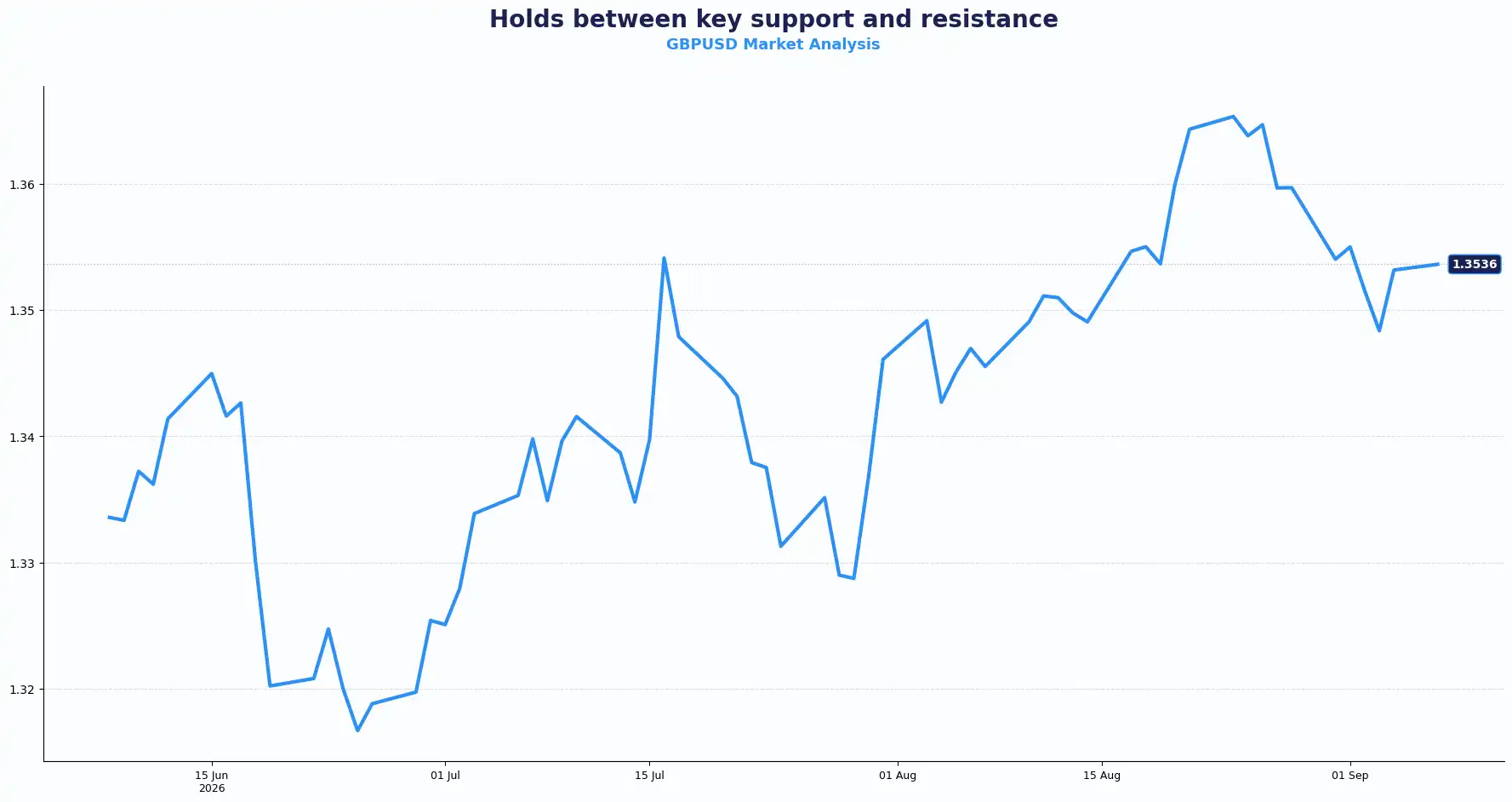
Key technical reference levels for GBP/USD: Resistance sits near 1.3548, while Support is around 1.3470-1.3460.
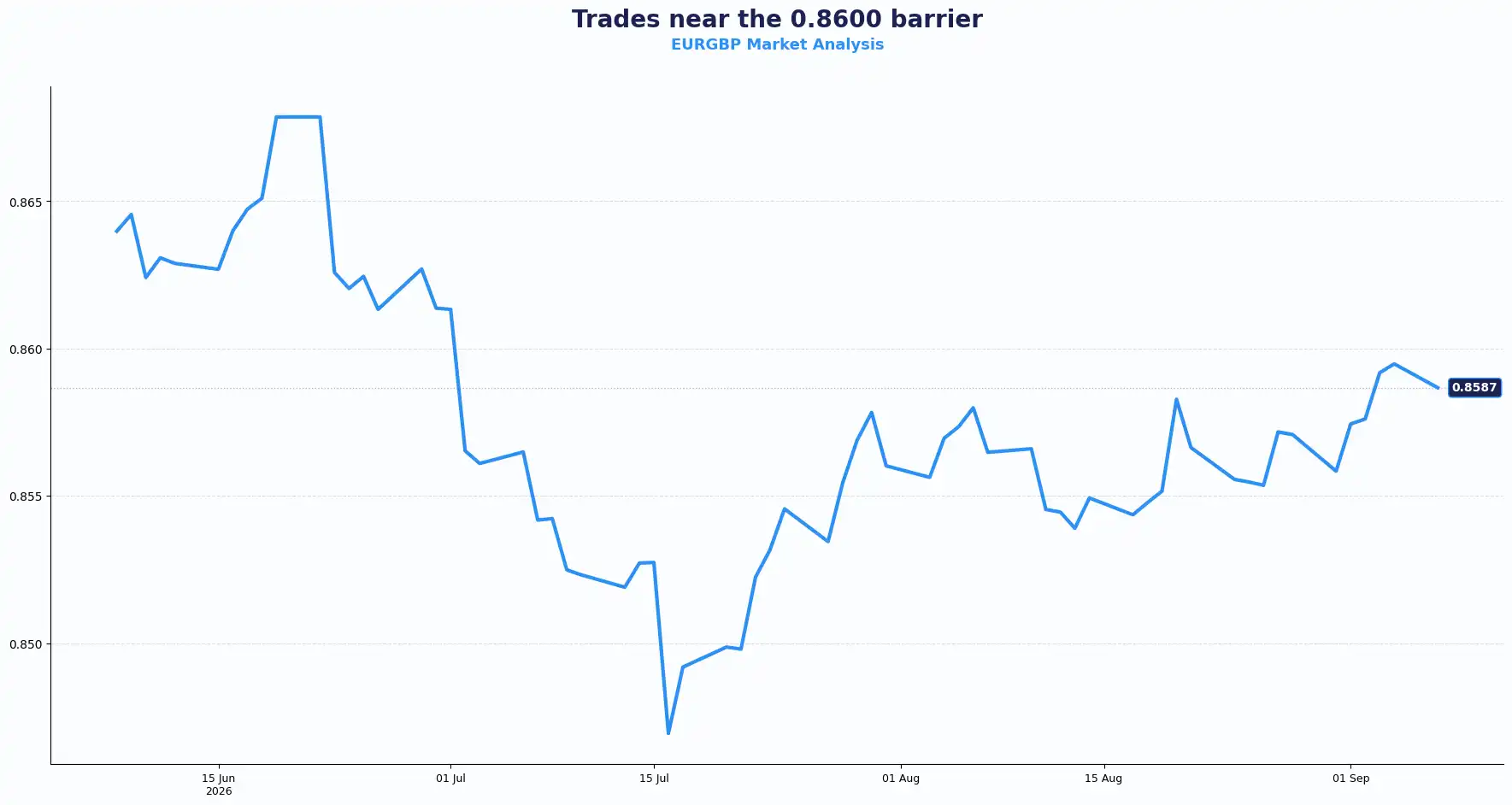
Key technical reference levels for EUR/GBP: Resistance sits near 0.8600, while Support is around 0.8585.
EUR: Euro Holds Steady Following German Production Data
EUR/USD: 1.1628
EUR/USD is holding around 1.1628 despite weaker German industrial data, as expectations for another ECB rate hike continue to provide some support to the euro.
Germany’s July Industrial Production fell 1.1% month-on-month, compared with expectations for a 0.3% increase, while June was revised to 0.0% from an earlier 0.2% rise. The contraction points to continued weakness in Europe’s largest economy and could weigh on the euro if similar softness appears across wider regional activity data.
At the same time, markets continue to expect a 25-basis-point ECB rate hike this week. Higher oil prices are also adding to inflation concerns across the eurozone and could keep pressure on policymakers to maintain a restrictive policy stance. However, weaker growth indicators may make the outlook for further tightening beyond September less certain.
For EUR/USD, the current backdrop therefore reflects competing influences. Firm ECB rate expectations may offer support to the euro, while weaker regional activity and any renewed demand for the US dollar could limit further gains.
Attention now turns to the final Eurozone Q2 GDP reading and Employment Change later today. An upward revision could provide some support to the regional growth outlook, while a weaker reading may reinforce concerns about economic momentum and influence expectations for the ECB’s policy path.
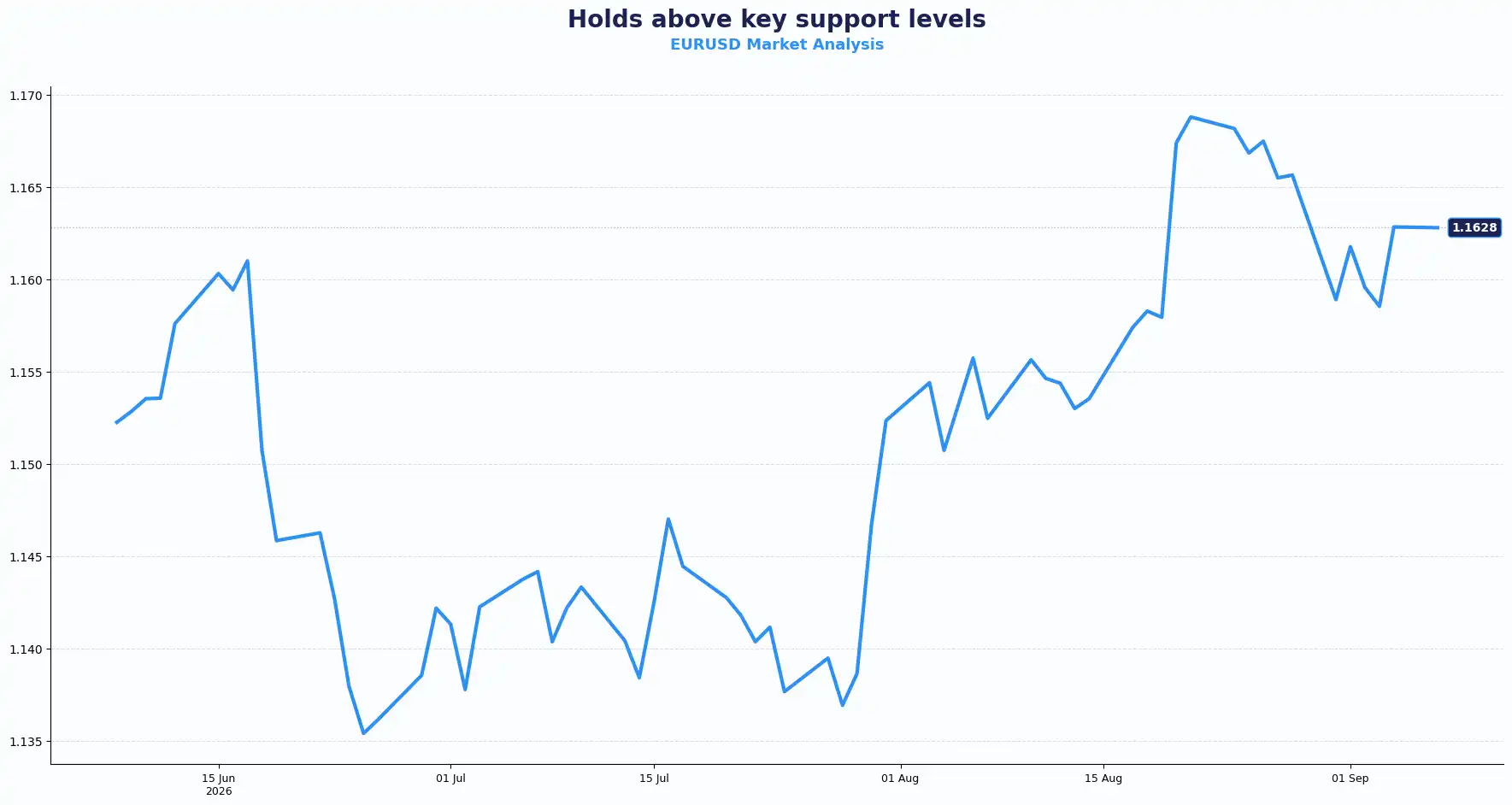
Key technical reference levels for EUR/USD: Resistance sits near 1.1679, while Support is around 1.1563, followed by 1.1500.
USD: Oil Rise Complicates Fed Rate Outlook
DXY: 99.10
The Dollar Index (DXY) is holding around 99.10 as markets assess the implications of higher oil prices following the latest escalation between the US and Iran. Brent crude has moved towards $97.50 a barrel after US forces struck three Iranian crude tankers over the weekend, raising concerns around energy supply and shipping through the Strait of Hormuz. If oil prices remain high, higher energy costs could add to US inflationary pressures and influence expectations for the Federal Reserve’s next policy move.
The dollar has received only limited support from Friday’s employment report despite stronger-than-expected headline payroll growth. August Nonfarm Payrolls increased by 162,000, well above the 56,000 expected, while the Unemployment Rate remained at 4.1%. The figures increased expectations for a September Fed rate hike, but the dollar’s relatively contained response suggests markets are still weighing labour-market resilience against the wider inflation and policy outlook.
Market pricing has moved towards roughly a 57-58% probability of a 25-basis-point September Fed Rate hike, up from around 50% before the jobs report. Higher oil prices could add another inflation consideration for policymakers, although upcoming US inflation data will remain important. If price pressures remain firm, expectations for further tightening may increase; softer inflation readings could reduce some of that support.
Markets will be closely watching this week’s Producer Price Index (PPI) and Consumer Price Index (CPI) releases for signs that price pressures are increasing. Any meaningful surprise could influence Fed rate expectations and, in turn, the direction of the US dollar.
Yen Firms as Aussie Reaches Three-Month High
USD/JPY: 155.95 | AUD/USD: 0.7217
USD/JPY has moved lower following the yen’s advance last week. Markets were pricing approximately a 75% probability of a 25-basis-point BoJ rate increase at the 18 September meeting, together with a 60% probability of another increase by December. Changes in market expectations is another factor influencing the USD/JPY pair, alongside US interest-rate expectations and broader market conditions.
AUD/USD has recently traded near a three-month high. Australian Q2 GDP increased by 0.4% quarter-on-quarter and 2.1% year-on-year, according to the Australian Bureau of Statistics. The data may influence expectations for the RBA’s policy outlook alongside subsequent inflation and labour-market releases.
Attention will also turn to comments from RBA Deputy Governor Andrew Hauser on Tuesday, which could provide further guidance on how policymakers are assessing growth, inflation and the case for another rate hike.
CURRENT RATE TABLE
| Pair | Rate | Trend |
|---|---|---|
| GBP/USD | 1.3536 | Range-bound / Mild downside |
| EUR/USD | 1.1628 | Holding firm |
| EUR/GBP | 0.8587 | Range-bound / Mild upside |
| USD/CAD | 1.3835 | Range-bound |
| AUD/USD | 0.7217 | Mild bullish |
| NZD/USD | 0.5874 | Mild bearish |
| USD/JPY | 155.95 | Yen firmer / Pair bearish |
| GBP/JPY | 210.55 | Yen firmer / Pair bearish |
Market lookahead:
Mon, Sep 07
- Eurozone GDP Growth Rate & Employment Change (Q2, Final)
- UK Chancellor Healey Speech
Tues, Sep 08
- Japan GDP Growth Rate (Q2, Final) & Average Cash Earnings (Jul)
- China Trade Balance, Exports & Imports (Aug)
- Germany Trade Balance (Jul)
Wed, Sep 09
- China Consumer Price Index (CPI) & Producer Price Index (PPI) (Aug)
- US ADP Weekly Employment Change
Thurs, Sep 10
- ECB Interest Rate Decision & Press Conference
- US Producer Price Index (PPI) & Core PPI (Aug)
- US Initial Jobless Claims
Fri, Sep 11
- UK GDP, Industrial & Manufacturing Production (Jul)
- UK Goods Trade Balance (Jul)
- US Consumer Price Index (CPI) & Core CPI (Aug)
Stay Ahead in the Currency Game
Whether you're a daily FX trader or handle international transactions regularly, our 'Currency Pulse' newsletter delivers the news you need to make more informed decisions. Receive concise updates and in-depth insights directly in your LinkedIn feed.
Subscribe to 'Currency Pulse' now and never miss a beat in the currency markets!
Ready to act on today’s insights? Get a free quote or give us a call on: +44 (0)20 7740 0000 to connect with a dedicated portfolio manager for tailored support.
Important Disclaimer: This blog is for informational purposes only and should not be considered financial advice. Currency Solutions does not take into account the investment objectives, financial situation, or specific needs of individual readers. We do not endorse or recommend any specific financial strategies, products, or services mentioned in this content. Forward contracts can help businesses manage foreign exchange exposure by providing greater certainty over future exchange rates, although they may also mean that businesses do not benefit from favourable exchange-rate movements. Businesses should consider their individual circumstances and speak with their dealer to understand how forward contracts may support their specific foreign exchange requirements. All information is provided “as is” without any representations or warranties, express or implied, regarding its accuracy, completeness, or timeliness.