Yen Jumps as BoJ and Fed Signals Reshape the Dollar and FX
10 min read
Share


The yen is taking centre stage after hawkish BoJ signals pushed expectations for a September rate hike higher. The yen has strengthened against the dollar, euro and sterling, while the dollar faces fresh pressure ahead of US labour data.
Sterling is hovering near $1.35 as elevated UK gilt yields keep fiscal concerns in focus. Huw Pill’s BoE speech today adds another policy signal for the pound. The euro is holding near $1.16 as investors weigh ECB rate expectations against a shifting dollar backdrop.
The Aussie dollar and Kiwi dollar are also responding to central-bank signals and China’s economic pulse. China’s trade and PMI data remain important for both currencies given their close links to regional demand. Oil prices are easing from recent highs but stay elevated as renewed US-Iran tensions raise concerns over energy supply. That keeps inflation and interest-rate expectations in focus across major currencies.
Attention now turns to Friday’s BoE Governor Bailey’s speech and US payrolls report, with the data likely to shape expectations for the Fed’s September decision.
GBP: Sterling Feels the Fiscal Squeeze and Yields Paradoxes
GBP/USD: 1.3502 | EUR/GBP: 0.8593
The pound started Thursday close to $1.3490 after touching a three-week low on Wednesday, continued to trade near the $1.3500 level. Renewed US-Iran strikes pushed oil higher and revived inflation concerns. UK gilt yields added another layer of pressure as the 10-year gilt yields pushed above 5.20% this week, the highest since 2008. In any conventional playbook, rising yields pull in foreign capital and lift the currency. Sterling has not played along.
Higher gilt yields can support a currency when they reflect stronger expectations for UK interest rates. These yields are not rising because investors are confident in British growth prospects. They are rising because inflation fears and fiscal uncertainty are pushing up the cost of UK debt, and investors demand more compensation for inflation and fiscal risk.
Finance minister John Healey faces an October 28 budget with a thinning margin of error. Rising global borrowing costs have compressed the remaining headroom under the previous government's fiscal rules, and he may need to raise taxes to stay on track. That puts fiscal policy back at the centre of sterling pricing.
BoE policymaker Catherine Mann pointed to signs of stronger growth and a stabilised labour market. Inflation has run a little hotter than the Bank of England (BoE) anticipated. Markets now price in a BoE rate hike by year-end, though September carries only around a 15% probability of that hike. BoE Governor Andrew Bailey is due to speak Friday, alongside the US August payrolls report; the two events could likely shape the near-term path for the GBP/USD pair.
The British Chambers of Commerce said the UK economy is on course to grow faster than previously expected in 2026. Although that is a constructive data point, firms continue to flag caution on capital expenditure given geopolitical uncertainty tied to the US-Iran conflict. A de-escalation in the Middle East could be a tailwind for gilt yields and, by extension, for sterling sentiment.
The GBP/USD pair now trades near 1.3490, above the 100-day Simple Moving Average (SMA) and the lower Bollinger Band. The RSI points to subdued momentum. The pair holds a mildly bullish near-term bias so long as it stays above those supports. Prime Minister Andy Burnham's arrival in late June delivered a sentiment lift for the pound. That political goodwill is still doing some work; however, that sentiment is thinning without fresh policy signals to sustain it.
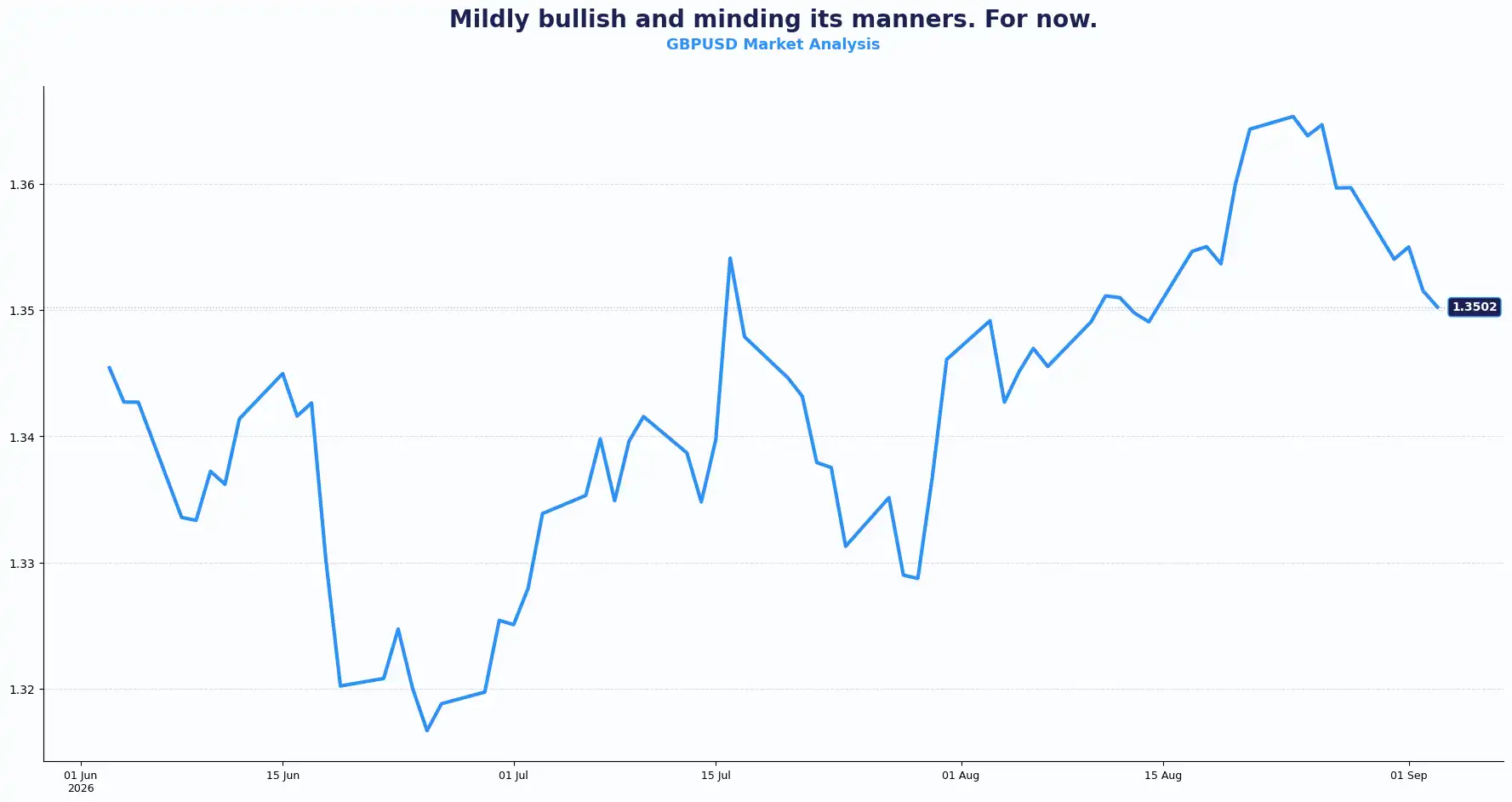
Key technical levels for the GBP/USD pair: Resistance sits at 1.3550, 1.3600 and Support sits at 1.3440, 1.3480
On the cross, EUR/GBP stood near 0.8595 after struggling to clear resistance around 0.8580 and 0.8585, the top of an ascending triangle pattern. The measured target for a breakout sits at 0.8630 (the June highs). Sterling's relative resilience against the euro reflects the divergence between BoE and ECB rate expectations at the short end.
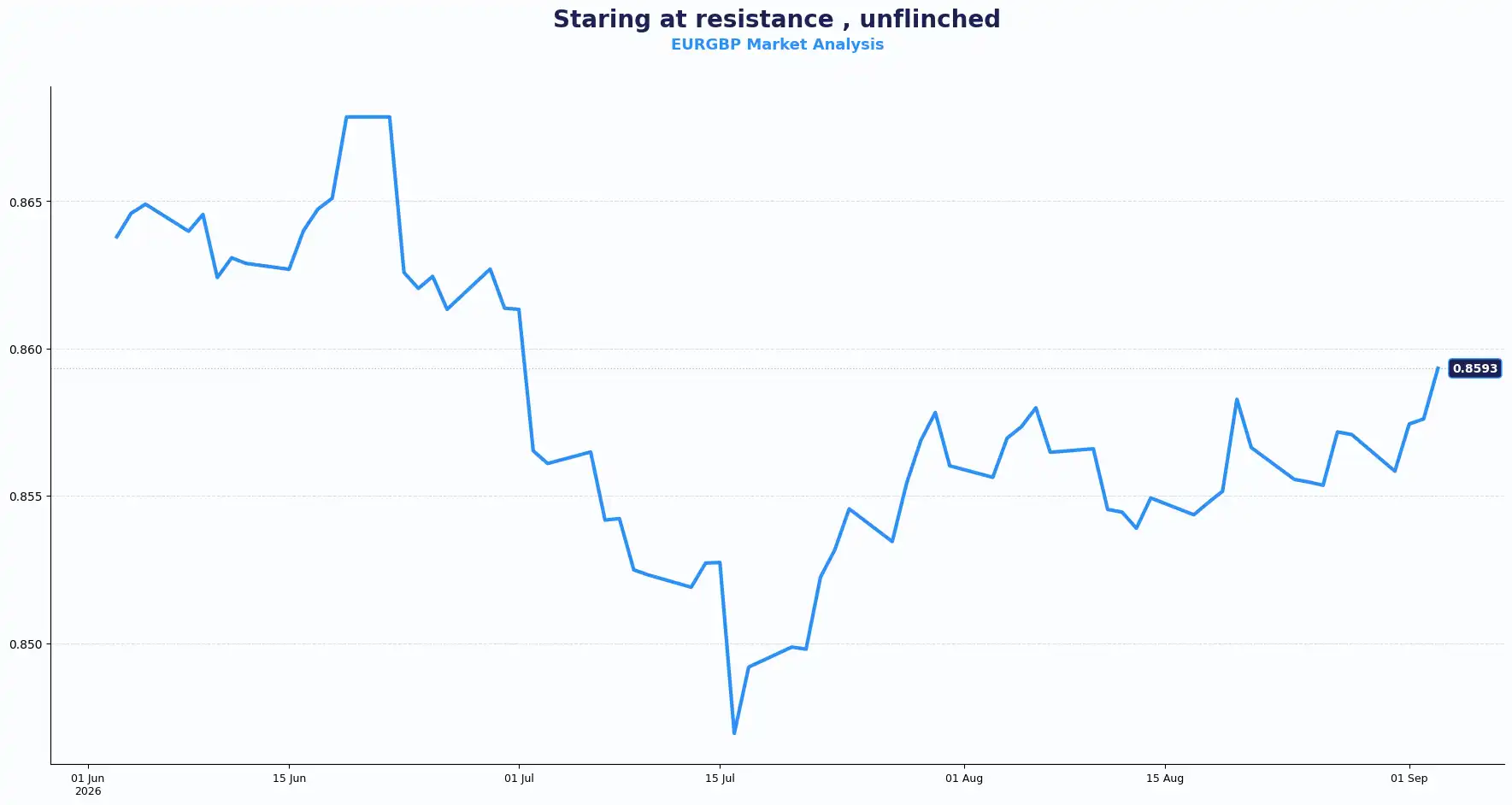
Key technical levels for the EUR/GBP pair: Resistance sits at 0.8630, 0.8660 and Support sits at 0.8585, 0.8555
GBP/JPY extended losses to a three-and-a-half-week low near 212.66. A broad-based yen rally on BOJ repricing drove the move, rather than sterling weakness in isolation.
EUR: Euro Holds Near $1.16 Amid Dollar Uncertainty
EUR/USD: 1.1606 | EUR/GBP: 0.8593
EUR/USD is testing 1.1600. The pair faces pressure from a dollar that continues to draw support from US inflation concerns and the prospect of tighter Federal Reserve (Fed) policy.
The structural divergence between European Central Bank (ECB) and Federal Reserve (Fed) expectations still supports a broadly firm euro, but two crosswinds are blunting momentum. First, rising global yields and fresh US-Iran hostilities are dampening risk appetite, and the euro tends to soften in that environment. Second, EUR/USD faces downside risk toward 1.1550 if Friday's US payrolls data surprise to the upside and reinforce Fed-tightening bets.
Monetary policy signals and global risk aversion push the single currency in opposite directions. ECB member Joachim Nagel issued strong hints of a September rate hike. Markets now price in a more than 95% chance of ECB tightening. While the ECB's policy stance is providing a floor, until the hike is delivered and forward guidance is digested, the euro remains in a holding pattern relative to major crosses.
Usually, clear rate expectations drive sustained currency gains. However, escalations in the Middle East and rising tensions of the US-Iran conflict continue to rattle global risk appetite. Investors are seen flying to safety or unwinding risk positions. For now, that flight keeps euro gains pinned below structural technical ceilings, and without clearer global market stability, monetary tightening alone is unlikely to break the euro out of its structural range.
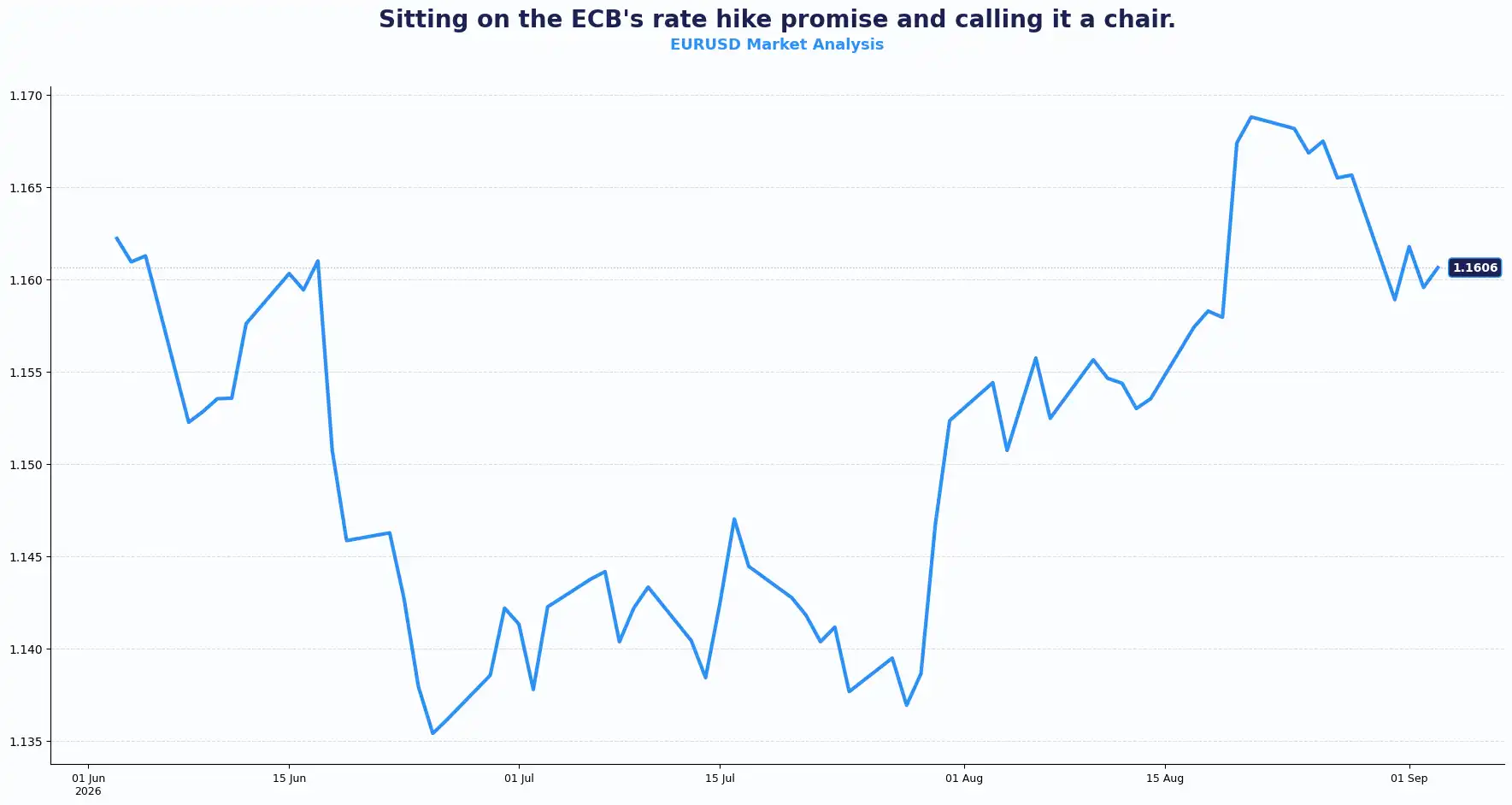
Key technical levels for the EUR/USD pair: Resistance sits at 1.1620, 1.1650 and Support sits at 1.1550, 1.1520
Meanwhile, the EUR/JPY pair slid to 182.90 as the yen surge overwhelmed euro support. Policy meetings at the ECB and the Bank of Japan (BoJ) are being closely watched by investors for further signals on the global tightening pace, and the outcomes of both could reprice euro crosses sharply.
USD: Dollar Faces a Fresh Test From US Jobs Data
DXY: 99.25
The dollar index (DXY) traded around 99.40 in the early European session on Thursday, then edged lower to 99.25. The yen's sharp rally is weighing on the Greenback across the board, and New York Fed President John Williams tempered expectations by noting inflation is continuing to ease. US 10-year Treasury yields dipped to 4.776% after touching multi-year highs. The 30-year Japanese Government Bond yield fell to 4.085% after decent demand at auction.
The ADP report already delivered a softer signal. Private payrolls rose by 38,000 in August against expectations for 48,000. Economists expect tomorrow’s NonFarm Payrolls (NFP) to rebound by 56,000 after July's unexpected 23,000 decline. Unemployment is forecast at 4.1%
The jobs data now sits directly against the Fed's inflation concerns. Fed Chair Kevin Warsh used his Jackson Hole speech to reinforce the central bank's focus on returning inflation to its 2% target. His comments raised expectations for a September rate increase. Current market pricing puts the probability of a September hike around ~60%, leaving the dollar with a delicate setup.
However, even a robust payrolls print may not be sufficient to lock in a September move, because Warsh's Jackson Hole speech was heavy on inflation rhetoric but short on hard guidance. Investors continue to play ping-pong about who Kevin Warsh is. A hawk? A dove? We've seen both extremes of that trade. Fed Governor Christopher Waller speaks later today. The dollar's next directional move could gain cues from his commentary and from Friday's Jobs data.
Long-dated Treasury yields are still at their highest since 2007. US national debt has crossed $40 trillion. Treasury Secretary Scott Bessent argues the US can grow out of the debt. The Treasury has historically responded to financing pressure with structural innovation, from fixed-price bond sales pre-1970 to yield-based auctions introduced in 1974. But structural solutions do not reduce the pressure that elevated long yields are currently reflecting.
Oil at $91.12 (WTI) is its own variable for the dollar. President Trump said the latest US-Iran strikes would be short-lived. That comment pulled crude off its highs and eased safe-haven dollar demand. If geopolitical tensions ease, it removes one of the Greenback’s recent support pillars.
Higher energy prices can reinforce inflation pressure and complicate the Fed's policy decision.
At the same time, the dollar has faced pressure from a sharp recovery in the yen.
The dollar's recent strength has not come from one clean driver. It reflects a combination of Fed repricing, geopolitical demand, and higher US yields. Each of which can now pull the dollar in a different direction.
Other currencies: Yen takes centre stage
AUD/USD: 0.7160 | NZD/USD: 0.5858 | USD/JPY: 157.61 | GBP/JPY: 212.66
The Japanese yen staged a sharp rally, driving USD/JPY down to 157.61 and GBP/JPY to a three-week low near 212.66.
The yen's surge stems from market speculation about official rate checks, along with hawkish remarks from Bank of Japan board member Hajime Takata. Takata urged the BOJ to raise interest rates flexibly rather than stick to a slow schedule as inflation pressures intensify. That shift prompted investors to price in faster BOJ rate hikes, despite Japan's underlying fiscal challenges. A September BoJ hike now looks close to fully priced.
Since the joint US-Japan yen-buying intervention on 31 July, the yen has struggled to hold ground against persistently wide rate differentials and elevated energy prices. Takata's comments reopened the debate on pace rather than direction.
The Australian dollar held near $0.7170. Stronger domestic data has supported expectations for further Reserve Bank of Australia tightening. The August high near $0.7208 acts as the next technical reference.
The New Zealand dollar recovered towards $0.5860 after Wednesday's sharp decline. The Reserve Bank of New Zealand raised its policy rate to 2.75%, but its cautious guidance limited the kiwi's response.
Both AUD and NZD lost ground to the yen. AUD/JPY fell 0.7% to 113.05, and NZD/JPY dropped 0.4% to 92.49.
China's Services PMI rose to 51.4 in August, beating the 50.6 forecast. Japan's Composite PMI climbed to 53.5, extending a 17-month expansion streak. Both readings provided constructive regional context for antipodean currencies, though the yen's strength muted that support on Thursday.
USD/CAD also carries a central-bank story. The Bank of Canada held its policy rate at 2.25% but signalled that further increases could follow if inflation stays too high. Canadian inflation has risen to 3% while Brent Crude sits well above the BoC's earlier assumption. The Canadian dollar traded around C$1.3876 per US dollar.
South Korea's won has gained over 12% in two months from the 17-year low near 1,550 touched in late June. South Korea's Foreign Exchange Stabilisation Fund, managed by the finance ministry and the Bank of Korea, purchased US dollars through over-the-counter transactions as SK Hynix repatriated dollar proceeds to South Korea. The move is distinct from traditional FX intervention: it replenishes the fund's depleted dollar reserves while stabilising volatility. South Korea has not publicly disclosed the exact size or asset breakdown of the fund.
The Swiss government named Christoph Ammann as the new president of the Swiss National Bank's Bank Council, replacing Barbara Janom Steiner from 1 May 2027.
The common thread across these currencies is policy divergence.
The pound faces fiscal pressure. The euro has ECB tightening expectations behind it. The dollar awaits employment data to validate or challenge the Fed's repricing. The yen has gained ground as expectations for the BoJ have turned more hawkish. The Australian and Canadian dollars draw support from domestic inflation and energy dynamics.
The current FX environment is more than a simple one-way currency story; it is increasingly tied to policy expectations, fiscal credibility and geopolitical risk. That makes the underlying drivers worth watching closely as the next round of data could reshape rate expectations.
Current Rate Table:
| Pair | Rate | Trend |
|---|---|---|
| GBP/USD | 1.3502 | Mildly bullish above 1.3440 |
| EUR/USD | 1.1606 | Neutral to mildly bearish below 1.1620 |
| EUR/GBP | 0.8593 | Bullish above 0.8585 |
| GBP/JPY | 212.66 | Bearish near-term |
| USD/JPY | 157.61 | Bearish near-term |
| AUD/USD | 0.7160 | Bullish bias |
| NZD/USD | 0.5858 | Bearish to neutral |
| USD/CAD | 1.3876 | Mildly bearish USD bias |
Market lookahead:
Thurs, Sep 03
- UK PMI
- Germany & Eurozone HCOB Composite & Services PMI (Aug)
- Eurozone Producer Price Index (PPI) (Jul)
- BoE Monetary Policy Hearings
- US Initial Jobless Claims
Fri, Sep 04
- Germany’ Factory Orders (Jul)
- BoE Governor Bailey Speech
- Eurozone Retail Sales (Jul)
- US Average Hourly Earnings, NonFarm Payrolls, Unemployment Rate for Aug
Stay Ahead in the Currency Game
Whether you're a daily FX trader or handle international transactions regularly, our 'Currency Pulse' newsletter delivers the news you need to make more informed decisions. Receive concise updates and in-depth insights directly in your LinkedIn feed.
Subscribe to 'Currency Pulse' now and never miss a beat in the currency markets!
Ready to act on today’s insights? Get a free quote or give us a call on: +44 (0)20 7740 0000 to connect with a dedicated portfolio manager for tailored support.
Important Disclaimer: This blog is for informational purposes only and should not be considered financial advice. Currency Solutions does not take into account the investment objectives, financial situation, or specific needs of individual readers. We do not endorse or recommend any specific financial strategies, products, or services mentioned in this content. Forward contracts can help businesses manage foreign exchange exposure by providing greater certainty over future exchange rates, although they may also mean that businesses do not benefit from favourable exchange-rate movements. Businesses should consider their individual circumstances and speak with their dealer to understand how forward contracts may support their specific foreign exchange requirements. All information is provided “as is” without any representations or warranties, express or implied, regarding its accuracy, completeness, or timeliness.