US Dollar Reaches 18-Month High While Fed's Hammack Supports Restrictive Monetary Policy
8 min read
Share


The US dollar reached an 18-month high on Monday, with the US Dollar Index (DXY) climbing to 102.58 amid renewed Middle East tensions and expectations of restrictive US monetary policy. The euro weakened against the dollar amid continuing French fiscal concerns, while sterling also declined. DXY eased slightly during early Tuesday trading but remained close to Monday's high.
Federal Reserve (Fed) policymaker Beth Hammack said monetary policy should become restrictive relatively quickly to address increasingly widespread inflation pressures. Her remarks pointed to the possibility of further interest-rate increases, although they did not represent a Fed policy decision. Interest-rate markets continued to view unchanged rates in October as the more likely outcome, with Wednesday's US inflation report potentially influencing expectations.
Oil prices rose sharply on Monday following further attacks affecting Saudi Arabia and regional shipping, with Brent crude reaching around $107 a barrel. Prices subsequently eased towards $105 during early Tuesday trading, while uncertainty around energy supplies persisted. Renewed increases could add to inflation concerns, while a sustained decline could ease some pressure.
Elsewhere, the Bank of France estimated third-quarter economic growth of just 0.1%, adding to concerns about eurozone economic momentum. UK retail-sales survey figures provided a more positive signal, although broader dollar movements remained an important influence on sterling.
GBP: Sterling Recovers Modestly as UK Retail Sales Improve
GBP/USD: 1.3225 | EUR/GBP: 0.8453
Sterling recovered modestly against the US dollar during early Tuesday trading, with GBP/USD moving towards 1.3225 after falling close to 1.3200 on Monday. The recovery followed stronger-than-expected British Retail Consortium (BRC) sales figures, with like-for-like retail sales increasing 1.0% year-on-year in September, compared with expectations of 0.7% and the previous month's 0.5% rise. Total retail sales growth also improved to 1.3% from 0.7%, although it remained below the 12-month average of 1.5%. The figures may point to some improvement in retail spending, but continued pressure from higher fuel costs and household expenses could limit the strength of demand.
Bank of England (BoE) policymaker Catherine Mann reiterated concerns about persistent UK inflation during Monday's remarks, warning that price pressures approaching 4% around year-end could become embedded in wage negotiations. Interest-rate markets were pricing approximately a 90% probability of a BoE rate increase in November, reflecting expectations that further tightening may be required. If inflation remains elevated, these expectations could provide some support for sterling. However, weaker economic activity or easing inflation pressures could reduce expectations for additional increases, potentially limiting the pound's recovery against the dollar.
Sterling performed better against the euro, with EUR/GBP trading near 0.8453 after touching fresh lows around 0.8445 during Monday's session. Euro weakness coincided with renewed concerns around France's fiscal position, while comparatively elevated UK rate expectations remained relevant to the currency pair. If French fiscal concerns persist, the euro could remain under pressure against sterling. Conversely, an improvement in euro-area sentiment or weaker UK economic data could allow EUR/GBP to recover. Thursday's UK GDP figures may provide further insight into the balance between inflation risks and economic growth.
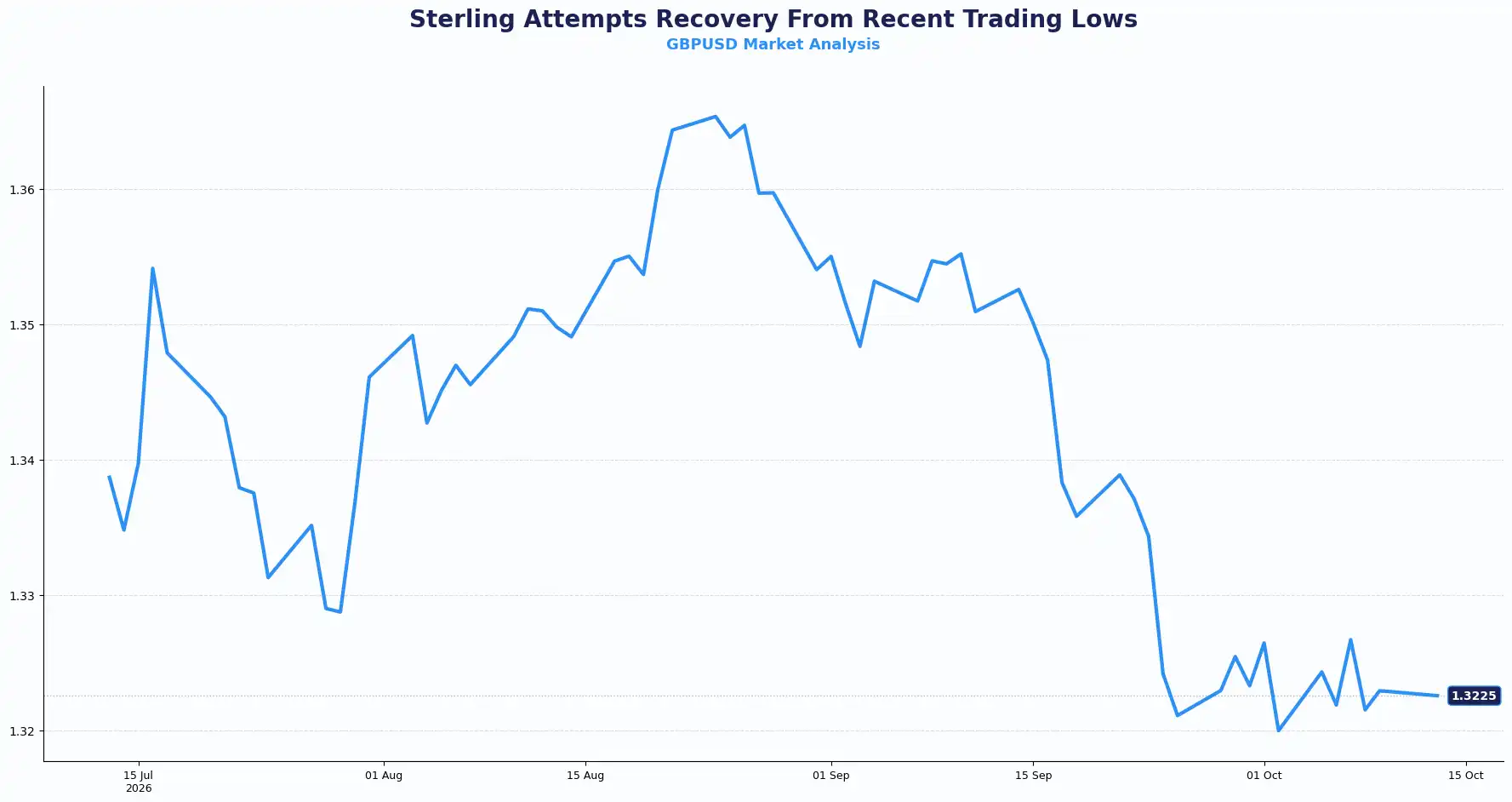
Key technical reference levels for GBP/USD: Resistance sits near 1.3250, followed by 1.3300, while support sits around 1.3200, followed by 1.3180.
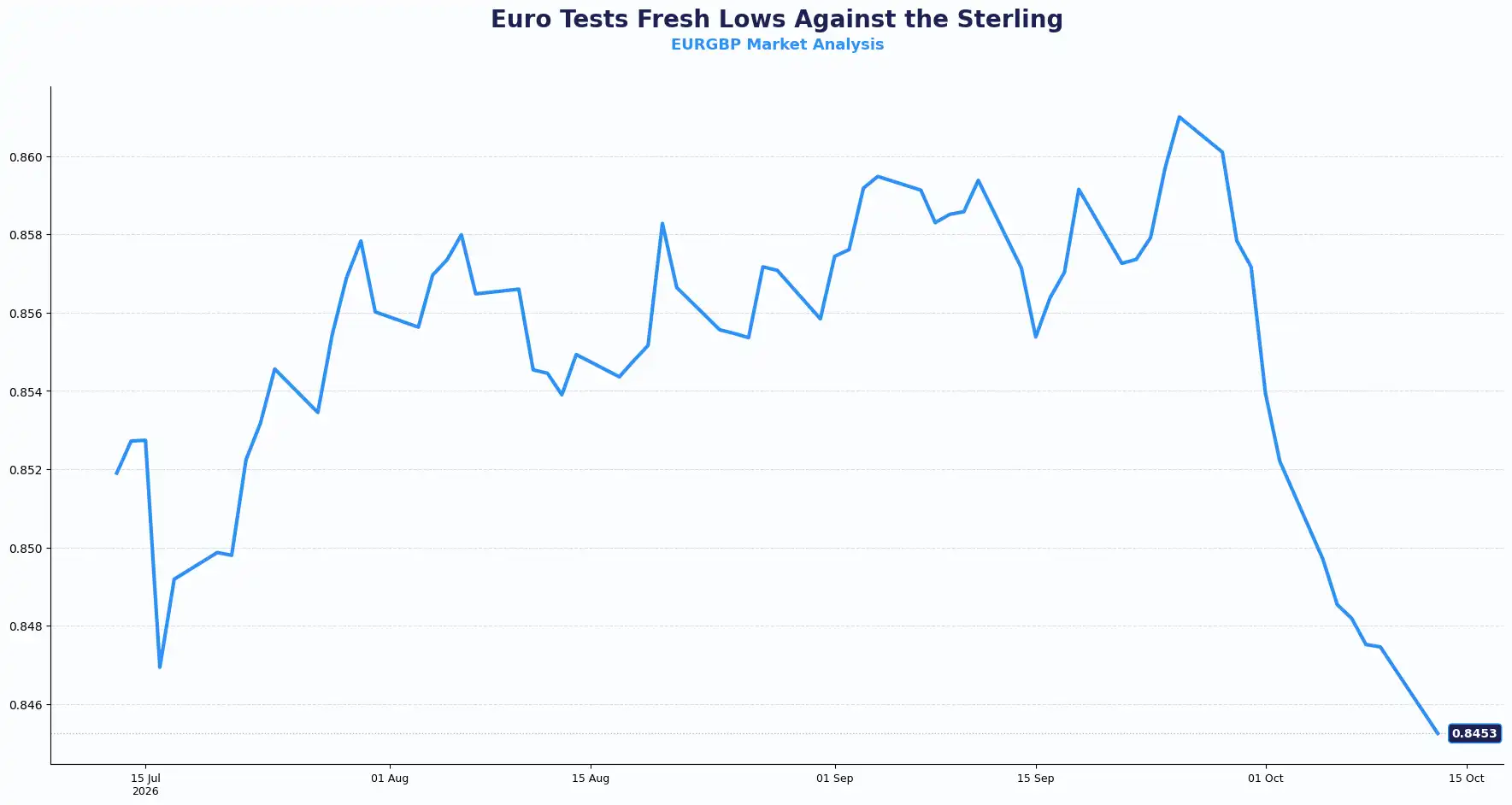
Key technical reference levels for EUR/GBP: Resistance sits near 0.8490, followed by 0.8500, while support sits around 0.8445, followed by 0.8400.
EUR: Weak French Growth Outlook Adds to Euro Pressure
EUR/USD: 1.1186
The euro remained under pressure against the US dollar during Monday's session, with EUR/USD falling below 1.1200 towards 1.1155 before recovering modestly during early Tuesday trading. The decline reflected a combination of renewed dollar strength and continued concerns around France's fiscal and economic position. French government bond spreads remained elevated as investors assessed the country's borrowing requirements and growth prospects, although the euro recovered some ground as US Treasury yields and oil prices eased overnight.
Fresh economic estimates added to the concerns. The Bank of France projected just 0.1% growth in the third quarter, following stagnation in the previous quarter. Services activity provided some support, but manufacturing, construction and agriculture remained weak. The central bank's business survey also highlighted rising energy and material costs, with some firms reporting weaker demand and pressure on their cash positions. These conditions could limit economic momentum if higher costs persist, although stronger industrial demand or improving business confidence could support activity in subsequent months.
The weaker French outlook presents another consideration for the European Central Bank (ECB), which continues to balance elevated inflation against risks to economic growth. Higher energy costs could increase inflation pressures, while weaker activity and elevated government borrowing costs could reduce expectations for further near-term tightening. If French fiscal concerns intensify or US interest-rate expectations remain comparatively elevated, the euro could face renewed pressure. Conversely, easing energy prices or improved economic conditions could support a recovery. Wednesday's US inflation figures may provide further direction for EUR/USD through changes in Fed rate expectations.
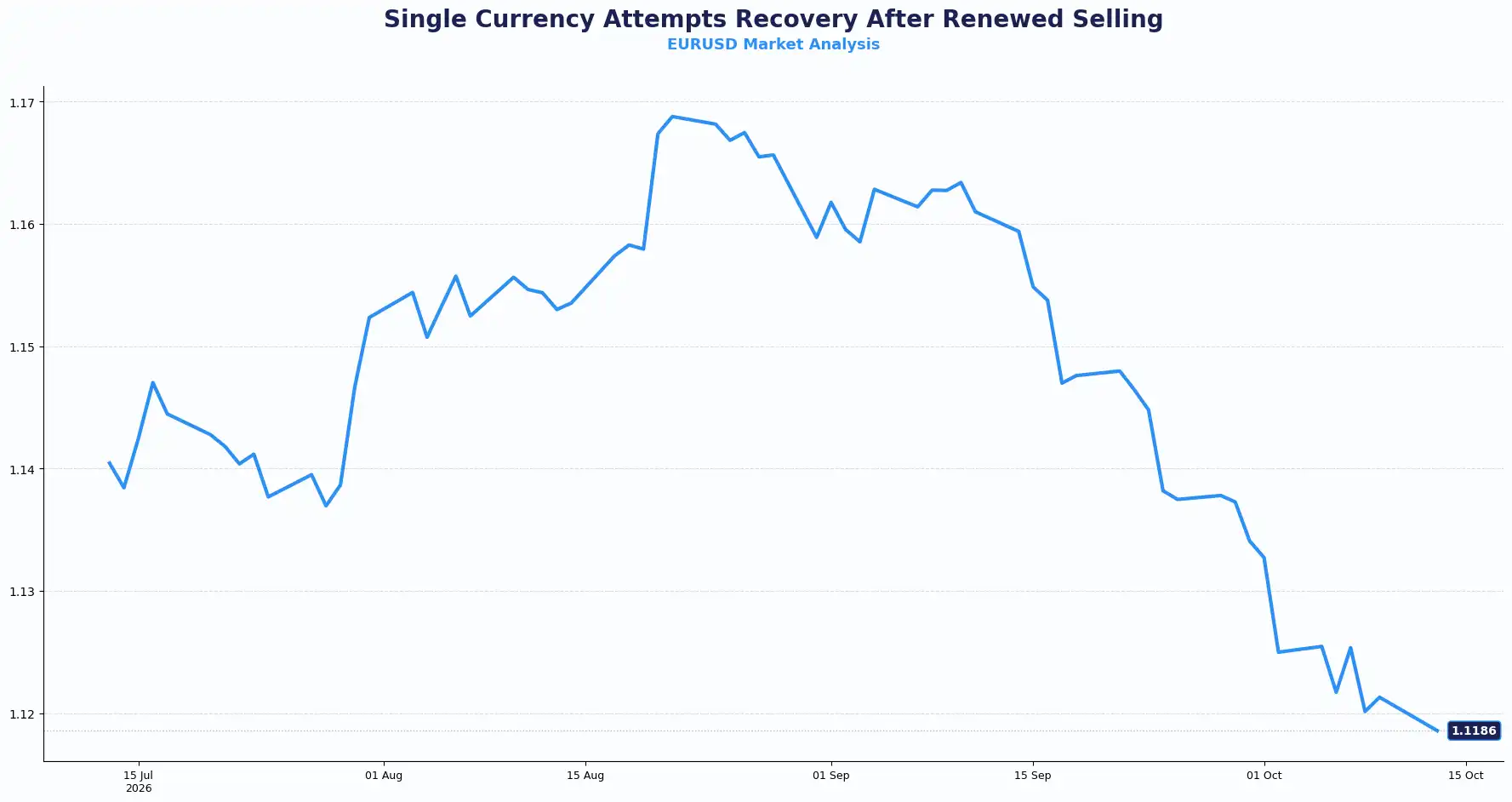
Key technical reference levels for EUR/USD: Resistance sits near 1.1215, followed by 1.1242, while support sits around 1.1160, followed by 1.1130.
USD: Dollar Eases From Recent High as Fed Rate Expectations Remain Elevated
DXY: 102.40
The US dollar eased modestly during early Tuesday trading after reaching an 18-month high of 102.58 on Monday. DXY retreated towards 102.40 as oil prices declined and US Treasury yields stabilised, although the index remained close to its recent peak. The dollar's earlier advance may have reflected demand for assets perceived as relatively defensive amid geopolitical uncertainty and expectations that US monetary policy could remain restrictive. With US Treasury cash markets closed for Monday's holiday, trading conditions were also relatively subdued.
Fed policymaker Beth Hammack argued that monetary policy should become more restrictive relatively quickly, citing inflation pressures spreading beyond energy into other areas of the economy. She highlighted strong corporate investment and consumer spending as factors supporting demand, while expressing concern that businesses were increasingly planning price increases. However, Hammack also acknowledged the importance of controlling inflation without unnecessarily weakening employment, suggesting that the timing and extent of further tightening remain important considerations.
Interest-rate markets continued to favour an October Fed pause, despite a modest increase in expectations for another rate rise. If Wednesday's US Consumer Price Index (CPI) figures indicate persistent inflation, expectations for additional tightening could increase and provide support for the dollar. Conversely, softer inflation figures could reduce those expectations and limit further gains. Thursday's US producer-price and retail-sales data may provide additional evidence on inflation pressures and consumer demand.
Other Currencies: RBA Highlights Inflation Risks While Yen Recovers
AUD/USD: 0.6960 | NZD/USD: 0.5589 | USD/JPY: 158.22 | GBP/JPY: 209.17
The Australian dollar remained under pressure against the US dollar during early Tuesday trading, with AUD/USD hovering near 0.6960 following the release of the Reserve Bank of Australia's (RBA) September meeting minutes. Policymakers highlighted growing upside risks to inflation, including higher energy costs, domestic capacity constraints and emerging price pressures linked to artificial intelligence investment. The minutes indicated that prompt policy action may be needed to prevent inflation expectations from becoming more firmly embedded.
However, the RBA also acknowledged uncertainty over how restrictive financial conditions already were. Australian house prices had fallen more than expected, while household consumption remained relatively subdued. These competing signals suggest that further tightening could remain under consideration, although weaker economic activity may influence the timing of future decisions. AUD/USD showed limited immediate reaction to the minutes, with broader US dollar movements continuing to influence the pair. Thursday's Australian employment figures could provide further insight into domestic economic conditions.
The Japanese yen strengthened modestly on Tuesday, with USD/JPY easing towards 158.22 following fresh wholesale inflation data. Japan's Corporate Goods Price Index rose 6.8% year-on-year in September, down from 7.6% in August and below expectations of 7.6%. Although producer-price inflation slowed, it remained elevated, keeping expectations of further Bank of Japan (BoJ) tightening relevant. If wholesale price pressures continue feeding into consumer inflation, expectations for additional rate increases could strengthen. Conversely, further easing in producer prices could reduce the urgency for tightening.
NZD/USD recovered slightly towards 0.5589 after approaching an 18-month low, although the New Zealand dollar remained sensitive to elevated US interest-rate expectations and geopolitical uncertainty. Lower oil prices and a modest retreat in the US dollar provided some relief during early Tuesday trading. However, renewed risk aversion or stronger US inflation data could limit the recovery, while softer US economic figures could provide additional support.
Current Rate Table
| Pair | Rate | Trend |
|---|---|---|
| GBP/USD | 1.3225 | Mildly bearish GBP |
| EUR/GBP | 0.8453 | Bearish EUR |
| EUR/USD | 1.1186 | Bearish short-term |
| USD/JPY | 158.22 | Consolidation |
| AUD/USD | 0.6960 | Mildly bearish AUD |
| NZD/USD | 0.5589 | Bearish |
| USD/CAD | 1.4270 | Mildly bullish USD |
Market Lookahead
Wednesday, Oct 14
- US Consumer Price Index & Core CPI (Sep)
- US Fed Beige Book
Thursday, Oct 15
- AUD Employment Change & Unemployment Rate (Sep)
- GBP UK GDP (Aug)
- US Producer Price Index & Core PPI (Sep)
- US Retail Sales & Core Retail Sales (Sep)
Friday, Oct 16
- EUR Eurozone HICP & Core HICP (Sep, Final)
- GBP BoE Governor Bailey Speech
- USD Fed Chair Warsh Remarks
- US Industrial Production (Sep)
Stay Ahead in the Currency Game
Whether you're a daily FX trader or handle international transactions regularly, our 'Currency Pulse' newsletter delivers the news you need to make more informed decisions. Receive concise updates and in-depth insights directly in your LinkedIn feed.
Subscribe to 'Currency Pulse' now and never miss a beat in the currency markets!
Ready to act on today’s insights? Get a free quote or give us a call on: +44 (0)20 7740 0000 to connect with a dedicated portfolio manager for tailored support.
Important Disclaimer: This blog is for informational purposes only and should not be considered financial advice. Currency Solutions does not take into account the investment objectives, financial situation, or specific needs of individual readers. We do not endorse or recommend any specific financial strategies, products, or services mentioned in this content. Forward contracts can help businesses manage foreign exchange exposure by providing greater certainty over future exchange rates, although they may also mean that businesses do not benefit from favourable exchange-rate movements. Businesses should consider their individual circumstances and speak with their dealer to understand how forward contracts may support their specific foreign exchange requirements. All information is provided “as is” without any representations or warranties, express or implied, regarding its accuracy, completeness, or timeliness.