US Consumer Sentiment Declines, Inflation Expectations Rise; Oil Prices Fall
8 min read
Share


US consumer confidence weakened further in early October, while households’ inflation expectations increased, presenting a mixed picture for US monetary policy. The University of Michigan’s preliminary Consumer Sentiment Index fell to 46.3 from 48.1 in September, below expectations. One-year inflation expectations rose to 4.7% from 4.6%, while the five-year measure edged up to 3.5% from 3.4%.
The figures may reflect continued household concerns about living costs, although weaker sentiment does not necessarily mean consumer spending will fall. Higher inflation expectations could keep the possibility of further Federal Reserve (Fed) tightening in view, while signs of softer demand could reduce expectations for additional increases. Wednesday’s US inflation data may provide further direction.
Oil prices declined early Monday after President Donald Trump said Russia and Ukraine had agreed to halt attacks on energy infrastructure. Neither side had confirmed a mutual ceasefire, and reports of continued strikes added uncertainty. Brent crude fell towards $103 a barrel, although Middle East supply risks remained a potential source of renewed price pressure.
Elsewhere, the Institute for Fiscal Studies (IFS) estimated a potential £36 billion UK fiscal adjustment ahead of the October Budget, while Italian industrial production fell 1.3% in August. Those developments could affect expectations for UK borrowing and euro-area growth, with implications for sterling and the euro.
GBP: Sterling Edges Higher as UK Fiscal Concerns Persist
GBP/USD: 1.3243 | EUR/GBP: 0.8461
Sterling made modest gains against the US dollar during early Monday trading, with GBP/USD recovering towards 1.3243 The move coincided with an easing in US Treasury yields. The pound also retained much of its recent strength against the euro, although uncertainty surrounding the UK's fiscal position remained an important consideration. The currency's recovery was relatively limited as investors assessed the implications of higher government borrowing costs and the upcoming October Budget.
Fresh concerns emerged over the weekend after the IFS estimated that Chancellor John Healey could face a fiscal adjustment of approximately £36 billion to accommodate inflation-related spending pressures and defence commitments. Higher inflation can increase the cost of public services, while elevated borrowing costs make additional government debt more expensive. The assessment does not represent an announced government policy, but it highlights the difficult choices facing the Treasury ahead of the 28 October Budget. Healey has reiterated his commitment to fiscal discipline, although market participants may look for further detail on how spending commitments and borrowing targets could be balanced.
Interest-rate expectations also remain relevant for sterling. Market pricing continues to reflect expectations of potential further Bank of England (BoE) tightening. as policymakers assess persistent inflation pressures. If expectations for higher UK rates remain elevated, they could provide some support for the pound, particularly against the euro. However, weaker economic activity or easing energy-related inflation could reduce those expectations. EUR/GBP remained near recent lows around 0.8465, with French fiscal concerns continuing to affect the euro's relative performance. A deterioration in UK fiscal sentiment could nevertheless limit sterling's advantage.
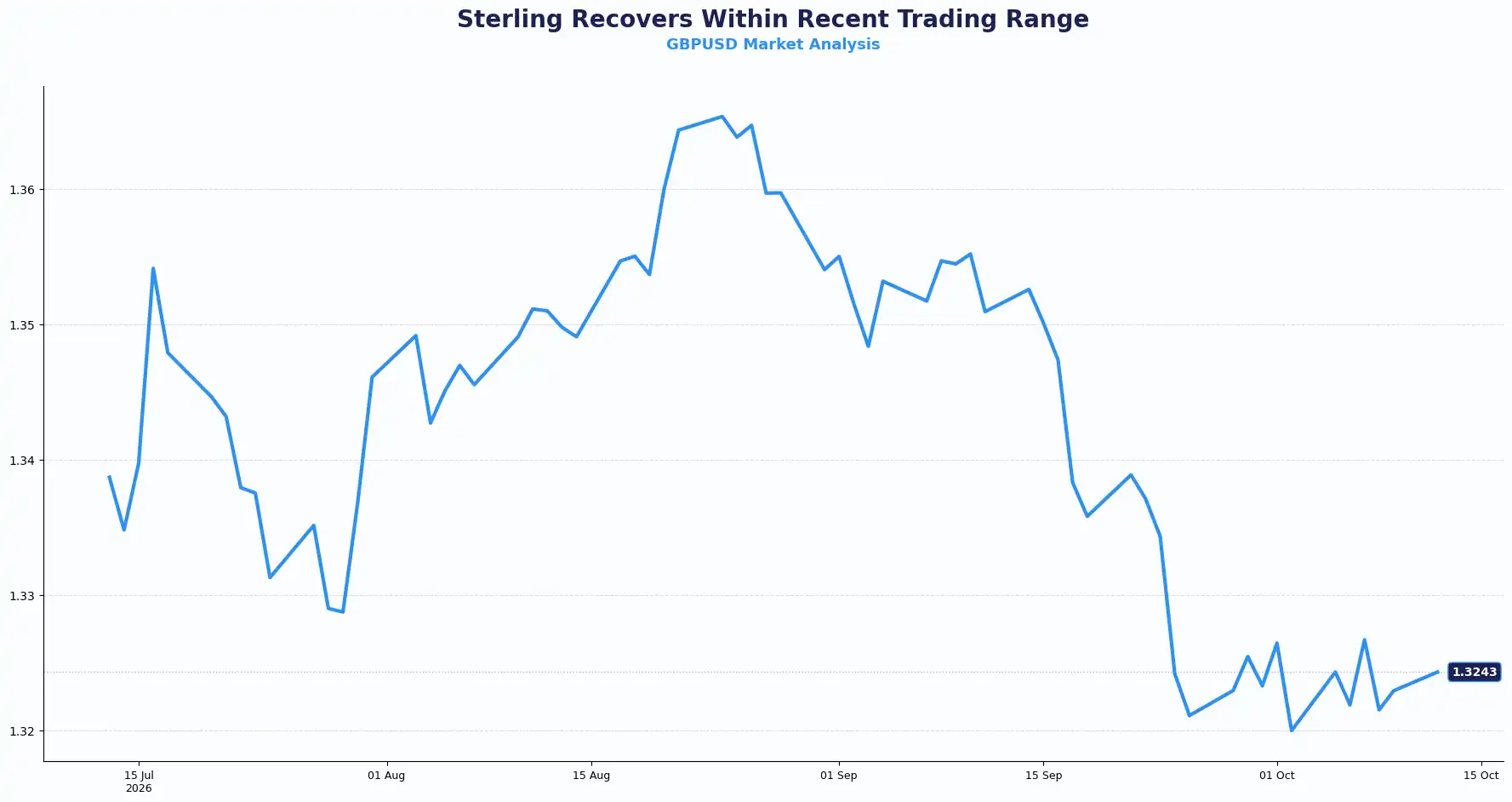
Key technical reference levels for GBP/USD: Resistance sits near 1.3260, followed by 1.3300, while support sits around 1.3180, followed by 1.3140.
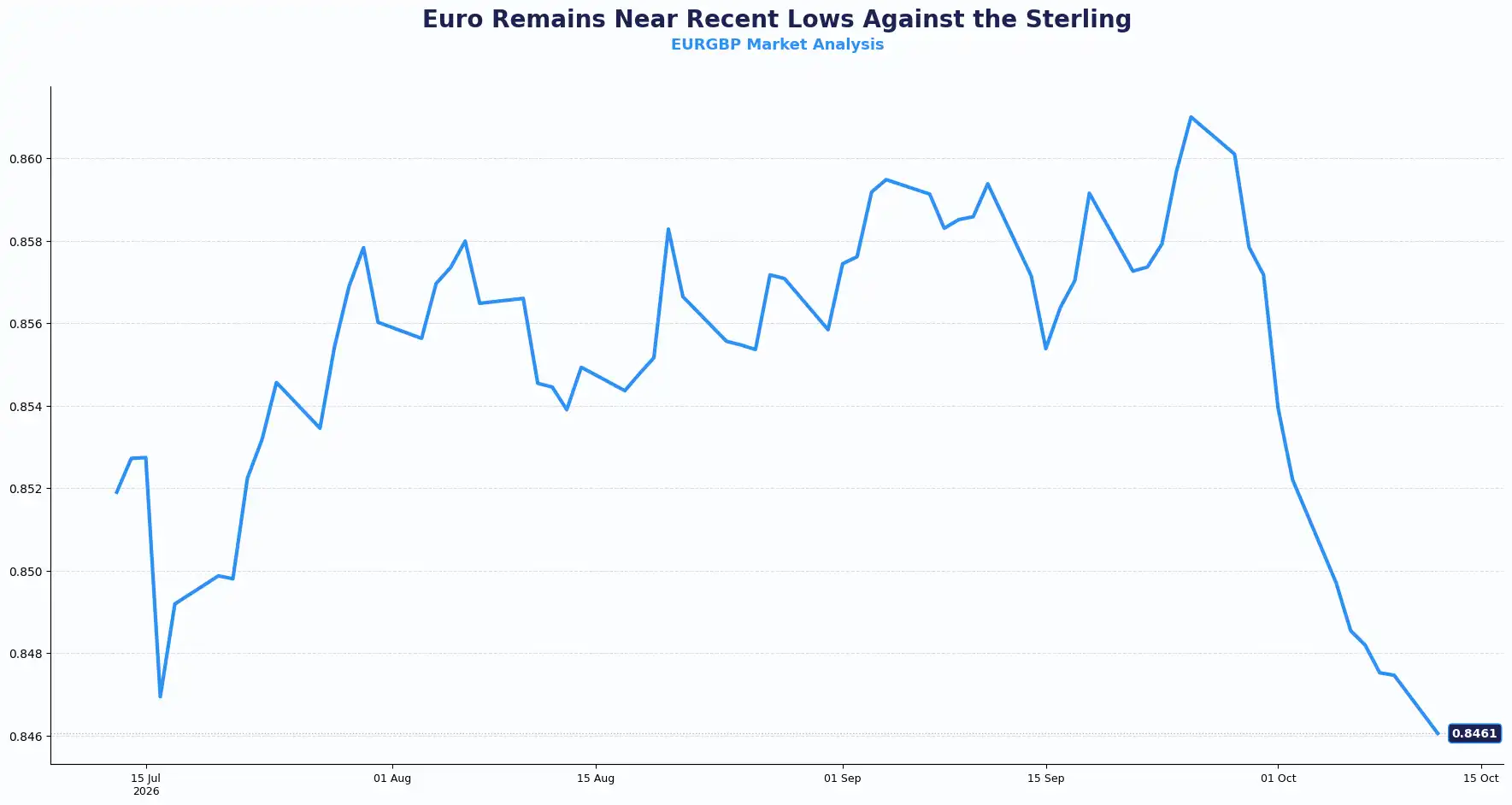
Key technical reference levels for EUR/GBP: Resistance sits near 0.8500, followed by 0.8540, while support sits around 0.8455, followed by 0.8400.
EUR: Weak Italian Industrial Data Adds to Eurozone Growth Concerns
EUR/USD: 1.1207
The euro recovered modestly against the US dollar during early Monday trading, with EUR/USD moving towards 1.1207 after ending Friday near 1.1200. The recovery coincided with softer US consumer sentiment and a slight pullback in the dollar, although the euro remained close to its recent 17-month lows. Concerns around France's public finances also continued to affect sentiment, limiting the recovery despite some easing in global energy prices.
Fresh economic data from Italy added to concerns about eurozone industrial activity. Industrial production fell 1.3% month-on-month in August, considerably below expectations for an unchanged reading and reversing July's revised 0.6% increase. Output also declined 1.1% over the June–August period compared with the preceding three months, suggesting that weakness extended beyond a single monthly reading. However, Italy's economy expanded during the first half of the year, meaning the latest industrial figures do not necessarily indicate a broader economic contraction.
The weaker industrial figures could complicate expectations for further European Central Bank (ECB) tightening, particularly if similar trends emerge across other major eurozone economies. At the same time, inflation risks remain relevant, with elevated energy costs and government borrowing pressures influencing the economic outlook. If energy prices continue to ease and economic activity weakens, expectations for additional ECB rate increases could decrease. Conversely, renewed energy-price pressures or stronger inflation data could increase expectations for further tightening. EUR/USD may therefore remain sensitive to both eurozone developments and Wednesday's upcoming US inflation figures.
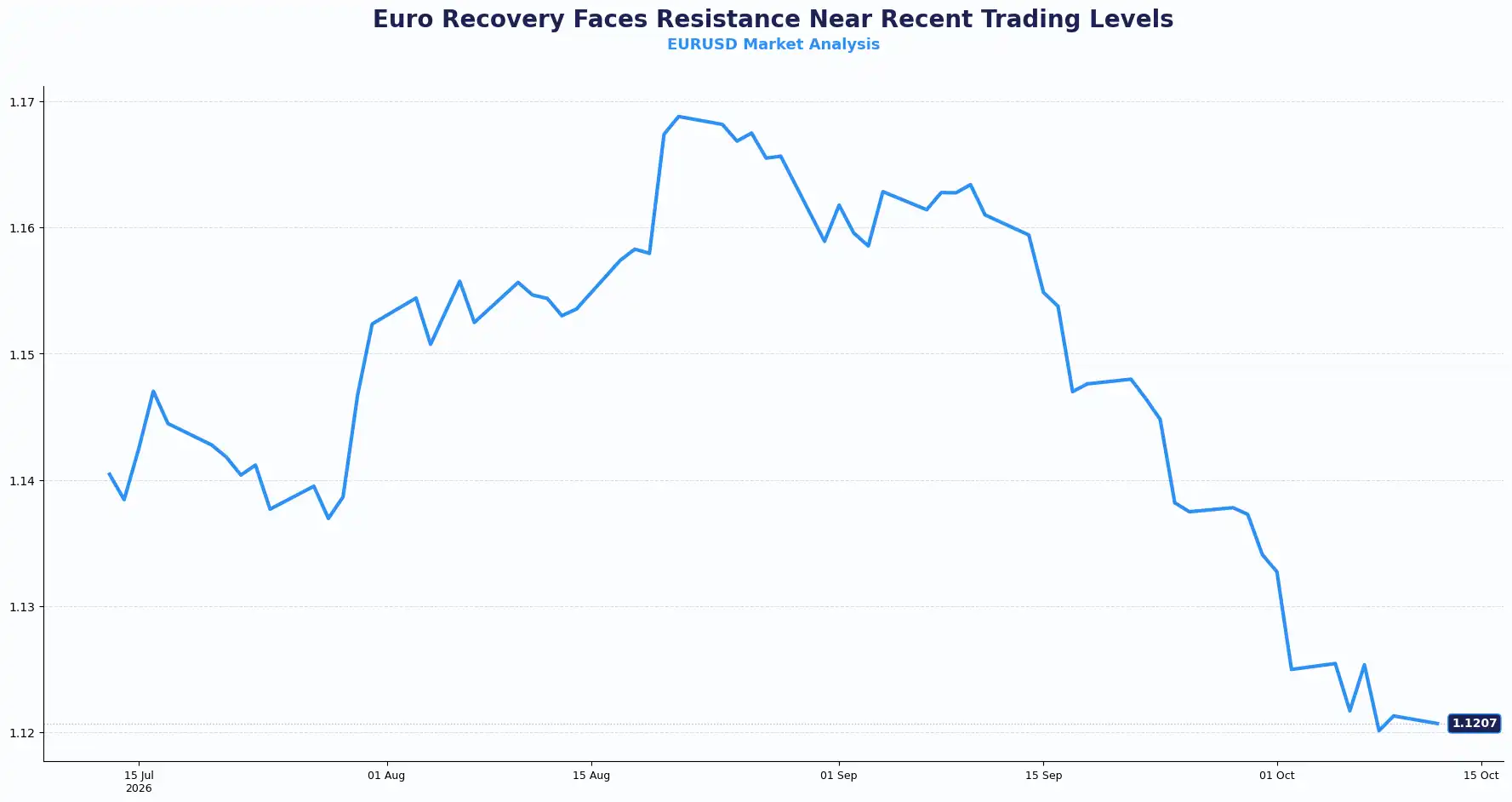
Key technical reference levels for EUR/USD: Resistance sits near 1.1220, followed by 1.1280, while support sits around 1.1160, followed by 1.1120.
USD: Dollar Holds Near Recent Highs as Inflation Concerns Persist
DXY: 102.16
The US dollar remained close to its recent 18-month high during early Monday trading, although DXY eased slightly towards 102.16 as US Treasury yields and oil prices retreated. The decline provided some relief following last week's rise in borrowing costs, but continued Middle East tensions and expectations for restrictive Fed policy remained relevant to dollar demand. With US bond markets closed for Monday's holiday, reduced trading activity could also influence short-term currency movements.
Friday's consumer survey presented a mixed assessment of the US economy. The University of Michigan's Current Economic Conditions Index fell sharply to 44.7 from 50.9, while the forward-looking Consumer Expectations Index improved slightly to 47.3 from 46.3. The figures may suggest a greater deterioration in assessments of current conditions. However, both short-term and longer-term inflation expectations increased, indicating that concerns about future price pressures remain elevated.
Interest-rate markets were pricing approximately an 81% probability of the Fed leaving rates unchanged in October, although another increase later in the year remained possible. If upcoming inflation data show persistent price pressures, expectations for further tightening could increase and provide some support for the dollar. Conversely, softer inflation or evidence of weakening economic activity could reduce those expectations. Wednesday's US Consumer Price Index (CPI) release could provide further insight into inflation and policy expectations of these competing factors.
Other Currencies: Canadian Dollar Weakens Following Sharp Employment Decline
USD/CAD: 1.4280 | AUD/USD: 0.6985 | NZD/USD: 0.5610 | USD/JPY: 158.10 | GBP/JPY: 209.40
The Canadian dollar weakened sharply on Friday after employment unexpectedly fell by 68,300 in September, compared with expectations for a modest increase. The unemployment rate rose to 6.5% from 6.4%, while August's figures were revised to show a loss of 41,700 jobs. USD/CAD climbed towards 1.4300, its highest level in approximately 18 months. The employment figures may have contributed to reduced expectations for an immediate rate increase.
The second consecutive monthly employment decline raised concerns about Canada's economic momentum, particularly as labour-force participation fell to 64.8%. Markets reduced expectations for a BoC rate increase in October, although another increase in December remained possible. If employment conditions continue to weaken, expectations for additional tightening could decrease further, while stronger economic data or persistent inflation could alter that assessment.
AUD/USD recovered towards 0.6985 during early Monday trading as the recovery coincided with softer US consumer sentiment and reduced US dollar strength. However, expectations for another near-term Reserve Bank of Australia (RBA) rate increase have decreased following recent inflation data. Tuesday's RBA meeting minutes could provide further insight into policymakers' assessment of price pressures and economic activity. A more restrictive policy outlook could support the Australian dollar, while renewed US dollar demand could limit gains.
NZD/USD remained near 0.5610 as the New Zealand dollar remained relatively weak against the US dollar from the gap between US and New Zealand interest rates and uncertainty surrounding Middle East developments. Expectations for Reserve Bank of New Zealand (RBNZ) policy remain relevant, although a reduction in global risk concerns could offer some support. Meanwhile, USD/JPY traded near 158.10, with Japanese markets closed for a public holiday. Expectations for a pause at the Bank of Japan's (BoJ) October meeting and elevated US yields remained important influences on the yen.
Current Rate Table
| Pair | Rate | Trend |
|---|---|---|
| GBP/USD | 1.3243 | Mildly bullish GBP |
| EUR/GBP | 0.8461 | Mildly bearish EUR |
| EUR/USD | 1.1207 | Ranging near recent lows |
| USD/JPY | 158.10 | Consolidation |
| AUD/USD | 0.6985 | Mildly bullish AUD |
| NZD/USD | 0.5610 | Neutral to bearish |
| USD/CAD | 1.4280 | Bullish USD |
Market Lookahead
Monday, Oct 12
- GBP BoE Mann Speech
Tuesday, Oct 13
- EUR Germany Harmonised Index of Consumer Prices (Sep)
- AUD RBA Meeting Minutes
Wednesday, Oct 14
- CNY Consumer Price Index & Producer Price Index (Sep)
- US Consumer Price Index & Core CPI (Sep)
Thursday, Oct 15
- AUD Employment Change & Unemployment Rate (Sep)
- GBP UK GDP (Aug)
- US Producer Price Index & Core PPI (Sep)
- US Retail Sales & Core Retail Sales (Sep)
Friday, Oct 16
- EUR Eurozone HICP & Core HICP (Sep, Final)
- GBP BoE Governor Bailey Speech
- US Fed Chair Warsh Speech
Stay Ahead in the Currency Game
Whether you're a daily FX trader or handle international transactions regularly, our 'Currency Pulse' newsletter delivers the news you need to make more informed decisions. Receive concise updates and in-depth insights directly in your LinkedIn feed.
Subscribe to 'Currency Pulse' now and never miss a beat in the currency markets!
Ready to act on today’s insights? Get a free quote or give us a call on: +44 (0)20 7740 0000 to connect with a dedicated portfolio manager for tailored support.
Important Disclaimer: This blog is for informational purposes only and should not be considered financial advice. Currency Solutions does not take into account the investment objectives, financial situation, or specific needs of individual readers. We do not endorse or recommend any specific financial strategies, products, or services mentioned in this content. Forward contracts can help businesses manage foreign exchange exposure by providing greater certainty over future exchange rates, although they may also mean that businesses do not benefit from favourable exchange-rate movements. Businesses should consider their individual circumstances and speak with their dealer to understand how forward contracts may support their specific foreign exchange requirements. All information is provided “as is” without any representations or warranties, express or implied, regarding its accuracy, completeness, or timeliness.