Dollar Gains as Oil Surge and Middle East Escalation Pressure Major Currencies
9 min read
Share


DXY climbed to 99.79 on Wednesday, its strongest print since mid-August, as oil pushed to its highest level since late July and the US 10-year Treasury yield surged to 4.80%, a level not seen since early 2025.
US forces struck Iranian targets in the Strait of Hormuz on Tuesday. Tehran responded with ballistic missiles. Oil rose for a third straight session and inflation fears did the rest. Rising yields reinforced bets on a September Fed hike to around 70%.
Sterling slipped to 1.3495, its lowest since mid-August. The euro trades below 1.1600 despite eurozone CPI jumping to 3.3% in August. The yen tests 160 per dollar again, now holding near intervention territory. The RBNZ delivered a 25bps hike but the New Zealand dollar still fell.
Friday's US payrolls could sharpen the picture on the next Fed decision and dollar direction.
GBP: Sterling Feels the Pressure Near 1.3500
GBP/USD: 1.3509 | EUR/GBP: 0.8569
GBP/USD has resumed its decline and returned to the low 1.3500s after Monday’s gains faded. The pound fell to around 1.3495 on Wednesday in the early European session, its lowest level since mid-August. EUR/GBP also edged to 0.8576, before trading near 0.8569. The pair continues to consolidate in range.
The immediate pressure comes from renewed US-Iran hostilities. US forces launched strikes against Iranian targets on Tuesday. Iran responded with attacks on US military assets across the region. The escalation has lifted oil prices and strengthened demand for the dollar as a safe-haven currency. Brent Crude climbed above $95 a barrel while WTI moved above $90. Rising geopolitical risk diverts capital into safe-haven assets, and the dollar is rising as the primary beneficiary. Sterling, with its moderate risk profile, absorbs that outflow.
Higher oil prices add another inflation risk. US Treasury yields have responded sharply. The 10-year yield reached 4.812%, its highest level since November 2023. Higher yields increase the dollar's yield appeal and reinforce expectations for tighter Federal Reserve (Fed) policy.
The structural backdrop works against the pound right now. Bank of England’s (BoE) Governor Andrew Bailey told reporters the UK is not yet seeing significant second-round inflation effects, noting a softening labour market and calling for patience before further policy action. Market pricing now reflects two 25-basis-point (bps) BoE hikes across the coming months, but Bailey's watchful tone signals the central bank is in no hurry. That caution, set against a hawkish Fed, keeps rate differentials working in the dollar's favour. Bailey speaks on Friday; his commentary could sharpen the picture on whether a September BoE hike is on the table.
A stronger dollar and higher US yields can pressure GBP/USD even when UK inflation risks remain contained. Sterling therefore faces a split signal. Domestic policy offers some support while the external shock favours the dollar.
The next UK focus falls on the final S&P Global Services PMI tomorrow. The reading could offer a fresh look at service-sector activity and business conditions.
Against the euro, the pound held its ground. The EUR/GBP pair pulled back to the 0.8560 area after eurozone headline CPI rose to 3.3% in August, but core inflation eased unexpectedly to 2.4%. Softer core data and weak German retail sales took the heat out of the euro's initial inflation-driven bid. The pair is trading near 0.8570 in the early European session, with momentum indicators tipping bearish for EUR/GBP, though the pair remains contained within the range of the last two sessions, with support holding above 0.8555.
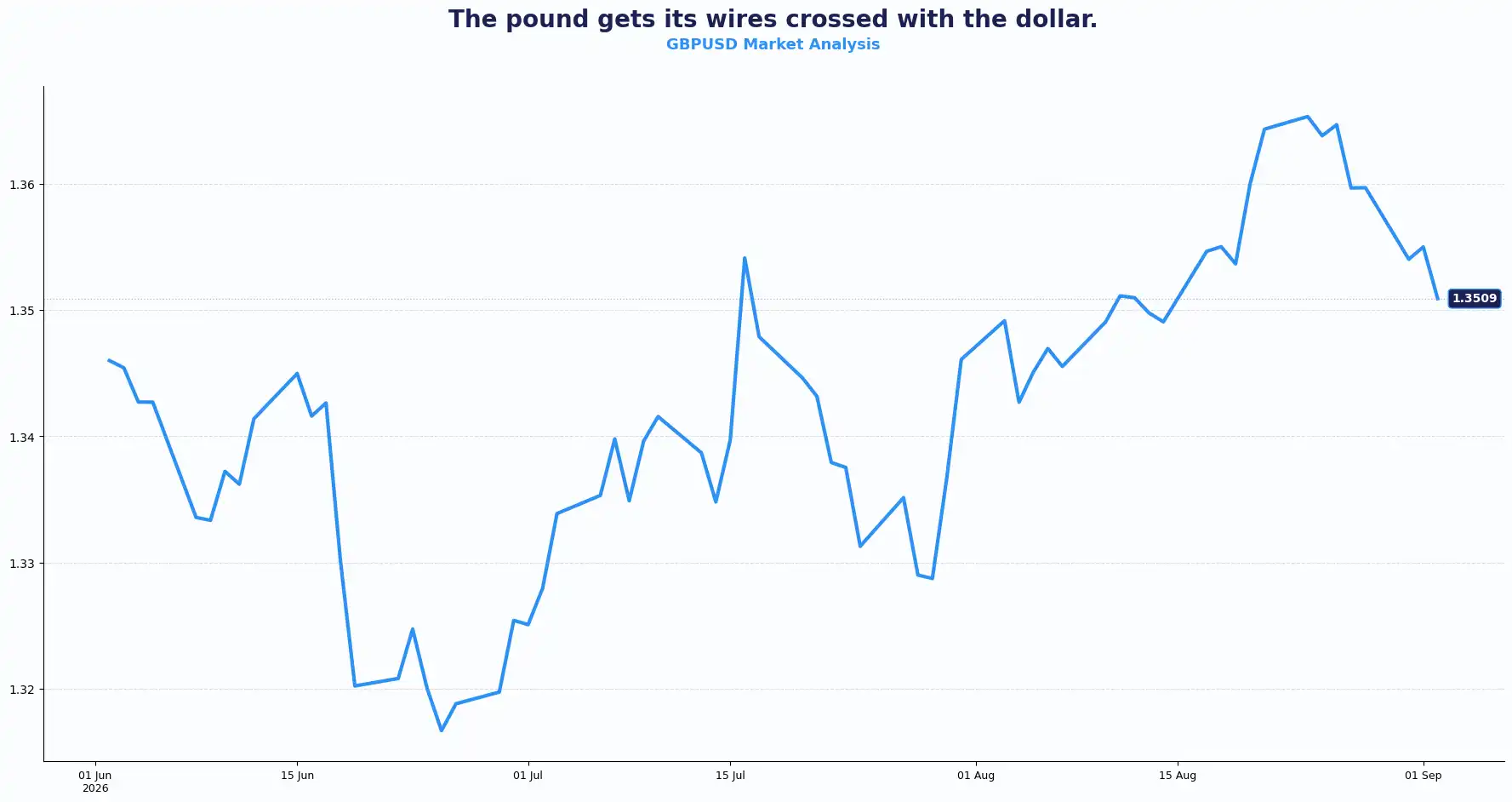
Key technical levels for the GBP/USD pair: Resistance sits at 1.3570, 1.3620 and Support sits at 1.3495, 1.3450
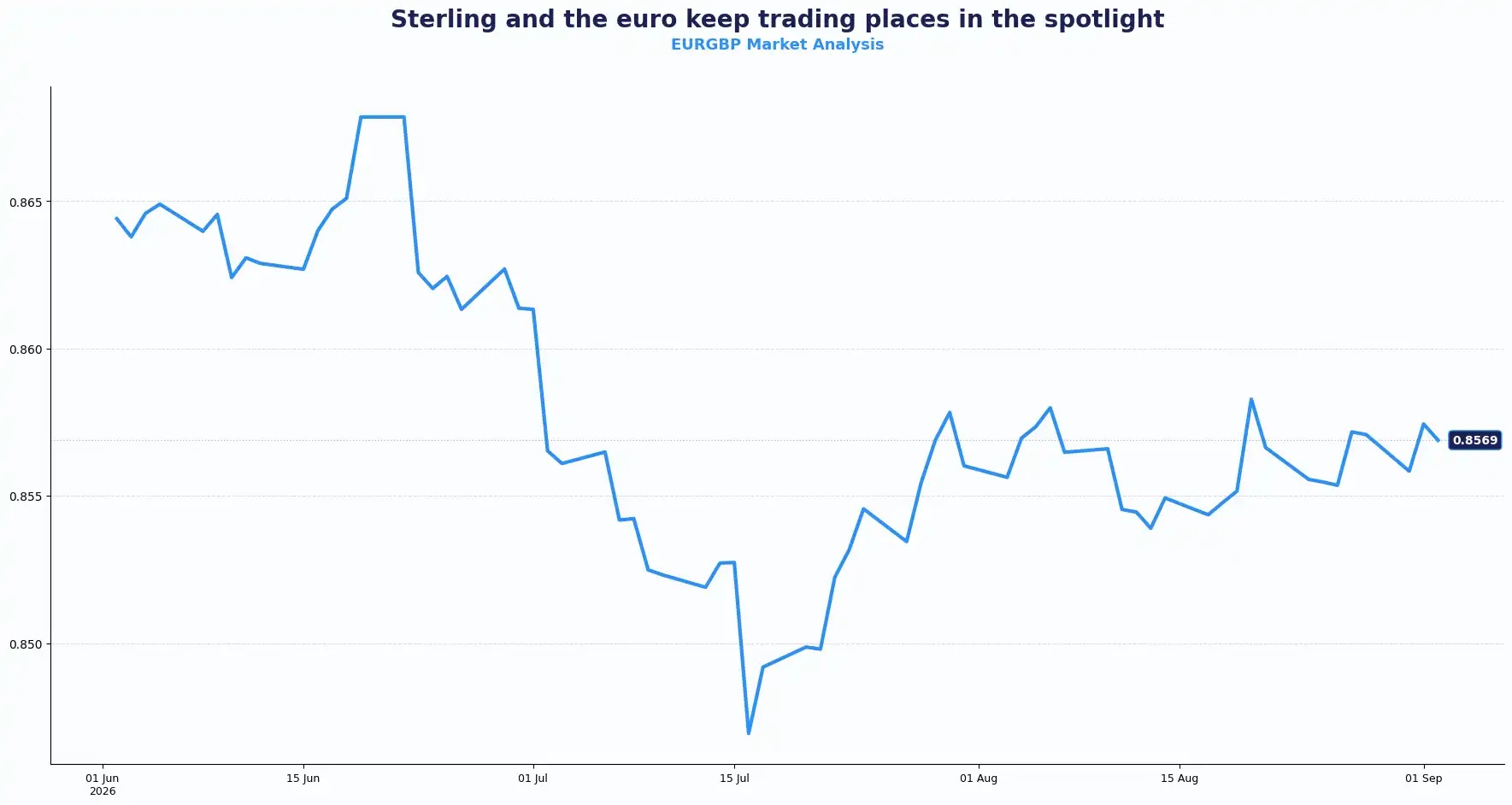
Key technical levels for the EUR/GBP pair: Resistance sits at 0.8610, 0.8640 and Support sits at 0.8540, 0.8510
EUR: Euro Faces a Tougher Inflation Test
EUR/USD: 1.1582 | EUR/GBP: 0.8569
EUR/USD has slipped back below 1.1600, despite a sharper-than-expected jump in Eurozone inflation. The pair traded around 1.1580 on Wednesday as the dollar gained ground.
August headline inflation rose to 3.3%, up from 2.9% in July, driven by energy costs tied directly to the Middle East conflict. The core CPI moved lower to 2.4% from 2.5%, a slight softening that tempered the initial reaction.
The inflation data sits well above the ECB’s 2% target, cementing expectations for an ECB rate hike in September. ECB officials have signalled growing discomfort with persistently elevated price pressures, with one policymaker warning that prolonged energy disruption could sustain inflation even without a wage-price spiral taking hold. Yet the euro has not gained significantly from that policy signal.
Energy prices create a difficult balance for the ECB. Higher oil and gas costs can lift inflation while also weighing on household spending and business activity. The central bank therefore faces an inflation problem with a growth cost attached.
The ECB looks more assertive than most of its G10 peers in leaning against entrenched price risks. After September, the trajectory appears less clear. The ECB's own projections point to inflation easing through 2026, which limits the case for a sustained hiking cycle beyond the near term.
The bigger force on EUR/USD is the dollar side of the equation. Fed Chair Kevin Warsh used the Jackson Hole platform to warn that policymakers stand ready to tighten again if inflation does not move convincingly towards 2%. That statement, combined with oil-driven inflation anxiety, has pushed the market’s probability of a September Fed hike, the divergence trade that keeps EUR/USD on the defensive despite the eurozone's own inflationary heat.
The next euro-area data points arrive on Thursday. Final services PMI figures for Germany and the eurozone will offer a closer look at activity. Producer prices will also add another measure of pipeline inflation pressure. Friday's eurozone retail sales and US payrolls data will be the next test.
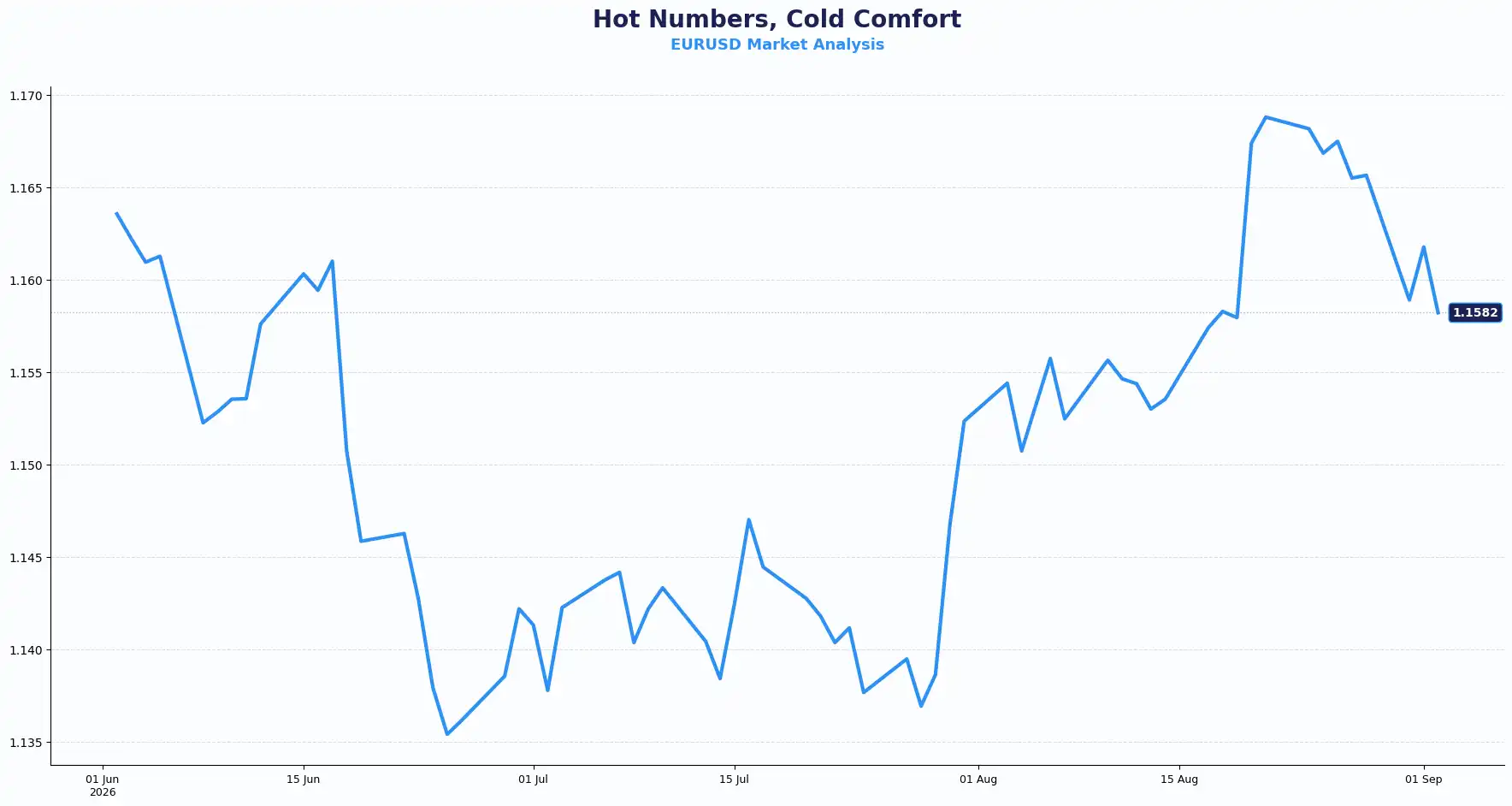
Key technical levels for the EUR/USD pair: Resistance sits at 1.1600, 1.1640 and Support sits at 1.1565, 1.1525
USD: Dollar Strengthens as Yields Give Fresh Support and Fed Bets Shift
DXY: 99.79
The dollar has recovered from Monday’s losses and moved towards a two-week-high. The DXY rose to around 99.79 in the early European session on Wednesday. Three forces drove the move: surging oil prices, higher Treasury yields, and hawkish Fed signals.
The renewed conflict between the US and Iran has pushed Brent Crude and WTI reaching its highest prices since late July. The Strait of Hormuz has also come back into focus. Shipping traffic through the waterway fell sharply on Tuesday. That matters for currencies because energy disruption can feed directly into inflation expectations.
The US 10-year Treasury yield climbed to a level not touched since early 2025, as a global bond sell-off gathered pace. Rising yields have strengthened the dollar and added pressure to currencies with lower relative yields, attracting capital into dollar-denominated assets. The logic runs directly from oil prices to inflation expectations to Fed rate pricing to dollar strength.
Fed Governor Michael Barr added his voice on Tuesday, noting the central bank stands ready to raise rates if inflation fails to cool. The latest market pricing puts the probability of a September Fed hike around 68%.
Overnight data delivered a mixed reading. July JOLTS job openings printed at 7.27 million, below consensus. The ISM Manufacturing PMI for August eased to 54.6 from 55.6 in July. Both missed forecasts, yet the reading still points to expansion with some loss of momentum.
That makes the employment data important. ADP employment data are due on Wednesday. Factory Orders and EIA crude inventories follow later in the day. Friday brings the August NonFarm Payrolls (NFP) report. The data could help shape expectations for the Fed’s September decision.
Asia-Pacific and Commodity Currencies
AUD/USD: 0.7140 | NZD/USD: 0.5839 | USD/JPY: 159.97 | GBP/JPY: 216.00 | USD/CHF: 0.8130
The dollar’s strength extends beyond sterling and the euro.
USD/JPY remains close to the 160 level. The yen has struggled despite expectations for further Bank of Japan (BoJ) tightening. Japanese and US officials have also discussed the need for orderly yen movements as the currency approaches levels that have previously triggered intervention concerns. US Treasury Secretary Scott Bessent reportedly expressed strong support for decisive BOJ action to address yen weakness in a meeting with Governor Kazuo Ueda. Coordinated intervention appears unlikely until tensions in the Middle East ease and oil price pressure subsides.
The Australian dollar has also pulled back. AUD/USD sits around 0.7140. Australian GDP grew 0.4% quarter on quarter in the second quarter, ahead of the 0.3% expectation. The better-than-expected figures provided a brief lift, but the stronger US yields and geopolitical risk weigh on the pair, offsetting that domestic support.
NZD/USD has faced sharper pressure. The pair sits around 0.5840 after the Reserve Bank of New Zealand (RBNZ) raised its official cash rate by 25 basis points to 2.75%, as widely anticipated by the markets. Governor Anna Breman stressed the bank is not on a preset path and confirmed the OCR track broadly aligns with May projections. The accompanying guidance offered less support to the kiwi than a more hawkish outcome would have. The New Zealand dollar dropped against the dollar, near its weakest level since mid-August. The 50-day EMA at 0.5864 now acts as the immediate overhead barrier.
The Swiss franc is the weakest G10 currency this quarter. USD/CHF is around 0.8130. The SNB holds at 0.00% against subdued domestic inflation, and with Swiss yields pinned near zero, the franc offers little carry appeal against a dollar backed by higher Treasury yields. Switzerland’s low-rate environment offers little relative yield support while global inflation concerns keep the focus on central-bank divergence.
USD/MXN is holding near 17.00. Higher oil prices can offer Mexico some support through its energy exposure, but broader risk aversion and stronger US yields can weigh on the peso.
Current market volatility reflects a live mix of geopolitical risk, energy prices, bond yields, and central-bank expectations. Those forces could move currency levels quickly when fresh data arrives.
Current Rate Table:
| Pair | Rate | Trend |
|---|---|---|
| GBP/USD | 1.3509 | Bearish |
| EUR/USD | 1.1582 | Bearish |
| EUR/GBP | 0.8569 | Neutral / Mild Bullish |
| USD/JPY | 159.97 | Bullish (USD) |
| GBP/JPY | 216.00 | Bearish (GBP) |
| AUD/USD | 0.7140 | Bearish |
| NZD/USD | 0.5839 | Bearish |
| USD/CHF | 0.8130 | Bullish (USD) |
| USD/MXN | 17.00 | Range-bound |
Market lookahead:
Thurs, Sep 03
- Australia S&P Global Composite & Services PMI (Aug)
- Australia’s Trade Balance (Aug)
- UK PMI
- Germany & Eurozone HCOB Composite & Services PMI (Aug)
- Eurozone Producer Price Index (PPI) (Jul)
- BoE Monetary Policy Hearings
- US Initial Jobless Claims
Fri, Sep 04
- Germany’ Factory Orders (Jul)
- BoE Governor Bailey Speech
- Eurozone Retail Sales (Jul)
- US Average Hourly Earnings, NonFarm Payrolls, Unemployment Rate for Aug
Stay Ahead in the Currency Game
Whether you're a daily FX trader or handle international transactions regularly, our 'Currency Pulse' newsletter delivers the news you need to make more informed decisions. Receive concise updates and in-depth insights directly in your LinkedIn feed.
Subscribe to 'Currency Pulse' now and never miss a beat in the currency markets!
Ready to act on today’s insights? Get a free quote or give us a call on: +44 (0)20 7740 0000 to connect with a dedicated portfolio manager for tailored support.
Important Disclaimer: This blog is for informational purposes only and should not be considered financial advice. Currency Solutions does not take into account the investment objectives, financial situation, or specific needs of individual readers. We do not endorse or recommend any specific financial strategies, products, or services mentioned in this content. Forward contracts can help businesses manage foreign exchange exposure by providing greater certainty over future exchange rates, although they may also mean that businesses do not benefit from favourable exchange-rate movements. Businesses should consider their individual circumstances and speak with their dealer to understand how forward contracts may support their specific foreign exchange requirements. All information is provided “as is” without any representations or warranties, express or implied, regarding its accuracy, completeness, or timeliness.