Warsh Raises Stakes for G10 FX as Yen Nears 160, Hormuz Tensions Add to Dollar Bid
9 min read
Share


The dollar opens September on the front foot. Fed Chair Warsh's Jackson Hole debut landed hawkish, he flagged unfinished inflation business which triggered the markets. Fed September hike bets climbed to 65% from 41% in a week. US 2-year Treasury yields posted their biggest speech-day jump in 20 years. The yen cracked past $160 for the first time in a month, erasing more than half of its intervention-driven gains. Hormuz tensions added a second bid to the dollar. Renewed US-Iran hostilities pushed oil toward $86, lifting Treasury yields further and reinforcing safe-haven flows into the Greenback.
That energy-driven inflation pressure is shaping central bank calculus across G10. Sterling held above its 100-day SMA near $1.3547, with BoE tightening odds firming at roughly 60% for the September meeting, though the October budget keeps a ceiling on the pound's upside. The euro struggled near $1.1607 after German retail sales collapsed 3.4% MoM against a 0.4% gain expected.
Eurozone HICP for August lands today alongside US ISM Manufacturing PMI and JOLTS. US ADP figures follow Wednesday. US NonFarmPayrolls report on Friday could be the week's defining data point for the September Fed decision.
GBP: Sterling Faces a Stronger Dollar Test
GBP/USD: 1.3534 | EUR/GBP: 0.8564
The British pound trades near 1.3530 against the US dollar during early European hours, dipping below immediate resistance at 1.3550 after struggling to build on its recent recovery. The pair continues to hold above its 100-day moving average (MA), which keeps the broader technical structure constructive, but short-term momentum has stalled, and a neutral RSI signals consolidation rather than conviction.
The pound's immediate headwind is the dollar's renewed bid. Fed Chair Kevin Warsh spoke at Jackson Hole on Friday and gave the market a direct signal: unless policymakers are "confident that underlying inflation is moving to our objective, clearly and at sufficient speed," the Fed "has work to do." He stopped short of naming a timeline or committing to a hike, but the signal was plain enough. Market bets on a September Fed rate hike climbed to around 65% on the CME FedWatch tool, up from below 40% before the speech.
The Fed faces persistent inflation while higher oil prices threaten another round of price pressure. Rising Treasury yields have reinforced that concern. The US 10-year yield pushed towards its highest level since early 2025 as investors reassessed inflation and borrowing risks.
GBP/USD therefore faces pressure from both monetary policy expectations and safe-haven demand.
Middle East tensions have added another layer. Reports of attacks around the Strait of Hormuz pushed energy prices higher and revived concerns about supply disruption. Higher oil prices feed directly into inflation expectations. That gives central banks less room to soften policy.
Bank of England (BoE) policy expectations show notable resilience. Markets now price in roughly a 60% chance of a 25-basis-points (bps) interest rate hike at the BoE's upcoming policy meeting in September, with a cumulative 36 basis points (bps) of tightening priced by year-end. While that is a supportive backdrop for the pound, investors remain sharply focused on the UK's October budget. The fiscal picture remains unresolved, and until it is, sterling's upside is capped. Fiscal policy decisions could heavily dictate domestic growth projections and sovereign bond pricing throughout the autumn.
That creates an interesting divide for GBP/USD. The pound still benefits from expectations that UK rates could stay elevated. The dollar, however, now carries support from rising Fed expectations and geopolitical demand for defensive assets. For now, the pair sits between those competing forces.
EUR/GBP tells a similar story from another angle. The pair trades close to recent lows at 0.8564, suggesting sterling has held up better against the euro despite pressure from a stronger dollar. Support around 0.8530 remains important. The next major UK focus comes later this week, with the BoE's Monetary Policy Report hearings and the Governor's commentary.
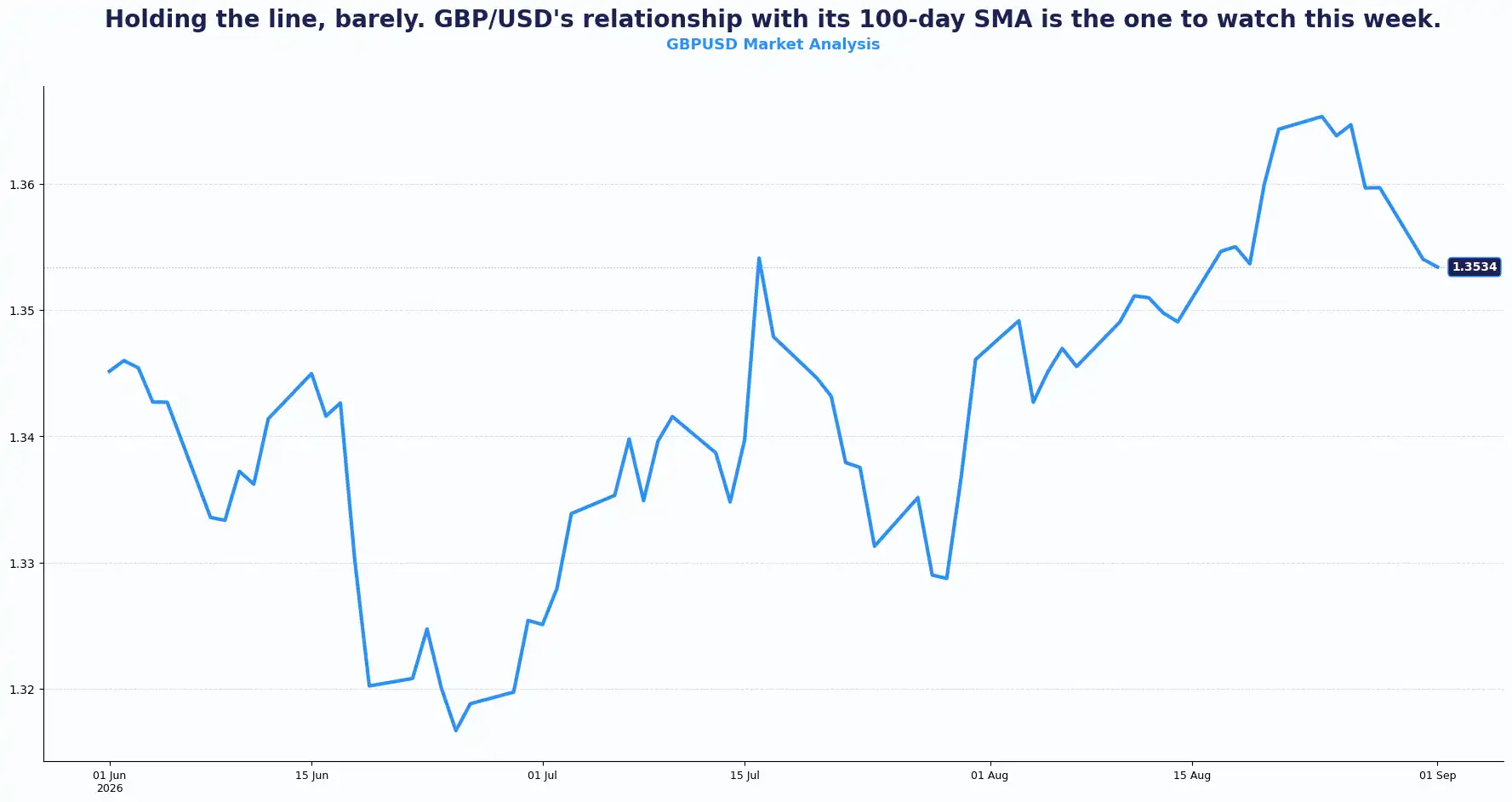
Key technical levels for the GBP/USD pair: Resistance sits at 1.3550 and Support sits at 1.3526, 1.3490
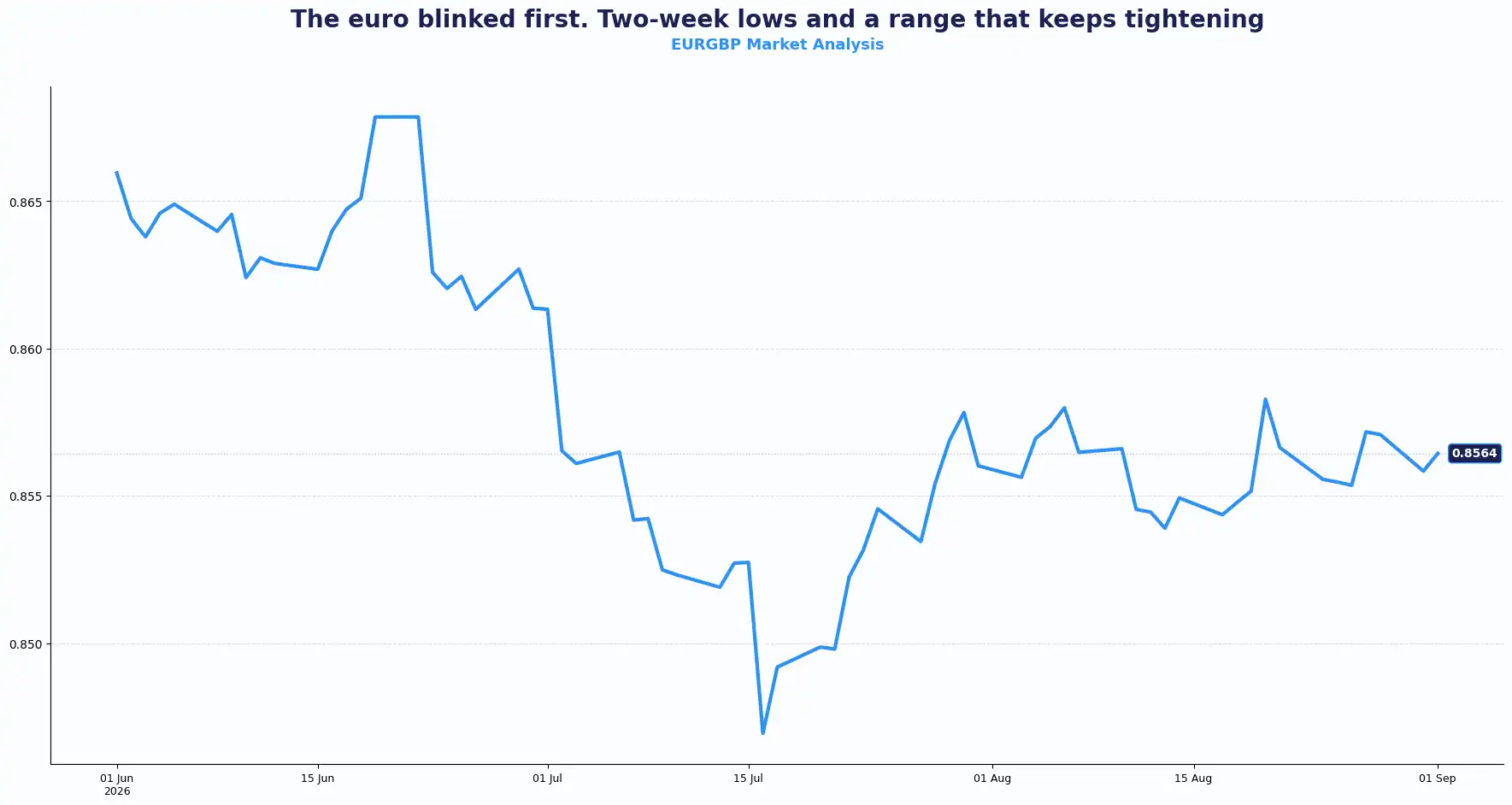
Key technical levels for the EUR/GBP pair: Resistance sits at 0.8600 and Support sits at 0.8530
EUR: German Retail Slump Damps Momentum
EUR/USD: 1.1596 | EUR/GBP: 0.8564
EUR/USD trades below 1.1600 in the early European session. It edged towards 1.1607 but bounced off the 100-day SMA near 1.1575 overnight, but the bounce lacked conviction. Two things are pulling the pair lower: a firmer dollar and a strikingly weak German retail sales print. The Euro (EUR) edges slightly lower following the Germany’s Retail Sales release.
German retail sales fell 3.4% MoM in July, missing consensus estimates of a 0.4% expansion and expanding the annual decline to 2.5%. Despite severe consumer contraction in Europe’s primary economy, preliminary German inflation data rose to 2.9% YoY in August, up from 2.8% in July. A notable contraction in consumer spending arrives as the European Central Bank (ECB) prepares to hike again. This sticky inflation profile keeps ECB board members favouring elevated policy rates. A September ECB hike looks near certain, but the German consumption data is an uncomfortable backdrop.
The dollar adds another challenge. Fed expectations strengthened after Warsh's Jackson Hole remarks, while geopolitical tensions have supported defensive positioning. The EUR/USD has struggled to hold gains despite trading above the 1.1600 level.
Traders now await the Eurozone Harmonised Index of Consumer Prices (HICP) print for wider policy clues. Headline Eurozone HICP data, due later today, is forecast to rise. A softer HICP figure could shift attention back towards Europe's weakening consumer picture.
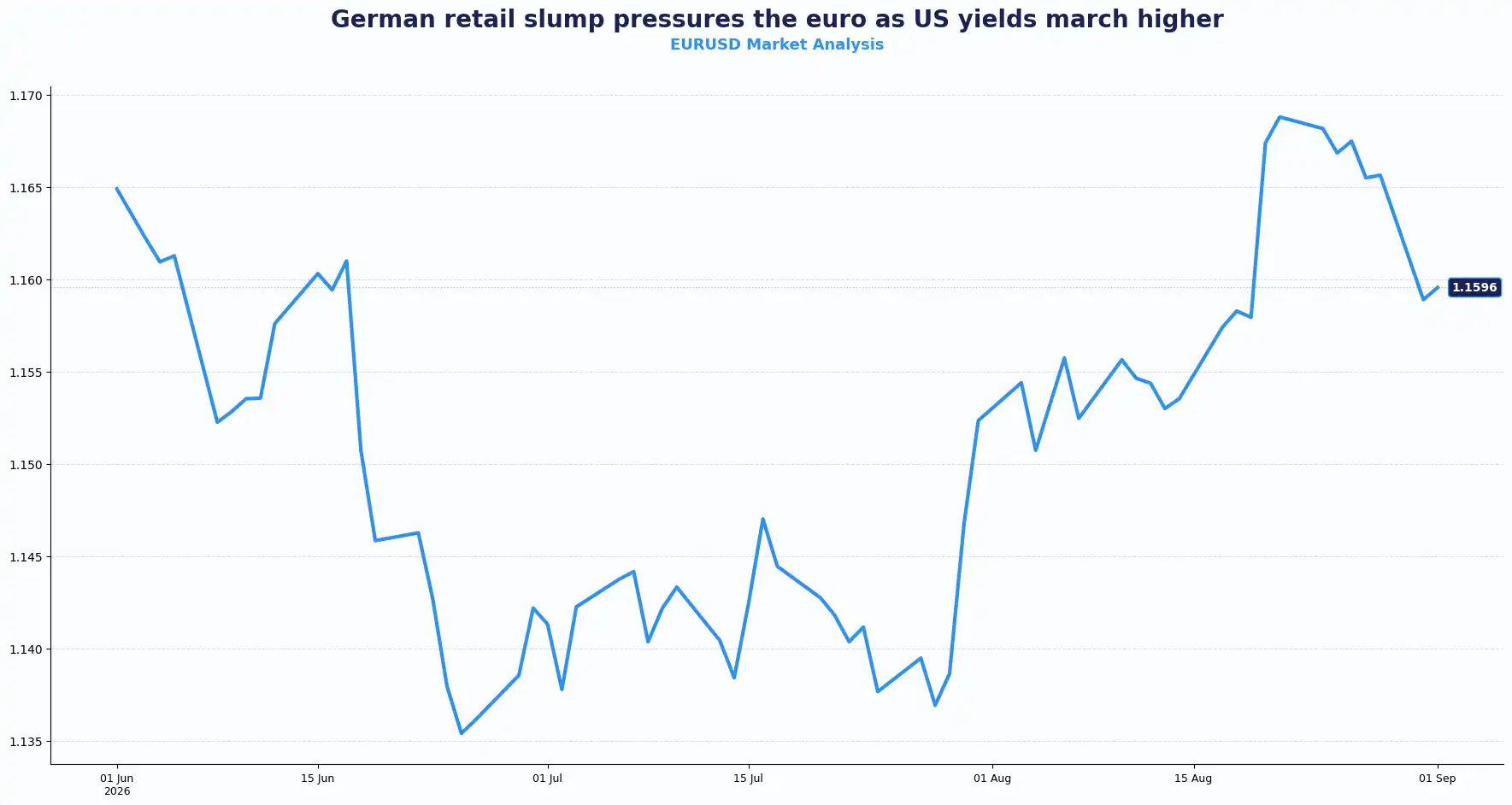
Key technical levels for the EUR/USD pair: Resistance sits at 1.1650 and Support sits at 1.1575, 1.1530
USD: The Dollar Gains Support but Faces a Data Test
DXY: 99.59
The US dollar sits at the centre of Tuesday's currency story. The Dollar Index (DXY) traded near 99.59, supported by higher Treasury yields and renewed expectations of Fed tightening. Yet the dollar has not moved in a straight line. Some of Friday's sharp gains faded as investors reassessed Warsh's comments and waited for hard economic data.
Warsh delivered rhetoric, but the data must now support it. The Fed Chair made clear that inflation has not yet returned convincingly towards target. He stressed the importance of price stability and pushed back against the idea that recent improvements in inflation signal a lasting change.
He warned that the Fed has "work to do" if underlying inflation does not move convincingly toward that target. Gold fell over 3% after the speech. Silver dropped more than 4%. The NASDAQ shed nearly 139 points. The market's reaction was not to a policy change; it was to credible hawkish intent from a chair who has left rates at 3.5% since December 2025 through two consecutive meetings.
Whether Warsh can follow through is the open question. The US national debt now costs over $1 trillion annually to service. The Treasury attempted a bond market intervention to drive long-term yields lower, and it did not work. The debt load creates structural constraints on how far the Fed can tighten without triggering a financial shock. The market believes Warsh for now. The data starting with ISM Manufacturing PMI and JOLTS today, ADP on Wednesday, and NFP on Friday will test that belief before September's meeting. The Fed has not announced a rate increase, leaving this week's data in control.
Strong activity and labour figures could strengthen the argument that the Fed can maintain a restrictive stance. Weak data could challenge the case for further tightening.
The dollar also benefits from geopolitics. Renewed conflict involving Iran has pushed oil prices higher and increased demand for defensive currencies. Higher energy prices have also complicated the inflation outlook.
The result is a difficult mix. Higher inflation supports expectations of a hawkish central bank. Higher energy costs can also weaken growth. The bond market has reflected that tension. US Treasury yields pushed sharply higher as investors reassessed inflation risk and government borrowing.
For currency markets, that makes US data the next reality check. The dollar has support; it now needs the numbers to justify it.
Yen Under Dual Pressure, Aussie and Kiwi Diverge
AUD/USD: 0.7170 | NZD/USD: 0.5910 | USD/JPY: 159.85 | USD/CAD: 1.3850
USD/JPY trades at 159.85 as the Japanese yen struggled to gain ground. Japan's 10-year bond yield touched 3% for the first time since 1996, partly driven by US Treasury Secretary Scott Bessent's commentary that the US expects the Bank of Japan (BoJ) to act in ways that lead to a stronger yen.
Japan's Finance Minister Satsuki Katayama confirmed that she met with Bessent and agreed that orderly yen movements are critical to global market stability, while Japanese officials insist the BoJ will set policy according to domestic economic conditions. The yen remains weak, with no drastic moves due to external pressure from the US. The problem for the yen is that higher Japanese yields should support the currency, yet the dollar continues to benefit from higher US yields and expectations of Fed tightening. The September BoJ meeting now carries greater weight.
A stronger commitment to tightening could support the yen. A cautious message could leave USD/JPY exposed to another test of 160.
Elsewhere, commodity currencies produced a mixed picture.
AUD/USD holds at 0.7170, supported by China's RatingDog Manufacturing PMI rising to 51.5 in August from 50.9 in July, well above the forecast of 50.9. Australian building permits dipped 3.6% in July, but beat the expected decline. The dollar's renewed bid caps the pair's upside.
NZD/USD trades near 0.5910, subdued despite the same positive Chinese PMI surprise. The RBNZ is expected to deliver a back-to-back 25-basis-points (bps) hike to 2.75% at its meeting this week, which provides domestic support, but the pair is struggling against broader dollar strength.
USD/CAD hovered around the mid-1.3800s. Rising crude prices underpin the Canadian dollar while the Warsh-driven dollar bid offsets that support. The pair now sits between two powerful macro drivers.
The currency story has become less about one central bank and more about policy divergence. Add oil, geopolitics, and bond yields to the equation, and volatility has plenty of fuel.
Current Rate Table
| Pair | Rate | Trend |
|---|---|---|
| GBP/USD | 1.3534 | Neutral / Bullish Bias |
| EUR/GBP | 0.8564 | Bearish Consolidation |
| EUR/USD | 1.1596 | Bearish Pressure |
| USD/JPY | 159.85 | Mildly Bullish |
| AUD/USD | 0.7170 | Modest Upside |
| NZD/USD | 0.5910 | Subdued |
| USD/CAD | 1.3850 | Rangebound |
Market lookahead
Tue, Sep 01
- Eurozone HICP & Core HICP (Aug) (inflation)
- US ISM Manufacturing PMI (Aug)
- US JOLTS Job Openings (Jul)
Wed, Sep 02
- RBNZ Interest Rate Decision
Thurs, Sep 03
- Australia S&P Global Composite & Services PMI (Aug)
- Australia’s Trade Balance (Aug)
- Germany & Eurozone HCOB Composite & Services PMI (Aug)
- Eurozone Producer Price Index (PPI) (Jul)
- BoE Monetary Policy Hearings
- US Initial Jobless Claims
Fri, Sep 04
- Germany’ Factory Orders (Jul)
- BoE Governor Bailey Speech
- Eurozone Retail Sales (Jul)
- US Average Hourly Earnings, NonFarm Payrolls, Unemployment Rate for Aug
Stay Ahead in the Currency Game
Whether you're a daily FX trader or handle international transactions regularly, our 'Currency Pulse' newsletter delivers the news you need to make more informed decisions. Receive concise updates and in-depth insights directly in your LinkedIn feed.
Subscribe to 'Currency Pulse' now and never miss a beat in the currency markets!
Ready to act on today’s insights? Get a free quote or give us a call on: +44 (0)20 7740 0000 to connect with a dedicated portfolio manager for tailored support.
Important Disclaimer: This blog is for informational purposes only and should not be considered financial advice. Currency Solutions does not take into account the investment objectives, financial situation, or specific needs of individual readers. We do not endorse or recommend any specific financial strategies, products, or services mentioned in this content. Forward contracts can help businesses manage foreign exchange exposure by providing greater certainty over future exchange rates, although they may also mean that businesses do not benefit from favourable exchange-rate movements. Businesses should consider their individual circumstances and speak with their dealer to understand how forward contracts may support their specific foreign exchange requirements. All information is provided “as is” without any representations or warranties, express or implied, regarding its accuracy, completeness, or timeliness.