Dollar Retreats as Fed Rate Hike Expectations Ease Ahead of US NFP Data
8 min read
Share


The US dollar has moved lower with DXY slipping towards 99.00 as markets reduced expectations for a September Fed rate hike. GBP/USD has recovered above 1.3500, EUR/USD has moved beyond 1.1600, while continued Yen strength has pushed USD/JPY further lower.
Sterling has gained additional support after BoE’s Huw Pill advocated that raising interest rates sooner could reduce the risk of more aggressive tightening later. Stronger cost pressures continue to complicate the BoE’s policy outlook.
The Euro holds firm on strong September ECB rate hike expectations. Yen has extended its weekly advance, as market prices for further BoJ policy tightening. The Australian dollar moved above 0.7200 as broader US dollar weakness supports risk-sensitive currencies.
Markets now turn to the US August employment report, including NFP, unemployment and wage growth, alongside Canadian labour-market data later today. The data releases could provide cues on the next direction for Fed expectations and major currency pairs.
GBP: Sterling Rises as Pill Backs Earlier Rate Hike
GBP/USD: 1.3535 | EUR/GBP: 0.8584
GBP/USD has climbed to around 1.3535, recovering further from after hitting a three-week low earlier this week, as softer US dollar and fresh hawkish comments from BoE Chief Economist Huw Pill support the sterling.
Pill advocated that raising interest rates sooner could reduce the risk of the BoE needing more aggressive policy tightening later should inflation pressures persist.
Markets continue to price over a 15% probability of a 25-basis-point BoE rate hike in September, and probability for a hike in November policy meeting has increased to 70%. Pill’s comments reinforced market expectations that further policy tightening remains on the table, which could provide some support for sterling.
UK economic data also provided a mixed but broadly resilient picture. The final August Services Purchasing Managers’ Index (PMI) rose to 52.5 from 52.1 in July, marking its strongest reading since April, although it was revised down from the preliminary estimate of 52.8. The figures indicate expansion, suggesting activity in the UK’s dominant services sector continued to improve. Persistent price pressures could strengthen the case for keeping BoE monetary policy restrictive.
The EUR/GBP pair is trading near the 0.8584 area after the euro gained against sterling earlier in the week. This suggests sterling’s latest recovery has been clearer against the US dollar, where broader dollar weakness has added to the move, while the currency remains more contained against the euro.
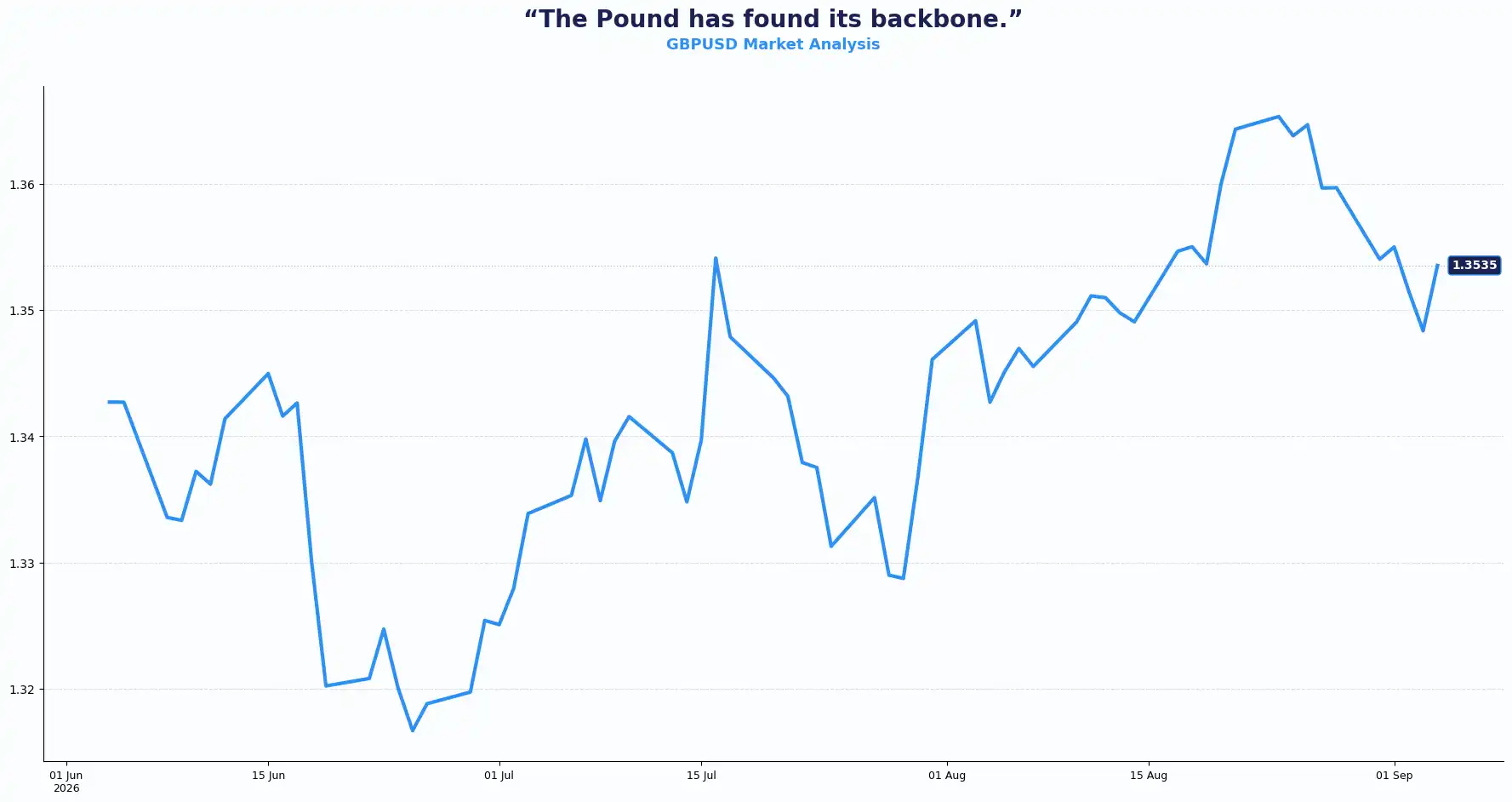
Key technical reference levels for the GBP/USD pair: Resistance sits around 1.3555, while Support sits near 1.3443.
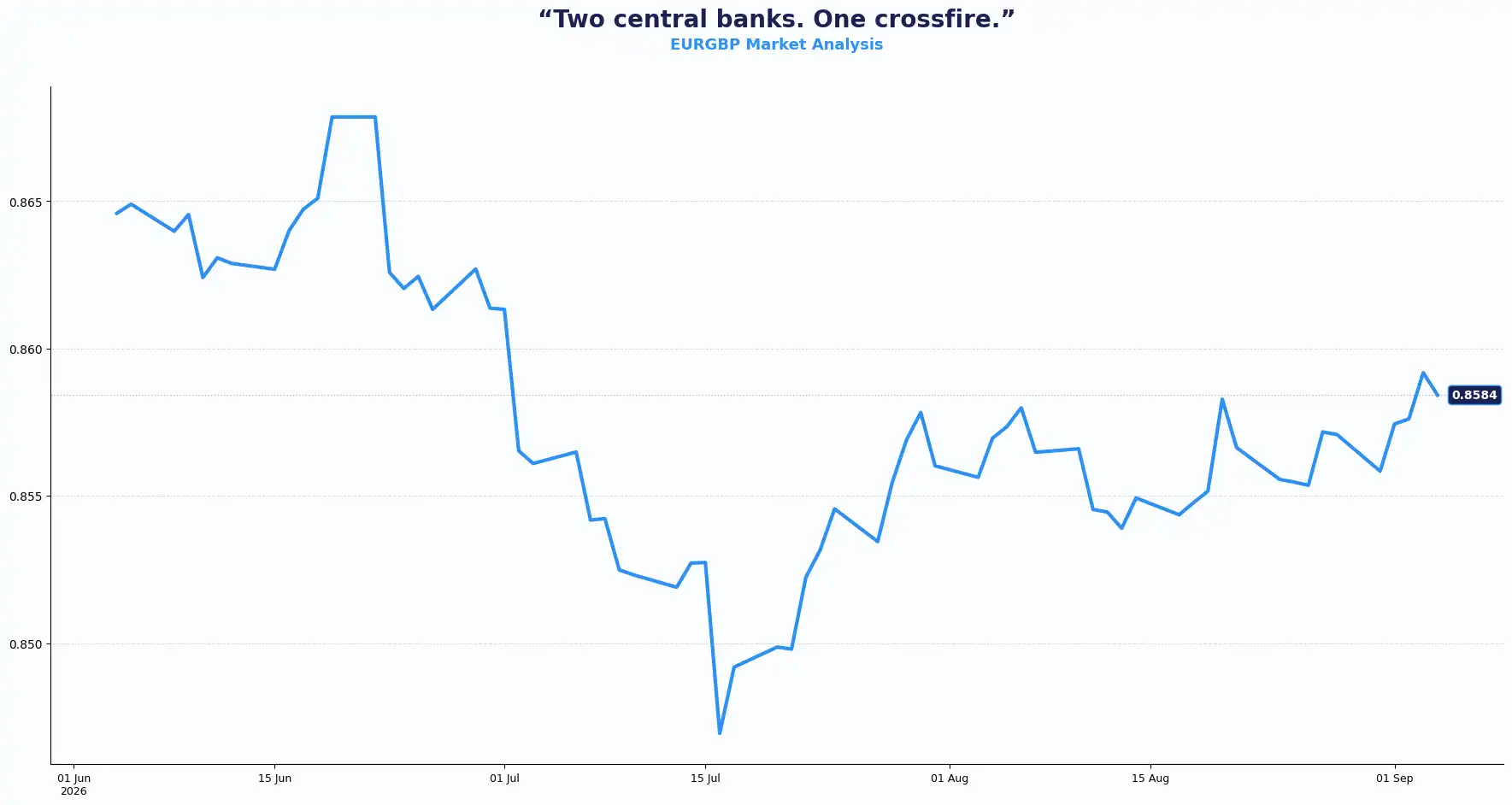
Key technical reference levels for the EUR/GBP pair: Resistance sits around 0.8600, while Support sits near 0.8584.
EUR: Eurozone Activity Expansion Supports the Euro
EUR/USD: 1.1623
EUR/USD is holding around 1.1623 after advancing on Thursday, with resilient Eurozone activity and firm European Central Bank (ECB) rate expectations helping the Euro retain its gains.
Germany’s July Factory Orders rose 2.5% month-on-month, well above the 0.3% increase forecasted, while June’s gain was revised to 3.1%. Stronger industrial orders suggest demand conditions in Europe’s largest economy remain more resilient than expected, which can support the Euro sentiment.
The broader Eurozone picture also remained in expansion during August. The Services PMI eased slightly to 51.6 from 51.7, while the Composite PMI held at 52.0. Readings above 50 indicate growth, while exports increased for the first time in around four-and-a-half years. Services employment rose at its fastest pace in eight months. Price pressures remained firm, keeping the possibility of further European Central Bank (ECB) policy tightening in focus.
Market expectations for the next ECB move remain strong, with broad expectations of a 25-basis-point rate hike to 2.50% in September, with the possibility of another hike later in the year if inflation pressures persist. Renewed market expectations for an ECB hike offer support to the Euro, although the policy path beyond September policy remains dependent on incoming inflation and growth data.
Attention now turns to July Eurozone Retail Sales data, which is expected to rise 0.3% month-on-month after a 0.3% decline in June. A stronger reading could add to evidence of resilient domestic demand, while a weaker result may limit some of the support coming from recent activity data.
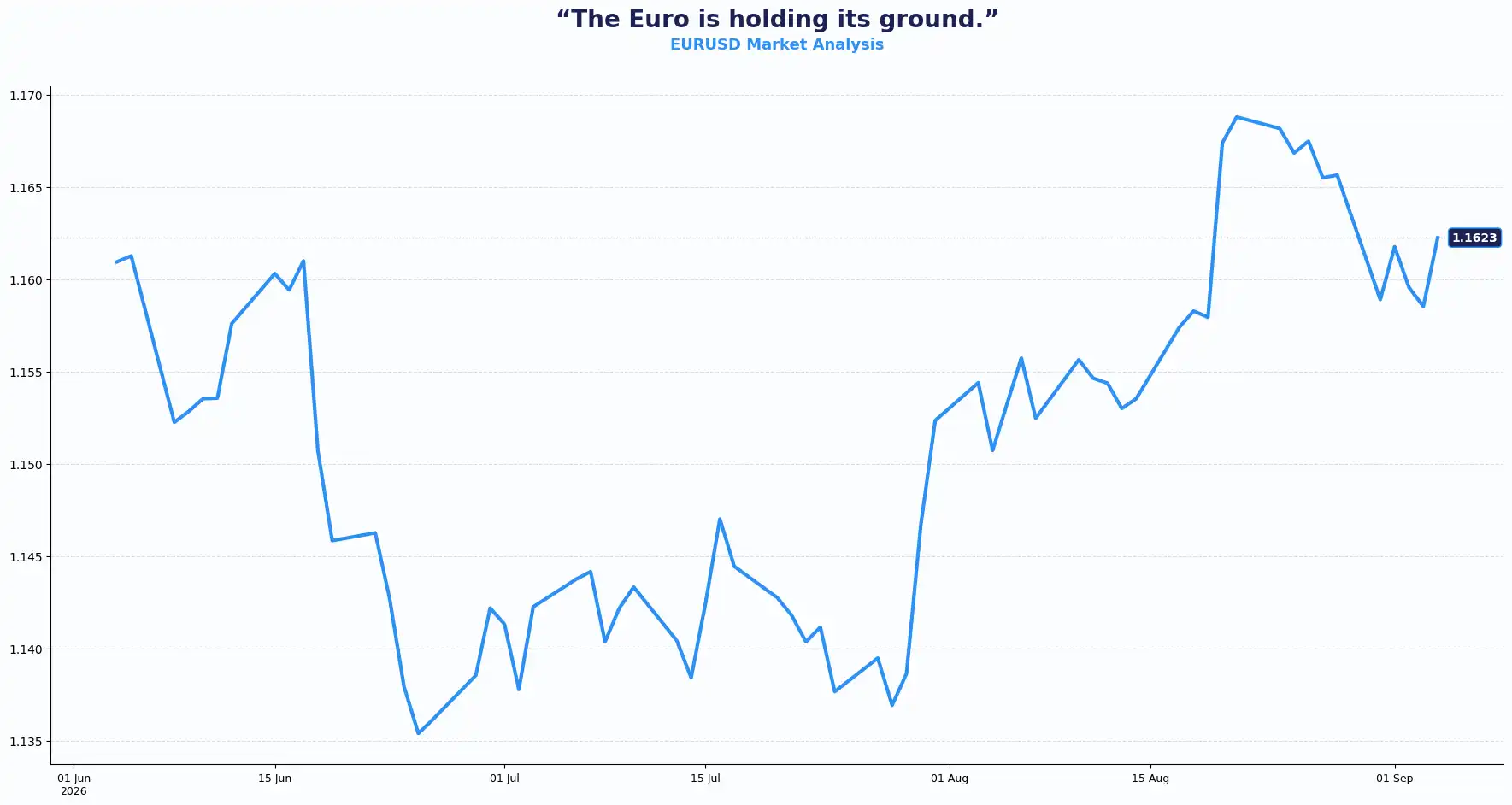
Key technical reference levels for the EUR/USD pair: Resistance sits near 1.1720, while Support sits around 1.1564.
USD: Dollar Holds Near 99.00 Amid Mixed US Data
DXY: 99.00 | USD/JPY: 156.45
The Dollar Index (DXY) is holding around 99.00 after falling more than 0.5% on Thursday, with reduced expectations for a September Federal Reserve (Fed) rate hike keeping the US dollar under pressure.
Fed Governor Christopher Waller said he is inclined to support keeping rates unchanged this month if upcoming inflation data continues to show progress; prompting a shift in market expectations of Fed’s next move. The CME FedWatch tool showed the probability of a September hike drop from 63.2% to 50.2% in one session.
Waller's tone stood in contrast to Fed Chair Kevin Warsh's hawkish posture the week prior. Waller noted early signs of disinflation, solid GDP growth, and a satisfactory labour market but kept the door to a hike open if August's Consumer Price Index (CPI) surprises to the upside. The CPI print, due next week, is now the primary policy signal near term.
US economic data presented a mixed picture. The August ISM Services PMI rose to 55.4 signalling stronger activity in the services sector. New Orders climbed to 60.9, while the Prices Paid Index increased to 72.6, indicating that price pressures remain firm. At the same time, the Employment Index stayed in contraction, keeping concerns around hiring in focus.
Weekly labour-market data added to that caution. Initial Jobless Claims increased to 206,000 slightly above the 205,000 expected. The rise was modest, but alongside this week’s weaker private-sector hiring figures it reinforces the importance of today’s official employment report for assessing whether the US labour market is losing momentum.
Today's NonFarm Payrolls (NFP) expected to show 56,000 jobs added in August with unemployment steady at 4.1%, carries weight, but a strong payrolls read without a strong inflation follow-up is unlikely to push the Committee toward action.
The Japanese yen is also continuing to influence the dollar. USD/JPY has recovered towards 156.50 this morning after falling sharply over the previous two sessions, but the pair remains close to one-month lows. Reduced Fed hike expectations, lower US Treasury yields and firmer expectations for BoJ tightening have all contributed to the broader decline in USD/JPY this week. Markets now fully price a 25 basis point BoJ hike at its September 17-18 meeting, with a follow-up in December.
Other currencies: Canadian Dollar Firms While Aussie Extends Gains
USD/CAD: 1.3791 | AUD/USD: 0.7209 | NZD/USD: 0.5898
Dollar softness is broad-based. The Canadian dollar strengthened further, with USD/CAD falling towards 1.3791 as broader US dollar weakness supported the currency ahead of Canada’s August employment report. The labour-market figures will be closely watched for signs of whether employment conditions are strengthening or weakening, which could influence expectations for the Bank of Canada’s (BoC) next policy move.
Canada’s July trade surplus narrowed to C$769 million from C$4.2 billion in June, as exports fell 2.3% and imports rose 2.2%. The weaker trade position points to softer external demand, although today’s employment data is likely to carry greater immediate weight for the Canadian dollar because of its potential impact on interest-rate expectations.
The Australian dollar extended its advance, pushing AUD/USD towards 0.7209 and its strongest levels since May. A weaker US dollar has contributed to the move, while stronger expectations for another Reserve Bank of Australia (RBA) rate hike have provided additional support afterQ2 GDP grew 0.4% quarter-on-quarter, above the 0.3% forecast. The firmer growth reading suggests the Australian economy remains resilient, keeping further policy tightening in consideration.
The kiwi dollar also recovered, with NZD/USD moving towards 0.5898 after this week’s earlier decline. The rebound has largely reflected softer US dollar conditions, while expectations for further Reserve Bank of New Zealand (RBNZ) policy tightening remain more cautious following this week’s policy decision. That leaves NZD sensitive to both changes in US dollar direction and any further shift in the domestic rate outlook.
CURRENT RATE TABLE:
| Pair | Rate | Trend |
|---|---|---|
| GBP/USD | 1.3535 | Recovering / Mild bullish |
| EUR/USD | 1.1623 | Mild bullish |
| EUR/GBP | 0.8584 | Range-bound / Mild bullish bias |
| USD/CAD | 1.3791 | Bearish / CAD firmer |
| AUD/USD | 0.7209 | Bullish |
| NZD/USD | 0.5898 | Recovering / Mild bullish |
| USD/JPY | 156.45 | Bearish / Yen firmer |
| GBP/JPY | 211.70 | Bearish / Yen firmer |
Market Lookahead:
Fri, Sep 04
- UK Construction PMI (Aug)
- BoE Decision Maker Panel (Aug)
- Eurozone Retail Sales (Jul)
- ECB Chief Economist Philip Lane Speech
- US Average Hourly Earnings, NonFarm Payrolls, Unemployment Rate (Aug)
- Canada Employment Change & Unemployment Rate (Aug)
Mon, Sep 07
- Germany Industrial Production (Jul)
- Eurozone GDP Growth Rate & Employment Change (Q2)
- Japan GDP Growth Rate (Q2, Final)
- Japan Average Cash Earnings (Jul)
Stay Ahead in the Currency Game
Whether you're a daily FX trader or handle international transactions regularly, our 'Currency Pulse' newsletter delivers the news you need to make more informed decisions. Receive concise updates and in-depth insights directly in your LinkedIn feed.
Subscribe to 'Currency Pulse' now and never miss a beat in the currency markets!
Ready to act on today’s insights? Get a free quote or give us a call on: +44 (0)20 7740 0000 to connect with a dedicated portfolio manager for tailored support.
Important Disclaimer: This blog is for informational purposes only and should not be considered financial advice. Currency Solutions does not take into account the investment objectives, financial situation, or specific needs of individual readers. We do not endorse or recommend any specific financial strategies, products, or services mentioned in this content. Forward contracts can help businesses manage foreign exchange exposure by providing greater certainty over future exchange rates, although they may also mean that businesses do not benefit from favourable exchange-rate movements. Businesses should consider their individual circumstances and speak with their dealer to understand how forward contracts may support their specific foreign exchange requirements. All information is provided “as is” without any representations or warranties, express or implied, regarding its accuracy, completeness, or timeliness.