New Zealand Dollar Weakens Following RBNZ Rate Hold While US Dollar Remains Firm
6 min read
Share


The New Zealand dollar fell sharply during early Wednesday trading after the Reserve Bank of New Zealand (RBNZ) unexpectedly left its Official Cash Rate at 2.75%, against expectations of a 25-basis-point rate hike. NZD/USD dropped as much as 1.7% to approximately 0.5583 before recovering some ground after Governor Anna Breman indicated that further tightening remained possible.
Meanwhile, the US dollar held near a two-week high, with the US Dollar Index (DXY) around 102.40 ahead of the Federal Reserve (Fed) policy decision. Tuesday's US data showed consumer confidence rising to 91.7 from 84.2, while durable goods orders increased 1.8% in September. Interest-rate markets largely anticipated unchanged Fed rates, with attention focused on potential December tightening.
Sterling softened against the dollar towards 1.3295 but remained near a 17-month high against the euro, with EUR/GBP around 0.8367 on Tuesday. Investors awaited Wednesday's UK Budget, while the European Central Bank's (ECB) latest lending survey revealed declining demand for housing loans and tighter lending standards for businesses.
Separately, Australian inflation accelerated to 1.3% in the third quarter, supporting expectations of further Reserve Bank of Australia (RBA) tightening. AUD/USD traded near 0.7035 following the release.
GBP: Sterling Slips Against Dollar but Remains Firm Against Euro
GBP/USD: 1.3279 | EUR/GBP: 0.8370
Sterling extended its decline against the US dollar for a fourth consecutive session on Tuesday, with GBP/USD slipping below the 1.3350 support area. However, the pound maintained its relative strength against the euro, potentially supported by expectations of tighter Bank of England (BoE) policy and continued concerns over France's fiscal position. The contrasting movements indicated that Sterling's weakness remained more pronounced against the dollar.
Meanwhile, the UK government sold £4.5 billion of five-year bonds on Tuesday at an average yield of 5.036%, the highest for this maturity since 2008. Demand remained strong, with bids exceeding the amount offered by 3.51 times. However, elevated borrowing costs highlighted the financial pressures facing the government, particularly as investors assessed the potential implications for future debt issuance and servicing costs.
Ahead of the Budget, overnight implied volatility in currency options markets stood at approximately 5.3% for EUR/GBP and 8% for GBP/USD. Meanwhile, investors continued to anticipate a 25-basis-point BoE rate hike on 5 November. The forthcoming Budget and Federal Reserve (Fed) decision could influence currency movements through changes in fiscal confidence and interest-rate expectations.
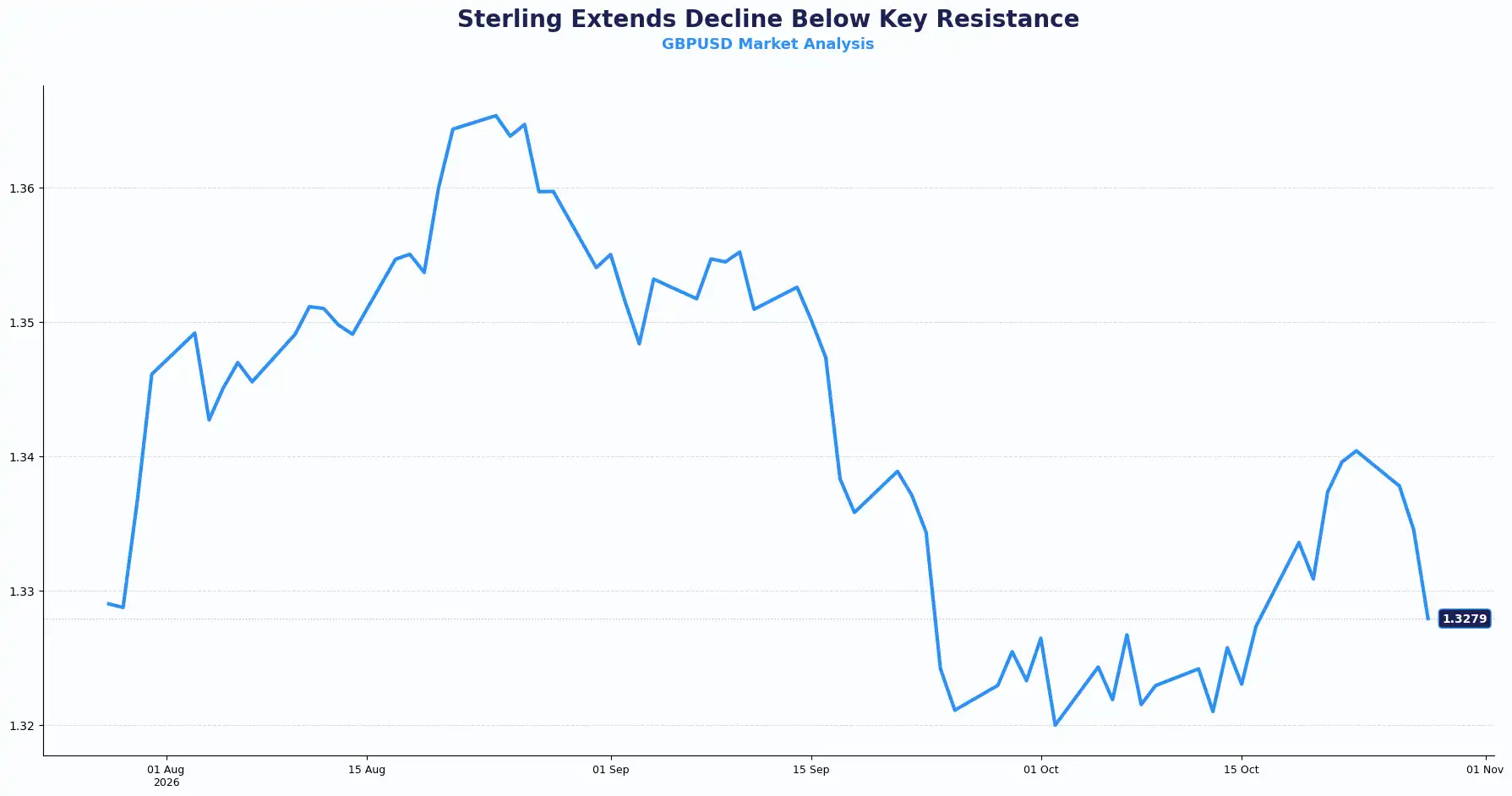
Key technical reference levels for GBP/USD: Resistance sits near 1.3390, followed by 1.3415, while support sits around 1.3285, followed by 1.3150.
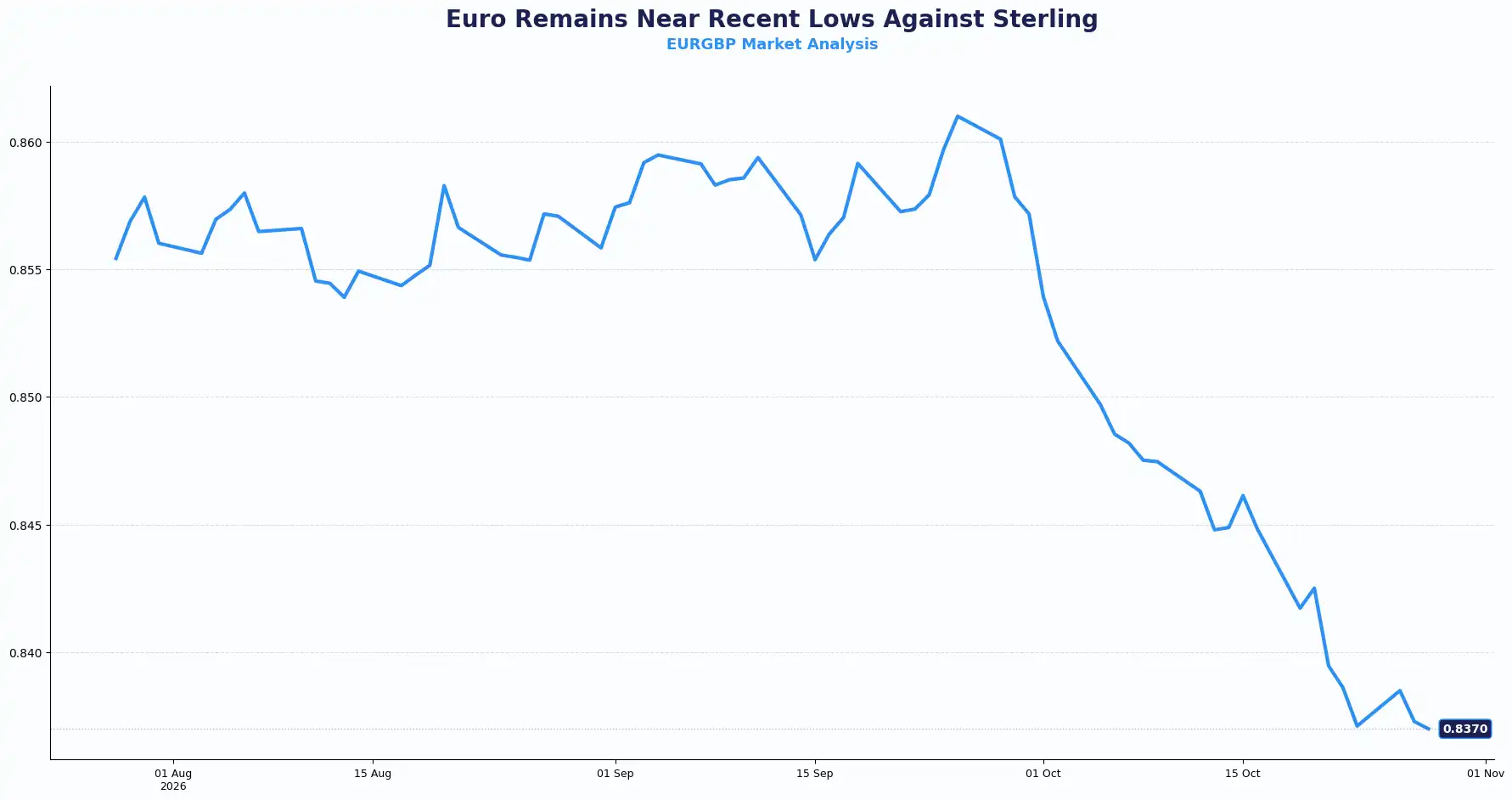
Key technical reference levels for EUR/GBP: Resistance sits near 0.8400, followed by 0.8430, while support sits around 0.8355, followed by 0.8315.
EUR: Euro Weakens Amid Tighter Eurozone Credit Conditions
EUR/USD: 1.1120
The euro extended its losses against the US dollar on Tuesday, declining approximately 0.33% to 1.1136 before stabilising near 1.1120 during early Wednesday trading. The pair remained close to its mid-October low as investors assessed European economic conditions and differences between Federal Reserve (Fed) and European Central Bank (ECB) policy expectations. Elevated energy costs and continued concerns over France's fiscal position also constrained the euro's recovery.
The ECB's quarterly Bank Lending Survey recorded a net balance of 27% for banks reporting lower demand for housing loans during the third quarter, compared with 15% previously and expectations of 12%. Higher interest rates, weaker consumer confidence and deteriorating housing-market prospects may have contributed to the decline. France experienced the most pronounced tightening of lending standards among major eurozone economies, while banks anticipated further restrictions across lending categories during the final quarter.
However, September's lending figures showed continued resilience, with loans to businesses increasing 4.2% annually and household lending rising 3.1%. The contrast suggested that earlier lending momentum remained intact, although tighter financing conditions could weigh on future borrowing and investment. Markets largely anticipated unchanged ECB rates at Thursday's meeting, with attention turning to policymakers' assessment of inflation and economic growth.
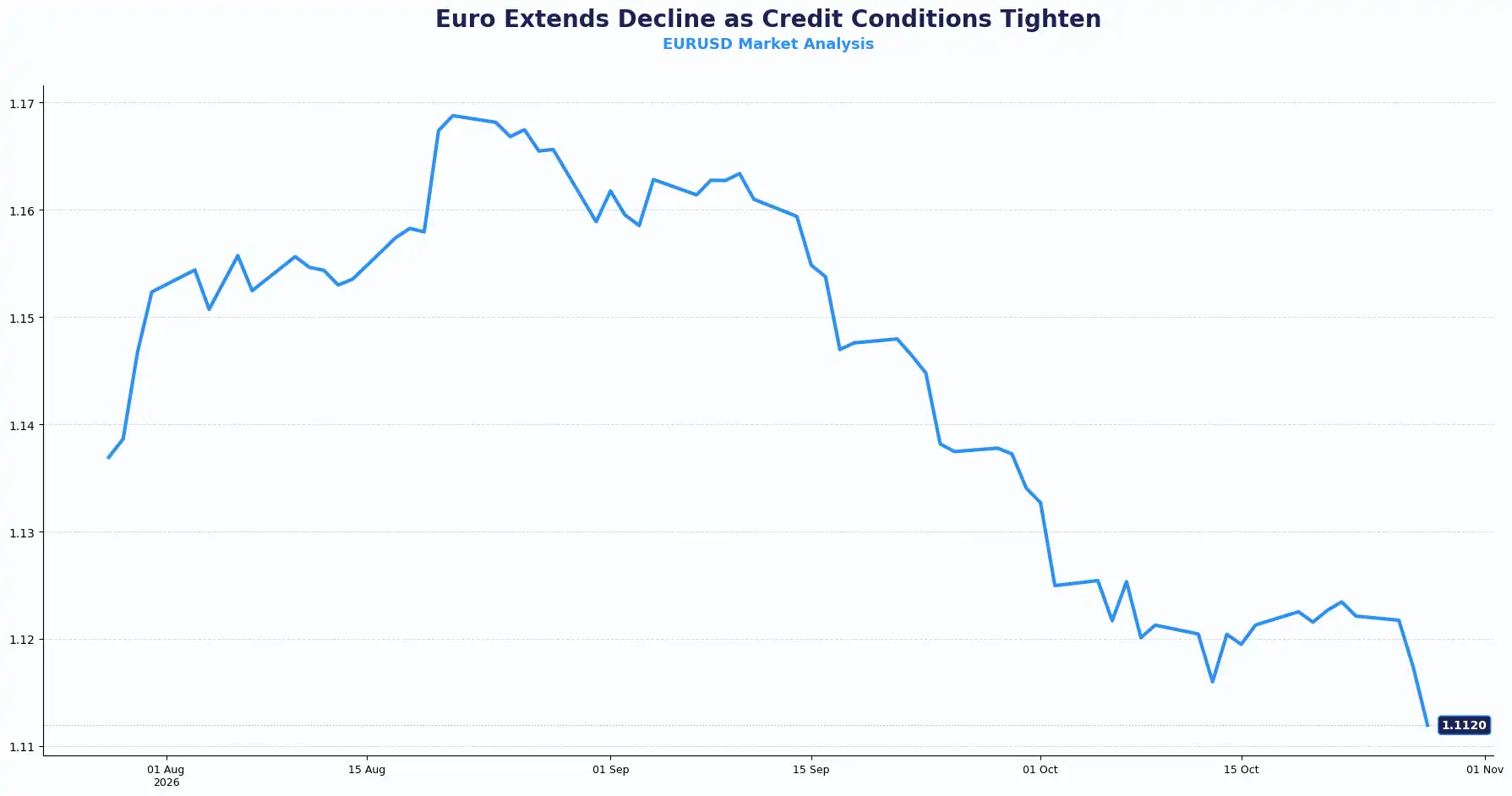
Key technical reference levels for EUR/USD: Resistance sits near 1.1130, followed by 1.1205, while support sits around 1.1100, followed by 1.1050.
USD: Dollar Holds Firm Ahead of Fed Policy Decision
DXY: 102.40
The US dollar maintained its recent gains during early Wednesday trading, with the US Dollar Index (DXY) holding near 102.40. The benchmark 10-year US Treasury yield increased to approximately 5.01%, which may have provided some support for the currency. However, further dollar gains remained limited as investors awaited fresh guidance on US monetary policy.
Detailed US business investment figures showed continued demand for equipment, with core capital-goods orders excluding aircraft increasing 0.5% in September, while shipments rose 1.2%. Investment in artificial intelligence (AI) infrastructure remained an important contributor, although elevated borrowing costs and uncertainty over future returns presented risks. Meanwhile, consumer sentiment improved alongside lower gasoline prices, although concerns about food and household expenses persisted.
Interest-rate futures indicated a 92.8% probability that the Federal Reserve (Fed) would leave rates unchanged at 3.75%-4.00% on Wednesday, while markets assigned an 84.4% probability to a December rate hike. Investors will assess the Fed's policy statement and press conference for indications of future tightening. Thursday's third-quarter US GDP and Personal Consumption Expenditures (PCE) inflation figures could provide additional evidence on economic growth and price pressures.
Other Currencies: Australian Dollar Gains as Inflation Exceeds Forecasts
AUD/USD: 0.7035 | NZD/USD: 0.5585 | USD/JPY: 157.95 | GBP/JPY: 210.00
The Australian dollar strengthened against the US dollar during early Wednesday trading, with AUD/USD briefly reaching a one-month high near 0.7055 before easing towards 0.7035. Australia's annual inflation accelerated to 4.3% in September from 4.0%, exceeding expectations of 4.2%, while quarterly inflation increased 1.3%. The figures may have reinforced expectations of a Reserve Bank of Australia (RBA) rate hike in November, while the Australian dollar's further gains remained limited amid continued US dollar strength.
Meanwhile, the Australian dollar reached a 13-year high against its New Zealand counterpart, reflecting a sharp divergence in the two currencies' performance. The movement in AUD/NZD was considerably larger than the Australian dollar's modest advance against the US dollar, alongside differing monetary-policy expectations in Australia and New Zealand.
The Canadian dollar weakened approximately 0.3% against the US dollar on Tuesday, with USD/CAD rising towards 1.4050, extending its retreat from Friday's five-week low near 1.3966. The currency weakened amid falling oil prices and uncertainty ahead of the Bank of Canada (BoC) interest-rate decision. Markets continued to anticipate a 25-basis-point rate hike on Wednesday, although the decision and accompanying guidance remained important for the Canadian dollar's outlook.
Current Rate Table
| Currency Pair | Rate | Trend |
|---|---|---|
| GBP/USD | 1.3279 | Bearish short-term |
| EUR/GBP | 0.8370 | Bearish EUR |
| EUR/USD | 1.1120 | Bearish short-term |
| USD/JPY | 157.95 | Mildly bullish USD |
| AUD/USD | 0.7035 | Mildly bullish AUD |
| NZD/USD | 0.5585 | Bearish NZD |
| USD/CAD | 1.4050 | Mildly bullish USD |
| GBP/JPY | 210.00 | Mildly bearish GBP |
Market Lookahead
Wednesday, Oct 28
- UK Budget 2026
- BoC Interest Rate Decision
- US Fed Interest Rate Decision
Thursday, Oct 29
- US GDP (Q3)
- ECB Interest Rate Decision
- US Initial Jobless Claims
Friday, Oct 30
- BoJ Interest Rate Decision
- Eurozone GDP (Q3)
- US PCE Price Index & Core PCE Price Index (Sep)
Stay Ahead in the Currency Game
Whether you're a daily FX trader or handle international transactions regularly, our 'Currency Pulse' newsletter delivers the news you need to make more informed decisions. Receive concise updates and in-depth insights directly in your LinkedIn feed.
Subscribe to 'Currency Pulse' now and never miss a beat in the currency markets!
Ready to act on today’s insights? Get a free quote or give us a call on: +44 (0)20 7740 0000 to connect with a dedicated portfolio manager for tailored support.
Important Disclaimer: This blog is for informational purposes only and should not be considered financial advice. Currency Solutions does not take into account the investment objectives, financial situation, or specific needs of individual readers. We do not endorse or recommend any specific financial strategies, products, or services mentioned in this content. Forward contracts can help businesses manage foreign exchange exposure by providing greater certainty over future exchange rates, although they may also mean that businesses do not benefit from favourable exchange-rate movements. Businesses should consider their individual circumstances and speak with their dealer to understand how forward contracts may support their specific foreign exchange requirements. All information is provided “as is” without any representations or warranties, express or implied, regarding its accuracy, completeness, or timeliness.