BRENT CRUDE NEARS $100 A BARREL AMID RENEWED INFLATION CONCERNS
7 min read
Share


Brent crude has traded around the $100-a-barrel level, extending recent gains as renewed fighting in the Middle East raises concerns over energy supplies. Higher energy prices may add to near-term inflation uncertainty and could influence market expectations for the Bank of England (BoE), European Central Bank (ECB) and Federal Reserve (Fed).
Sterling is trading relatively steady against the US dollar after BoE Governor Andrew Bailey pushed back against the idea that further UK rate hikes are inevitable, while highlighting an inflation risk premium linked to higher energy prices. The euro has edged higher ahead of Thursday’s ECB decision, where markets widely expect a 25-basis-point rate hike, while the US dollar remains near a recent multi-week low as investors look towards this week’s US inflation data for further direction on September Fed rate expectations.
Elsewhere, the yen is holding close to the seven-month high reached earlier this week as Bank of Japan rate hike expectations remain elevated, while China’s latest inflation figures showed consumer and producer price pressures increasing in August. Together, higher oil prices, changing central-bank expectations and persistent geopolitical risks are creating a more complex backdrop across major FX markets.
GBP: Sterling Steady as Bailey Tempers Rate Hike Expectations
GBP/USD: 1.3547 | EUR/GBP: 0.8590
GBP/USD is holding around the mid-1.3500s, while EUR/GBP remains relatively steady as Sterling absorbs fresh comments from the BoE Governor alongside renewed pressure from higher energy prices. The limited movement suggests markets are weighing a more complicated UK interest-rate outlook rather than responding to a single domestic driver.
Speaking to Parliament’s Treasury Committee on 8 September, BoE Governor said further rate increases should not be viewed as inevitable and emphasised that future decisions would depend on economic and geopolitical developments. He also noted that current market interest-rate pricing appears to include an additional risk premium linked to uncertainty over energy prices and their potential effect on inflation. This is important because higher market-implied rates do not necessarily mean policymakers themselves are signalling the same path for Bank Rate.
Brent crude approaching $100 a barrel adds another layer of uncertainty. Higher energy costs could lift UK headline inflation and influence household spending, but BoE policymakers are also assessing whether those pressures spread into wages and broader domestic prices. Deputy Governor Dave Ramsden described domestically generated inflation pressures as relatively benign, reinforcing the distinction between an external energy shock and persistent underlying inflation.
For Sterling, several competing factors remain relevant. Higher energy prices may influence inflation expectations and market-implied interest rates, while Bailey’s comments indicate that further BoE rate increases should not be assumed. GBP/USD may also respond to US inflation data, while EUR/GBP may be influenced by changes in relative BoE and ECB policy expectations.
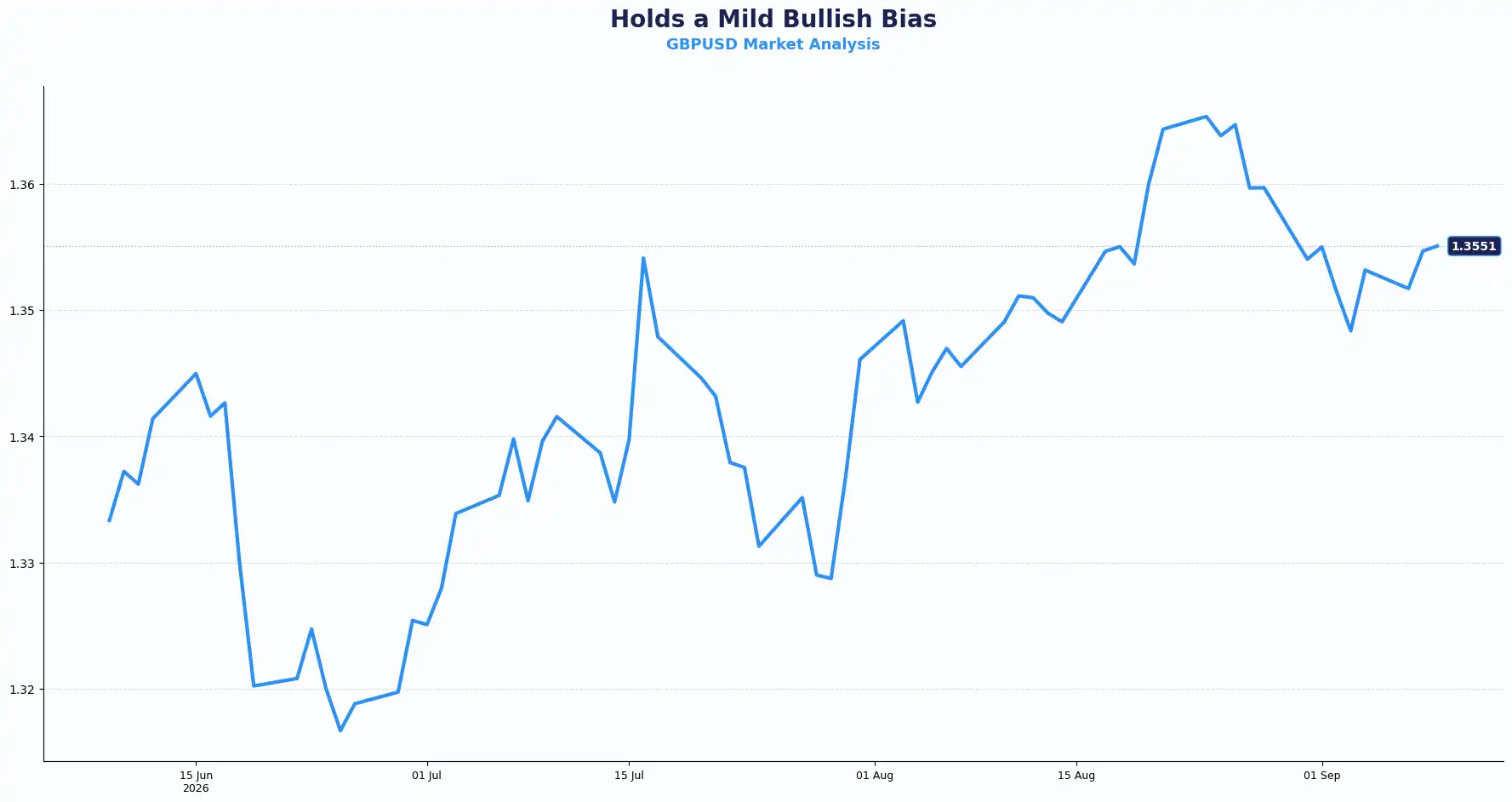
Key technical reference levels for GBP/USD: Resistance sits near 1.3560, followed by 1.3632, while Support sits around 1.3524, followed by 1.3502 and 1.3477.
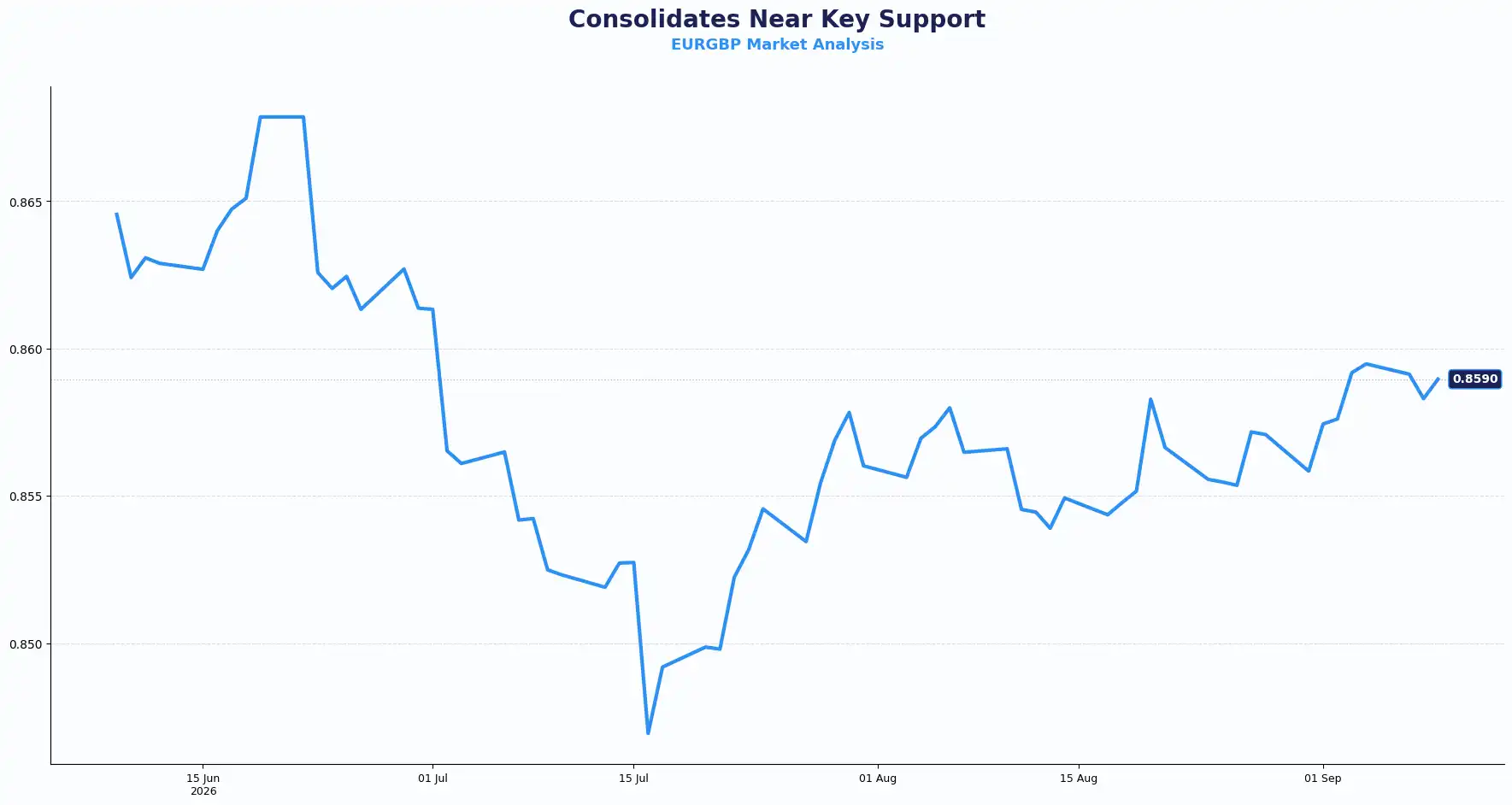
Key technical reference levels for EUR/GBP: Resistance sits near 0.8600, followed by 0.8632, while Support sits around 0.8585, followed by 0.8565.
EUR: Euro Edges Higher Ahead of ECB Rate Decision
EUR/USD: 1.1641
EUR/USD has edged above 1.1640 to a 12-day high, while EUR/GBP remains relatively steady as investors position ahead of Thursday’s European Central Bank (ECB) policy decision. Softer US dollar conditions are helping EUR/USD move higher, although gains remain measured as markets wait for clearer guidance from the ECB.
A 25-basis-point ECB rate hike is widely expected on Thursday, meaning attention is increasingly shifting towards the central bank’s updated economic projections and President Christine Lagarde’s comments on the path for future policy. Brent crude nearing $100 adds another inflation consideration, particularly after Eurostat’s flash estimate showed euro-area annual inflation at 3.3% in August, up from 2.9% in July. Higher energy costs could keep headline inflation elevated, although policymakers will also assess whether those pressures spread more broadly through wages and services.
For the euro, market attention is likely to focus on how the ECB’s decision and guidance compare with expectations already reflected in market pricing. Market reaction to the ECB’s decision, economic projections and policy guidance could influence the euro’s direction, depending on how they compare with prevailing expectations. Currency markets may react differently even where policy communication is perceived as more restrictive or accommodative. EUR/USD will also remain sensitive to this week’s US inflation data, while EUR/GBP could respond to changes in relative ECB and BoE rate expectations.
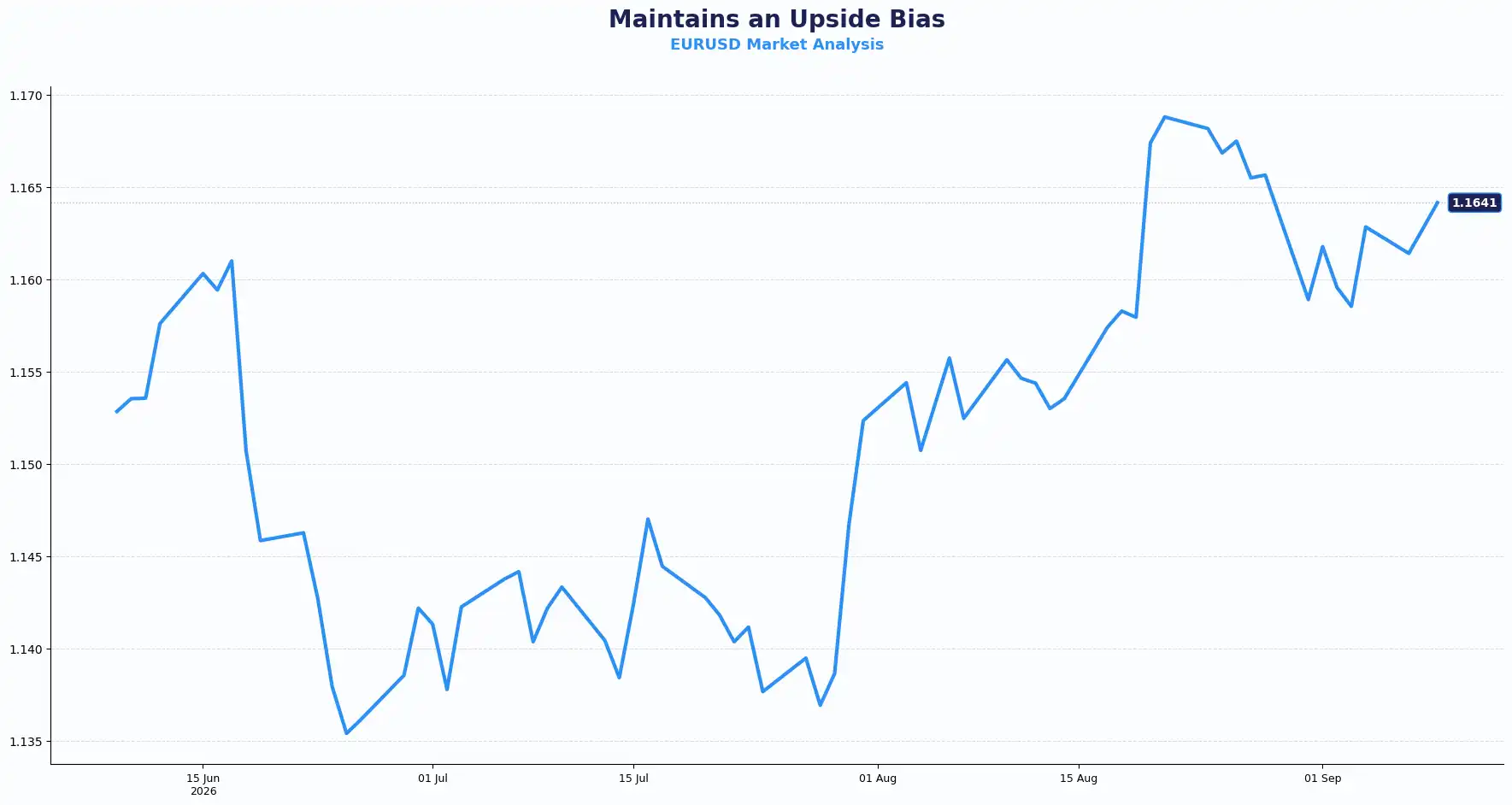
Key technical reference levels for EUR/USD: Resistance sits near 1.1698, followed by 1.1786, while Support sits around 1.1609, followed by 1.1579.
USD: Dollar Nears Three-Week Low Ahead of US Inflation Data
DXY: 98.70
The Dollar Index (DXY) has slipped towards 98.70, near a recent multi-week low, as the US dollar struggles to find support ahead of this week’s inflation data. Brent crude approaching $100 is adding another layer of uncertainty by raising concerns that higher energy costs could keep US headline inflation elevated.
Higher oil prices may add to near-term headline inflation uncertainty at a time when markets, investors and traders are reassessing expectations for the Federal Reserve’s September policy decision. According to the Federal Reserve Bank of New York’s August 2026 Survey of Consumer Expectations, median one-year inflation expectations were unchanged at 3.6%, while three-year expectations declined to 3.2%. The perceived probability that unemployment would be higher one year ahead rose to 44.4%.
Attention now turns to August PPI data on Thursday and CPI data on Friday. Market participants will assess both reports for evidence of changes in inflation pressures and the potential implications for market expectations surrounding the Federal Reserve’s September policy decision.
Inflation data that comes in above or below market expectations could change expectations for the Fed’s next policy move. However, the direction and scale of any currency reaction are uncertain and may also depend on positioning, other economic data and broader market conditions.
Other Currencies: Yen Firm, China Inflation Rises and Oil Supports CAD
USD/JPY: 153.42 | USD/CNH: 6.71 | AUD/USD: 0.7223 | NZD/USD: 0.5856 | USD/CAD: 1.3776
The yen is holding close to this week’s seven-month high, with USD/JPY near 153.30 as market pricing continues to reflect expectations of possible further BoJ tightening ahead of the September policy meeting. The outcome remains uncertain. The latest move broadly extends the price action observed on 8 September rather than reflecting a clearly identifiable new domestic catalyst, although markets are still reassessing the appeal of yen-funded carry trades ahead of next week’s BoJ meeting.
China’s August inflation data showed the Consumer Price Index (CPI) rising 0.8% year-on-year from 0.5% in July, while the Producer Price Index (PPI) increased 3.8% from 3.5%, according to the National Bureau of Statistics of China. Much of the increase came from higher energy and commodity costs, while core inflation remained relatively subdued. The yuan remains relatively firm against the US dollar, while the inflation figures released on 9 September were followed by only limited immediate movement in AUD/USD, which remained around 0.7220.
NZD/USD is holding near 0.5860, China’s latest inflation data was followed by limited immediate movement in NZD/USD, although the pair may also be influenced by domestic rate expectations and broader US-dollar conditions. Domestic rate expectations and broader US dollar conditions remain important drivers for the pair.
Higher crude prices may be one supportive factor for the Canadian dollar, although interest-rate expectations, trade developments and broader US-dollar movements may also influence USD/CAD. As crude oil is an important Canadian export, changes in oil prices can influence the Canadian dollar; however, the relationship is not consistent and other macroeconomic factors may dominate.
The takeaway is mixed across regional currencies: the yen remains supported by BoJ rate hike expectations, China’s inflation data has had only a modest spillover into AUD and NZD, while higher oil prices may be one factor influencing recent CAD performance.
CURRENT RATE TABLE
| Pair | Rate | Trend |
|---|---|---|
| GBP/USD | 1.3547 | Consolidating, mild bullish bias |
| EUR/USD | 1.1641 | Mild bullish bias |
| EUR/GBP | 0.8590 | Consolidating |
| USD/CAD | 1.3776 | Bearish |
| AUD/USD | 0.7223 | Mild bullish bias |
| NZD/USD | 0.5856 | Consolidating, mild bullish bias |
| USD/JPY | 153.42 | Bearish, yen bullish |
| GBP/JPY | 207.84 | Bearish, yen bullish |
MARKET LOOKAHEAD:
Wed, Sep 09
- US ADP Weekly Employment Change
- ECB President Christine Lagarde Speech
Thu, Sep 10
- European Central Bank (ECB) Interest Rate Decision
- US Producer Price Index (PPI) & Core PPI (Aug)
- US Initial Jobless Claims
- ECB President Christine Lagarde Press Conference and Updated Economic Projections
Fri, Sep 11
- UK GDP, Industrial & Manufacturing Production (Jul)
- UK Goods Trade Balance (Jul)
- US Consumer Price Index (CPI) & Core CPI (Aug)
Stay Ahead in the Currency Game
Whether you're a daily FX trader or handle international transactions regularly, our 'Currency Pulse' newsletter delivers the news you need to make more informed decisions. Receive concise updates and in-depth insights directly in your LinkedIn feed.
Subscribe to 'Currency Pulse' now and never miss a beat in the currency markets!
Ready to act on today’s insights? Get a free quote or give us a call on: +44 (0)20 7740 0000 to connect with a dedicated portfolio manager for tailored support.
Important Disclaimer: This blog is for informational purposes only and should not be considered financial advice. Currency Solutions does not take into account the investment objectives, financial situation, or specific needs of individual readers. We do not endorse or recommend any specific financial strategies, products, or services mentioned in this content. Forward contracts can help businesses manage foreign exchange exposure by providing greater certainty over future exchange rates, although they may also mean that businesses do not benefit from favourable exchange-rate movements. Businesses should consider their individual circumstances and speak with their dealer to understand how forward contracts may support their specific foreign exchange requirements. All information is provided “as is” without any representations or warranties, express or implied, regarding its accuracy, completeness, or timeliness.