US PMIs Take Centre Stage as Dollar Reaches Two-Month High
6 min read
Share


US business activity strengthened sharply in September, while the dollar also advanced, with the Dollar Index (DXY) moving above 101.00 to its highest level in around two months. The US Composite PMI rose to 58.4 from 56.0, while manufacturing and services activity also improved, indicating stronger activity across both sectors.
The stronger data has coincided with increased expectations that the Federal Reserve (Fed) may need to raise rates again. Fed Governor Michael Barr also said further policy adjustments are likely to be needed to bring inflation under control, adding to the focus on the path for US interest rates. DXY was trading around 101.20 early Thursday after holding most of Wednesday’s gains.
Several major currencies have traded lower against the stronger US dollar. GBP/USD is trading around 1.3240, close to its lowest level since early July, while EUR/USD has slipped below 1.1400 to around 1.1380. Sterling has traded lower alongside stronger US activity data and softer UK readings, while the euro has also remained under pressure despite an improvement in Eurozone business activity.
GBP: Sterling Under Pressure as UK Services Growth Slows
GBP/USD: 1.3253 | EUR/GBP: 0.8600
GBP/USD is trading around 1.3253, close to its lowest level since early July. Sterling traded lower following the UK business-activity data, while stronger US readings highlighted a contrast in the latest business-activity figures.
The UK Composite PMI fell to 51.7 from 52.5, while the Services PMI also eased to 51.7 from 52.5, below expectations of 52.0. Manufacturing was more resilient, with the Manufacturing PMI rising to 52.0 from 51.7. The overall picture points to slower growth in the services sector, which makes up a large share of the UK economy, even as manufacturing activity improved.
Price-pressure indicators were firmer. Businesses reported stronger cost pressures and a faster rise in selling prices, which may complicate the balance between weaker growth and persistent inflation in the Bank of England (BoE) policy outlook. Interest-rate markets are still indicating a possibility of another BoE rate increase in November, but softer activity could make the path for further tightening less clear.
EUR/GBP moved towards 0.8600 after the UK data, with the euro gaining ground against sterling. The move also coincided with stronger Eurozone PMI readings released on Wednesday, highlighting a contrast between the UK and Eurozone business-activity figures during the session.
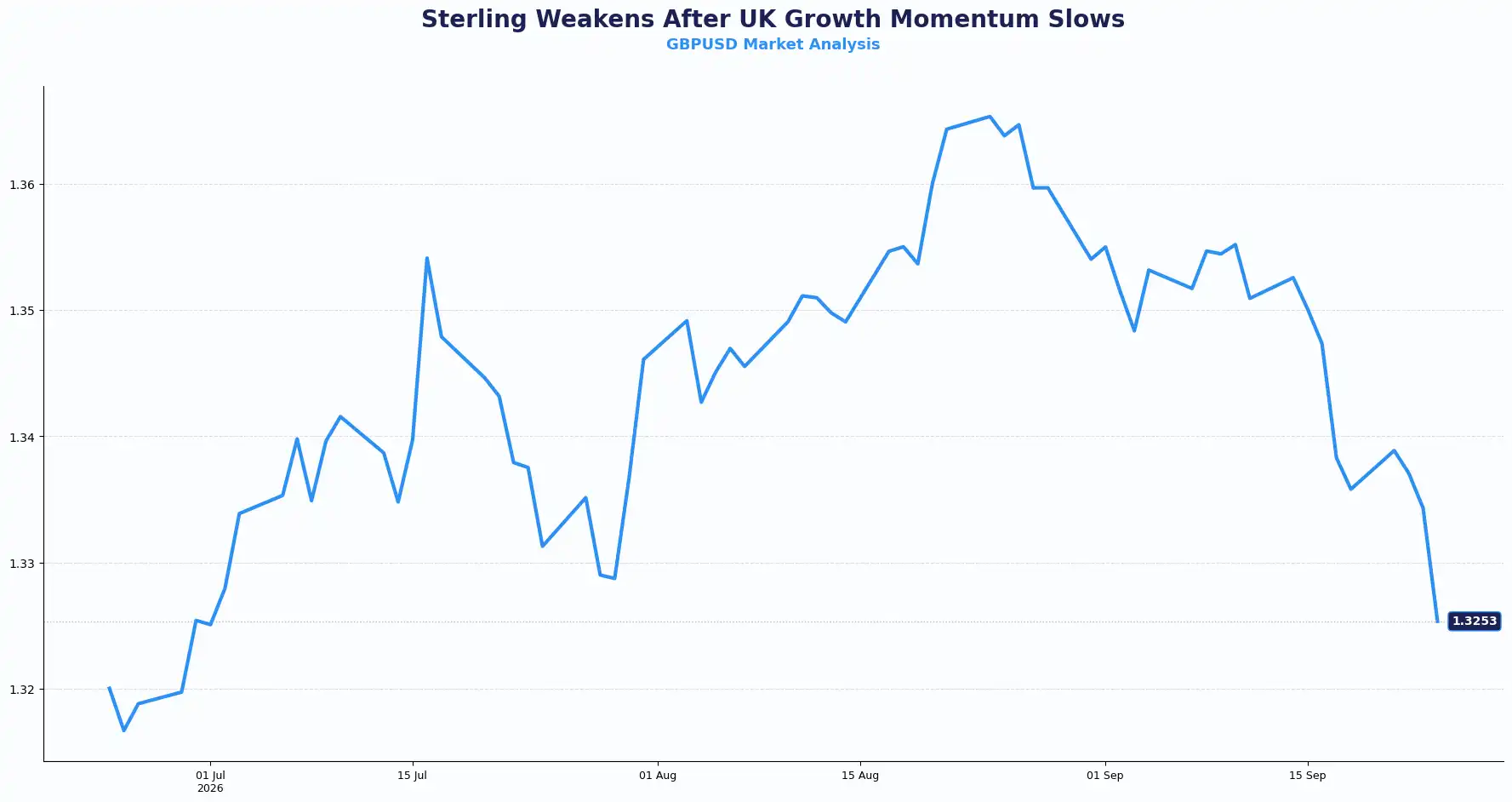
Key technical reference levels for GBP/USD: resistance sits near 1.3300, followed by 1.3350, while support sits around 1.3200, followed by 1.3150.
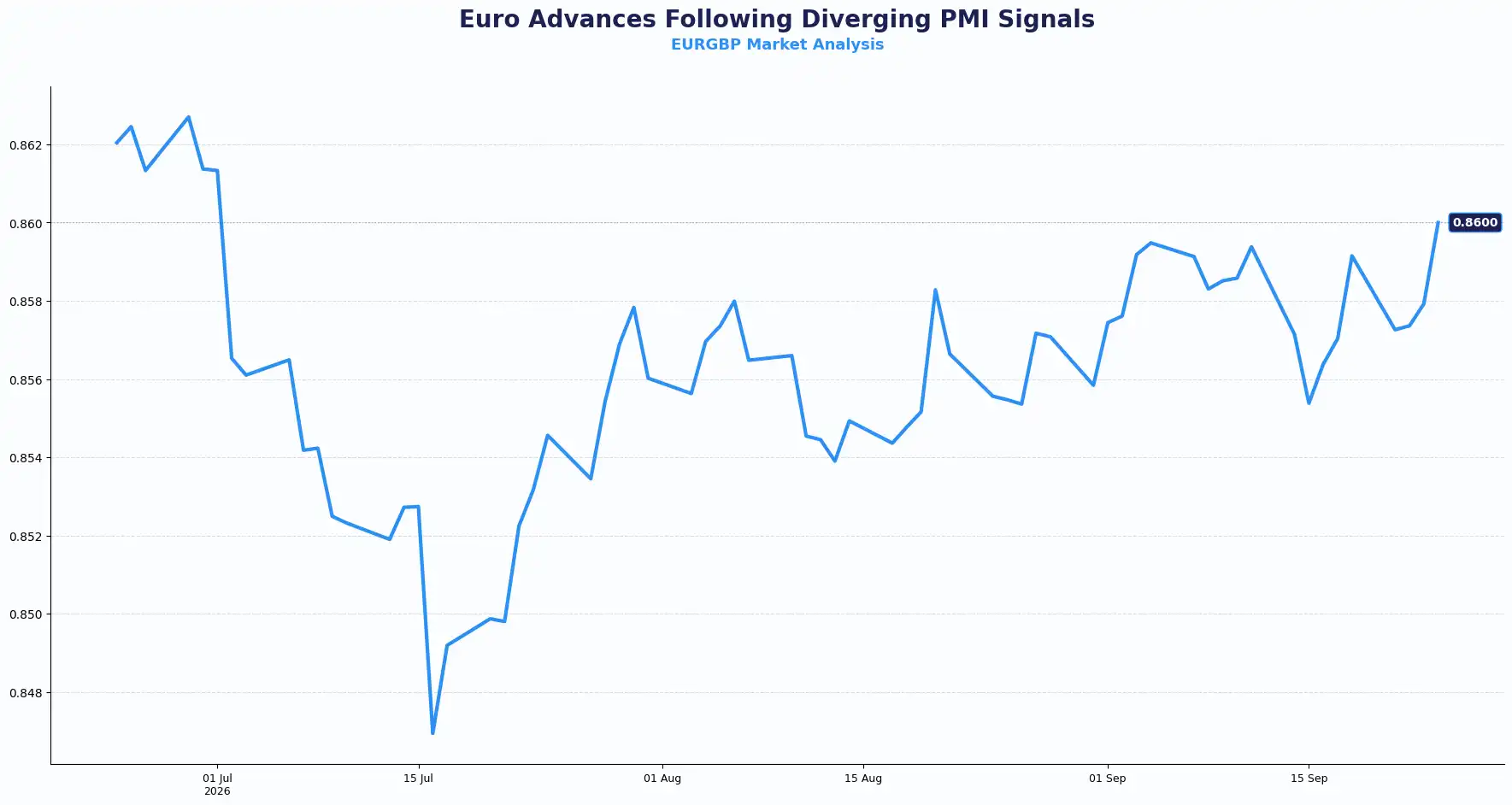
Key technical reference levels for EUR/GBP: resistance sits near 0.8600, followed by 0.8641, while support sits around 0.8578, followed by 0.8559.
EUR: Euro Remains Soft Despite Stronger Eurozone Activity
EUR/USD: 1.1401
EUR/USD is trading around 1.1400, despite a stronger set of Eurozone business-activity figures. The Eurozone Composite PMI rose to 53.1 from 52.0, above expectations, while the Services PMI increased to 53.0 and the Manufacturing PMI held at 52.7. The readings point to a broader improvement in activity across the region.
Germany also contributed to the stronger regional picture, with both manufacturing and services activity improving. The better data may be relevant to expectations for further European Central Bank (ECB) tightening, particularly as price pressures remain elevated. However, the euro has remained under pressure, with US activity data and expectations for further Fed tightening also in focus.
EUR/USD is therefore trading against a backdrop of firmer Eurozone activity and elevated US rate expectations. Today’s Germany Ifo Business Climate reading will provide another update on conditions in Europe’s largest economy, while the pair may remain sensitive to changes in US rate expectations.
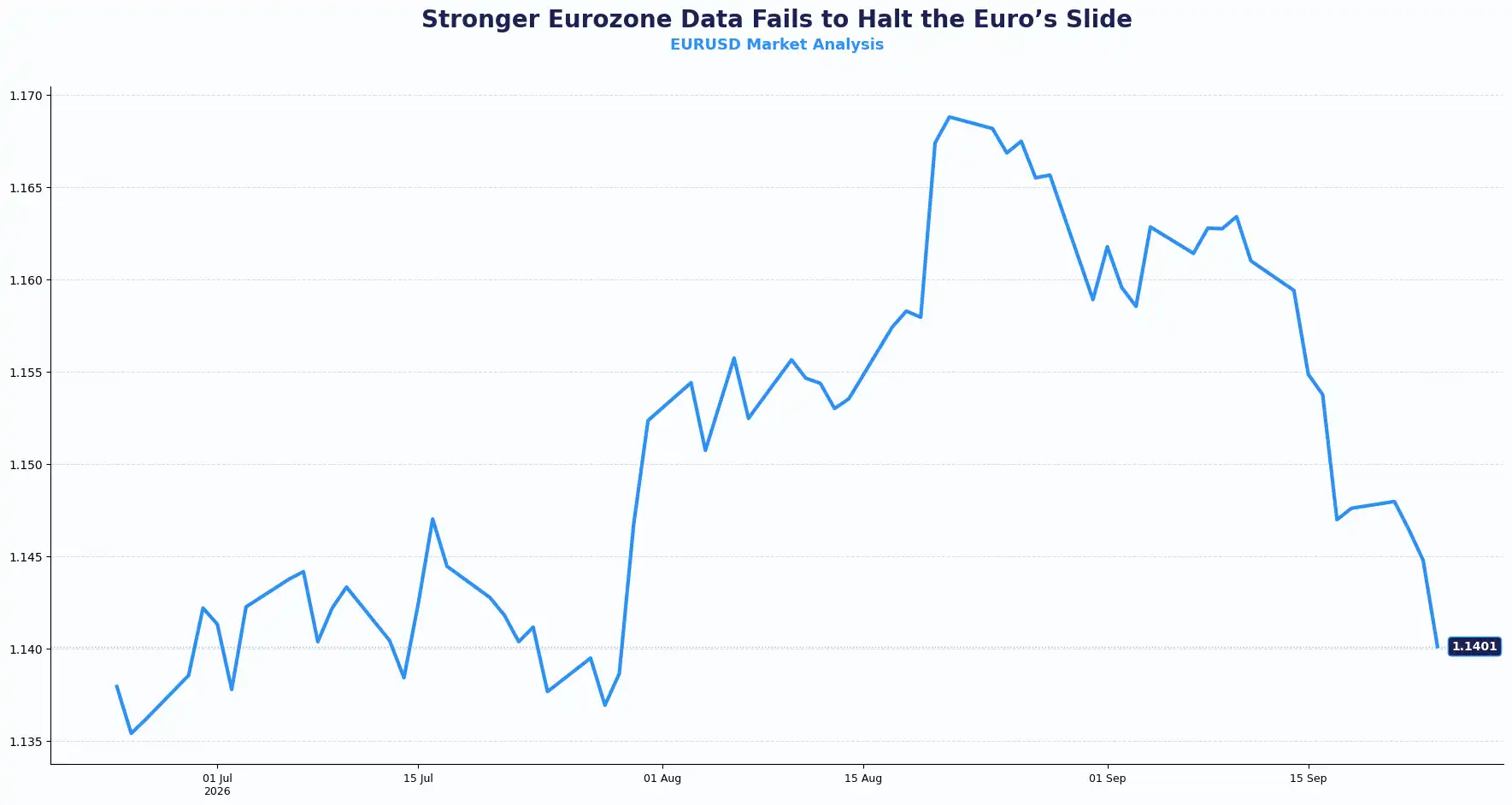
Key technical reference levels for EUR/USD: resistance sits near 1.1400, followed by 1.1450, while support sits around 1.1353, followed by 1.1325.
USD: Dollar Advances Alongside Higher US Yields
DXY: 101.10
The Dollar Index (DXY) is trading around 101.10 after reaching approximately 101.23 on Wednesday. The dollar gained across major currencies alongside stronger US business-activity data and increased expectations that the Fed may need to raise rates again.
The details of the PMI report were also consistent with that interpretation. The Manufacturing PMI rose to 57.0, compared with expectations of 53.5, while the Services PMI increased to 58.7, above expectations of 56.0. Businesses also reported a sharp increase in prices paid, which may reinforce concerns that inflation pressures remain persistent even as economic activity continues to grow.
US Treasury yields moved sharply higher alongside the data release and fresh Fed commentary. The 10-year yield climbed above 5.10%, while the five-year yield approached 5%, alongside wider yield differentials with some other major markets. Fed Governor Michael Barr also said further rate increases may be needed, with inflation risks remaining an important concern.
Interest-rate pricing subsequently implied a higher probability of another Fed increase in October, rising to around 73% from approximately 53% before the PMI release. Attention now turns to today’s US Initial Jobless Claims and further Fed speeches for further information on the labour market and rate outlook.
Other Currencies: Australian Dollar Slips After Mixed Jobs Data
AUD/USD: 0.7025 | USD/JPY: 158.50 | NZD/USD: 0.5675
AUD/USD is trading around 0.7025 after Australia’s unemployment rate rose to 4.6% from 4.5% in August. Employment increased by 39,500, above expectations, but the composition of the increase was mixed: full-time employment fell by 6,300, while part-time employment increased by 45,800.
The figures present a mixed picture ahead of next week’s Reserve Bank of Australia (RBA) policy meeting. The labour market is still adding jobs, but the rise in unemployment and decline in full-time positions may indicate some cooling despite the headline employment increase. Interest-rate expectations nevertheless continue to indicate the possibility of another RBA rate increase, with inflation still above the central bank’s target range.
USD/JPY has climbed towards 158.50, with the yen weakening further alongside higher US Treasury yields. The pair has gained more than 3% in less than two weeks, while the possibility of intervention by Japanese authorities remains a factor being monitored by market participants.
NZD/USD is trading around 0.5675, close to its lowest level since early July. The move has coincided with broader US-dollar strength and higher US yields, while attention is also turning to the Trump-Xi meeting for any fresh developments relevant to the wider trade outlook.
Current Rate Table
| Pair | Rate | Trend |
|---|---|---|
| GBP/USD | 1.3253 | Bearish short-term |
| EUR/GBP | 0.8600 | Mildly bullish EUR |
| EUR/USD | 1.1401 | Bearish short-term |
| USD/JPY | 158.50 | Mildly bullish USD |
| AUD/USD | 0.7025 | Bearish short-term |
| NZD/USD | 0.5675 | Bearish short-term |
| USD/CAD | 1.4106 | Mildly bullish USD |
Market Lookahead
Thursday, Sep 24
- Germany Ifo Business Climate (Sep)
- US Initial Jobless Claims
Friday, Sep 25
- US Durable Goods Orders (Aug)
Stay Ahead in the Currency Game
Whether you're a daily FX trader or handle international transactions regularly, our 'Currency Pulse' newsletter delivers the news you need to make more informed decisions. Receive concise updates and in-depth insights directly in your LinkedIn feed.
Subscribe to 'Currency Pulse' now and never miss a beat in the currency markets!
Ready to act on today’s insights? Get a free quote or give us a call on: +44 (0)20 7740 0000 to connect with a dedicated portfolio manager for tailored support.
Important Disclaimer: This blog is for informational purposes only and should not be considered financial advice. Currency Solutions does not take into account the investment objectives, financial situation, or specific needs of individual readers. We do not endorse or recommend any specific financial strategies, products, or services mentioned in this content. Forward contracts can help businesses manage foreign exchange exposure by providing greater certainty over future exchange rates, although they may also mean that businesses do not benefit from favourable exchange-rate movements. Businesses should consider their individual circumstances and speak with their dealer to understand how forward contracts may support their specific foreign exchange requirements. All information is provided “as is” without any representations or warranties, express or implied, regarding its accuracy, completeness, or timeliness.