Sterling Slips as Markets Assess Goolsbee’s Fed Tightening Comments
6 min read
Share


Sterling is trading below 1.3400 against the US dollar after slipping during Monday’s session, while markets assess fresh comments from Chicago Fed President Austan Goolsbee. GBP/USD is currently around 1.3383, while the Dollar Index (DXY) is holding near 100.40, while relative US and UK rate expectations remain relevant for the pair.
Goolsbee said persistent US inflation may increasingly reflect stronger demand alongside earlier supply-side pressures. He added that if demand is overheating, the Federal Reserve (Fed) may need a more aggressive and front-loaded policy response. His comments have kept further Fed tightening in focus, while market pricing continues to reflect the possibility of further tightening this year.
The wider market backdrop is more balanced. US Treasury yields have eased from recent highs, while the dollar continues to trade near recent highs, while Brent crude has fallen below $100 a barrel as Saudi oil exports recover. Lower energy prices may ease some inflationary pressure, although markets continue to assess the broader implications for interest-rate expectations. EUR/USD is also trading below 1.1500, leaving the dollar near recent highs against both sterling and the euro.
GBP: Borrowing Overshoot Adds to Sterling Pressure
GBP/USD: 1.3369 | EUR/GBP: 0.8572
GBP/USD is trading around 1.3369, remaining close to recent lows after slipping below 1.3400 on Monday. Markets continue to assess Goolsbee’s comments alongside expectations for further US tightening, while Treasury yields have eased from recent highs.
Fresh UK public-finance data added a domestic development this morning. Government borrowing reached £18.3 billion in August, above market expectations of £15.5 billion. Borrowing between April and August totalled £77.3 billion, around £8.1 billion above the Office for Budget Responsibility’s forecast for the period.
The figures provide a further update on the UK fiscal position ahead of the government’s next Budget, while interest-rate markets continue to assess the possibility of further Bank of England (BoE) tightening later this year. Market pricing on Monday implied roughly a 65% probability of a November BoE rate increase.
EUR/GBP is trading around 0.8572, near the lower end of its recent range. The cross has shown limited directional movement, with both currencies awaiting fresh business-activity data. Preliminary UK and Eurozone Purchasing Managers’ Index readings on Wednesday will provide a further update on business activity.
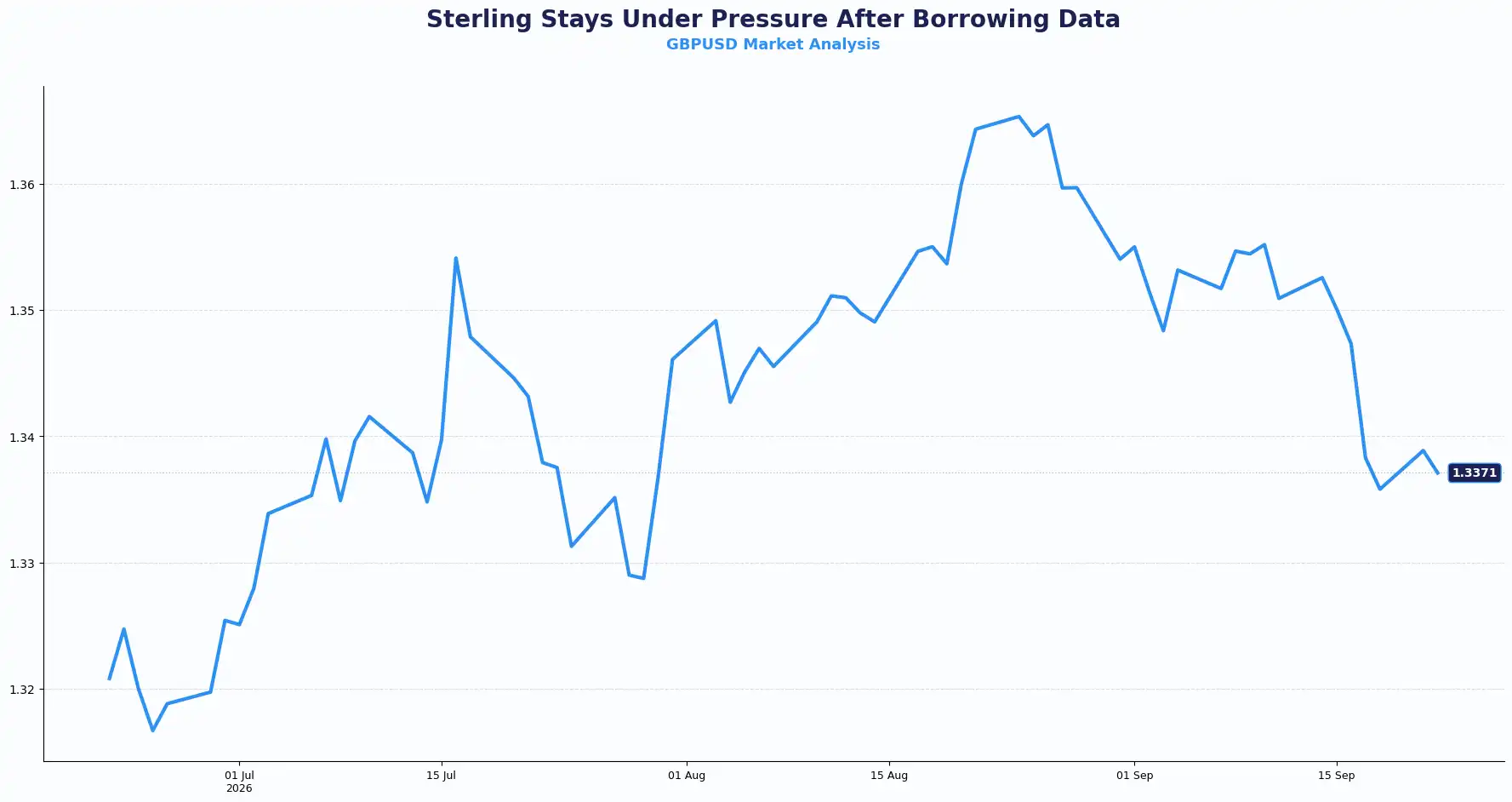
Key technical reference levels for GBP/USD: Resistance sits near 1.3407, followed by 1.3435, while Support sits around 1.3344, followed by 1.3254.
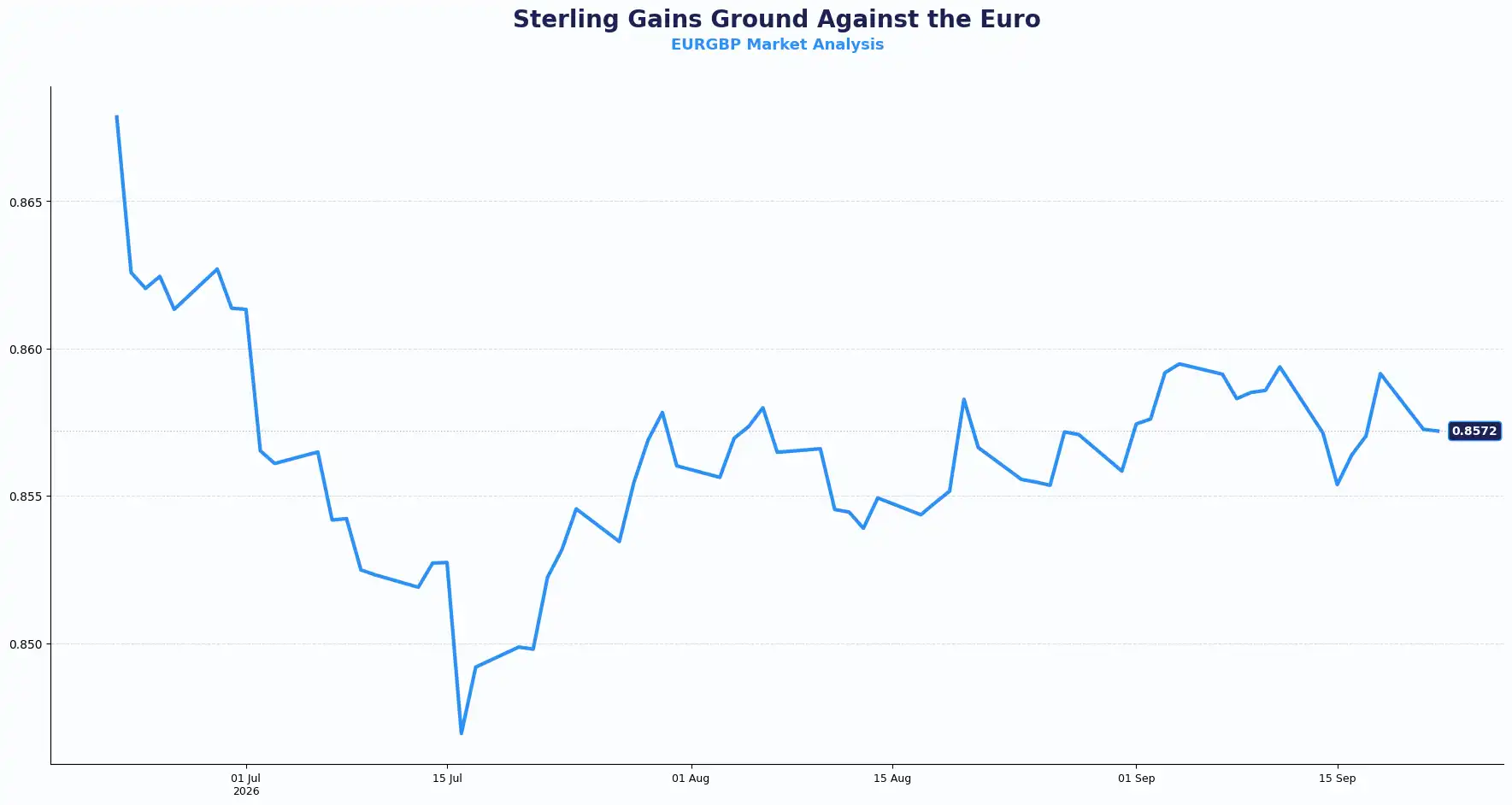
Key technical reference levels for EUR/GBP: resistance sits near 0.8580, followed by 0.8600, while support sits around 0.8572, followed by 0.8555.
EUR: German Inflation Remains Elevated as Growth Slows
EUR/USD: 1.1460
EUR/USD is trading around 1.1460, remaining below 1.1500 following last week’s decline. The US dollar continues to trade near recent highs as markets assess the possibility of further Fed tightening.
Recent German data have provided a further update on the domestic economic backdrop. The Bundesbank said inflation is likely to remain elevated in the near term, partly because of higher energy costs, while economic growth weakened over the summer as exports and consumer spending slowed. The central bank nevertheless expects activity to improve moderately later in the year.
Energy-price developments also remain relevant to the inflation outlook assessed by the European Central Bank (ECB). An ECB assessment published on Monday indicated that higher wholesale gas prices may now pass through to consumer inflation more quickly than in previous years, although the impact on electricity prices has become less pronounced as renewable-energy use has increased.
For EUR/USD, markets continue to assess persistent inflation risks alongside softer economic activity, while expectations for additional US rate increases remain another relevant factor. Preliminary Eurozone and German PMI readings on Wednesday will provide the next major update on business activity.
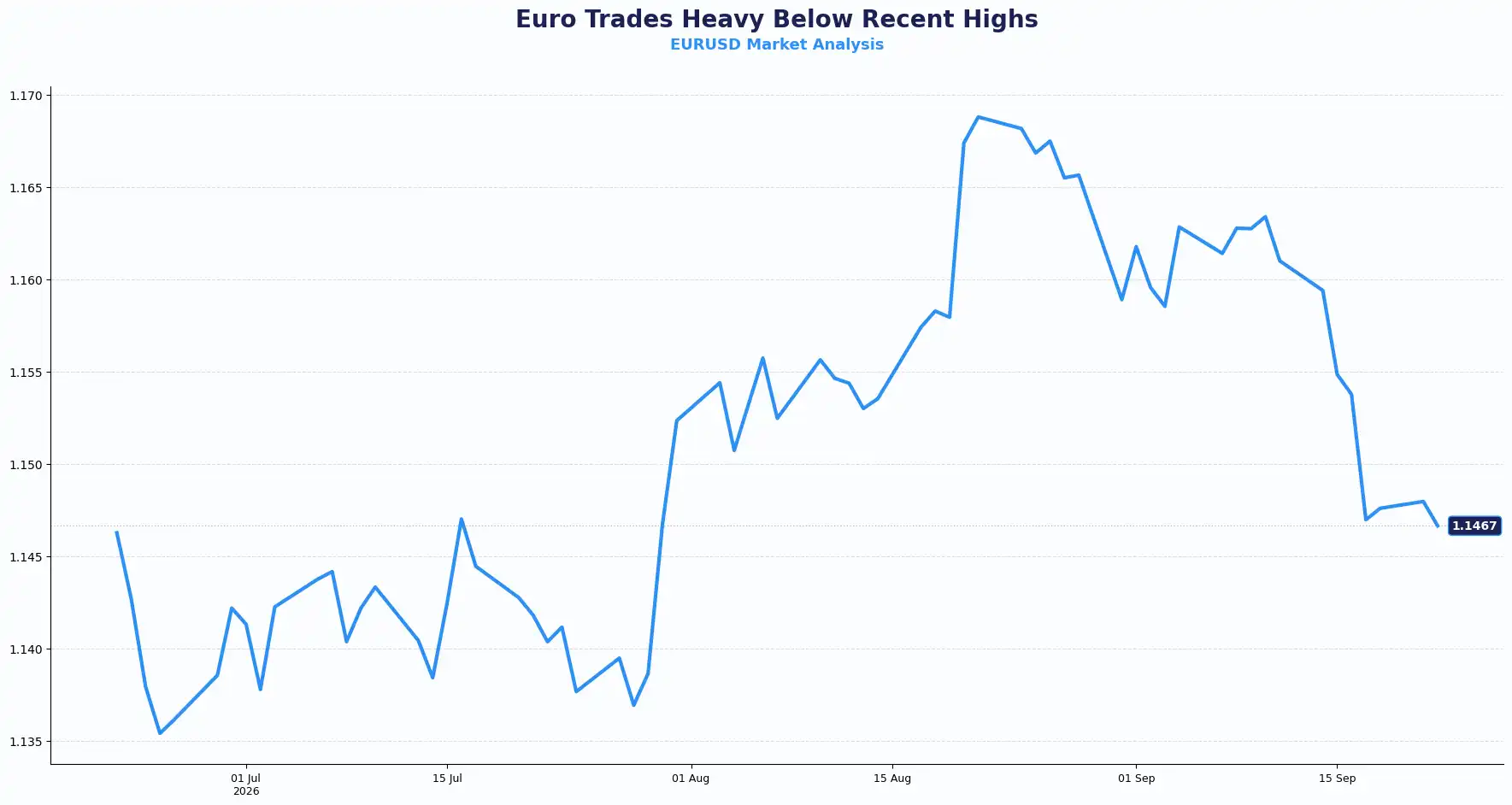
Key technical reference levels for EUR/USD: resistance sits near 1.1500, followed by 1.1545, while support sits around 1.1435, followed by 1.1400.
USD: Dollar Holds Near Recent Highs as Fed Debate Continues
DXY: 100.40
DXY is trading around 100.40, close to the upper end of its recent range as markets continue to assess the prospect of further Federal Reserve (Fed) tightening. Interest-rate markets are pricing roughly a 56% probability of another Fed rate increase in October, up from around 43.5% last week.
Chicago Fed President Austan Goolsbee also commented on the inflation and monetary-policy outlook. Goolsbee said persistent inflation may increasingly reflect stronger demand alongside earlier supply shocks, and indicated that a more aggressive response could be required if demand is overheating.
The wider US rate backdrop is more balanced than earlier in the month. Longer-term Treasury yields have eased, while expectations for additional tightening remain elevated. DXY remains near recent highs without extending materially above last week’s peak.
Attention today turns to further Fed commentary and the weekly ADP employment reading. Further labour-market and inflation data may be assessed alongside existing expectations for the October meeting.
Other Currencies: Yen Trades Lower Amid Wide Global Rate Differentials
USD/JPY: 157.61 | GBP/JPY: 210.78 | AUD/USD: 0.7116 | NZD/USD: 0.5744
USD/JPY is trading around 157.61 as the yen comes under renewed pressure. Markets currently imply roughly a 30% probability of another Bank of Japan (BoJ) rate increase in October, compared with around a 55% probability of another Fed increase, while differences between US and Japanese rate expectations remain relevant for the pair.
Market attention has also shifted from Monday’s intervention-related developments, towards expectations for the pace of future BoJ tightening relative to other major central banks. GBP/JPY is trading around 210.78, while the yen remains weaker against several major currencies.
NZD/USD has recovered to around 0.5744 after Reserve Bank of New Zealand (RBNZ) Governor Anna Breman said persistent increases in global oil prices could result in somewhat higher near-term inflation than previously forecast. Markets currently imply around a 75% probability of another RBNZ rate increase in October.
AUD/USD is trading near 0.7116 as markets continue to assess Australian inflation risks and expectations for further Reserve Bank of Australia tightening. Broader US dollar moves and relative interest-rate expectations remain relevant considerations for the pair.
Current Rate Table
| Pair | Rate | Trend |
|---|---|---|
| GBP/USD | 1.3369 | Bearish short-term |
| EUR/GBP | 0.8572 | Mildly bearish EUR |
| EUR/USD | 1.1460 | Neutral to bearish |
| USD/JPY | 157.61 | Mildly bullish USD |
| AUD/USD | 0.7116 | Ranging |
| NZD/USD | 0.5744 | Mildly bullish NZD |
| USD/CAD | 1.4028 | Mildly bullish USD |
Market Lookahead
Tuesday, Sep 22
- USD – Fed Vice Chair Jefferson Speech
- USD – Fed President Williams Speech
- EUR – Eurozone Consumer Confidence (Preliminary)
Wednesday, Sep 23
- EUR – Germany & Eurozone HCOB Composite & Services PMI (Sep)
- GBP – S&P Global Composite & Services PMI (Sep)
- USD – S&P Global Services PMI (Sep)
Thursday, Sep 24
- EUR – Germany Ifo Business Climate (Sep)
- USD – Initial Jobless Claims
Friday, Sep 25
- USD – Durable Goods Orders (Aug)
Stay Ahead in the Currency Game
Whether you're a daily FX trader or handle international transactions regularly, our 'Currency Pulse' newsletter delivers the news you need to make more informed decisions. Receive concise updates and in-depth insights directly in your LinkedIn feed.
Subscribe to 'Currency Pulse' now and never miss a beat in the currency markets!
Ready to act on today’s insights? Get a free quote or give us a call on: +44 (0)20 7740 0000 to connect with a dedicated portfolio manager for tailored support.
Important Disclaimer: This blog is for informational purposes only and should not be considered financial advice. Currency Solutions does not take into account the investment objectives, financial situation, or specific needs of individual readers. We do not endorse or recommend any specific financial strategies, products, or services mentioned in this content. Forward contracts can help businesses manage foreign exchange exposure by providing greater certainty over future exchange rates, although they may also mean that businesses do not benefit from favourable exchange-rate movements. Businesses should consider their individual circumstances and speak with their dealer to understand how forward contracts may support their specific foreign exchange requirements. All information is provided “as is” without any representations or warranties, express or implied, regarding its accuracy, completeness, or timeliness.