US Inflation Rises as Dollar Strengthens Against the Sterling and Euro
7 min read
Share


The US dollar strengthened against the euro and Sterling after US inflation data showed consumer prices rose 0.4% in August. The release lifted expectations for a 25-basis-point Federal Reserve rate increase, with market pricing for a hike rising to around 86% from 72% a day earlier. Higher Treasury yields also supported the dollar, although its gains were limited as oil prices remained elevated amid the continuing conflict in the Middle East.
In the eurozone, European Central Bank Chief Economist Philip Lane said a persistent rise in energy prices could weaken personal consumption later in the year. His comments came as higher energy costs continued to create uncertainty around inflation and the wider economic outlook, keeping the impact of the energy shock in focus for the euro.
Sterling also remained sensitive to the wider inflation and interest-rate backdrop. Rising oil prices increased concerns about renewed inflationary pressure in the UK, while the dollar's firmer tone placed pressure on GBP/USD. Elsewhere, the Japanese yen remained stronger against the US dollar during the reporting period as expectations for tighter Bank of Japan policy continued to influence USD/JPY.
GBP: US Inflation Data Puts Pressure on Sterling
GBP/USD: 1.3479 | EUR/GBP: 0.8561
Sterling remained above the $1.35 level at the start of the new week after recovering from a brief decline against the US dollar following Friday's US inflation data. GBP/USD fell towards 1.3470 after the release before recovering, as the initial dollar strength following the data eased.
The US Consumer Price Index rose 0.4% in August from July, while annual inflation remained at 3.4%. Core inflation increased 0.3% month-on-month and eased to 2.4% annually. The figures strengthened market expectations of a Federal Reserve rate increase, with pricing rising to around 86% on Friday.
Despite the stronger dollar immediately following the data, Sterling regained ground as the market reaction moderated. By Monday morning, GBP/USD was consolidating above 1.3500, with investors appearing more cautious ahead of the major central-bank decisions due later in the week.
Against the euro, Sterling was comparatively steady during the reporting period. With no major UK economic release after Friday's cut-off, EUR/GBP was influenced mainly by developments in the eurozone and the wider response to higher energy prices and changing interest-rate expectations.
For GBP/USD, the stronger US inflation figures added support to the dollar by reinforcing expectations of tighter US monetary policy. A further strengthening of those expectations can add pressure to the pair, while a moderation in US rate expectations can reduce dollar support and allow GBP/USD to recover.
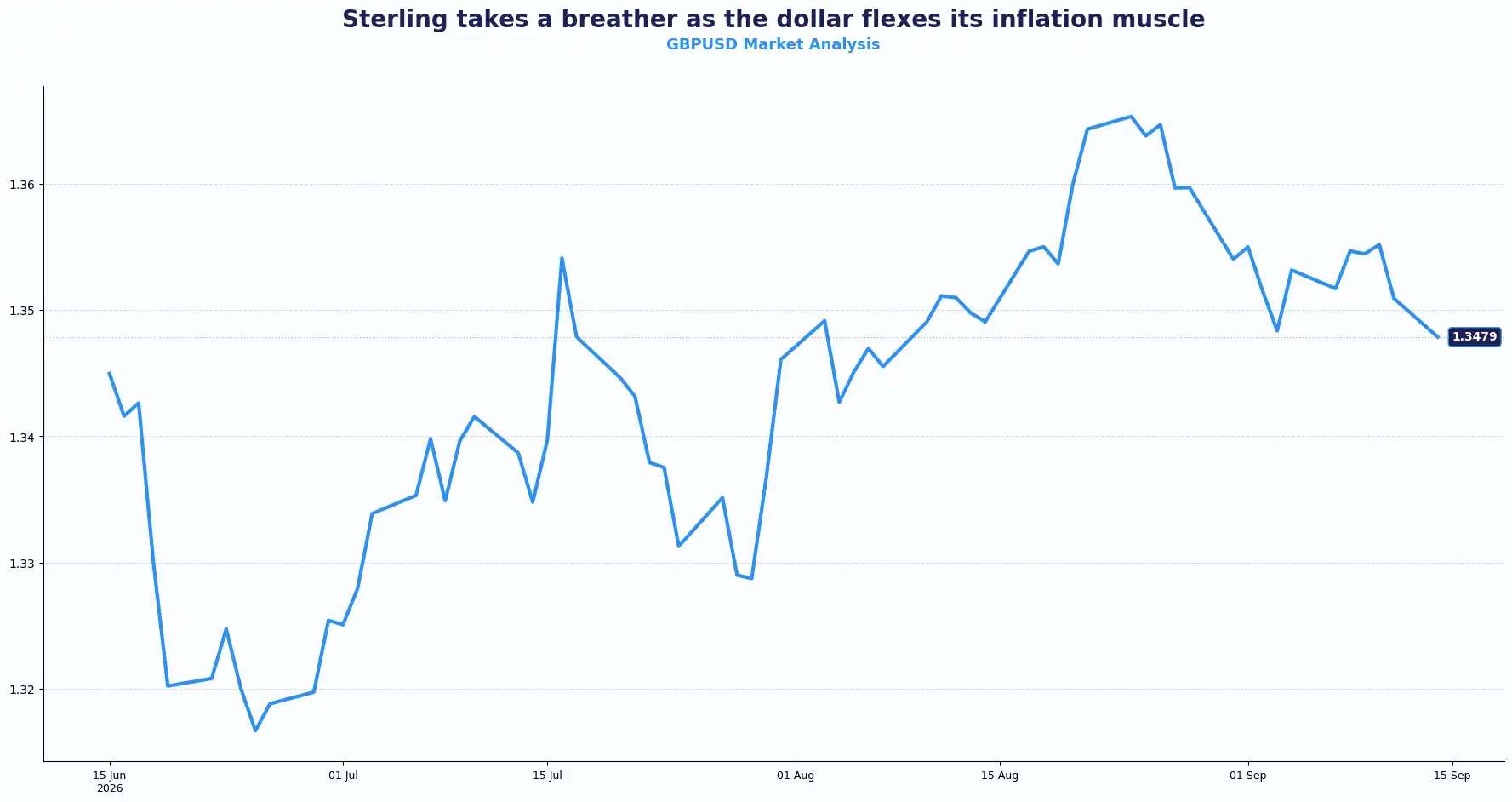
Key Technical levels for the GBP/USD pair: Resistance sits near 1.3542, followed by 1.3675, while Support sits around 1.3476, followed by 1.3448.
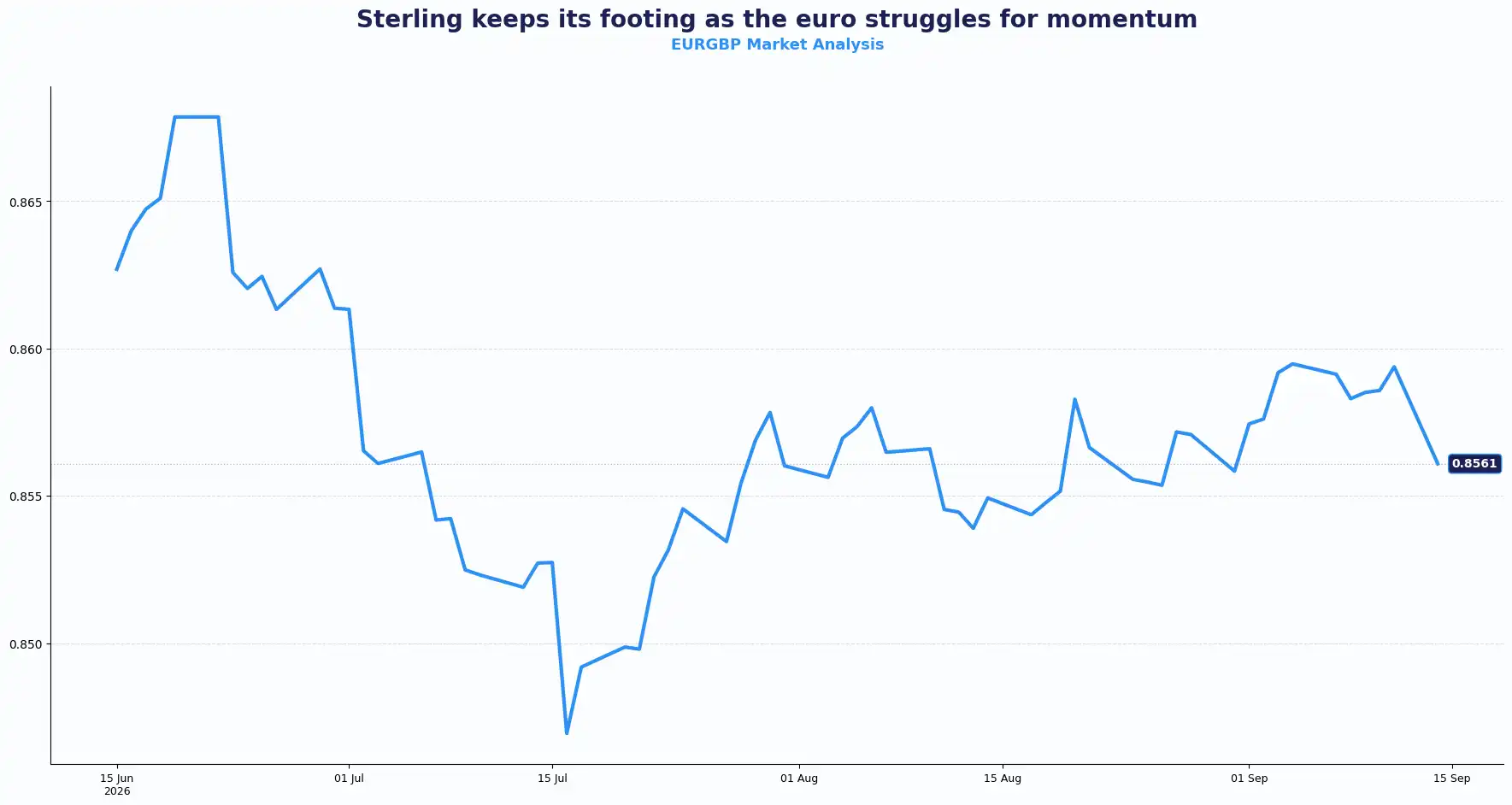
Key Technical levels for the EUR/GBP pair: Resistance sits near 0.8600, followed by 0.8649, while Support sits around 0.8570, followed by 0.8553.
EUR: Euro Slips Below $1.16 as Dollar Strengthens
EUR/USD: 1.1539
The euro came under pressure against the US dollar after Friday’s US inflation figures strengthened expectations for a Federal Reserve rate increase. EUR/USD fell below 1.1600 in early Asian trading on Monday, reaching around 1.1585 as markets adjusted to the latest US inflation data.
US consumer prices rose 0.4% month-on-month in August, keeping annual inflation at 3.4%. Core inflation, which excludes food and energy prices, increased 0.3% from the previous month and 2.4% from a year earlier. The data added to expectations for tighter US monetary policy and provided support for the dollar against the euro.
The euro's movement was also influenced by the wider interest-rate backdrop in Europe. The ECB's previous decision and subsequent policy messaging had kept expectations for further tightening elevated, but the dollar's stronger reaction to the latest US inflation data outweighed that support during the period. FXStreet reported that markets were pricing in close to 40 basis points of additional ECB tightening by the end of the year, while EUR/USD still moved lower.
The result was a softer EUR/USD despite the ECB's more hawkish tone. A stronger US inflation reading can increase expectations for higher US interest rates and support the dollar, while a weaker reading can have the opposite effect on the pair. During this reporting period, the stronger US inflation signal was the more significant influence on EUR/USD.
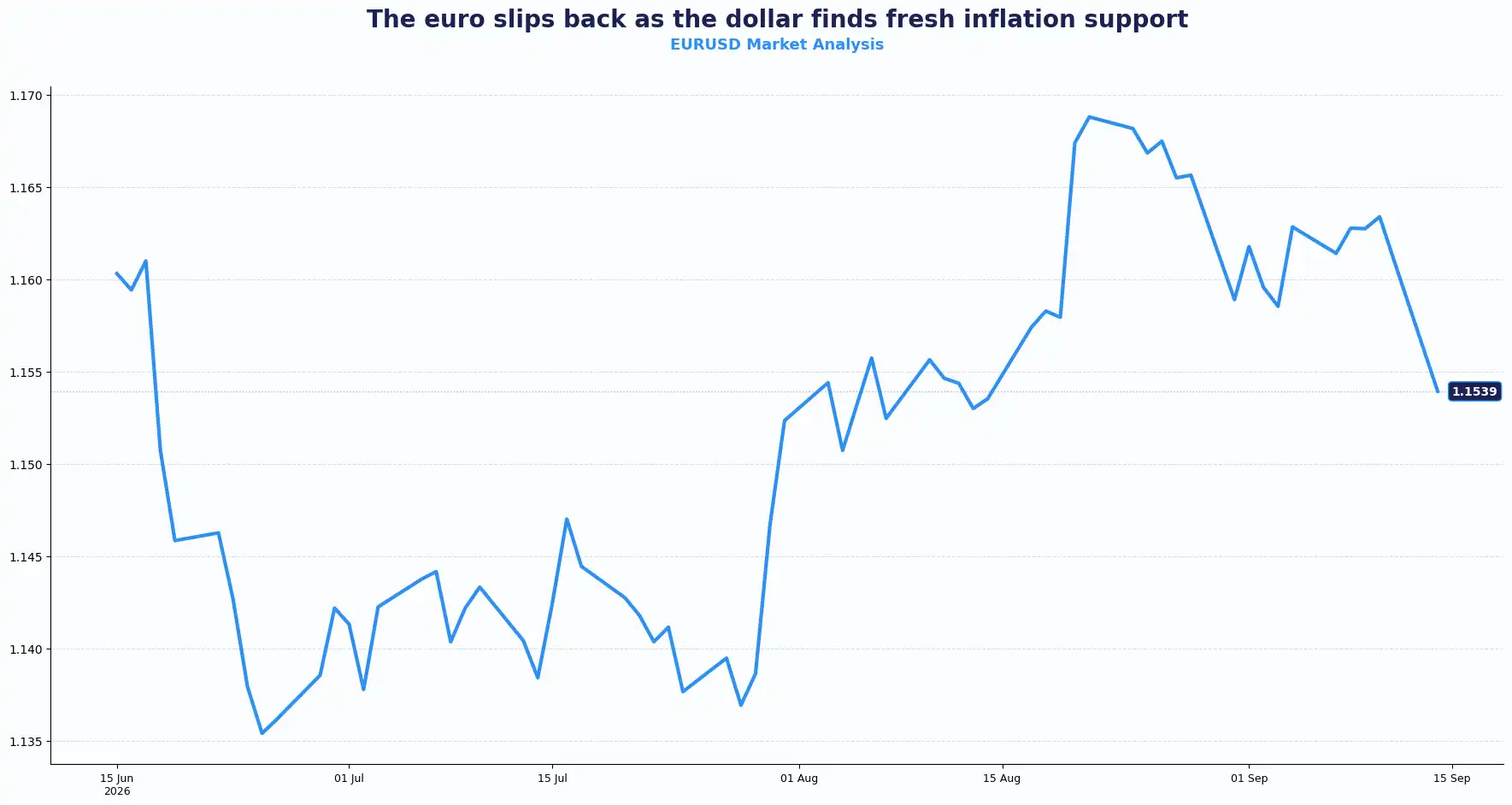
Key Technical levels for the EUR/USD pair: Resistance sits near 1.1620, followed by 1.1654, while Support sits around 1.1569, followed by 1.1530.
USD: US Inflation Data Supports the Dollar
DXY: 99.34
The US dollar strengthened against several major currencies after August inflation data showed consumer prices rose 0.4% month-on-month, while annual inflation remained at 3.4%. The release increased market expectations of a 25-basis-point Federal Reserve rate increase, with the probability rising to around 86% from 72% previously.
Core consumer prices, which exclude food and energy, increased 0.3% from the previous month and 2.4% year-on-year. The monthly rise was the strongest since April and added to concerns that underlying inflationary pressure remains persistent.
The shift in rate expectations was reflected in the US Treasury market, with the two-year Treasury yield reaching around 4.63% following the inflation release. Higher yields supported the dollar as markets reassessed the interest-rate outlook.
The dollar's advance was not uniform, however. While it gained against the euro and Swiss franc after the CPI release, overall gains remained limited, with the Dollar Index still facing pressure after a second consecutive weekly decline. The yen also strengthened against the dollar, supported by expectations of tighter Bank of Japan policy.
Over the weekend, renewed concerns around energy supplies added another layer to the inflation story. Brent crude moved back above $100 a barrel as tensions in the Middle East increased, keeping attention on the potential impact of higher energy costs on inflation and monetary policy.
For the dollar, stronger-than-expected inflation can increase expectations of tighter monetary policy and provide support for DXY. Conversely, softer inflation can reduce those expectations and limit dollar support. During this reporting period, the August inflation figures were the main factor behind the dollar's firmer tone.
Other Currencies: Yen Gains as Dollar's Post-CPI Rise Fades
AUD/USD: 0.7167 | NZD/USD: 0.5827 | USD/JPY: 154.11 | GBP/JPY: 208.00
The Japanese yen strengthened against the US dollar during Friday's trading session, with USD/JPY falling after an initial rise following the release of US inflation data. The pair briefly climbed to around 154.49 before reversing lower and trading near 153.60, as demand for the yen outweighed the dollar's initial post-CPI gains.
The yen's move was also supported by expectations that the Bank of Japan could continue normalising monetary policy. Markets had already been assessing the possibility of further tightening in Japan, helping the currency recover even as US inflation strengthened expectations around Federal Reserve policy.
The reversal in USD/JPY also showed that the stronger US inflation reading did not produce a sustained dollar advance against every major currency. While the dollar gained against the euro and initially moved higher against the yen, the latter's strength limited the move as the session progressed.
Elsewhere, the Australian dollar came under pressure at the start of the new week, with AUD/USD trading lower as renewed expectations of tighter US monetary policy supported the greenback. NZD/USD also weakened, falling towards the 0.5780 region in early Monday trading. These moves reflected the broader dollar reaction rather than a separate major Australian or New Zealand event during the reporting period.
Current Rate Table
| Pair | Rate | Trend |
|---|---|---|
| GBP/USD | 1.3479 | Neutral / Mild Bearish Pressure |
| EUR/GBP | 0.8561 | Rangebound |
| EUR/USD | 1.1539 | Neutral / Mild Bearish Pressure |
| USD/JPY | 154.11 | Mild Bearish Pressure |
| AUD/USD | 0.7167 | Mild Bearish Pressure |
| NZD/USD | 0.5827 | Mild Bearish Pressure |
| GBP/JPY | 208.00 | Rangebound |
Market lookahead:
Tue, Sep 15
- UK Average Earnings figures (Jul)
- UK Unemployment Rate (Jul)
Wed, Sep 16
- UK Consumer Price Index (Aug) inflation figures
- US Retail Sales (Aug)
- Federal Reserve Interest Rate Decision
Thu, Sep 17
- Bank of England Interest Rate Decision
- Eurozone Consumer Price Index (Aug) inflation figures
Fri, Sep 18
- UK Retail Sales (Aug)
- Bank of Japan Interest Rate Decision
Stay Ahead in the Currency Game
Whether you're a daily FX trader or handle international transactions regularly, our 'Currency Pulse' newsletter delivers the news you need to make more informed decisions. Receive concise updates and in-depth insights directly in your LinkedIn feed.
Subscribe to 'Currency Pulse' now and never miss a beat in the currency markets!
Ready to act on today’s insights? Get a free quote or give us a call on: +44 (0)20 7740 0000 to connect with a dedicated portfolio manager for tailored support.
Important Disclaimer: This blog is for informational purposes only and should not be considered financial advice. Currency Solutions does not take into account the investment objectives, financial situation, or specific needs of individual readers. We do not endorse or recommend any specific financial strategies, products, or services mentioned in this content. Forward contracts can help businesses manage foreign exchange exposure by providing greater certainty over future exchange rates, although they may also mean that businesses do not benefit from favourable exchange-rate movements. Businesses should consider their individual circumstances and speak with their dealer to understand how forward contracts may support their specific foreign exchange requirements. All information is provided “as is” without any representations or warranties, express or implied, regarding its accuracy, completeness, or timeliness.