US Dollar Slides After Democrats Win Congress While Euro and Sterling Rise
7 min read
Share


The US dollar fell to a one-month low early Wednesday after Democrats won control of both the House of Representatives and the Senate in Tuesday's US midterm elections. The US Dollar Index (DXY) declined approximately 0.6% to 101.27 while investors assessed the implications of the election results. Meanwhile, the euro rose 0.6% to $1.1258 against the US dollar, while sterling gained 0.3% to $1.3484.
The election outcome could have implications for future regulation of the artificial intelligence sector, although any policy changes and their potential effects on US economic growth remain uncertain. US Treasury yields also declined, with the 10-year yield falling nearly five basis points to 4.915%. Lower yields may have added pressure on the dollar, although the longer-term economic implications of the election remain uncertain.
Meanwhile, Tuesday's US economic figures suggested continued resilience. September job openings increased to 7.523 million, exceeding expectations of 7.1 million, while factory orders rose 1.8%, above forecasts of 1.2%. Despite the stronger data, the dollar remained under pressure during the overnight session following the election results. Investors now await further US employment and services figures for additional indications of the economic outlook and potential Federal Reserve (Fed) interest-rate decisions.
GBP: Sterling Rises Ahead of Thursday's Rate Decision
GBP/USD: 1.3484 | EUR/GBP: 0.8338
Sterling's advance was more pronounced against the US dollar than against the euro. GBP/USD reached its highest level since 16 September, while a modest increase in EUR/GBP indicated that sterling had weakened slightly against the euro. This pattern was consistent with broader US dollar weakness rather than uniform sterling strength across currency pairs.
The Bank of England (BoE) is scheduled to announce its interest-rate decision on Thursday, 5 November, with markets widely expecting a 25-basis-point rate hike from 3.75% to 4.00%. UK inflation currently stands at 3.5%, above the central bank's 2% target, while elevated energy costs continue to contribute to inflationary pressures. Resilient economic activity and signs of stability in the labour market may also have influenced expectations of higher borrowing costs.
However, the expected rate hike is only part of the decision. Financial markets have priced in approximately three additional increases next year, while some economists believe further tightening may be more limited. Consequently, the Monetary Policy Committee's voting split and guidance on future interest rates could prove important for sterling. Investors will also be watching Wednesday's final UK services PMI, scheduled for release at 09:30 GMT, for further indications of economic activity.
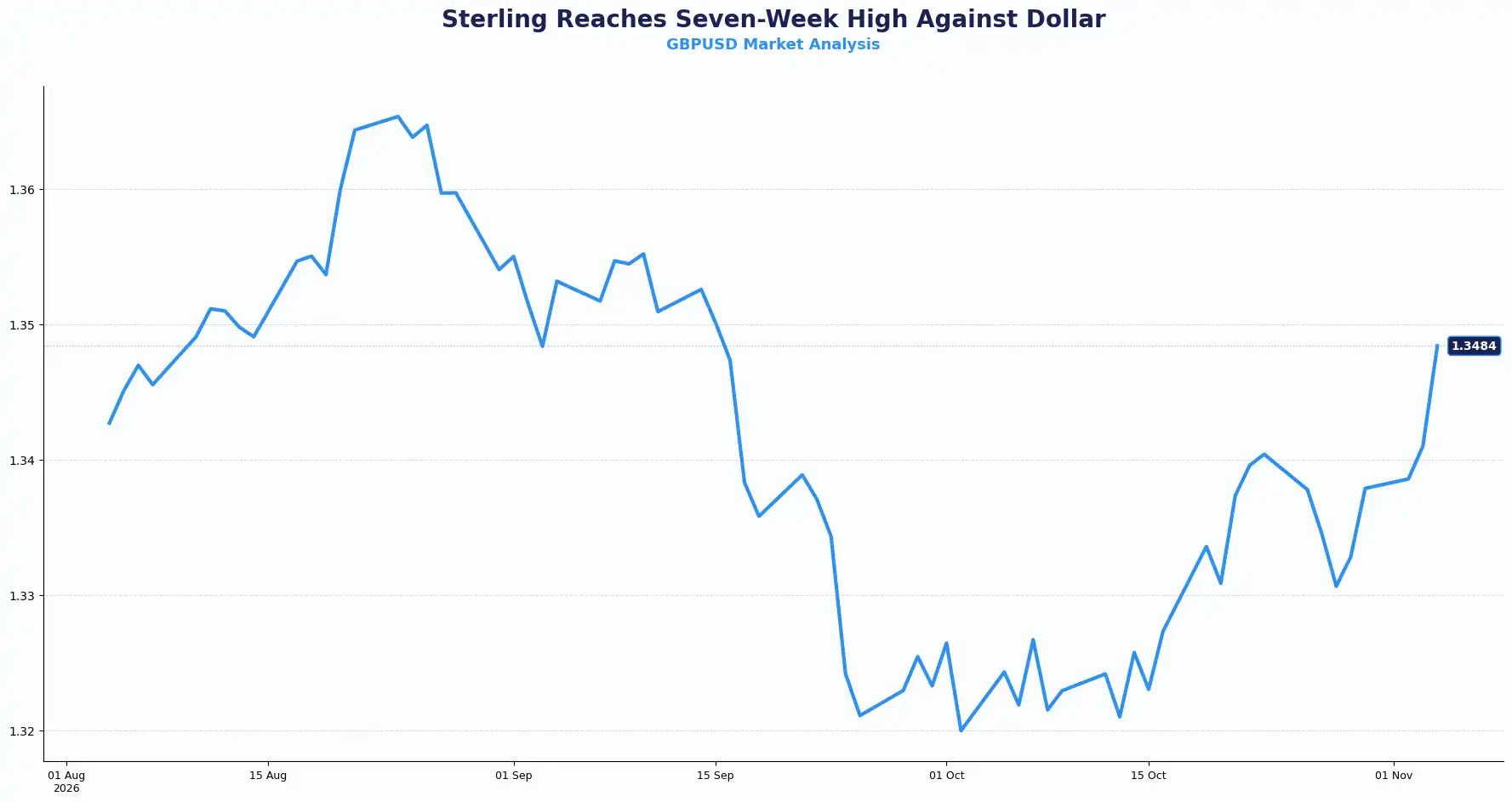
Key technical reference levels for GBP/USD: Resistance sits near 1.3480, followed by 1.3556, while support sits around 1.3424, followed by 1.3404.
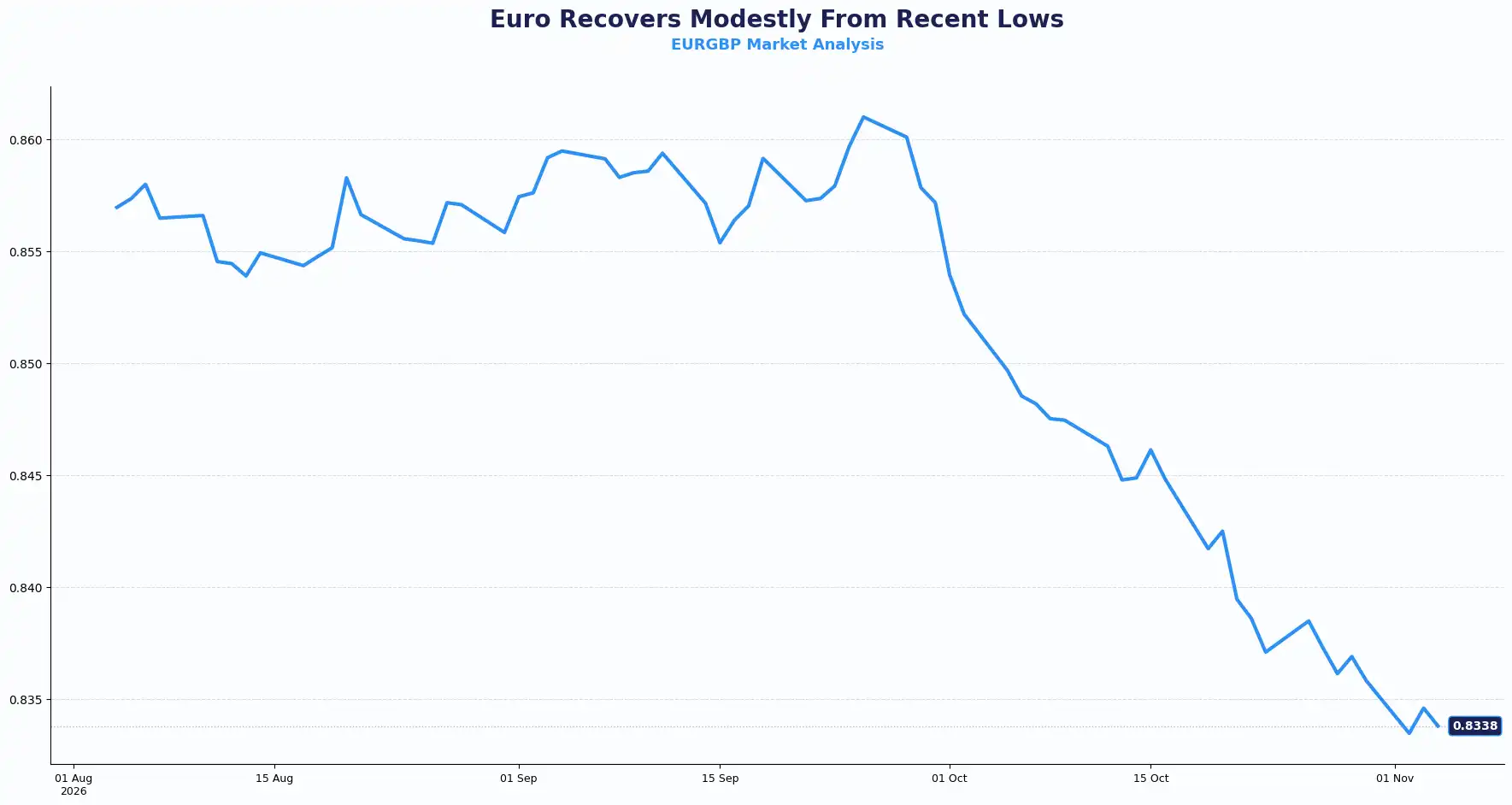
Key technical reference levels for EUR/GBP: Resistance sits near 0.8360, followed by 0.8380, while support sits around 0.8320, followed by 0.8300.
EUR: Euro Gains Amid December Rate Expectations
EUR/USD: 1.1247
The euro remained higher against the US dollar early Wednesday, although EUR/USD eased to around 1.1247 after reaching higher levels overnight. Alongside broader US dollar weakness, comments from European policymakers kept the possibility of another interest-rate increase before the end of the year in focus.
On Tuesday, Deutsche Bundesbank President Joachim Nagel said a December rate hike by the European Central Bank (ECB) would likely be necessary unless the inflation outlook improved significantly. Bulgarian central bank governor Dimitar Radev expressed a similar view, indicating that October's decision to leave interest rates unchanged did not mean further increases were ruled out. The ECB's deposit rate currently stands at 2.50%, with a potential December increase taking it to 2.75%. However, financial markets had not fully priced in that outcome.
The main concern for policymakers remains whether elevated energy costs could lead to broader increases in wages and consumer prices. Although there has been limited evidence of these effects so far, inflation risks remain elevated. Investors are therefore awaiting Wednesday's preliminary euro-area inflation figures, scheduled for 10:00 GMT, which could influence expectations for the December ECB meeting. With interest-rate markets also anticipating further Federal Reserve increases, the relative pace of tightening remains important for EUR/USD.
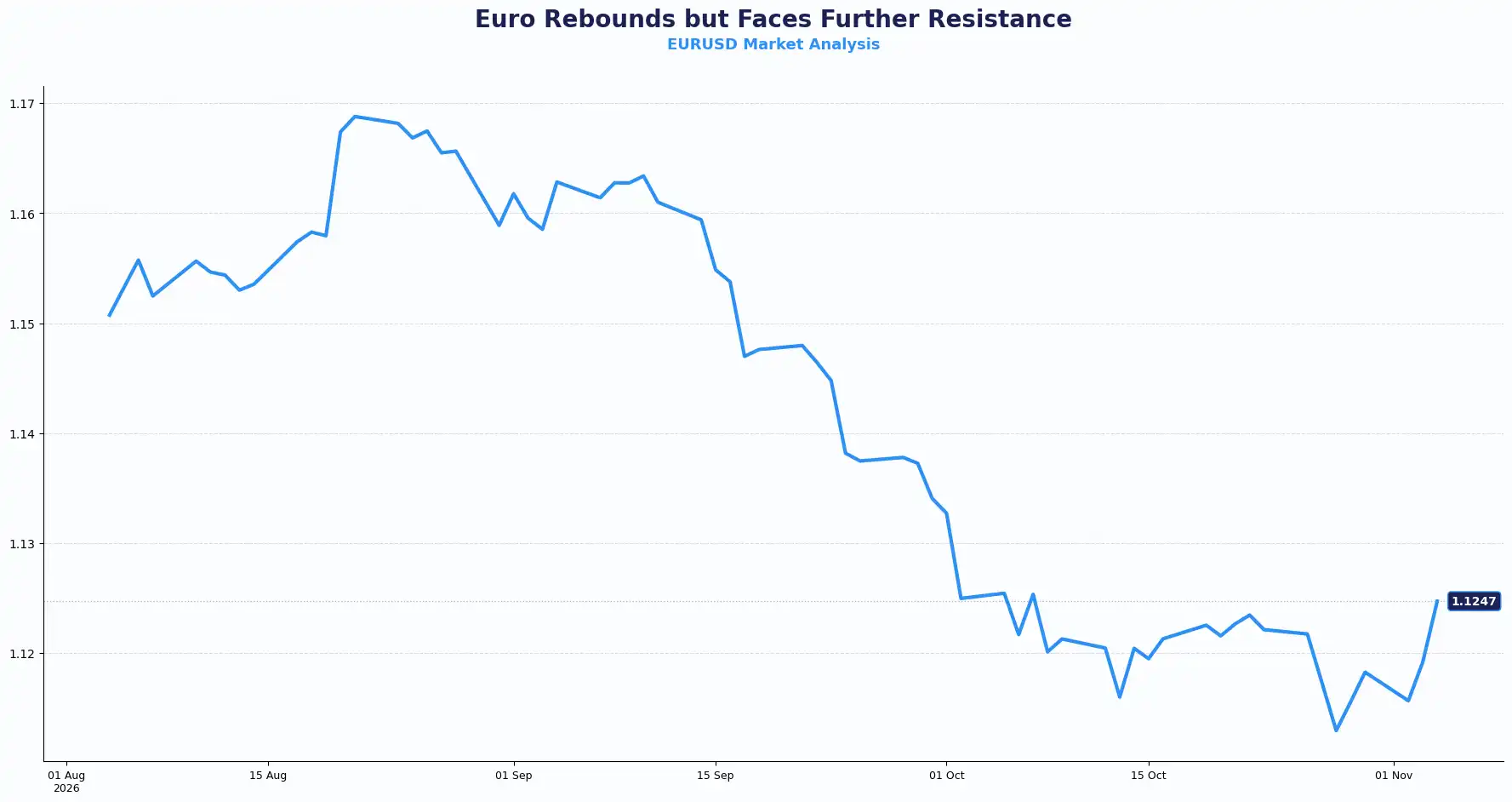
Key technical reference levels for EUR/USD: Resistance sits near 1.1250, followed by 1.1280, while support sits around 1.1215, followed by 1.1190.
USD: Dollar Slips Despite Fed Hike Bets
DXY: 101.27
Despite the decline in the US dollar, financial markets continued to anticipate further Federal Reserve (Fed) monetary tightening. Interest-rate futures indicated a probability of more than 75% for a December Fed rate hike, suggesting that the currency's weakness did not reflect a complete reversal in expectations for the central bank's next decision.
However, market pricing suggested reduced expectations for additional Fed rate hikes in 2027, while uncertainty remained over the potential implications of the election for US economic growth and government spending. Lower Treasury yields also reduced support for the dollar, even as expectations of a December rate hike remained relatively firm. This distinction is important because near-term currency movements and longer-term interest-rate expectations do not always move in the same direction.
Attention now turns to Wednesday's US economic releases. October's ADP private employment report, scheduled for 13:15 GMT, is expected to show approximately 69,000 additional jobs, compared with 90,000 previously. The Institute for Supply Management (ISM) Services Purchasing Managers' Index, due at 15:00 GMT, is forecast at 54.8, marginally below September's 54.9. Both releases, followed by Friday's nonfarm payrolls report, could influence expectations for the December Fed decision.
Other Currencies: Japanese Yen Strengthens While US Treasury Yields Fall
AUD/USD: 0.6970 | NZD/USD: 0.5620 | USD/JPY: 157.92 | GBP/JPY: 212.53
The Japanese yen strengthened nearly 0.8% against the US dollar on Wednesday, with USD/JPY falling to around 157.92 as US Treasury yields declined following the midterm election results. Lower US Treasury yields may have narrowed the relative interest-rate advantage of US dollar assets, potentially providing some support for the yen. Meanwhile, GBP/JPY traded near 212.53, as sterling's gains against the US dollar were partly offset by the yen's recovery.
The New Zealand dollar recovered modestly, with NZD/USD trading around 0.5620, although weaker domestic employment figures limited further gains. New Zealand's unemployment rate rose to 5.7% in the third quarter, exceeding expectations of 5.5%, while employment declined by 0.1% against forecasts for a 0.4% increase. The figures may have dampened expectations of a near-term rate hike by the Reserve Bank of New Zealand (RBNZ), following its decision to leave interest rates unchanged in October.
Meanwhile, the Australian dollar recovered slightly after two consecutive sessions of losses, with AUD/USD trading near 0.6970. However, the recovery remained modest amid weaker services-sector data. Australia's Services Purchasing Managers' Index (PMI) declined to 48.5 in October from 51.9, indicating a contraction in activity. China's RatingDog Services PMI also eased to 50.8 from 51.6, adding to concerns about regional economic momentum. The figures provided further context for investors assessing the Reserve Bank of Australia's (RBA) future interest-rate decisions.
Current Rate Table
| Currency Pair | Rate | Trend |
|---|---|---|
| GBP/USD | 1.3484 | Bullish GBP |
| EUR/GBP | 0.8338 | Mildly bullish EUR |
| EUR/USD | 1.1247 | Bullish EUR |
| USD/JPY | 157.92 | Bearish USD |
| AUD/USD | 0.6970 | Consolidating |
| NZD/USD | 0.5620 | Neutral to bearish NZD |
| USD/CAD | 1.3970 | Mildly bearish USD |
Market Lookahead
Wednesday, Nov 04
- Eurozone HICP & Core HICP (Oct)
- US ISM Services PMI (Oct)
Thursday, Nov 05
- BoE Interest Rate Decision & Monetary Policy Report
- US Initial Jobless Claims
Friday, Nov 06
- CAD Employment Change & Unemployment Rate (Oct)
- US Average Hourly Earnings (Oct)
- US Nonfarm Payrolls (Oct)
Stay Ahead in the Currency Game
Whether you're a daily FX trader or handle international transactions regularly, our 'Currency Pulse' newsletter delivers the news you need to make more informed decisions. Receive concise updates and in-depth insights directly in your LinkedIn feed.
Subscribe to 'Currency Pulse' now and never miss a beat in the currency markets!
Ready to act on today’s insights? Get a free quote or give us a call on: +44 (0)20 7740 0000 to connect with a dedicated portfolio manager for tailored support.
Important Disclaimer: This blog is for informational purposes only and should not be considered financial advice. Currency Solutions does not take into account the investment objectives, financial situation, or specific needs of individual readers. We do not endorse or recommend any specific financial strategies, products, or services mentioned in this content. Forward contracts can help businesses manage foreign exchange exposure by providing greater certainty over future exchange rates, although they may also mean that businesses do not benefit from favourable exchange-rate movements. Businesses should consider their individual circumstances and speak with their dealer to understand how forward contracts may support their specific foreign exchange requirements. All information is provided “as is” without any representations or warranties, express or implied, regarding its accuracy, completeness, or timeliness.