UK Jobs Miss Weighs on Pound; US-Iran Standoff Keeps FX on Edge
7 min read
Share


Sterling eased on Tuesday after UK unemployment held at 4.9% for the three months to June, defying expectations of a decline to 4.8%. Job creation slowed materially from the prior quarter, giving the pound little to work with ahead of Wednesday's UK CPI release. GBP/JPY slipped as the yen softened broadly despite firm market expectations for a BOJ rate hike in September.
The euro steadied around 1.1575 against the dollar, supported by eurozone economic resilience and growing ECB tightening expectations for September. EUR/GBP edged higher as sterling absorbed the jobs miss.
The dollar found a tentative floor after three days of losses. The US-Iran ceasefire MoU expired Monday with Trump ruling out any extension and no deal in sight, pushing oil to a two-week high and keeping the geopolitical risk premium firmly in play across FX. Fed hike bets fade. The Swiss franc gave up some safe-haven ground as the dollar steadied. Antipodean pairs faced headwinds from risk-off positioning and commodity uncertainty tied to Strait of Hormuz disruption.
Wednesday brings UK CPI and FOMC minutes.
GBP: Sterling Takes the First Hit from Softer Jobs Data
GGBP/USD: 1.3525 | EUR/GBP: 0.8554
Sterling slipped against the dollar on Tuesday after UK labour data showed unemployment holding at 4.9% in the three months to June. The figure fell short of expectations, to 4.8%.
GBP/USD traded around 1.3525 in the early European session, after failing to hold above the 1.3570 area. The move leaves sterling closer to near-term support while investors’ attention turns to Wednesday’s UK inflation report.
The labour data gave the pound little reason to extend its recent gains. The UK economy added 83,000 jobs in the three months to June. That was down from 147,000 in the three months to May.
Wage growth offered some support. Average earnings excluding bonuses rose 3.5% year on year in the three months to June. That compares with 3.4% previously. Stronger wage growth keeps domestic inflation pressure in focus. It also complicates the Bank of England’s (BoE) policy path.
A softer labour market can reduce pressure on the BoE to keep policy tight. Strong wage growth can push in the opposite direction. Wednesday’s CPI release could signal what carries more weight for sterling. Sterling has lost some momentum, but the data does not give the BoE a clean reason to turn more dovish either. The BoE held Bank Rate at 3.75% at its July meeting by a 6-3 vote split, with the minority preferring an increase to 4.00%. The next decision will be made at the September meeting.
UK Headline inflation is forecast to accelerate to 2.9% YoY from 2.6% in June. Core CPI, which strips out food, energy, alcohol and tobacco, is seen at 2.5%, anticipating slight easing from 2.6%.
That combination creates a delicate test for GBP/USD and EUR/GBP.
A stronger-than-expected headline print could reinforce expectations for tighter BoE policy and lend support to sterling. A softer reading could reduce that support and leave GBP/USD more exposed to the dollar’s own rate and risk drivers.
Against the euro, sterling edged lower to 0.8555, while EUR/GBP posts mild gains as the single currency absorbs the labour data. Against the yen, sterling fell to near 215.95, extending session losses.
The yen has not shown the same safe-haven strength as the dollar despite renewed geopolitical risk. Expectations for a Bank of Japan rate increase in September continue to shape the pair. That leaves GBP/JPY sensitive to both sides of the policy equation. UK inflation can shift the sterling leg while Japanese policy expectations can move the yen leg.
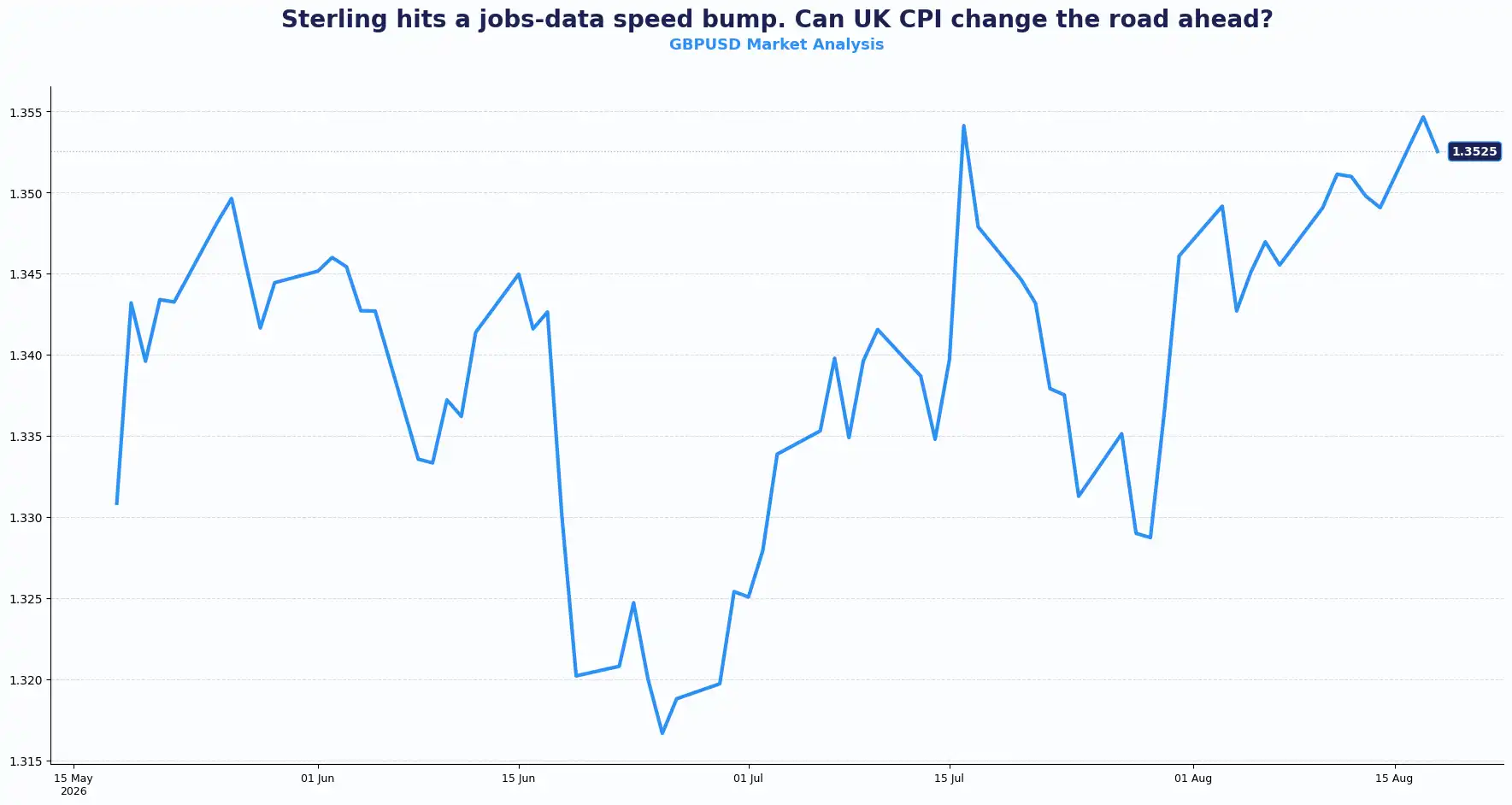
Key Technical levels for the GBP/USD pair: Resistance sits at 1.3570, 1.3615 and Support sits at 1.3500, 1.3450
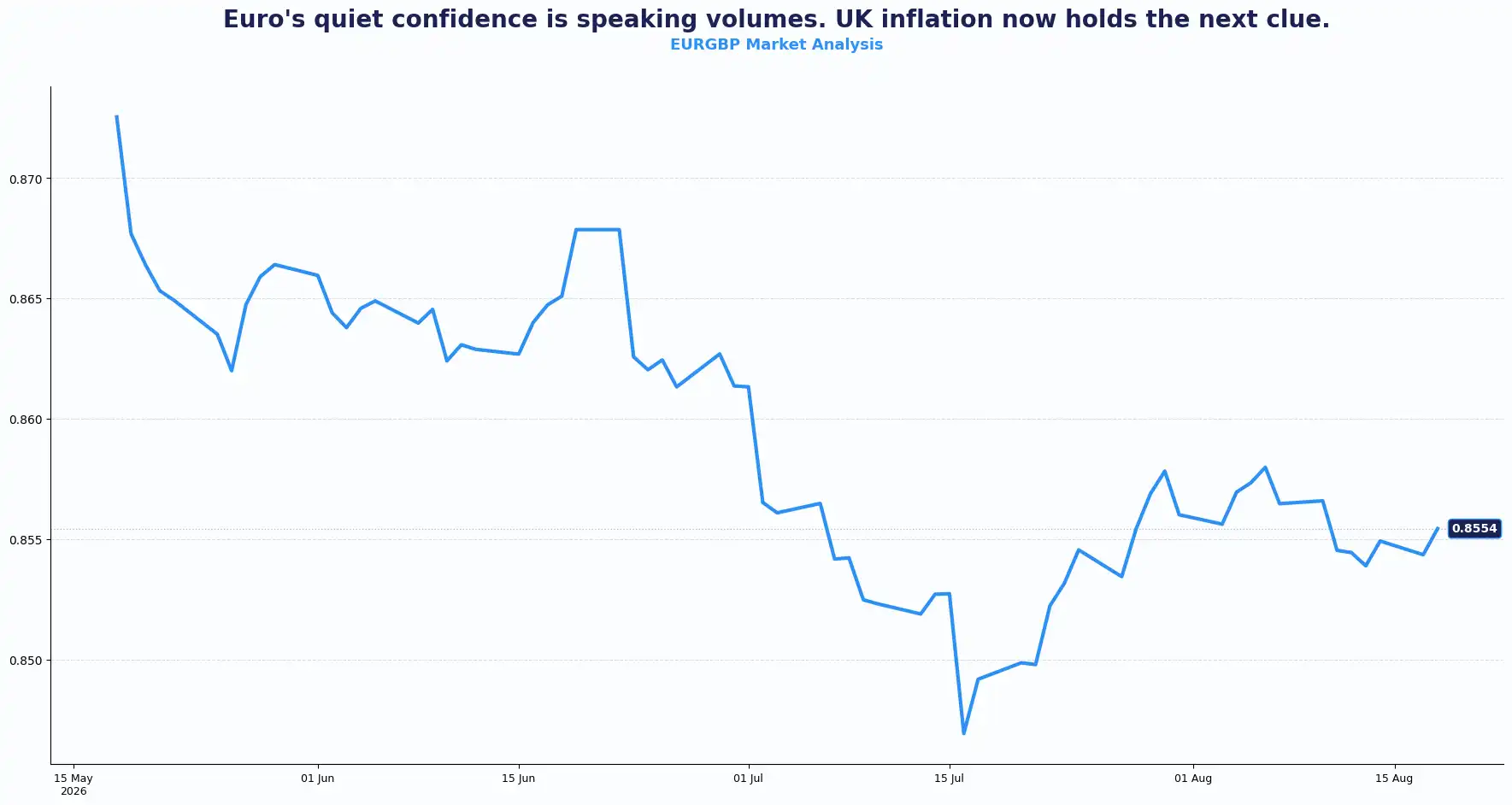
Key Technical levels for the EUR/GBP pair: Resistance sits at 0.8580, 0.8600 and Support sits at 0.8530
EUR: Euro Consolidates as Geopolitical Headwinds Grow
EUR/USD: 1.1574 | EUR/GBP: 0.8554
The euro finds firmer ground against sterling. The EUR/GBP pair edged higher as the softer unemployment figure reduced some of the recent support for sterling. Wednesday’s UK CPI figure could provide the next clear catalyst.
Eurozone economic resilience and the narrowing yield gap with the US have helped the euro hold a firmer tone. EUR/USD traded around 1.1570 after briefly testing the 1.1610 to 1.1614 resistance area before pulling back. EUR/USD now sits in a near-term range with 1.1560 acting as an important reference point and 1.1600 to 1.1615 forming the next upside test.
Geopolitical risk can favour the dollar through safe-haven demand. However, softer US economic data has reduced expectations for near-term Federal Reserve (Fed) tightening. That limits the dollar’s rate advantage and gives the EUR/USD pair room to hold higher levels.
Eurozone inflation and ECB expectations also matter. The ECB faces its own inflation risks from higher energy prices. Renewed disruption around the Strait of Hormuz could push energy costs higher and complicate the inflation outlook.
The ECB is expected to raise interest rates by 25 basis points at its September meeting. ECB president Christine Lagarde flagged last month that a rebound in oil prices tied to renewed hostilities in the Middle East poses an upside risk to eurozone inflation. Higher oil reinforces the case for further ECB tightening, which in turn provides a policy divergence argument in the euro's favour versus the dollar.
The ECB's September meeting and energy price dynamics could drive the next directional move for the single currency.
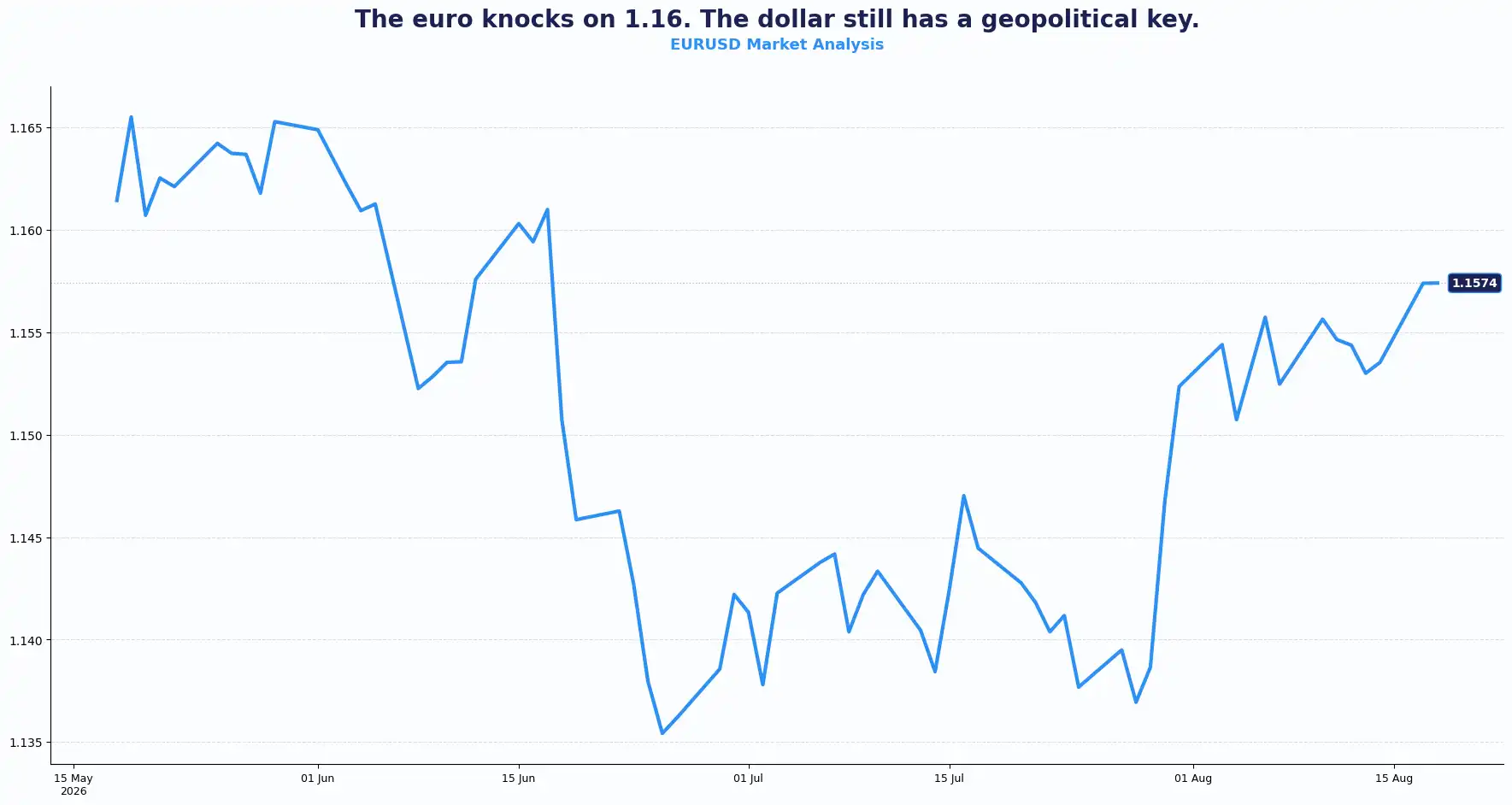
Key Technical levels for the EUR/USD pair: Resistance sits at 1.1600, 1.1615 and Support sits at 1.1560, 1.1500
USD: The Dollar Loses Rate Support but Gains Risk Demand
DXY: 99.60
The US Dollar Index steadied around 99.60 on Tuesday after three consecutive sessions of losses. Safe-haven demand tied to the collapse of the US-Iran agreement provided a modest floor. The DXY slipped below the base of its August consolidation range earlier this week, touching its multi-month lows against several major currencies.
Recent US economic data published have weakened the case for near-term Fed tightening. US NonFarm Payrolls (NFP) disappointed in July, and Consumer Price Index data for the same period came in modest. The combined effect led to a sharp reduction in expectations for Fed rate hikes. According to the CME FedWatch tool, the probability of a September hike has dropped to ~35%, down from 47% a month ago. Notably, three FOMC members dissented at the July meeting in favour of a hike; the detail behind that split is what Wednesday's FOMC minutes will illuminate.
Geopolitical risk drives near-term dollar strength. The US-Iran ceasefire MoU deadline expired without a final agreement. Iran has warned of a shift towards a fully offensive military posture while Washington has ruled out extending the temporary ceasefire. Oil prices have responded, with Brent Crude rising above $91 a barrel while WTI moved above $85 as concerns over supply through the Strait of Hormuz increased. That creates a tug of war for the dollar.
A steepening US yield curve reflects lingering fiscal concerns, keeping broader dollar trends constrained despite geopolitical support. Rising oil prices, should they persist, may force some re-pricing of hawkish Fed expectations. USD/CHF edged to 0.8116 as the Swiss franc gave up a fraction of its safe-haven premium.
Geopolitical escalation provides short-term support to the dollar, while fading Fed rate-hike expectations exert downward pressure. The FOMC minutes on Wednesday will be closely watched by markets for signals on whether the Fed's pause is firm or conditional on energy prices.
Other currencies show similar tension.
The Japanese yen softened broadly despite firm expectations for a Bank of Japan rate hike in September. USD/JPY trades at 159.69. The yen’s proximity to 160 per dollar keeps Japanese policy expectations firmly in focus. GBP/JPY fell to near 215.95 post UK employment data before stabilising around 216.05.
AUD/USD holds at 0.7103 and NZD/USD at 0.5879. Both antipodean pairs face headwinds from risk-off positioning and broader commodity uncertainty tied to disruptions in the Strait of Hormuz.
Current Rate Table
| Pair | Rate | Trend |
|---|---|---|
| GBP/USD | 1.3525 | Bearish short-term |
| EUR/USD | 1.1574 | Consolidation |
| EUR/GBP | 0.8554 | Mildly bullish EUR |
| USD/CHF | 0.8116 | Mildly bullish USD |
| USD/JPY | 159.69 | Ranging |
| GBP/JPY | 216.05 | Bearish short-term |
| AUD/USD | 0.7103 | Neutral to bearish |
| NZD/USD | 0.5879 | Neutral to bearish |
Market lookahead:
Tue, Aug 18
- Eurozone Harmonised Index of Consumer Prices (Jul) inflation figures
- Germany and Eurozone ZEW Survey - Economic Sentiment (Aug)
Wed, Aug 19
- UK Consumer Price Index (Jul) CPI - Inflation Figures
- UK Producer Price Index (PPI) (Jul)
- FOMC Minutes
Thurs, Aug 20
- Eurozone Consumer Confidence (Aug)
Fri, Aug 21
- UK GfK Consumer Confidence
- UK Retail Sales (Jul)
- Global PMI releases Services, Manufacturing and Composite (Aug)
Stay Ahead in the Currency Game
Whether you're a daily FX trader or handle international transactions regularly, our 'Currency Pulse' newsletter delivers the news you need to make more informed decisions. Receive concise updates and in-depth insights directly in your LinkedIn feed.
Subscribe to 'Currency Pulse' now and never miss a beat in the currency markets!
Ready to act on today’s insights? Get a free quote or give us a call on: +44 (0)20 7740 0000 to connect with a dedicated portfolio manager for tailored support.
Important Disclaimer: This blog is for informational purposes only and should not be considered financial advice. Currency Solutions does not take into account the investment objectives, financial situation, or specific needs of individual readers. We do not endorse or recommend any specific financial strategies, products, or services mentioned in this content. Forward contracts can help businesses manage foreign exchange exposure by providing greater certainty over future exchange rates, although they may also mean that businesses do not benefit from favourable exchange-rate movements. Businesses should consider their individual circumstances and speak with their dealer to understand how forward contracts may support their specific foreign exchange requirements. All information is provided “as is” without any representations or warranties, express or implied, regarding its accuracy, completeness, or timeliness.