Gulf conflict complicates June's central bank meetings
8 min read
Share


Middle East tensions are holding crude oil near multi-week highs, keeping headline inflation sticky across the G10 and boxing central banks into an uncomfortable hold. The BoE is hiking into a contracting economy. The ECB is pricing in a rate hike for June. The Fed is dropping its easing bias, carefully. Today's US nonfarm payrolls print is the first live data point that could shift the dollar's rate calculus.
GBP: Sterling Holds on Borrowed Hawkishness
GBPUSD 1.3436 | EURGBP 0.8650
Sterling remains locked in tight consolidation, with the GBP/USD pair pressing $1.3436 and the EUR/GBP pair testing 0.8650. The move came as investors weighed deteriorating UK economic data against persistent inflation concerns driven by higher energy prices.
May's construction PMI came in near 38, in deep contraction territory. The labour market shed roughly 100,000 jobs in the latest reading, the worst figure since 2020. And yet the Bank of England (BoE) rate sits at 3.75%, with the forward curve still leaning toward further tightening. Wage growth near 4.1% gives the hawks a number to point at. But hiking into a shrinking economy is a narrow path, and one the BoE would clearly rather not be walking.
April's CPI near 2.8% would, in calmer times, have cleared the way for cuts. Instead, the Middle East conflict and the continued threat to crude oil supply through the Strait of Hormuz are keeping energy costs elevated and headline inflation sticky. The hawkish premium in sterling is not domestic in origin. It is borrowed from the oil market. If Hormuz supply fears ease, the prop under the pound goes with them.
The same imported inflation logic is forcing an identically awkward posture onto the Bank of Japan (BoJ) and the Reserve Bank of Australia (RBA), which is precisely what ties the sterling story to the broader tape today.
The immediate focus remains the US Non-Farm Payrolls (NFP) report and a series of speeches from BoE Governor Andrew Bailey. Together, these could determine whether current rate expectations hold or begin to shift.
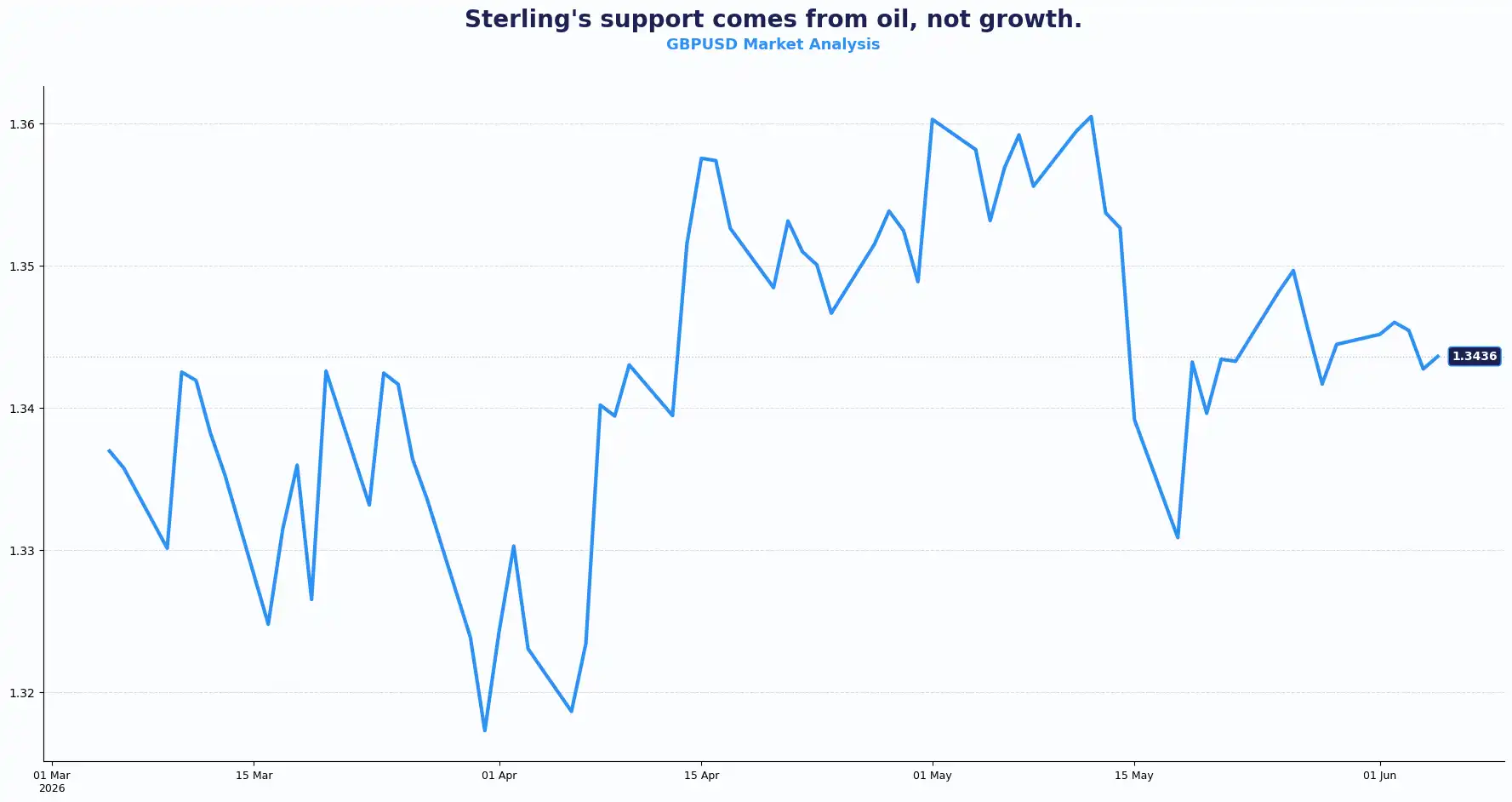
Key Technical levels for the GBP/USD pair: Resistance sits at 1.3520 and Support sits at 1.3350
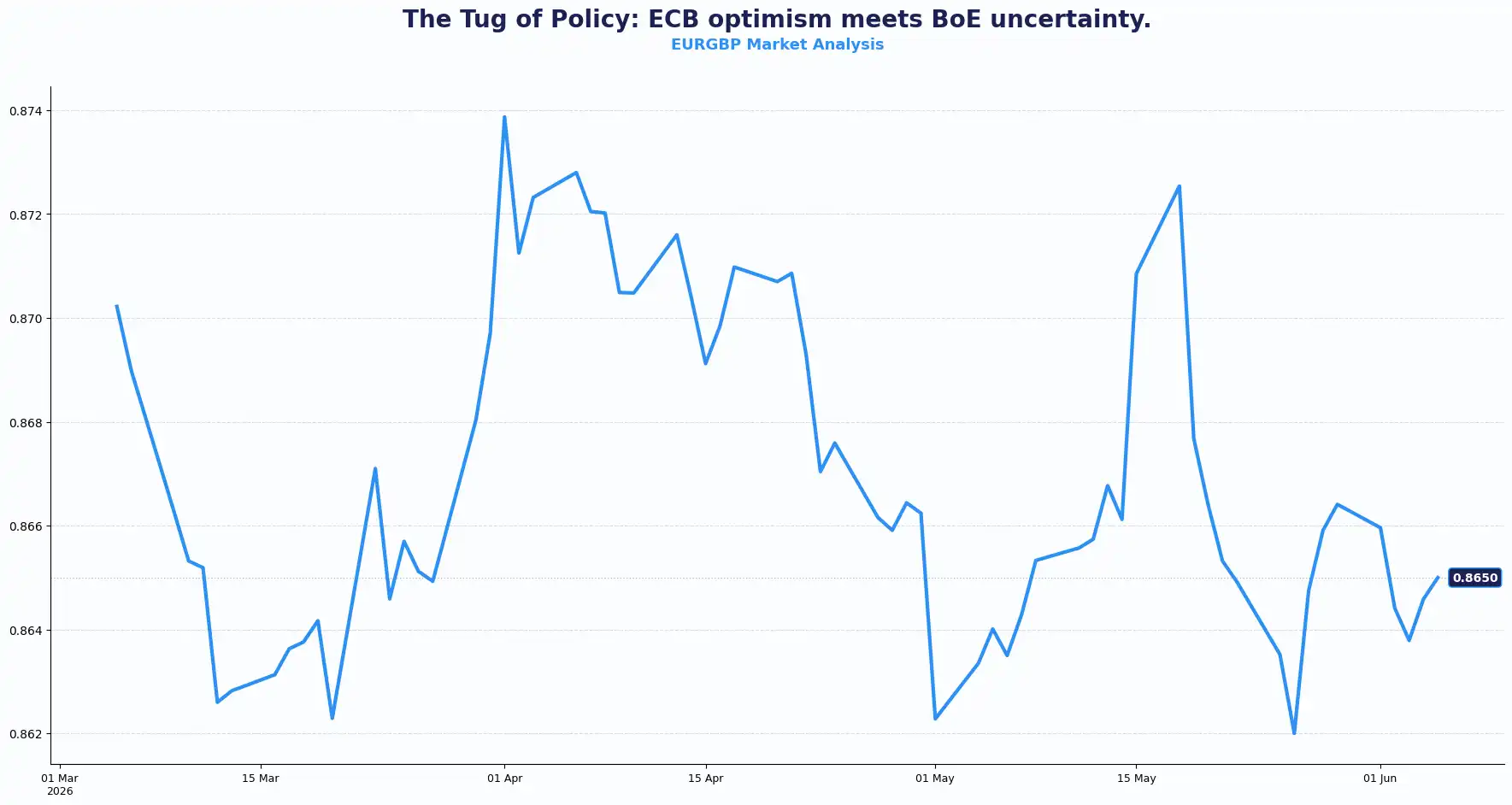
Key Technical levels for the EUR/GBP pair: Resistance sits at 0.8600 Support sits at 0.8600, 0.8720
EUR: Euro Advances as ECB Expectations Firm
EURUSD 1.1628
The euro strengthened against the dollar in the early European session, with the EUR/USD pair trading around 1.1628.
Recent inflation readings from the Eurozone reinforced expectations that the European Central Bank (ECB) may need to maintain a restrictive policy stance for longer than previously anticipated. That shift helped support the single currency even as investors reduced risk exposure ahead of major US data.
Attention now turns to Eurozone first-quarter GDP figures. Expectations point to growth of 0.1% quarter-on-quarter and 0.8% year-on-year, matching previous readings and not a number that screams strength. But the ECB's June calculus is driven by price pressures, rather than growth momentum, and on that front the hawks seem to have the upper hand.
The broader picture for the euro remains constructive. Inflation has proved more resilient than expected and policymakers continue to signal caution around easing policy too quickly.
Traders are treading carefully. Developments around the US-Iran negotiations are shifting fast, and the complexity of any deal, particularly around restoring Hormuz shipping flows, has introduced a layer of caution across the G10 space. The US dollar stalled through the session as participants waited for NFP to give direction.
Next week, traders will monitor German trade balance figures, import and export figures, and industrial production data. This data arrives at a time when the market is already questioning how durable euro-area economic data will be if the energy shock persists. Markets will also be watching for any ECB speaker commentary alongside those prints as the June meeting comes live next week. Any softening in tone from the ECB speakers could potentially be felt immediately in EUR crosses.
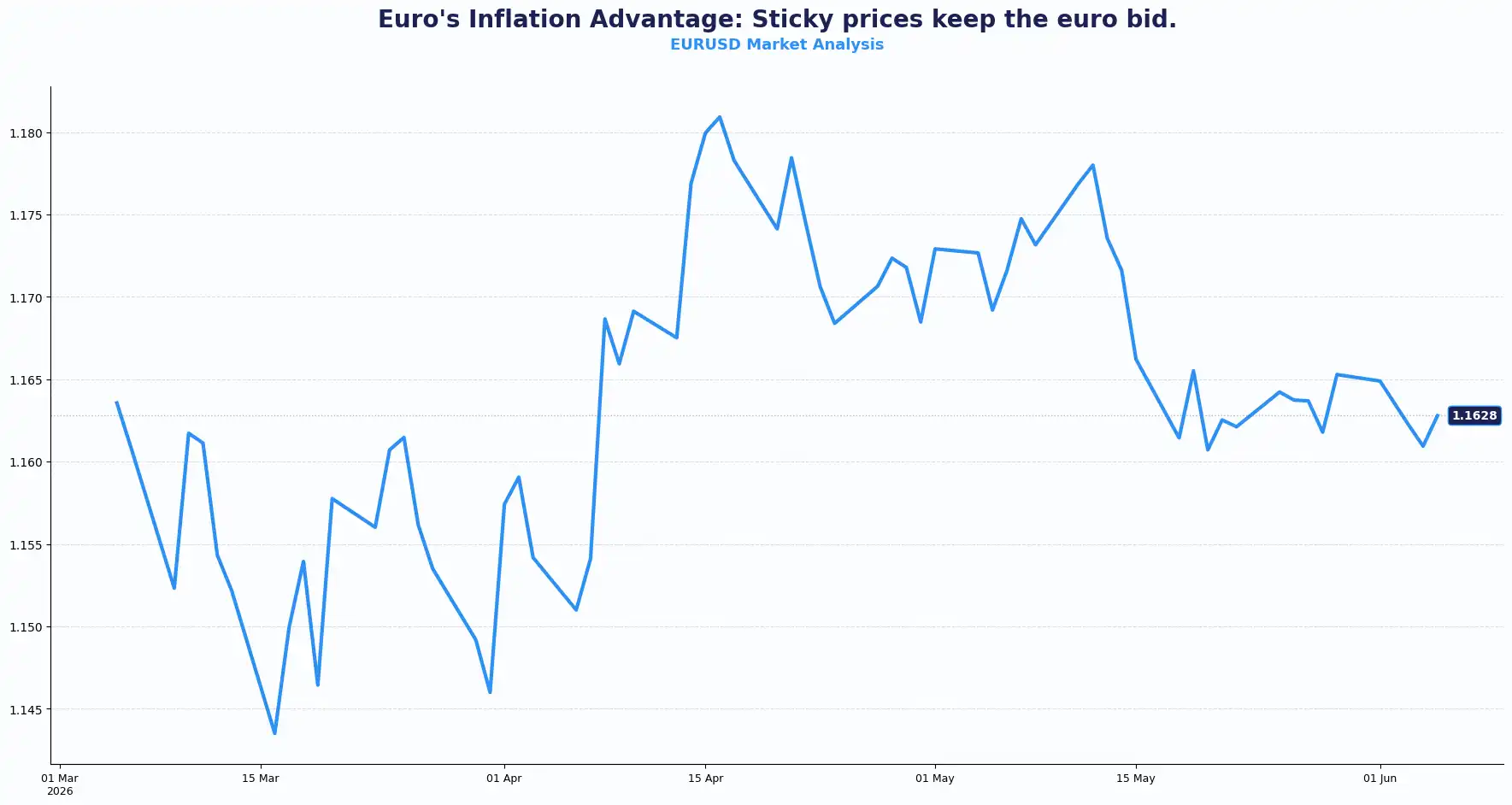
Key Technical levels for the EUR/USD pair: Resistance sits at 1.1700 and Support sits at 1.1540
USD: Dollar on Track for Weekly Gain; NFP Now in Focus
DXY 99.40
The dollar headed into Friday on course for a weekly gain, with the Dollar Index (DXY) holding near 99.40; supported by the Middle East conflict and its knock-on effect on energy-driven inflation expectations.
The May US Non-Farm Payrolls report lands today. The consensus calls for a rise of 85,000 in employment, with the jobless rate holding steady at 4.3%. A stronger print could further narrow the odds of a Fed rate hike; a miss could reopen the debate over whether the current rate-hold stance tilts toward an eventual cut rather than a hike.
Fed officials this week leaned cautiously toward potential tightening but without conviction. Under Kevin Warsh’s newly minted chairmanship, the Federal Open Market Committee (FOMC) is systematically abandoning its historical easing bias. However, the committee gave no indication it was ready to move in either direction at the 16-17 June meeting. What officials did suggest is that the longstanding easing bias, in place since December, could be dropped from the policy statement, which would clear the way for a future pivot to tightening. For now, the preferred scenario is an indefinite hold, with duration determined by whether inflation worsens or moderates.
Kansas City Fed's Schmid added on the sidelines that the FOMC wants any rate action to be "net positive" and to "not do harm unnecessarily." Weekly jobless claims came in at 225,000, up 13,000 from the prior week, with the four-week moving average at 214,750. The insured unemployment rate held at 1.2% two weeks ago, a number the hawks may note as still low by historical standards.
On Thursday, the Iran-backed Hezbollah militia explicitly rejected the newly brokered US-mediated ceasefire in Lebanon. Simultaneously, Israel refused to withdraw its ground forces. This sudden deadlock directly disrupts US President Donald Trump’s efforts to finalise a comprehensive peace treaty with Tehran and reopen the Strait of Hormuz. Because the Middle East conflict threatens global supply lines, Brent Crude futures surged 0.4% to $95.38 a barrel, on track for a 3.5% weekly gain while US West Texas Intermediate (WTI) crude climbed to $93.12.
Peace talk optimism trimmed gold's safe-haven bid. But strategists noted that even if Washington and Tehran reach a memorandum of understanding, restoring Hormuz shipping to pre-war levels is not a quick or clean process. Early increases in supply are likely to come from already-produced crude sitting in storage or on stranded vessels, not from a sustained restart in exports. This is a bottleneck story rather than one of a supply restart.
Yen Watches 160, Antipodeans Nurse Weekly Losses
AUDUSD 0.7120 | NZDUSD 0.5867 | USDJPY 159.95 | GBPJPY 214.70
The USD/JPY pair languished near 160, last printing firmer at 159.95. Japanese officials ramped up verbal intervention warnings throughout the session. Finance Minister Satsuki Katayama told parliament that authorities stand ready to act in the foreign exchange market at any time, and noted that Tokyo and Washington are in close contact on market moves. Japan's foreign reserves fell by $77 billion in May, a sign of the cost of prior intervention.
BOJ Governor Ueda said the central bank should assess the costs and benefits of raising interest rates carefully if inflation risks begin to outweigh downside risks to growth. Highly volatile yen moves since the start of the Middle East conflict in February carry a large speculative component, Katayama said. The 160 level is functioning as both a magnet and a warning line.
The Aussie dollar fell to around $0.711, touching a two-week low, and is on track for a weekly drop of roughly 1%. A stalemate in Middle East tensions weighed on risk appetite. The RBA signalled a wait-and-see approach; Governor Bullock acknowledged that three hikes this year are starting to filter through the economy, but said inflation is still elevated and that policymakers will stay alert. Deputy Governor Andrew Hauser is due to speak later today, with expectations pointing toward a steady policy reinforcement.
The kiwi dollar slipped 0.2% to hover at $0.5852, and for the week, it fared worse, losing 2.3%. The RBNZ's hawkish pivot just a week ago, which pulled forward expectations for the start of the tightening cycle to July or September from December, but could not protect the currency from broader risk-off selling.
China's yuan opened at $6.7879 and last traded at $6.7756; 14 pips firmer than the prior close. Strong corporate settlement flows onshore continue to anchor the yuan on a steady-to-firm trajectory. The yuan is down 0.1% against the dollar this month but 3.2% firmer year-to-date, making it one of the best-performing emerging market currencies since the outbreak of the Iran conflict in February.
Investors continue to watch both US economic data and developments in the Middle East. Those factors are likely to remain the primary drivers of broader FX sentiment heading into next week.
Across the currency complex, one theme continues to dominate. Energy prices, central bank expectations, and geopolitical developments remain tightly connected. Until greater clarity emerges on all three fronts, volatility across major currency pairs is likely to persist.
Current Rate Table:
| Pair | Rate | Trend |
|---|---|---|
| GBP/USD | 1.3436 | Sideways |
| EUR/USD | 1.1628 | Firm |
| EUR/GBP | 0.8650 | Sideways |
| USD/JPY | 159.95 | Intervention risk |
| GBP/JPY | 214.70 | Elevated |
| AUD/USD | 0.7120 | Weekly losses |
| NZD/USD | 0.5867 | Underperforming |
| USD/CNY | 6.7756 | Yuan firm YTD |
Market Lookahead
Fri, June 5
- US Unemployment rate (Apr)
- US Average hourly earnings (Apr)
- US Nonfarm payrolls (Apr)
- BoE governor bailey speech
Stay Ahead in the Currency Game
Whether you're a daily FX trader or handle international transactions regularly, our 'Currency Pulse' newsletter delivers the news you need to make more informed decisions. Receive concise updates and in-depth insights directly in your LinkedIn feed.
Subscribe to 'Currency Pulse' now and never miss a beat in the currency markets!
Ready to act on today’s insights? Get a free quote or give us a call on: +44 (0)20 7740 0000 to connect with a dedicated portfolio manager for tailored support.
Important Disclaimer: This blog is for informational purposes only and should not be considered financial advice. Currency Solutions does not take into account the investment objectives, financial situation, or specific needs of individual readers. We do not endorse or recommend any specific financial strategies, products, or services mentioned in this content. Forward contracts can help businesses manage foreign exchange exposure by providing greater certainty over future exchange rates, although they may also mean that businesses do not benefit from favourable exchange-rate movements. Businesses should consider their individual circumstances and speak with their dealer to understand how forward contracts may support their specific foreign exchange requirements. All information is provided “as is” without any representations or warranties, express or implied, regarding its accuracy, completeness, or timeliness.