Dollar Buckles on Bessent's Buyback, Pound and Euro Rise
8 min read
Share


Treasury Secretary Bessent doubled long-end bond buyback operations on Wednesday. In response, the 10-year yield fell to 4.64% as investors repriced duration risk. The dollar slid to three-month lows near 98.80. The move did the heavy lifting for the euro, the EUR/USD pair pushed to its highest since late May near 1.1675. Sterling drew independent support from firm UK CPI, keeping BoE one-hike pricing intact, the GBP/USD pair touched 1.3630.
The Fed's July Minutes confirmed three dissenters favoured a July hike, though investors largely overlooked the signal, treating the document as backward-looking given the softer data released since. September hike odds now sit at 32.7%. Trump's sweeping new Iran sanctions and the UAE's suspension of trade with Tehran added to renewed geopolitical uncertainty. The developments point to further flux in energy prices and heightened safe-haven demand flows, with crude oil already under upward pressure from Strait of Hormuz disruption.
Focus now shifts to US Initial Jobless Claims, ECB July Meeting Minutes, FOMC member speeches, and GfK Consumer Confidence all due today, which may shape near-term direction across G10.
GBP: Sterling Rallies on Inflation
GBP/USD: 1.3634 | EUR/GBP: 0.8579
Sterling climbed past 1.3600 against the dollar, reaching near 1.3630 in the early European session. The move took GBP/USD to a three-month high as weaker US data and lower Treasury yields put pressure on the dollar.
UK inflation reports added support. CPI rose to 2.9% in July from 2.6% in June. The increase matched economists’ forecasts but came in above the Bank of England’s (BoE) 2.8% projection. Core inflation held at 2.6% while services inflation eased to 3.4%.
Market consensus is that the BoE is on course to lift the Bank rate from 3.75% to 4.00% before year-end, reflecting one further 25 basis-point (bp) move.
The data keeps the BoE focused on inflation risks without creating a clear case for aggressive tightening. UK labour data also points to softer pressure. Private-sector wage growth slowed to 2.8%, and PAYE employment fell by 13,000. The combination gives sterling two competing forces: inflation argues for caution on rate cuts while weaker labour demand limits the case for a sharp policy shift. That backdrop has kept the pound bid even as global risk sentiment wobbles amid Middle East uncertainty.
Rate expectations can support sterling while the dollar faces its own policy repricing. UK inflation above the BoE’s forecast could keep a 2026 hike in focus. Softer employment conditions could temper that view.
Technical analysis suggests that the GBP/USD pair is currently trading above the 100-day SMA near 1.3610.
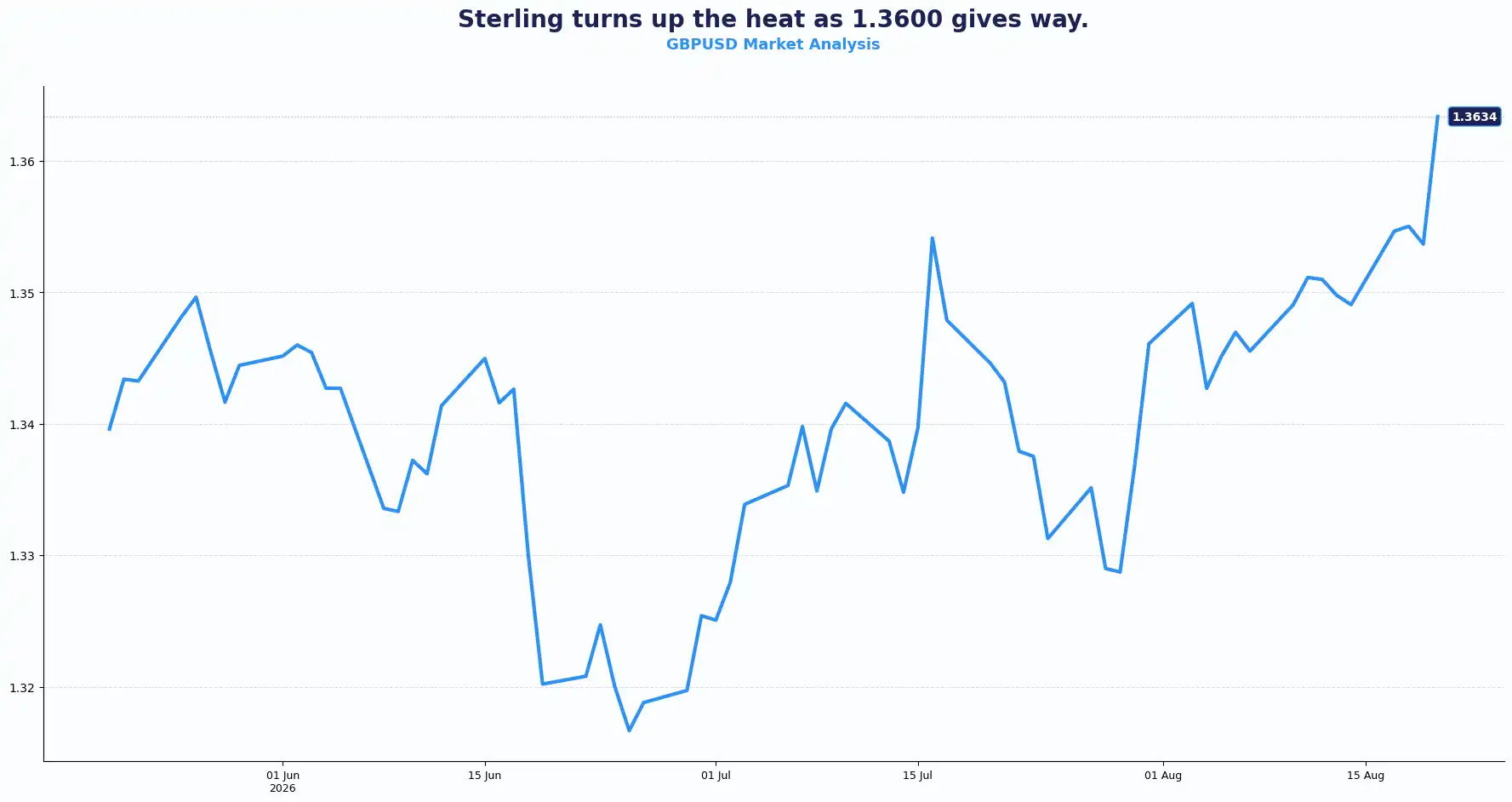
Key Technical levels for the GBP/USD pair: Resistance sits at 1.3645, 1.3655 and Support sits at 1.3560, 1.3475, 1.3430
EUR: The Euro Finds Its Footing
EUR/USD: 1.1699 | EUR/GBP: 0.8579
EUR/USD pushed past 1.1675 to reach its highest point since late May. A sharp decline in US Treasury yields sparked the surge, allowing the euro to capitalise on Greenback selling. Against Sterling, EUR/GBP trading near 0.8579, while EUR/JPY advanced toward 185.20 in early European trading.
The US Treasury’s decision to scale up long-dated bond buybacks flattened the US yield curve, pulling 10-year yields down. The programme is scheduled to run from September and cover 10-year and 30-year securities. The announcement pushed long-term US yields lower and weighed on the dollar. The move has wider FX implications. Lower US yields reduce one of the dollar’s key sources of support against the euro. The impact also depends on how European yields respond. The ECB kept its three key rates unchanged in July and continues to assess the impact of higher energy costs on inflation.
Meanwhile, Eurozone inflation confirmed 2.9% headline and 2.5% core prints. Underlying measures showed only modest increases, meaning price pressure has not spiked in the wake of the energy shock. The ECB has stressed that the energy shock could still feed into prices. That leaves policy expectations sensitive to incoming inflation and wage data. The Q2 Labour Cost Index eased to 3.1% year-on-year from 3.2% in Q1, pointing to moderating wage growth.
European Central Bank (ECB) officials view 3% inflation as elevated, keeping the market’s expectations for September rate hike odds above 90%. This persistent hawkish stance bolsters euro sentiment across major pairs.
The euro therefore has near-term support from the dollar side of the equation rather than a clear shift towards aggressive ECB tightening. EUR/USD could test 1.1700 if the dollar continues to lose ground.
EUR/GBP also trades near 0.8582. The pair reflects the competing inflation stories in Britain and the euro area. Sterling’s stronger UK rate profile could limit euro gains against the pound even while EUR/USD benefits from dollar weakness.
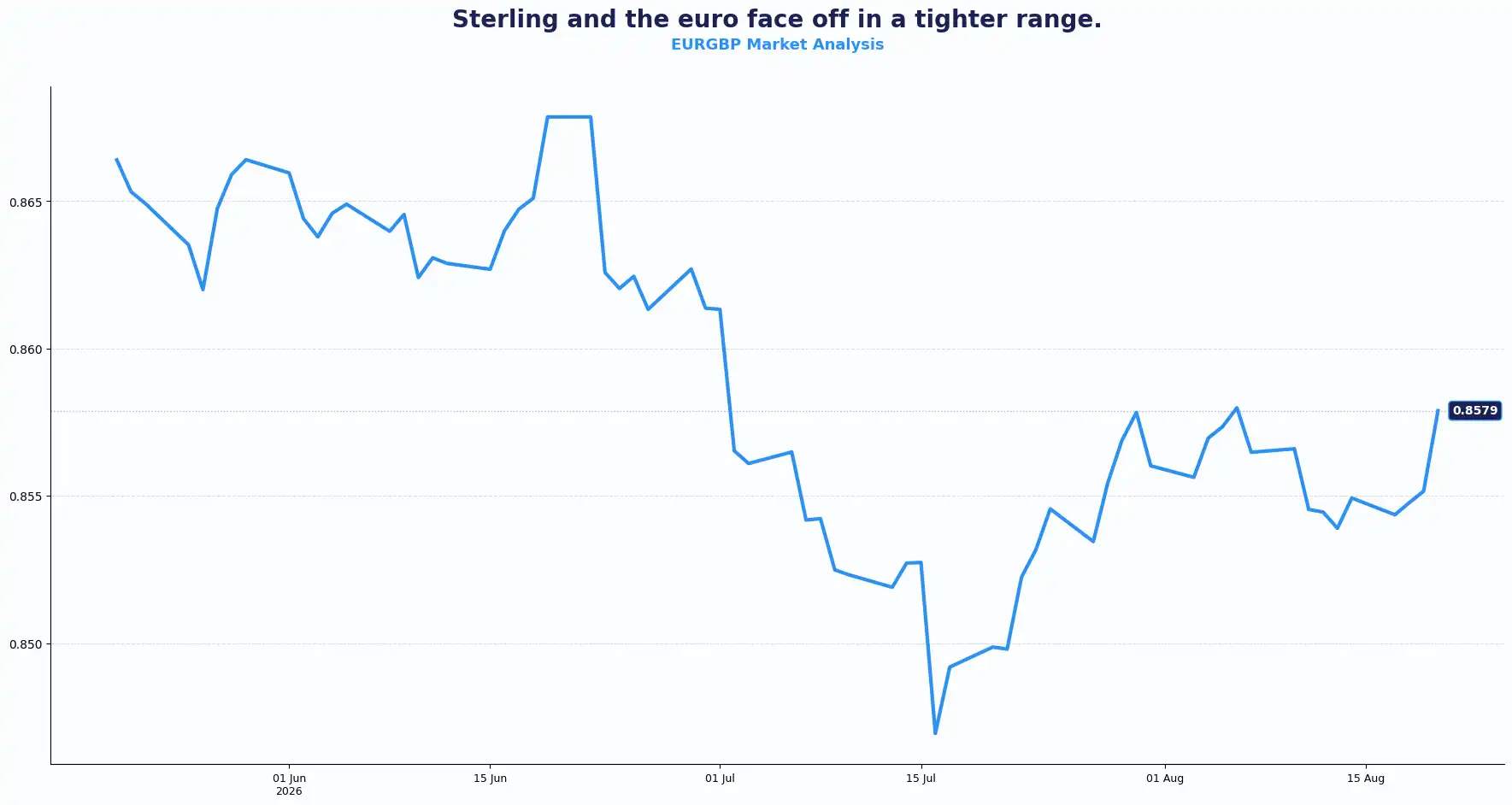
Key Technical levels for the EUR/GBP pair: Resistance sits at 0.8615, 0.8620 and Support sits at 0.8540, 0.8505
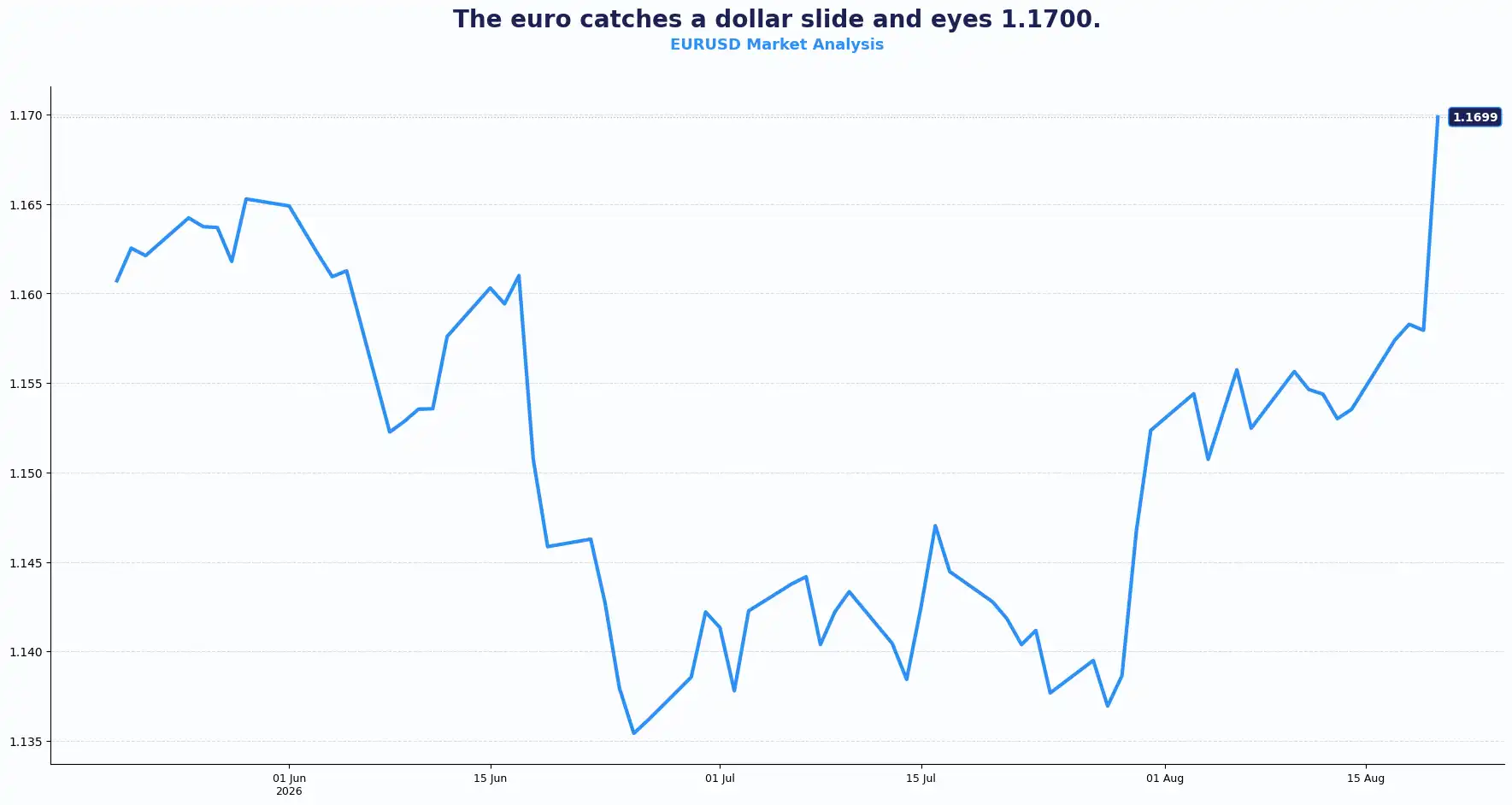
Key Technical levels for the EUR/USD pair: Resistance sits at 1.1700, 1.1805, 1.1915 and Support sits at 1.1600, 1.1554, 1.1494
USD: Treasury Move Deepens Dollar Pressure
DXY: 98.81
The dollar index dropped below 99.00 on Wednesday and held near 98.80 in early Thursday trading, its weakest print since late May. The trigger was Bessent's announcement: doubling buyback volumes on longer-dated bonds pulled yields lower and drained the dollar's key rate-differential support. The dollar also faced pressure from softer US inflation and employment data.
The July FOMC minutes added a more complicated signal. The Fed held its target range at 3.50%-3.75% at its July meeting. The minutes showed three officials voted for a July hike and confirmed the Fed still views inflation as elevated. The minutes showed wider concern over persistent inflation and support for tighter policy if inflation fails to return towards the 2% target.
Markets read the Minutes as backward-looking, and the focus has now shifted to what the data says. Subsequent US data have changed the policy debate. Softer employment data and subdued inflation have reduced expectations for a September Fed hike.
The probability of a Fed rate hike at the September meeting has dropped to 32.7%, down from 47% a month ago, according to CME FedWatch data. The July FOMC Minutes confirmed that many policymakers viewed further hikes as conditional on inflation not falling, but with the Fed holding the rates unchanged, the path of least resistance for the dollar could be shaped by Thursday's Initial Jobless Claims print and commentary from FOMC members later in the week. Any upside surprise in claims could extend the dollar's slide.
Geopolitical noise is not absent from the dollar story. Trump's announcement of the most severe economic action ever taken against Iran, and the UAE's subsequent suspension of all trade with Tehran following a ballistic missile incident, kept some safe-haven bids circulating. That support proved insufficient to arrest the dollar's decline against both sterling and the euro.
The structural repricing of Fed expectations and Bessent's intervention at the long end of the curve are shifting the dollar's medium-term outlook. Escalating sanctions against Iran and disruptions to Strait of Hormuz supply have failed to ignite a sustained dollar flight-to-safety.
Commodity & Pacific Currencies:
AUD/USD: 0.7123 | NZD/USD: 0.5953 | USD/JPY: 158.48 | GBP/JPY: 216.05
AUD/USD dropped to 0.7123 after Australia's July unemployment rate rose to 4.5%, above the 4.4% consensus. The Australian dollar came underselling pressure immediately on the release, pointing to a softening domestic labour backdrop that complicates the RBA's next move.
NZD/USD held near 0.5953 after China held its benchmark lending rates unchanged for a 15th consecutive month in August. New Zealand dollar buyers took some reassurance from the steady policy signal from China, a key input for commodity-linked antipodean currencies.
USD/JPY traded near 158.48, with the yen under pressure from wide interest rate differentials, a July trade deficit of JPY 634.5 billion, and elevated energy import costs tied to disruptions in the Strait of Hormuz. The yen's structural weakness against the dollar and the pound. GBP/JPY at 216.05 reflects the BoJ's persistent reluctance to normalise policy.
USD/CAD fell as crude oil prices surged on escalating Middle East tensions and stalled US-Iran negotiations. The Canadian dollar drew support from its commodity linkage, benefiting directly from oil price strength.
USD/CHF edged higher as geopolitical tensions and elevated oil prices shifted some demand toward the dollar over the Swiss franc ahead of Swiss trade balance data.
USD/IDR extended losses for a second session, trading near 17,810, as Bank Indonesia reaffirmed its commitment to currency stability under new leadership, holding its key rate at 5.75%.
The common thread across commodity-linked and EM currencies Thursday is the Strait of Hormuz narrative. Oil price pressure feeds through to energy-import-heavy economies, notably Japan, while benefiting producers and exporters in Canada and the broader EM complex. Central bank divergence does the rest: Bank Indonesia holds firm; the RBA faces a softening jobs picture; the BoJ stays anchored. Each of those divergences has impacted the relevant currency pair's short-term trajectory. Thursday's session underlines how quickly local data and commodity moves can reprice a pair.
Current Rate Table
| Pair | Rate | Trend |
|---|---|---|
| GBP/USD | 1.3634 | Bullish |
| EUR/USD | 1.1699 | Bullish |
| EUR/GBP | 0.8579 | Range-bound |
| USD/JPY | 158.48 | Bullish USD / JPY pressure |
| GBP/JPY | 216.05 | Bullish |
| AUD/USD | 0.7123 | Bearish bias |
| NZD/USD | 0.5953 | Mildly bullish |
| USD/CAD | 1.3775 | Bearish bias |
| USD/CHF | 0.7978 | Bullish bias |
| USD/IDR | 17,810 | Bearish USD bias |
Market lookahead:
Thurs, Aug 20
- Eurozone Consumer Confidence (Aug)
- US Initial Jobless Claims
Fri, Aug 21
- UK GfK Consumer Confidence
- UK Retail Sales (Jul)
- Global PMI releases Services, Manufacturing and Composite (Aug)
Stay Ahead in the Currency Game
Whether you're a daily FX trader or handle international transactions regularly, our 'Currency Pulse' newsletter delivers the news you need to make more informed decisions. Receive concise updates and in-depth insights directly in your LinkedIn feed.
Subscribe to 'Currency Pulse' now and never miss a beat in the currency markets!
Ready to act on today’s insights? Get a free quote or give us a call on: +44 (0)20 7740 0000 to connect with a dedicated portfolio manager for tailored support.
Important Disclaimer: This blog is for informational purposes only and should not be considered financial advice. Currency Solutions does not take into account the investment objectives, financial situation, or specific needs of individual readers. We do not endorse or recommend any specific financial strategies, products, or services mentioned in this content. Forward contracts can help businesses manage foreign exchange exposure by providing greater certainty over future exchange rates, although they may also mean that businesses do not benefit from favourable exchange-rate movements. Businesses should consider their individual circumstances and speak with their dealer to understand how forward contracts may support their specific foreign exchange requirements. All information is provided “as is” without any representations or warranties, express or implied, regarding its accuracy, completeness, or timeliness.