US-Iran Truce Extended, Hormuz Reopening Hopes Reprice FX
8 min read
Share


Ceasefire reports and softer US inflation cooled safe-haven demand for the dollar. DXY near 99. Traders track inflation risks, energy prices, and shifting central bank signals across G10. Sterling held steady, the euro bounced off six-week lows, and oil dipped, all on optimism around the reopening of the Strait of Hormuz.
GBP: Sterling Caught Between Rate Bets and Energy Crisis
GBPUSD 1.3421 | EURGBP 0.8670
Cable trading softer near 1.3421 after trading holding near 1.3450 a quiet session in Asia, drifting within a triangle formation that has defined price action for several weeks now. Safe-haven demand for the dollar eased after reports emerged that the US and Iran had agreed on a preliminary 60-day ceasefire extension, with traffic through the Strait of Hormuz also set to resume, pending President Trump's sign-off.
Beneath this immediate knee-jerk risk recovery, the structural narrative for Sterling remains tied to a distinct deceleration in domestic fundamentals. Investors have scaled back expectations for aggressive Bank of England (BoE) tightening after weaker labour data, softer inflation prints, and signs of slower consumer spending, cementing the view that the BoE has less room to tighten than once thought.
UK gilt yields extended their weekly decline toward 4.81%, reflecting a subtle downshifting in domestic interest rate expectations. A sharp weekly fall was driven by lower oil prices, a reduction in political uncertainty around the Starmer government, and Andy Burnham's commitment to current fiscal rules.
At the same time, energy costs remain a threat to the UK outlook. Geopolitical pressure in the Strait of Hormuz fueled fears of a prolonged energy shock, and those fears have begun to unwind amid ceasefire hopes. Investors fear another prolonged shock could hit consumer spending and further slow the economy. That leaves the BoE balancing sticky inflation risks against softer growth.
BoE Governor Andrew Bailey, Catherine Mann, and Megan Greene are scheduled to speak over the coming days. Hawkish commentary could firm sterling's footing. Absent that, the path of least resistance is to the side, with the triangle pattern narrowing toward a resolution.
EUR/GBP eased to 0.8660, now trading in range with 0.8670 in the European session as the pound held its ground. The ECB's expected June hike is a partial offset, but with UK rate expectations falling faster than those in the euro area, the cross is leaning modestly in the euro's favour in the near term.
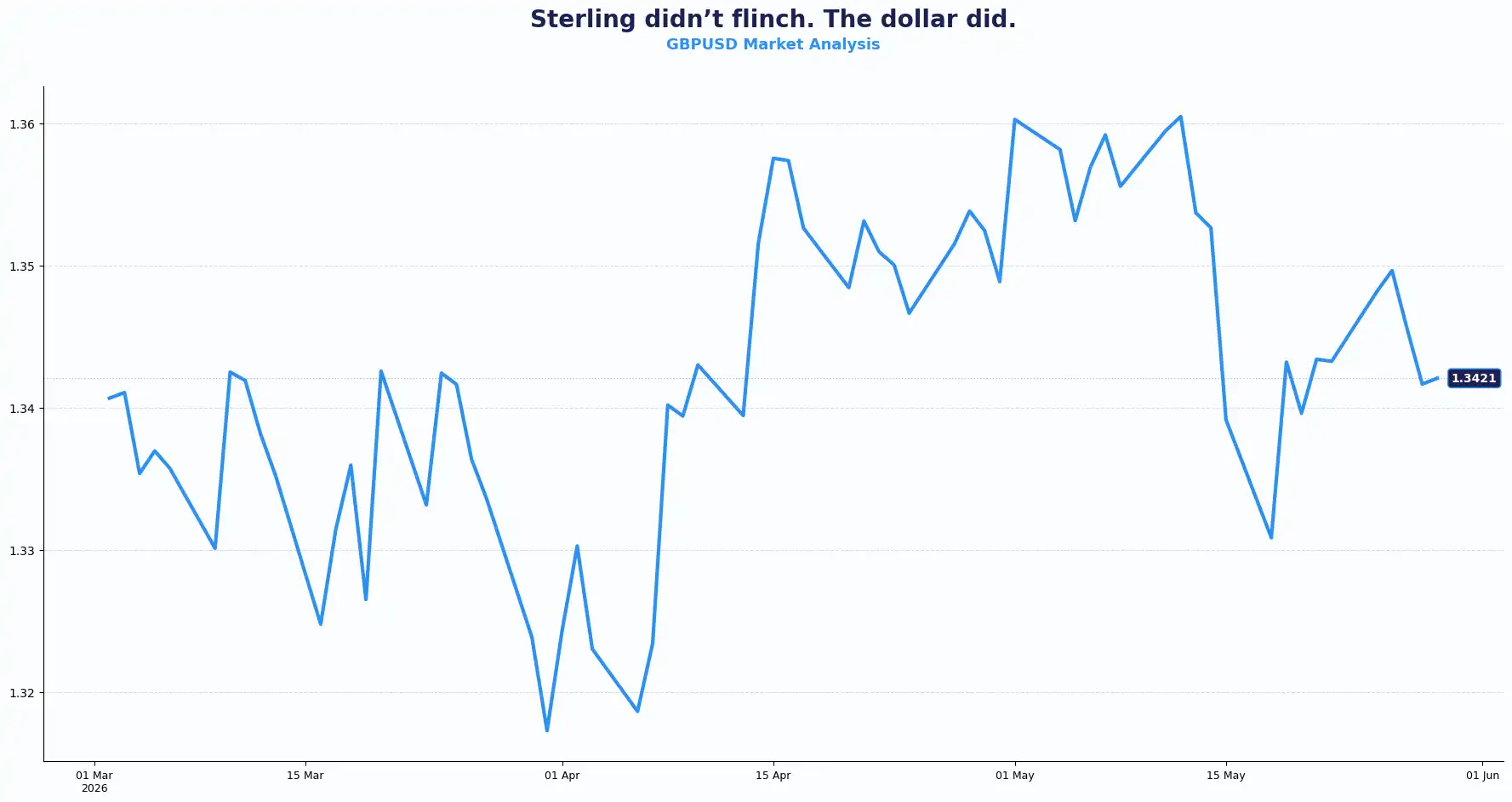
Key Technical levels for the GBP/USD pair: Resistance sits at 1.3485, 1.3520 and Support sits at 1.3380, 1.3325
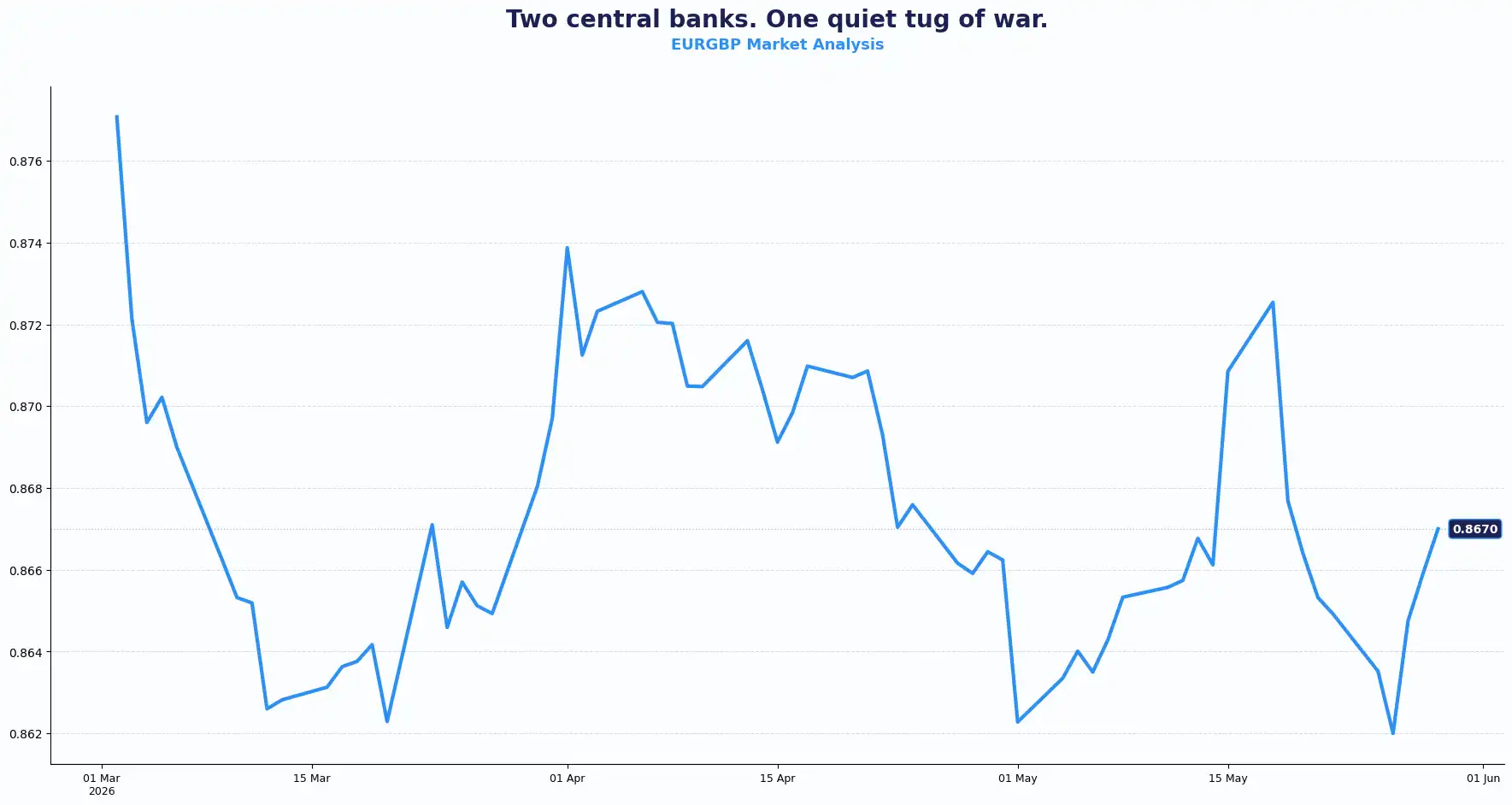
Key Technical levels for the EUR/GBP pair: Resistance sits at 0.8690, 0.8725 Support sits at 0.8635, 0.8610
EUR: ECB Minutes Reveal a Rate Hike Was Closer Than Admitted
EURUSD 1.1639
The euro arrested its recent downward trajectory on Friday, nudging higher to trade within a defined range of 1.1580 to 1.1660 against the US dollar. After testing a multi-week nadir, the single currency found a floor as it absorbed the implications of the latest European Central Bank (ECB) policy disclosures. The ECB minutes released from its 28-29 April meeting revealed what the market had quietly suspected. Several Governing Council members felt the decision to hold rates in April was a close call, with a number indicating they would not have opposed a hike had the option been formally on the table.
The wider context? The Council judged that the Iran conflict and disruptions in the Strait of Hormuz had materially increased the inflation outlook's uncertainty. Policymakers openly debated whether a "look-through" approach to the energy shock remained appropriate and concluded it probably did not. Second-round wage effects and the duration of the conflict were flagged as the key variables, with the June meeting identified as the moment those inputs would be clearer.
Markets now price in a near-certain 25bps hike on 11 June, with at least one additional move anticipated before year-end. These shifting expectations lend the euro a floor, even as the softer dollar gives it room to breathe.
Germany's preliminary inflation figures are due today, and they could either validate or complicate that rate-hike narrative.
The EUR/USD pair is currently trading within the range that has contained it since the ceasefire developments began, reshaping the risk landscape. Technically, the pair still needs a sustained break above 1.1660 to regain bullish momentum. Until then, traders may continue fading rallies inside the current consolidation band.
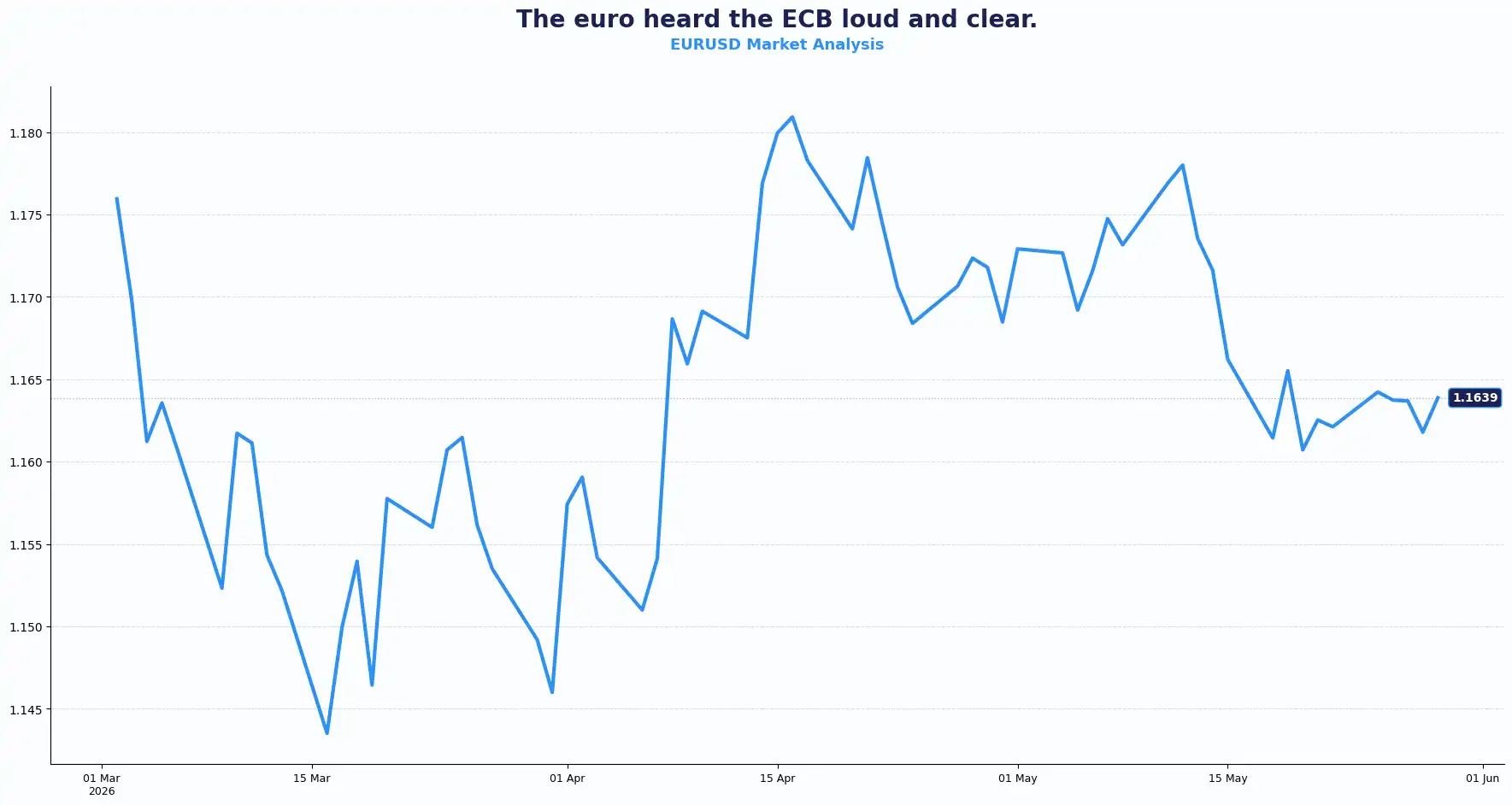
Key Technical levels for the EUR/USD pair: Resistance sits at 1.1660, 1.1700 and Support sits at 1.1580, 1.1545
USD: Ceasefire Extension Knocks the Safe-Haven Bid
DXY 99.06
The dollar spent the week under pressure, and Friday did little to reverse the trend. The dollar index sits near 99.00 after dipping 0.2% on Thursday, on track for a weekly loss of roughly 0.3%, snapping two consecutive weeks of gains.
Two forces drove the move. First, April's PCE inflation data came in softer than expected. Headline PCE rose 0.4% month on month, with core PCE up 0.2%. Annual rates held at 3.8% and 3.3% respectively, still above the Fed's target, but the monthly print was enough to calm fears that the energy shock was feeding directly into persistent inflation. Minneapolis Fed President Neel Kashkari acknowledged the data bore watching but stopped well short of signalling imminent rate action.
Second, the ceasefire development deflated the safe-haven premium that had supported the dollar through the Iran crisis. Oil futures fell more than 1% on the day and are on course for their steepest weekly decline since early April. WTI crude sits near $88 per barrel.
The Fed's rate path remains frozen for now. Even with inflation elevated above target, the central bank shows no appetite to move until the geopolitical fog clears further. The consensus view: rates on hold well into next year. That leaves the dollar range bound and vulnerable to any further de-escalation news, particularly if the Hormuz re-opening proves orderly and oil supply recovers gradually.
Even with a signed memorandum of understanding, shipowners may take time to send vessels back into the Persian Gulf, given fears that a ceasefire could break down. That caution limits how quickly the risk premium unwinds and, by extension, how fast the dollar weakens.
Other Currencies: Kiwi Leads, Yen Watches the Line
AUDUSD 0.7160 | NZDUSD 0.5958 | USDJPY 159.29 | GBPJPY 214.06
The Aussie dollar held near 0.7160, recovering from an overnight low of 0.7098 on optimism over a ceasefire. The bounce leaves it 0.5% firmer for the week, but short of resistance at 0.7182, a level it has failed to clear. Australia’s April inflation print came in softer than expected, and consumer spending data added to the picture of a cooling economy. Markets now price just a 5% probability of a June rate hike from the Reserve Bank of Australia (RBA), with the final move to 4.6% assigned a 70% probability for Q4. Australia’s GDP data next week will be closely watched.
The New Zealand dollar outperformed the lot, climbing to a two-week high near 0.5958 and targeting its May peak at 0.5991. The RBNZ's pivot was the catalyst. The governor's signals earlier this week suggested RBNZ’s rates need to rise sooner and more steeply to contain the inflationary pulse from energy prices. Markets now assign an 80% probability to a July hike, with the cash rate seen reaching 3.0% by year-end and peaking around 3.5%. A sharp squeeze on AUD/NZD short positions amplified the kiwi's move, with the cross sliding to a six-week low at NZD 1.2038, well off the NZD 1.2284 high hit earlier in the week.
The yen hovers near 159.30, pulling away from the 160 level that has previously triggered Japanese intervention. Finance Minister Satsuki Katayama reiterated this week that authorities would act in the event of excessive volatility or speculative movement. BoJ Governor Kazuo Ueda also flagged rising inflation risks tied to higher oil prices, without signalling a specific timing for the next rate move. Tokyo's core CPI for May printed at 1.3% YoY, the lowest since March 2022, and below the BoJ's 2% target for a fourth consecutive month. That data modestly reinforces the case for a hike at next month's meeting.
Current Rate Table:
| Pair | Level | Trend |
|---|---|---|
| GBP/USD | 1.3421 | Bullish bias above 1.3400 |
| EUR/USD | 1.1639 | Consolidating |
| EUR/GBP | 0.8670 | Slight bearish bias |
| USD/JPY | 159.29 | Dollar strength intact |
| AUD/USD | 0.7160 | Recovering |
| NZD/USD | 0.5958 | Bullish momentum |
| GBP/JPY | 214.06 | Elevated volatility |
Market Lookahead
Fri, 29 May
- Germany CPI + HICP
- BoE Governor Andrew Bailey speech
Sat, 30 May
- BoE Catherine Mann speech
Sun, 31 May
- BoE Megan Greene speech
Mon, 1 June
- Australia Manufacturing PMI
- China Manufacturing PMI
- Germany Retail Sales
- Eurozone Manufacturing PMI
- UK Manufacturing PMI
- US ISM Manufacturing PMI
Stay Ahead in the Currency Game
Whether you're a daily FX trader or handle international transactions regularly, our 'Currency Pulse' newsletter delivers the news you need to make more informed decisions. Receive concise updates and in-depth insights directly in your LinkedIn feed.
Subscribe to 'Currency Pulse' now and never miss a beat in the currency markets!
Ready to act on today’s insights? Get a free quote or give us a call on: +44 (0)20 7740 0000 to connect with a dedicated portfolio manager for tailored support.
Important Disclaimer: This blog is for informational purposes only and should not be considered financial advice. Currency Solutions does not take into account the investment objectives, financial situation, or specific needs of individual readers. We do not endorse or recommend any specific financial strategies, products, or services mentioned in this content. Forward contracts can help businesses manage foreign exchange exposure by providing greater certainty over future exchange rates, although they may also mean that businesses do not benefit from favourable exchange-rate movements. Businesses should consider their individual circumstances and speak with their dealer to understand how forward contracts may support their specific foreign exchange requirements. All information is provided “as is” without any representations or warranties, express or implied, regarding its accuracy, completeness, or timeliness.