UK Economy Weathers Iran War With Solid June as Dollar Shrugs Off Cool CPI
10 min read
Share


The UK economy held its ground in Q2, growing 0.4% QoQ in line with forecasts and supported by a surprise June jump of 0.3%. Annual growth beat expectations at 1.2%. But weak industrial and manufacturing output signalled that the US-Iran war energy squeeze is cutting through the production side. Sterling barely moved.
US July CPI confirmed a second consecutive month of cooling headline at 3.4%, core at 2.5%, trimming September Fed hike bets to around 40%. The dollar dipped on impact then recovered to near a one-week high as the Hormuz deadlock kept safe-haven demand intact. US-Iran talks confirmed no progress.
The euro held near 1.1520, consolidating below the 100-day SMA and the ECB widely priced by the markets for a September hike. The kiwi slid to a two-week low after RBNZ inflation expectations fell sharply. The yen held close to 160, keeping the intervention watch alive. US PPI lands later today.
GBP: Growth Holds Up but Production Weakens
GBP/USD: 1.3482 | EUR/GBP: 0.8549 | GBP/JPY: 214.89
Sterling traded below $1.3500 on Thursday after UK GDP grew 0.4% in the second quarter. Growth slowed from 0.6% in Q1 but matched expectations. June GDP rose 0.3% after no growth in May.
The headline gave the pound some support. The details offered a more mixed picture.
Industrial production fell 0.2% in June. Manufacturing output dropped 0.5%. Both figures missed expectations. May industrial production also faced a downward revision. The weaker factory data limited the boost from the GDP release and kept the GBP/USD pair below the 1.3500 level.
The annual beat and the June monthly surprise point to an economy that entered Q3 with more momentum than expected. Services, the dominant part of the UK economy, held up. The problem is the industrial side, where high energy costs tied to Middle East disruption are working through to output. Economists have flagged that the Iran war energy squeeze is likely to weigh more heavily on households and businesses in Q3, as dual fuel bills rise. The GDP pattern of a strong first half followed by a softer second half is well-documented in recent UK data, and the structural pressure building from higher utility costs could pull against whatever momentum June provided.
Yield spreads between the UK and the US showed signs of a modest recovery following a dip in mid-to-late July, and the one-month risk reversal profile for cable can be described as slightly more constructive for the pound.
The growth mix matters for the Bank of England (BoE). Stronger activity can reduce pressure for faster policy easing. Weaker production points towards a softer economic backdrop. Sterling therefore needs more than a strong GDP headline to sustain its recent gains.
The GBP/USD pair reached 1.3546 on Wednesday before slipping back towards 1.3490. The pair now sits close to a technical pivot around 1.3500.
The dollar adds another layer. US inflation cooled in July. That reduced pressure for an immediate Federal Reserve (Fed) rate increase and limited the dollar's upside. The pound therefore has some support from a softer US rate outlook even as weak UK production caps the move.
GBP/JPY traded near 214.89. The yen stayed close to 160 per dollar. That level keeps Japanese intervention risk in focus. Stronger UK growth can support the cross, but a sharper yen move could quickly change its direction.
Sterling's response to today's data encapsulates the current dynamic: a mixed report in a mixed macro environment produces very little net movement. The pound has not broken cleanly in either direction. The range is tight, but the tails are live. Industrial data signalling ongoing production stress and energy cost uncertainty into Q3 add to the list of variables that could shift the balance.
The pound enters the next phase with a solid first-half growth story but weaker production data. BoE expectations and US rate pricing now carry more weight for the next move.
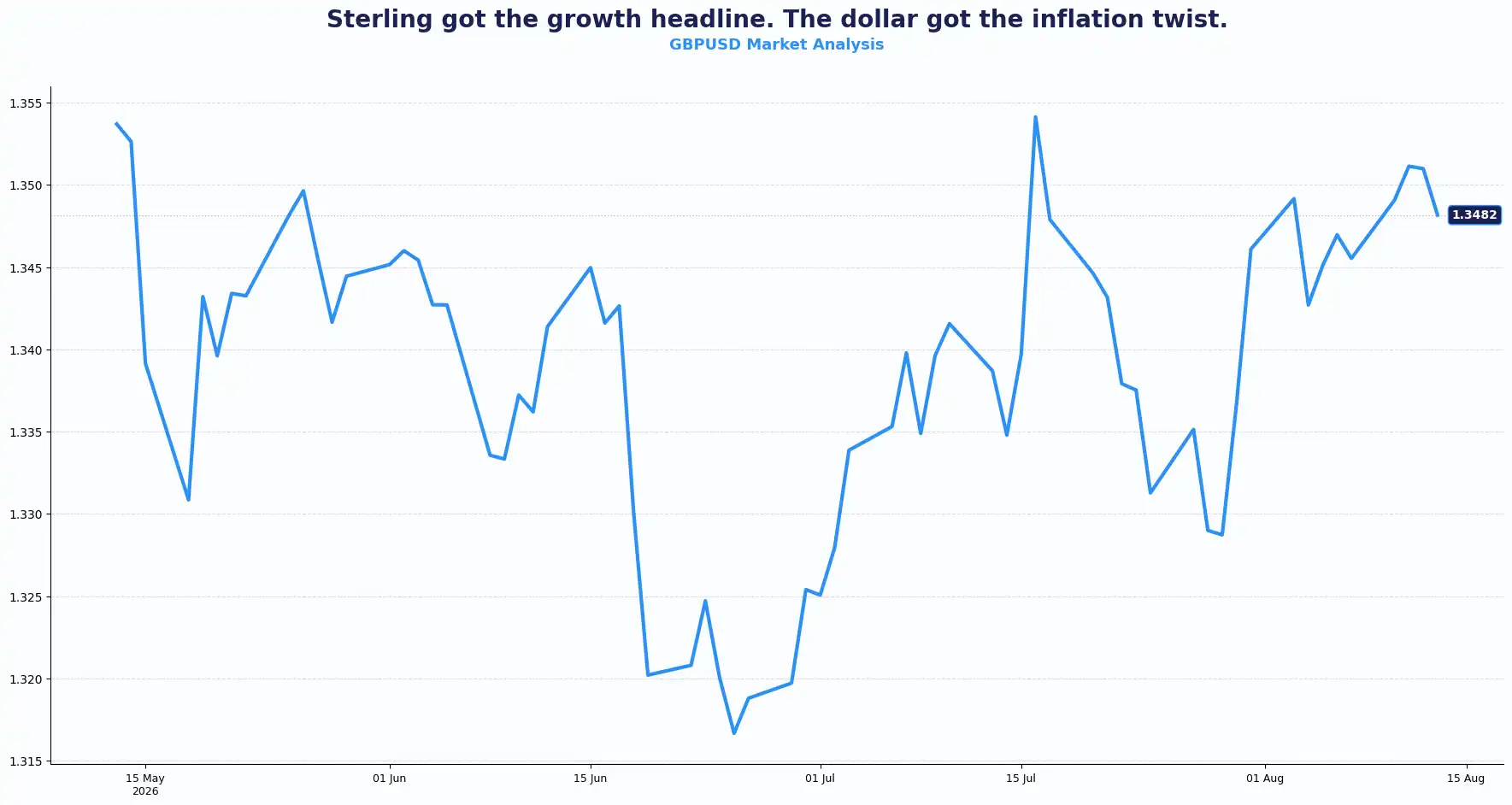
Key Technical levels for the GBP/USD pair: Resistance sits at 1.3546, 1.3600 and Support sits at 1.3450, 1.3400.
EUR: Rangebound Consolidation Post-FOMC Quiet, Pre-ECB Positioning
EUR/GBP: 0.8549 | EUR/USD: 1.1529
The EUR/USD pair held near 1.1520 through the early European session. The pair has spent most of August inside a flat, compressed range; a characteristic of the consolidation phase that set in after the FOMC meeting in late July. Against the pound, the euro edged to 0.8540, picking up mild support from the UK's mixed data picture and from European Central Bank (ECB) rate expectations.
The technical picture for EUR/USD carries a bearish bias while the price holds below the 100-day simple moving average. The pair lacks a clear directional catalyst right now. Softer US inflation reduced the urgency of a September Fed hike. That took some of the dollar's near-term fuel away and offered a degree of passive support to the euro. But the euro's own data flow has not generated independent momentum.
Stalled US-Iran talks and uncertainty around the Strait of Hormuz continue to keep oil prices and safe-haven demand in focus. Higher energy prices could lift inflation expectations while weighing on economic activity. That mix can support the dollar even when US inflation data points towards a less hawkish Fed.
Growth across the euro area remains uneven while energy costs create another inflation risk. Policymakers therefore have to balance price pressures against weaker activity. Rate expectations can shift quickly if energy prices move higher or economic data weakens.
The policy divergence angle is more active on the EUR/GBP cross. The ECB is widely expected to raise interest rates by 25 basis points at its September meeting. ECB president Christine Lagarde flagged last month that renewed Middle East hostilities and rebounding oil prices carry upside risk to Eurozone inflation, a dynamic that has kept ECB tightening expectations firm.
Eurozone GDP data could provide the next test of the growth outlook. Any change in ECB expectations could feed through to EUR/USD and EUR/GBP at the same time.
For now, the euro sits between softer US rate expectations and persistent geopolitical risk. That keeps EUR/USD range-bound while markets assess which force has greater weight.
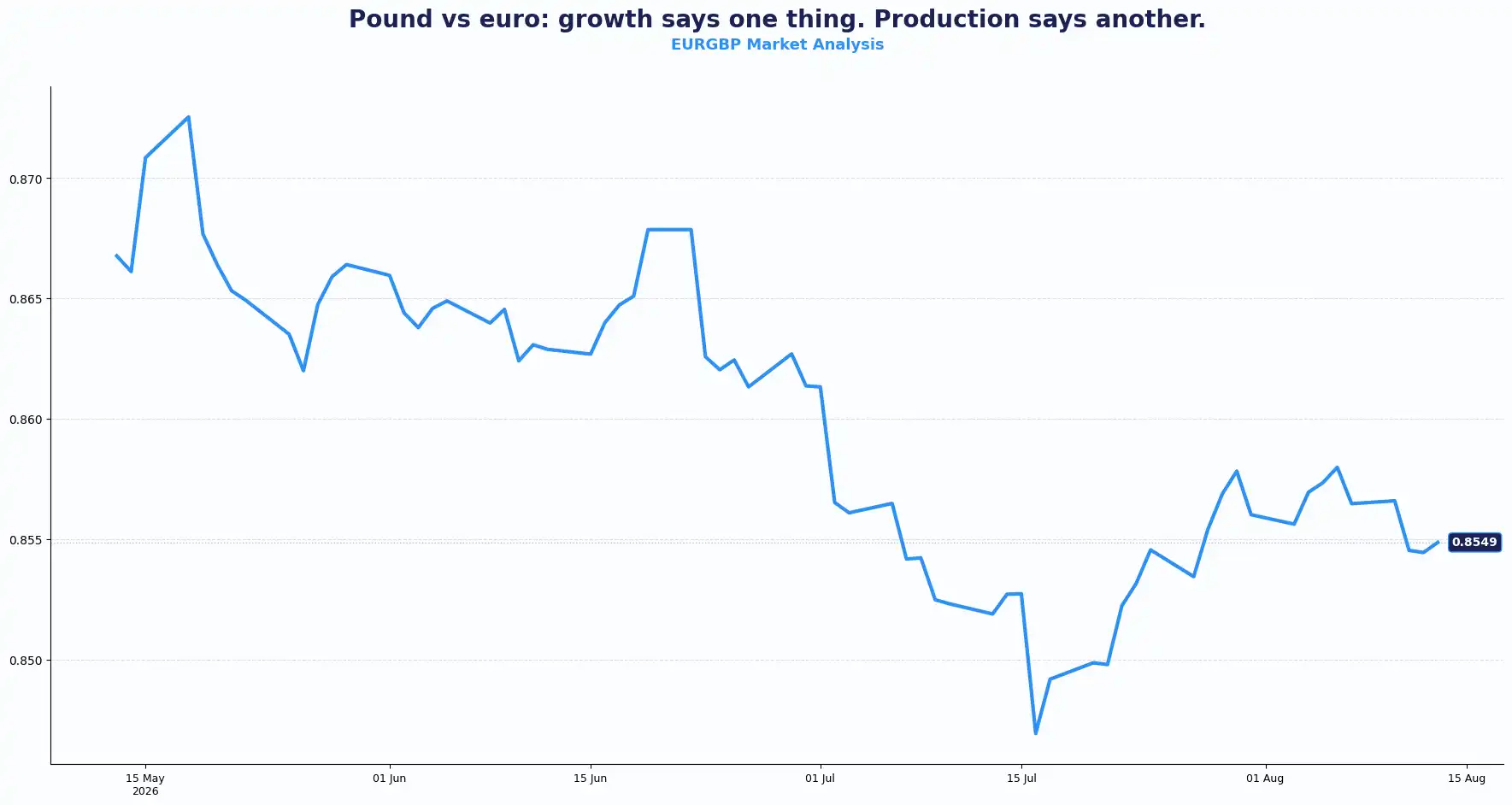
Key Technical levels for the EUR/GBP pair: Resistance sits at 0.8560, 0.8600 and Support sits at 0.8500
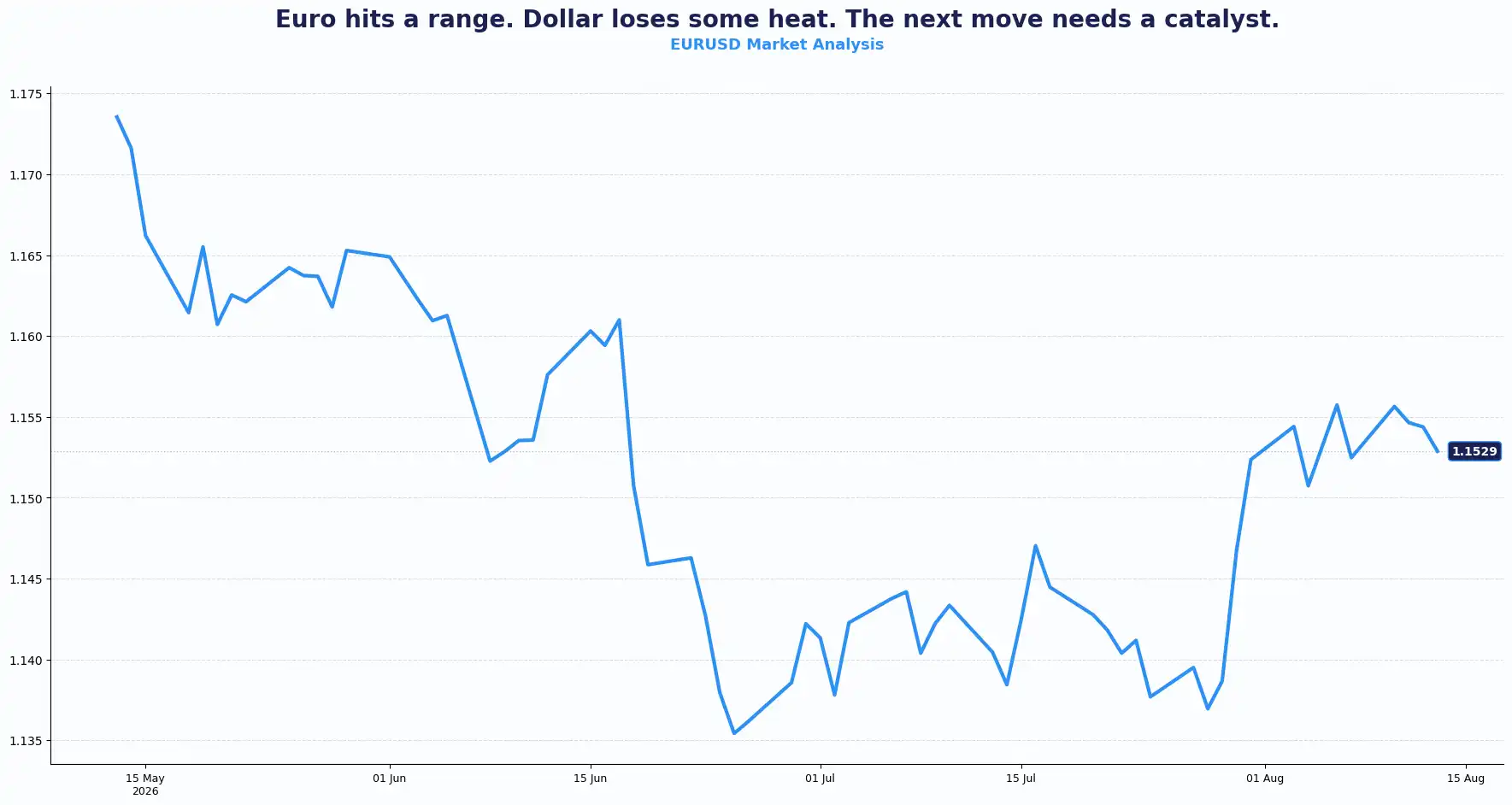
Key Technical levels for the EUR/USD pair: Resistance sits at 1.1550, 1.1565 and Support sits at 1.1500
USD: Soft CPI Cools Fed Hike Bets. Hormuz Keeps the Floor
DXY: 100.01 | USD/CNY: 6.7430 | USD/SGD: 1.2803
The dollar index (DXY) nudged up to near a one-week high, touching the 100 mark in early European session. Wednesday's US CPI report showed headline inflation at 3.4% YoY in July, down from 3.5% in June, the second consecutive monthly deceleration. On a monthly basis, CPI rose 0.1% after a 0.4% decline in June, the first monthly drop in six years. Core CPI came in at 2.5% annually, also down 0.1 percentage point from June. Both readings arrived in line with the forecasts.
The dollar dipped briefly on the release of the data. It then shrugged it off. The probability of a September Fed rate hike fell to around 40-42% on FedWatch, down from 54% the prior week, but safe-haven demand tied to the Hormuz deadlock pulled the index back toward 100. US PPI data for July is due later today and will be watched by markets as the next live signal on price pressures.
Two forces are pushing against each other in the dollar complex. Softer inflation and last week's downbeat July Nonfarm Payrolls (NFP) report have pulled back the case for near-term Fed tightening. Fed Chair Kevin Warsh faces a balancing act as hiring has slowed, but energy prices are running nearly 15% above year-ago levels and headline CPI at 3.4% sits well above the 2% target. The Fed can be described as in "wait-and-see mode" wanting a clear and lasting disinflation trend before acting, with the odds of a move now tilted toward October rather than September.
On the geopolitical side, the US-Iran talks remained deadlocked. A senior Iranian official confirmed that no progress was made in efforts to revive the interim deal agreed in June. President Trump stated the US holds "total control" over the Strait of Hormuz, but that language has done nothing to reduce the impasse. Brent Crude ended Wednesday's session largely flat, and the latest drone strike on Russia's Novorossiysk port was reported to have spared oil terminals. Safe-haven demand for the dollar persists against that backdrop.
The market anticipates the Fed is now more likely to hold rates in September rather than hike, pointing to the compounding effect of soft payrolls followed by a tame CPI print.
The next US data releases therefore carry more weight. Producer prices and weekly jobless claims could influence rate expectations and feed directly into major pairs such as the GBP/USD, EUR/USD and USD/JPY.
The dollar's position has also shaped Asian currencies. The yuan strengthened to a three-and-a-half-year high against the dollar. The Singapore dollar held near 1.2800 per dollar.
The dollar is not leading but it is also not giving ground easily. Safe-haven positioning connected to geopolitical risk sits beneath any softness generated by the inflation data. The PPI print later today could shift the picture, a hotter-than-expected reading could restore some September hike probability and support the dollar; a softer print could extend the current range dynamic.
Asia-Pacific: Policy Divergence Across the Board
AUD/USD: 0.7050 | NZD/USD: 0.5830 | USD/JPY: 159.42 | GBP/JPY: 214.89
The Australian dollar traded near 0.7050 after the Reserve Bank of Australia kept its cash rate at 4.35%.
Recent RBA commentary has kept inflation risks in focus. Assistant Governor Christopher Kent also pointed to restrictive financial conditions and weaker consumer activity. The central bank therefore retains a cautious policy stance while assessing whether inflation will cool fast enough.
That gives AUD/USD a different rate dynamic from EUR/USD. The RBA still carries a restrictive bias while softer US inflation has reduced pressure on the Fed. The Australian dollar can draw support from that gap, although commodity prices and broader risk sentiment still matter.
The New Zealand dollar faced a weaker domestic signal. The NZD/USD slipped towards 0.5830 after New Zealand inflation expectations fell sharply.
One-year inflation expectations dropped to 2.6% from 3.4%. That shift reduced pressure for aggressive Reserve Bank of New Zealand tightening. The kiwi fell through 0.5850 and brought 0.5762 into view.
USD/JPY traded around 159.42 with 160 acting as a key psychological level. Japanese producer prices rose 7.2% in July. The Bank of Japan has also highlighted rising inflation risks.
The yen therefore sits between domestic policy pressure and persistent interest-rate differentials. A move closer to 160 can increase intervention concerns. Any change in Japanese policy expectations could feed through to USD/JPY and GBP/JPY.
Across FX, the picture has several competing forces. UK growth has held up, but industrial output has weakened. The euro lacks a clear domestic catalyst. Softer US inflation has reduced the Fed's immediate hawkish case. The yen faces intervention risk while the Australian and New Zealand dollars respond to different domestic inflation signals.
Current Rate Table
| Pair | Rate | Trend |
|---|---|---|
| GBP/USD | 1.3482 | Sideways / capped |
| EUR/USD | 1.1529 | Bearish bias |
| EUR/GBP | 0.8549 | Mild EUR bid |
| USD/JPY | 159.42 | USD firm / JPY weak |
| GBP/JPY | 214.89 | Range |
| AUD/USD | 0.7050 | Holding |
| NZD/USD | 0.5830 | Bearish short-term |
Market lookahead:
Thurs, Aug 13
- Eurozone Industrial Production (Jun)
- US Producer Price Index (PPI) (Jul)
Fri, Aug 14
- Eurozone Trade Balance (Jun)
- Eurozone GDP Q2
- US Retail Sales (Jul)
Stay Ahead in the Currency Game
Whether you're a daily FX trader or handle international transactions regularly, our 'Currency Pulse' newsletter delivers the news you need to make more informed decisions. Receive concise updates and in-depth insights directly in your LinkedIn feed.
Subscribe to 'Currency Pulse' now and never miss a beat in the currency markets!
Ready to act on today’s insights? Get a free quote or give us a call on: +44 (0)20 7740 0000 to connect with a dedicated portfolio manager for tailored support.
Important Disclaimer: This blog is for informational purposes only and should not be considered financial advice. Currency Solutions does not take into account the investment objectives, financial situation, or specific needs of individual readers. We do not endorse or recommend any specific financial strategies, products, or services mentioned in this content. Forward contracts can help businesses manage foreign exchange exposure by providing greater certainty over future exchange rates, although they may also mean that businesses do not benefit from favourable exchange-rate movements. Businesses should consider their individual circumstances and speak with their dealer to understand how forward contracts may support their specific foreign exchange requirements. All information is provided “as is” without any representations or warranties, express or implied, regarding its accuracy, completeness, or timeliness.