Sterling Under Pressure Amid Weaker UK Housing Outlook & BoE Rate Debate
6 min read
Share


Sterling remained under pressure early Thursday, trading near 1.3260 against the US dollar as a weaker UK housing outlook coincided with expectations of further monetary tightening. GBP/USD extended Wednesday's decline, while new figures from the Royal Institution of Chartered Surveyors (RICS) highlighted continued weakness in property demand.
The RICS house price net balance fell to -36% in October from a revised -34% in September, below market expectations. The survey's 12-month house-sales expectations net balance also declined to -17%, its weakest reading since July 2023, amid continued pressure on buyer demand from higher mortgage costs.
Meanwhile, Bank of England (BoE) policymaker Megan Greene argued that further proactive monetary tightening was appropriate to limit persistent wage-driven inflation. She indicated that pay growth could stabilise at or above 3.5%, adding to concerns about inflation remaining above the BoE's 2% target.
The US dollar also strengthened as expectations of further Federal Reserve (Fed) rate hikes increased. The US Dollar Index (DXY) advanced towards 103.02, its highest level since April 2025, while EUR/USD traded near 1.1077. Attention now turns to the UK's preliminary third-quarter Gross Domestic Product (GDP) figures, which could provide further evidence of economic conditions and influence BoE rate expectations.
GBP: Sterling Weakens Amid Dollar Strength and BoE Rate Debate
GBP/USD: 1.3260 | EUR/GBP: 0.8353
Sterling remained under pressure against the US dollar early Thursday, with GBP/USD trading near 1.3260 after extending Wednesday's losses. Sterling remained subdued amid stronger Fed rate expectations, rising US Treasury yields and continued expectations of further BoE tightening.
The latest RICS housing survey indicated additional weakness in the UK property market. The house price net balance declined to -36% in October from a revised -34% in September, while the 12-month sales expectations net balance fell to -17%, its weakest reading since July 2023. New buyer enquiries remained subdued, reflecting the continued effect of elevated mortgage costs on demand.
Meanwhile, BoE policymaker Megan Greene argued that proactive monetary tightening remained appropriate to address persistent wage pressures. She indicated that pay growth could stabilise at 3.5% or higher, potentially complicating efforts to return inflation to the BoE's 2% target. Her comments kept the possibility of further rate hikes in focus, although the weaker housing outlook highlighted the challenges facing the UK economy.
Against the euro, sterling showed more limited movement, with EUR/GBP trading around 0.8353 after failing to sustain Wednesday's move towards 0.8370. Attention now turns to the UK's preliminary third-quarter GDP figures, with economists forecasting 0.7% quarterly growth. The release could influence expectations for the timing of future BoE policy decisions.
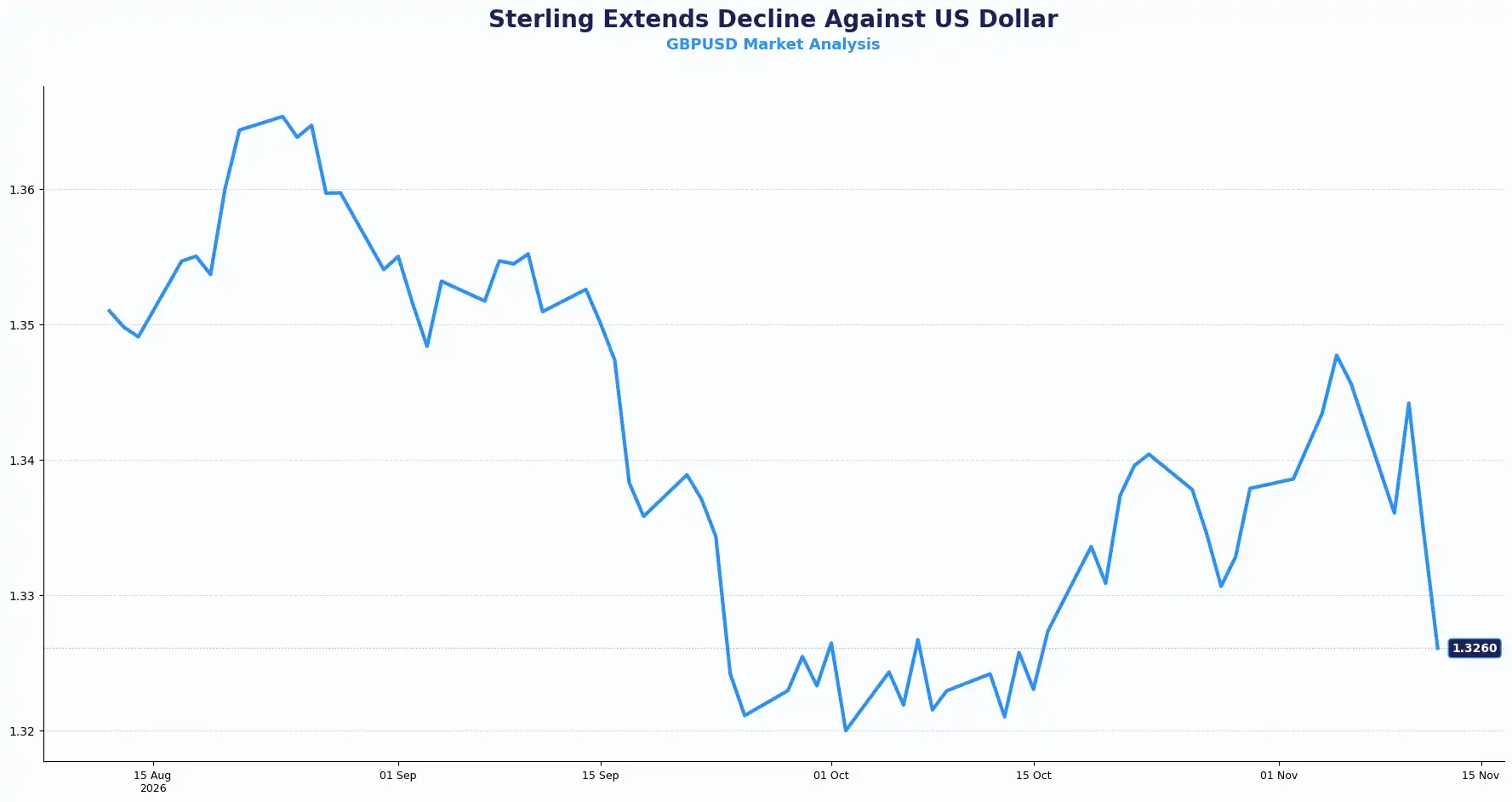
Key technical reference levels for GBP/USD: Resistance sits near 1.3370, followed by 1.3400, while support sits around 1.3260, followed by 1.3188.
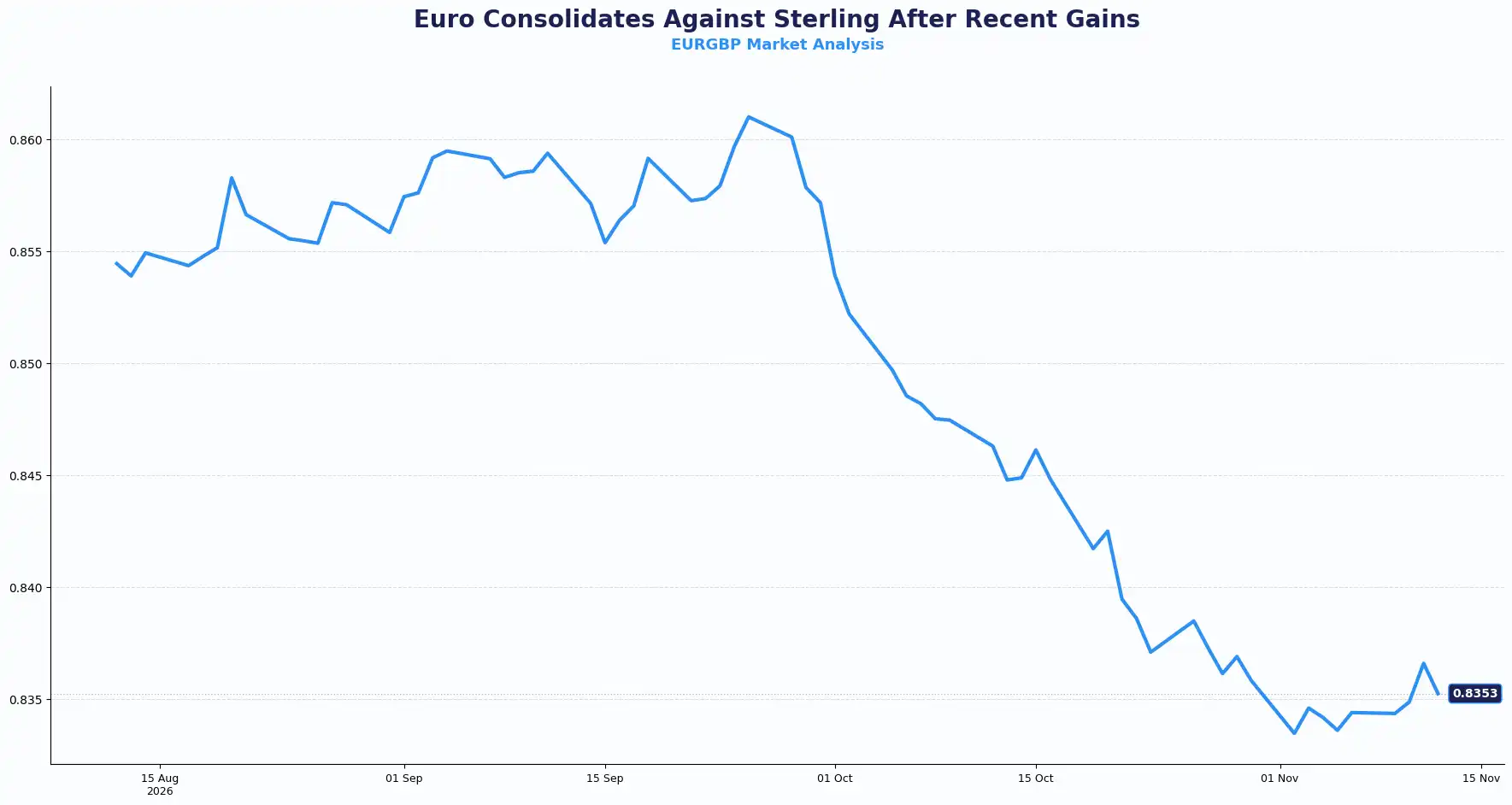
Key technical reference levels for EUR/GBP: Resistance sits near 0.8370, followed by 0.8380, while support sits around 0.8335, followed by 0.8320.
EUR: Euro Declines Despite Upgraded German Growth Forecast
EUR/USD: 1.1077
The euro weakened against the US dollar on Wednesday, with EUR/USD falling below 1.1100 before stabilising near 1.1077 early Thursday. The euro's decline coincided with increased expectations of further Fed rate hikes and broader US dollar strength, despite signs of improvement in Germany's economic outlook.
Germany's final October inflation figures showed consumer prices rising by 2.8% annually, down from 3.3% in September and in line with preliminary estimates. Meanwhile, Germany's Council of Economic Experts raised its 2026 growth forecast from 0.5% to 1.3%, citing stronger exports and government spending. However, the council also warned about mounting fiscal pressures, particularly from defence expenditure and long-term budget commitments.
The upward revision pointed to stronger expected growth in Europe's largest economy, although the euro continued to weaken against the US dollar. The European Central Bank (ECB) remains focused on incoming inflation and economic data when assessing the possibility of further tightening in December. Investors will now monitor upcoming ECB commentary and Friday's eurozone GDP and employment figures for further indications of economic conditions.
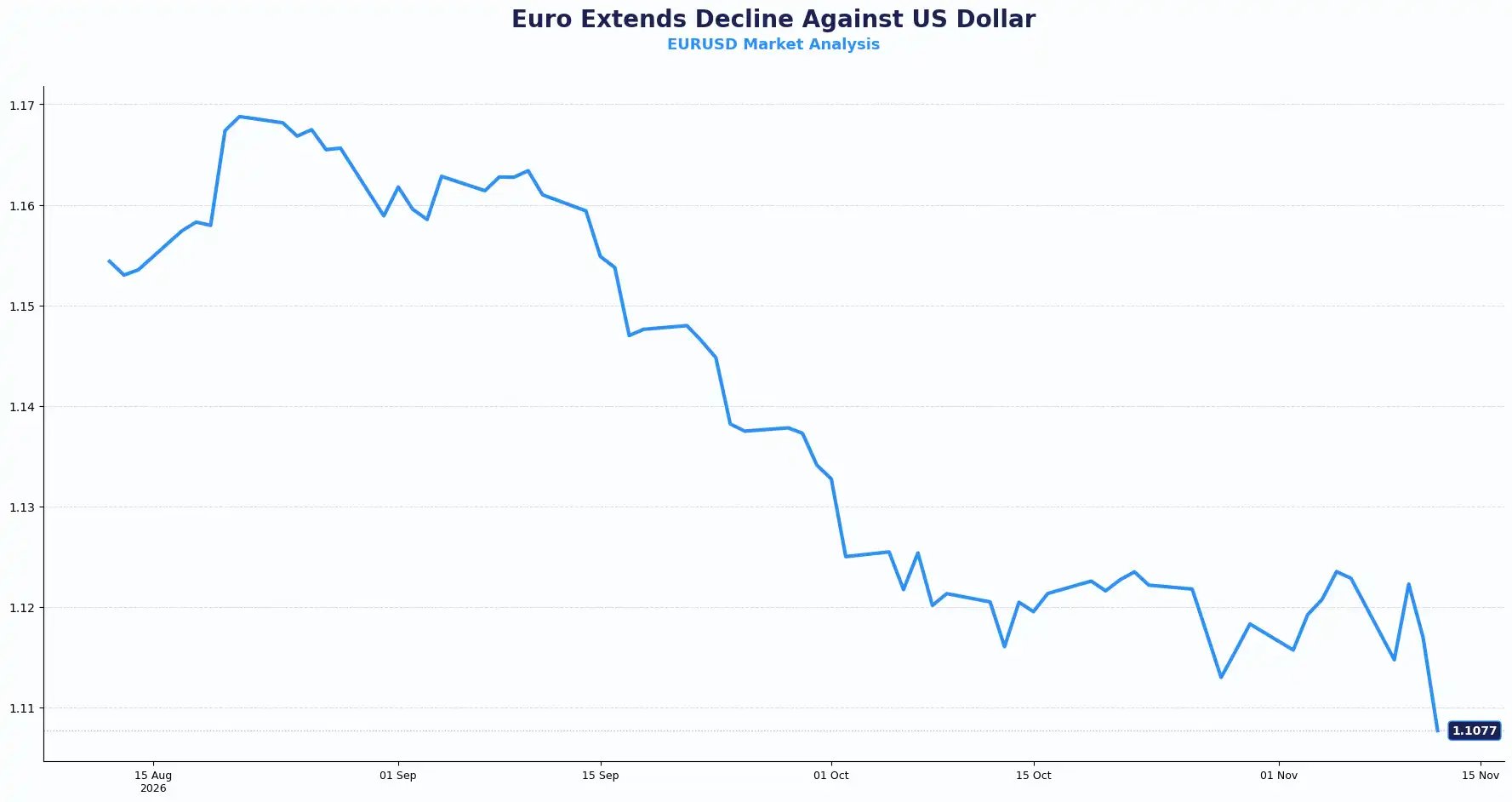
Key technical reference levels for EUR/USD: Resistance sits near 1.1100, followed by 1.1170, while support sits around 1.1050, followed by 1.1000.
USD: Dollar Advances Amid Higher Fed Rate Expectations
DXY: 103.02
The US dollar extended its gains on Wednesday, with the DXY reaching a fresh high since April 2025. The index rose approximately 0.68% during Wednesday's session before advancing to 103.02 early Thursday. The dollar's advance against major currencies, including sterling and the euro, coincided with growing expectations of further Fed tightening.
Interest-rate markets were pricing an approximately 87% probability of a 25-basis-point Fed rate hike in December, alongside a 13% probability of a larger 50-basis-point increase. The US 10-year Treasury yield also moved above 5% on Wednesday as investors reassessed the outlook for borrowing costs. Meanwhile, Goldman Sachs and Deutsche Bank anticipated additional Fed rate increases in early 2027, reflecting concerns about persistent inflation pressures.
The dollar's advance also reflected widening interest-rate differentials with other major economies. Investors now turn to Thursday's US initial jobless claims and Friday's Producer Price Index (PPI) figures for further evidence of labour-market conditions and inflation pressures. These releases could influence expectations for the Fed's December policy decision.
Other Currencies: G10 Currencies Weaken as Dollar Advances
AUD/USD: 0.6847 | NZD/USD: 0.5566 | USD/JPY: 159.83 | GBP/JPY: 212.03
The Japanese yen weakened further against the US dollar early Thursday, with USD/JPY approaching the psychologically important 160.00 level. The yen remained under pressure amid widening US–Japan interest-rate differentials, despite expectations of further Bank of Japan (BoJ) tightening. Japan's October PPI rose by 7.1% annually, exceeding forecasts of 6.5%, while BoJ policymaker Toichiro Asada cautioned against premature rate increases. Japanese officials also reiterated concerns about excessive currency movements, keeping potential intervention in focus.
The Australian dollar remained under pressure, with AUD/USD trading near 0.6847 after extending Wednesday's decline. The currency approached a seven-month low as the stronger US dollar and uncertainty surrounding the Reserve Bank of Australia's (RBA) future policy direction weighed on sentiment. Interest-rate markets continued to favour an extended pause in Australian borrowing costs, contrasting with expectations of further Fed tightening.
The New Zealand dollar also weakened, with NZD/USD trading near 0.5566 and remaining close to a 19-month low. New Zealand's electronic card retail sales declined by 0.7% in October, following a 0.4% fall in September, suggesting continued weakness in consumer spending. Although markets anticipated further Reserve Bank of New Zealand (RBNZ) tightening, the currency remained sensitive to US interest-rate expectations and incoming domestic economic data.
Current Rate Table
| Pair | Rate | Trend |
|---|---|---|
| GBP/USD | 1.3260 | Bearish bias |
| EUR/GBP | 0.8353 | Range to firm |
| EUR/USD | 1.1077 | Bearish bias |
| USD/JPY | 159.83 | Bullish bias |
| AUD/USD | 0.6847 | Bearish bias |
| NZD/USD | 0.5566 | Soft |
| USD/CAD | 1.4250 | Bullish bias |
Market Lookahead
Thursday, Nov 12
- USD - Initial Jobless Claims
Friday, Nov 13
- EUR - Eurozone GDP & Employment Change (Q3)
- USD - Producer Price Index & Core PPI (Oct)
Stay Ahead in the Currency Game
Whether you're a daily FX trader or handle international transactions regularly, our 'Currency Pulse' newsletter delivers the news you need to make more informed decisions. Receive concise updates and in-depth insights directly in your LinkedIn feed.
Subscribe to 'Currency Pulse' now and never miss a beat in the currency markets!
Ready to act on today’s insights? Get a free quote or give us a call on: +44 (0)20 7740 0000 to connect with a dedicated portfolio manager for tailored support.
Important Disclaimer: This blog is for informational purposes only and should not be considered financial advice. Currency Solutions does not take into account the investment objectives, financial situation, or specific needs of individual readers. We do not endorse or recommend any specific financial strategies, products, or services mentioned in this content. Forward contracts can help businesses manage foreign exchange exposure by providing greater certainty over future exchange rates, although they may also mean that businesses do not benefit from favourable exchange-rate movements. Businesses should consider their individual circumstances and speak with their dealer to understand how forward contracts may support their specific foreign exchange requirements. All information is provided “as is” without any representations or warranties, express or implied, regarding its accuracy, completeness, or timeliness.