Sterling Leads as Debt Fears and Middle East Sanctions Weigh Down the Dollar
8 min read
Share


The dollar index (DXY) slips below 99.00. Bessent's pledge to double long-dated bond buybacks rattled fiscal confidence, and today's Iran sanctions press conference adds a fresh layer of geopolitical risk. In response, Tehran is threatening the Strait of Hormuz vessel seizures.
Sterling sits near $1.3641, four sessions in the green, with bulls eyeing a clean break above 1.3660, a level the pound has not closed above since February. The euro holds above ~$1.1660, anchored by sticky Eurozone inflation and ECB rate expectations. Germany's Q2 GDP and IFO data land tomorrow, US PCE figures follow Wednesday, and Fed Chair Warsh makes his first Jackson Hole appearance of his tenure by the end of the week. The macro calendar is loaded and the dollar appears to have no obvious floor in sight.
GBP: Sterling Eyes February Highs
GBP/USD: 1.3628 | EUR/GBP: 0.8558
Sterling enters the week with intent. GBP/USD prints around the mid-1.3600s in its fourth consecutive positive session, sitting just shy of the 1.3660 level that has capped the pair since February. The dollar's broad-based retreat is doing the heavy lifting, but sterling is not merely a passenger here.
The US currency trades near a three-month low as investors digest the Treasury’s decision to increase long-dated bond buybacks. The Treasury will increase some buyback operations from $2 billion to at least $4 billion per operation starting in September. The move targets 10- to 30-year debt and aims to improve liquidity at the long end of the Treasury curve. The announcement initially pulled Treasury yields lower. The dollar followed; it sold off and held its losses into the weekend. Sterling gained as the rate differential between the UK and US became less supportive of the dollar.
A bear-steepener dynamic is now in play. Long-term yields rising on fiscal and risk-premium concerns, while the front end holds relatively steady, typically pressures the dollar without reinforcing Fed tightening expectations. That structural read keeps GBP/USD bulls in control in the near term.
The pound also has domestic support. UK rate expectations have remained firm after stronger economic data and persistent inflationary pressures. Economists expect the Bank of England (BoE) to hold rates through the rest of the year, while markets still price in at least one UK rate hike before the year-end.
That leaves GBP/USD testing a technical ceiling rather than chasing an open-ended move. The 1.3650-1.3660 area now carries weight.
The geopolitical layer adds friction. Bessent holds a press conference today to announce what the White House has called the toughest sanctions in history against Iran. Tehran has rejected the threat and warned of further escalation around Gulf oil shipments. Iran's Supreme National Security Council secretary, Mohsen Rezaei responded by threatening to halt all oil exports with an “earthquake-like” shutdown through the Strait of Hormuz if economic pressure continues, a statement that reintroduced safe-haven demand for the dollar. Any country participating in US sanctions, Rezaei added, will be treated as committing an act of war. That kind of rhetoric does not evaporate overnight, and safe-haven flows could limit sterling's upside above 1.3660.
The sterling has moved a long way in a short period. The next leg depends less on Sterling alone and more on whether the dollar can find a catalyst.
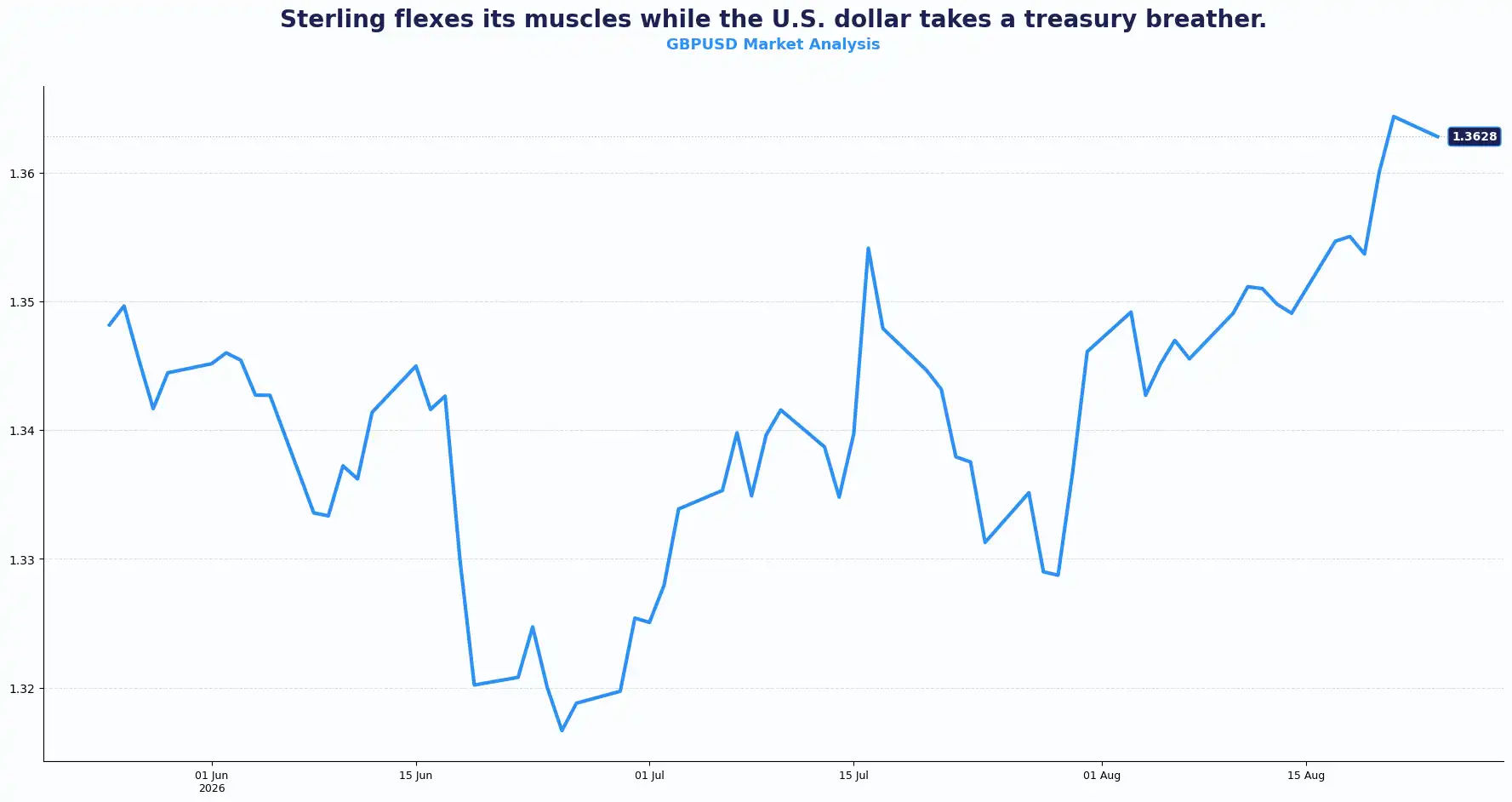
Key Technical levels for the GBP/USD pair: Resistance sits at 1.3660, 1.3700, 1.3750 and Support sits at 1.3580, 1.3500
EUR: European Central Bank Support Counterbalances Fiscal Noise
EUR/USD: 1.1665 | EUR/GBP: 0.8558
The euro extended its own four-day winning run, hovering around 1.1680 in the early European session. Sticky Eurozone inflation and persistent ECB rate expectations are providing structural support, even as the pair digests last week's strong advance. The euro has moved comfortably above $1.16 while the dollar absorbs renewed pressure from US fiscal policy.
Eurozone consumer inflation expectations for the year ahead ticked down to 2.9% from 3% in June, a marginal easing, but price growth remains well above the ECB's 2% target. That gap keeps additional monetary tightening in the conversation. ECB policymakers are also discussing the design of structural long-term refinancing operations (LTROs), signalling structural liquidity adjustments ahead. The ECB is not reversing course; it appears to be building new tools to manage reserve demand in a tighter policy environment.
German yields remain at elevated levels. The bullish yield view holds, though the pace of any further rise is likely to be measured rather than sharp. EUR/GBP at 0.8560 reflects a euro that is holding its own against sterling; neither the pound nor the single currency is showing a decisive directional break, while the dollar story dominates sentiment.
Germany's Q2 GDP figures and the August IFO business climate and expectations readings are due tomorrow. Both figures carry weight; a GDP miss or a deterioration in the IFO print could soften the ECB-tightening narrative and bring the EUR/USD gains back into focus. The key question now shifts from whether the euro can rise to whether the dollar can recover. Upcoming US inflation data and Fed commentaries could provide potential cues.
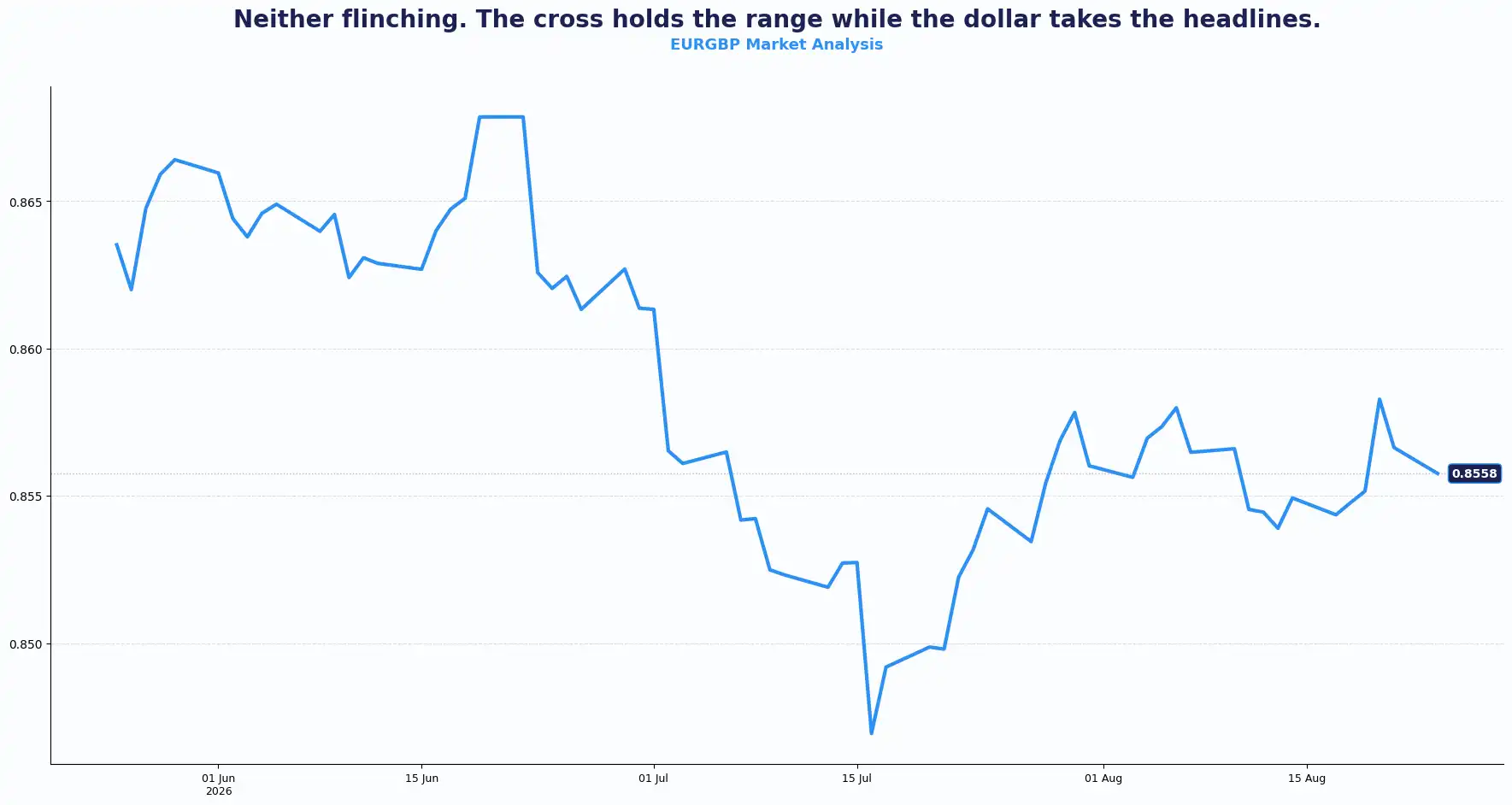
Key Technical levels for the EUR/GBP pair: Resistance sits at 0.8590, 0.8620 and Support sits at 0.8520, 0.8490
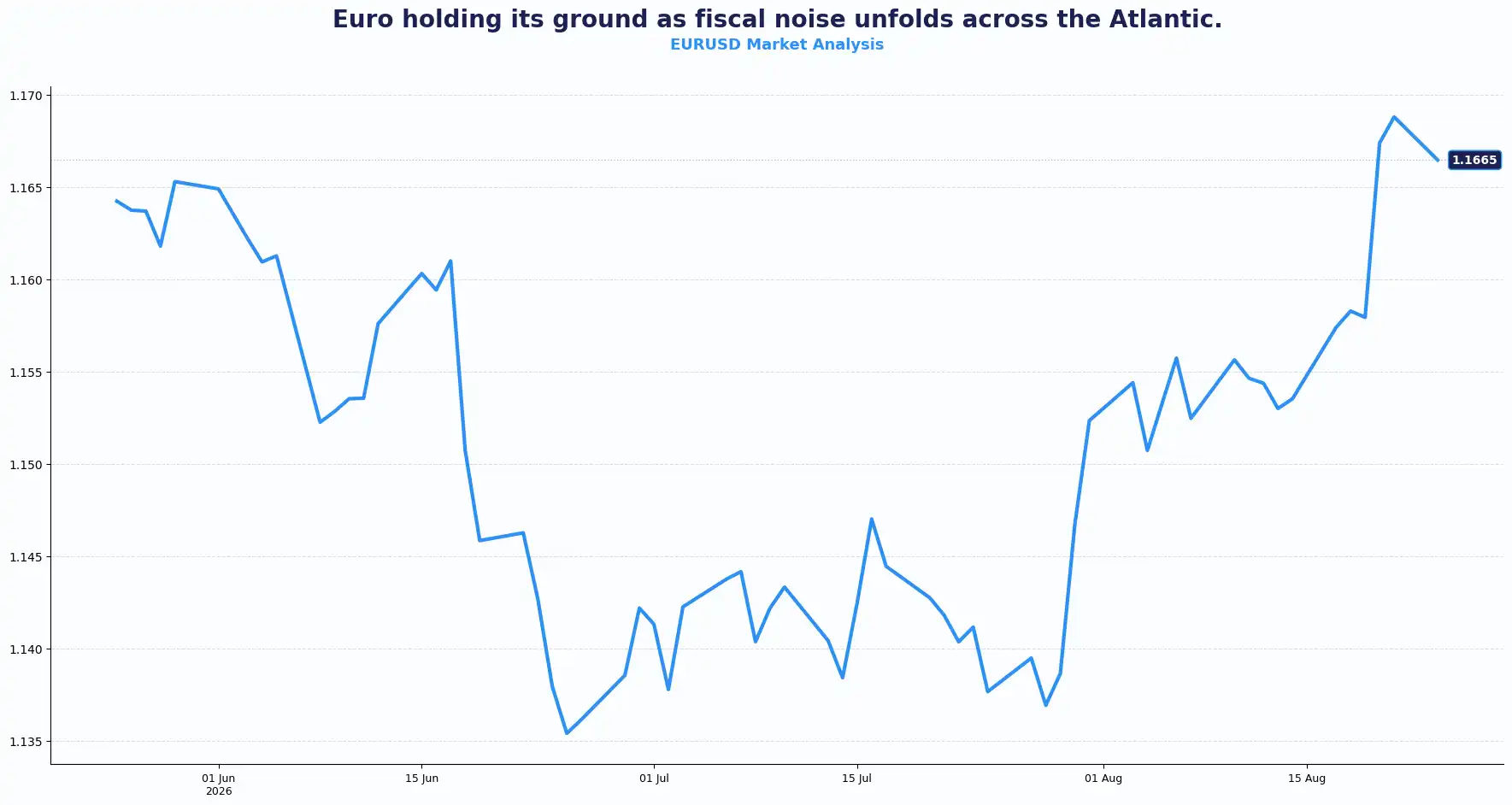
Key Technical levels for the EUR/USD pair: Resistance sits at 1.1700, 1.1750, 1.1805 and Support sits at 1.1620, 1.1550
USD: Dollar Faces Fiscal and Geopolitical Crossfire
DXY: 98.86 | USD/CHF: ~0.8000
The dollar index (DXY) trades around 98.86, having breached below the 99.00 support level last week for the first time since mid-May. The move reflects more than a single data point. The combination of treasury policy, fiscal concerns, and shifting rate expectations weighs on the single currency. FOMC minutes were released last week, but even that hawkish undercurrent failed to lift the dollar.
The Treasury buyback plan has become a new source of FX sensitivity. The US long-end yield curve carries a growing fiscal risk premium as investors assess debt supply, inflation and government borrowing needs. The 30-year Treasury yield recently reached its highest level since 2007 before easing after the buyback announcement.
The dollar faces another data test of US inflation. The July Personal Consumption Expenditures (PCE) price index arrives on Wednesday. That release could shape expectations around the Fed’s next policy steps. Fed Chair Kevin Warsh will also speak at Jackson Hole on Friday. His comments could influence expectations for rates, the balance sheet and the Treasury-Fed relationship.
Geopolitics adds a competing force. WTI crude slips below $85.00 as investors take profits ahead of Bessent's Iran sanctions announcement. Fears of Strait of Hormuz shipping disruption and Middle East escalation have not disappeared and continue to act as a structural bid for oil prices. Oil's volatility feeds directly into inflation expectations and, by extension, Fed rate assumptions. The market’s focus will be on Bessent’s press conference about whether China-linked sanctions are included; that is the market's key question and a potential catalyst for a sharp repricing.
The dollar therefore sits between two powerful narratives. Fiscal concerns can undermine confidence in the currency. Geopolitical stress can revive demand for it.
The Swiss franc is advancing on dollar weakness, with USD/CHF trading around 0.8000. The Swiss National Bank (SNB) holds its policy rate at 0% and retains its mandate to intervene against excessive franc appreciation, a tool the SNB has not needed to deploy aggressively yet, but one that markets are keeping an eye on given the pace of dollar decline.
Other Currencies: Asia-Pacific Realignment
AUD/USD: 0.7166 | NZD/USD: 0.5972 | USD/JPY: 158.95 | GBP/JPY: 216.81 | USD/CNY: 6.70
The Australian dollar posts modest gains above 0.7150, supported by a weak-dollar backdrop. AUD/USD trades around 0.7175 in the early Asian session.
The NZD/USD pair tells a slightly different story. New Zealand retail sales fell 0.5% quarter-on-quarter in Q2, softer than forecast. The kiwi eases below 0.6000, printing around 0.5970. A weak domestic print versus a soft dollar is a genuine tug-of-war. NZD/USD consolidates near its June high, and a clean break above 0.6000 remains the trigger bulls need to gain conviction.
The USD/CNY remains weak, heading towards 6.70. The yuan has benefited from the weaker dollar and recently posted an eighth consecutive weekly rise.
USD/JPY sits at 158.95. Two consecutive months of accelerating Japanese inflation strengthen the case for a Bank of Japan (BoJ) rate hike in September. A joint US-Japan FX intervention narrative has also been circulating. USD/JPY bulls face increasing resistance above 160 in the near term. GBP/JPY at 216.81 reflects sterling's comparative strength within the G10 complex.
Dollar weakness has created room for major and commodity currencies to push higher. That move now faces a more important test. US inflation, Treasury yields, and Iran-related developments could all shift the narrative quickly.
Current Rate Table
| Pair | Rate | Trend |
|---|---|---|
| GBP/USD | 1.3628 | Bullish |
| EUR/USD | 1.1665 | Bullish |
| EUR/GBP | 0.8558 | Neutral / Mild EUR bid |
| USD/JPY | 158.95 | Bearish bias |
| GBP/JPY | 216.81 | Bullish |
| AUD/USD | 0.7166 | Mildly Bullish |
| NZD/USD | 0.5972 | Neutral / Soft |
| USD/CHF | 0.8000 | Bearish |
| USD/CNY | ~6.72 | Bearish |
Market lookahead:
Tue, Aug 25
- Germany Q2 GDP
- US Durable Goods Orders (Jul)
- US Consumer Confidence (Aug)
Wed, Aug 26
- Australia’s Consumer Price Index (Jul)
- US GDP Q2
Thurs, Aug 27
- Germany’s IFO Business Climate
- Eurozone’s Consumer Confidence (Aug)
- US Goods Trade Balance (Jul)
Fri, Aug 28
- US Personal Consumption Expenditures (Jul)
Stay Ahead in the Currency Game
Whether you're a daily FX trader or handle international transactions regularly, our 'Currency Pulse' newsletter delivers the news you need to make more informed decisions. Receive concise updates and in-depth insights directly in your LinkedIn feed.
Subscribe to 'Currency Pulse' now and never miss a beat in the currency markets!
Ready to act on today’s insights? Get a free quote or give us a call on: +44 (0)20 7740 0000 to connect with a dedicated portfolio manager for tailored support.
Important Disclaimer: This blog is for informational purposes only and should not be considered financial advice. Currency Solutions does not take into account the investment objectives, financial situation, or specific needs of individual readers. We do not endorse or recommend any specific financial strategies, products, or services mentioned in this content. Forward contracts can help businesses manage foreign exchange exposure by providing greater certainty over future exchange rates, although they may also mean that businesses do not benefit from favourable exchange-rate movements. Businesses should consider their individual circumstances and speak with their dealer to understand how forward contracts may support their specific foreign exchange requirements. All information is provided “as is” without any representations or warranties, express or implied, regarding its accuracy, completeness, or timeliness.