Dollar Steadies Near Three-Month Low as US Data Deluge Hits
8 min read
Share


The dollar holds near 99 on the DXY as five major US data releases: core PCE, headline PCE, Q2 GDP second estimate, durable goods orders, and personal income and spending, land simultaneously today. Sterling trades just below mid-1.3600s, close to multi-month highs, with no critical UK data due this week making GBP/USD a near-pure dollar story.
The euro draws support from Tuesday's upward revision to German Q2 GDP and a one-year high IFO Business Climate reading, holding EUR/USD just below 1.1700 and EUR/GBP around 0.8560.
Iran and Oman restart Hormuz framework talks, extending oil's slide and pulling yields and inflation expectations lower alongside it. Fed Chair Kevin Warsh to deliver his inaugural Jackson Hole address on Friday amid a rare backdrop of the recent 9-3 FOMC vote split. Next week brings central bank policy decisions from the ECB and BoJ.
GBP: Sterling Holds Its Ground Close to Multi-Month Highs
GBP/USD: 1.3628 | EUR/GBP: 0.8563
GBP/USD edged lower during Wednesday’s Asian session but held close to its multi-month peak. The pair traded below the mid-1.3600s after Tuesday’s strong advance. The sterling still trades near the six-month high around 1.3660 as attention shifts to today’s US data cluster.
The pound gives back a portion of Tuesday's gains during the Asian session, slipping below the mid-1.3600s. The move reflects little conviction in either direction. The dollar is weighed down by falling US bond yields and a growing expectation of a Federal Reserve (Fed) rate hold at the September meeting.
The Fed's communication gap sits at the centre of the dollar's current weakness. Chair Kevin Warsh heads to Jackson Hole on Friday carrying questions the market badly wants to be answered: how does a Fed that has stepped back from forward guidance intend to anchor inflation expectations? How much tightening through long-term yields will it absorb before acting? Those questions hang over the dollar without clear answers, and sterling benefits from that uncertainty by default.
Tamer July US inflation data shifted the probability firmly toward a hold at the 15–16 September FOMC meeting. Falling crude prices reinforced that shift, easing inflationary pressure and pulling US bond yields lower. The Treasury's buyback strategy for longer-term bonds compounds the downward pressure on yields.
On the geopolitical side, Iran and Oman have resumed talks on a framework for safe commercial navigation through the Strait of Hormuz, extending oil's slide. Reports also indicate that the US offered Iran sanctions relief and an end to the naval blockade in exchange for reopening the Strait and halting regional proxy activity, raising the prospect of a diplomatic resolution that further weighs on the dollar's reserve-currency standing. GBP/USD holds its footing in that environment, supported from below even as it consolidates.
The pound also draws support from expectations of a BoE rate hike. Recent UK data and persistent inflation have kept the possibility of further Bank of England (BoE) tightening in focus.
For GBP/USD, the current picture reflects three moving parts. Sterling has strong technical support near recent highs. US yields have softened. Fed expectations now depend heavily on inflation and Warsh’s guidance. The pair could remain sensitive to every shift in that mix.
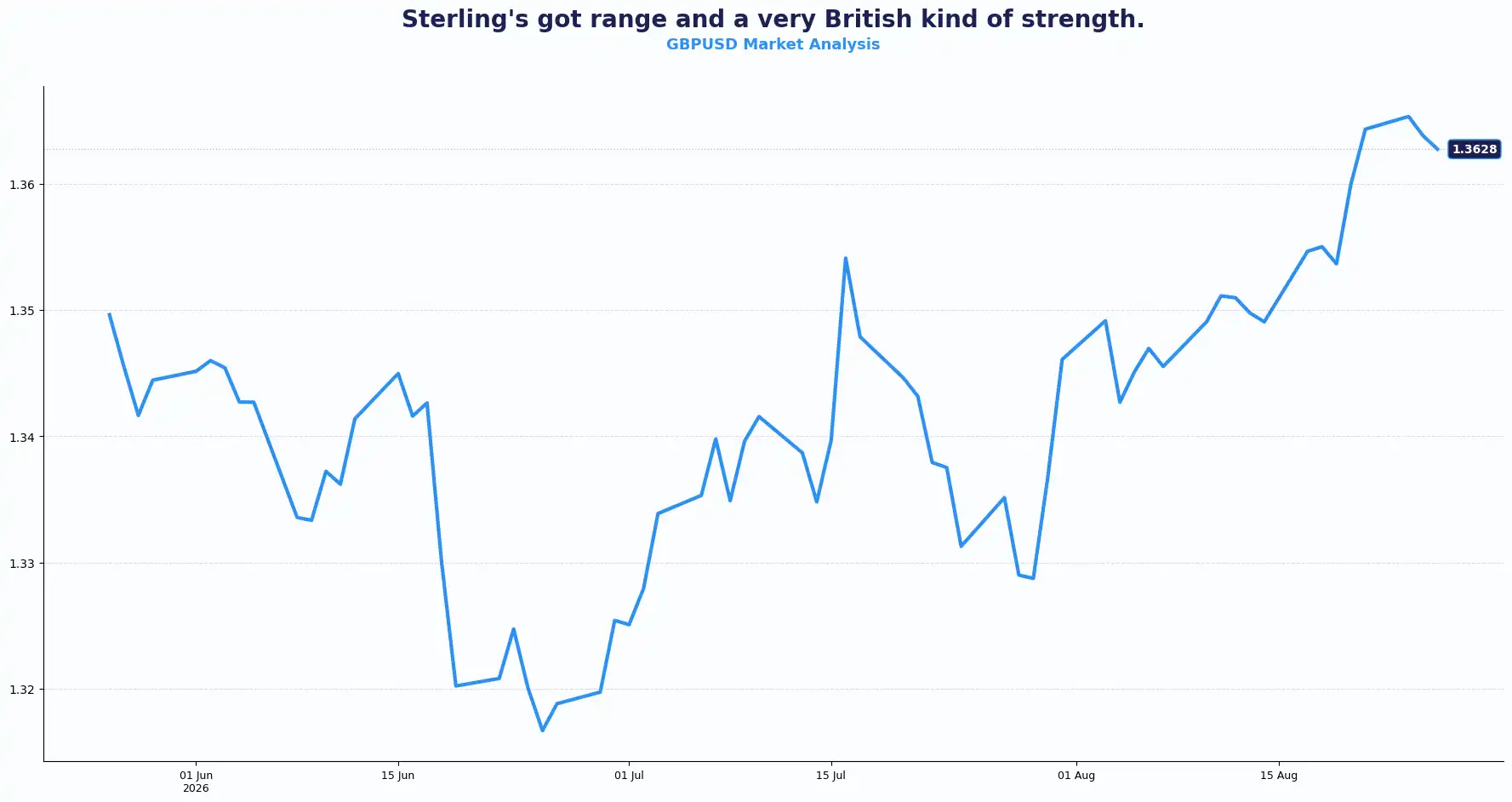
Key Technical levels for the GBP/USD pair: Resistance sits at 1.3650, 1.3700, 1.3750 and Support sits at 1.3520, 1.3480
EUR: Euro Ranges as German Data Offsets Dovish Sentiment
EUR/USD: 1.1673 | EUR/GBP: 0.8563 | EUR/JPY: 185.45
EUR/GBP edges up to 0.8560. The pair continues to trade inside its monthly range while both the UK and eurozone calendars offer little immediate domestic data. EUR/USD traded around 1.1665 on Wednesday after failing to hold above 1.1700. The pair has entered a tighter range after a strong recovery from the July lows. Elsewhere, EUR/JPY declines to 185.45 as hawkish Bank of Japan (BoJ) interest rate expectations strengthen the yen.
The euro drew support from stronger-than-expected German figures. Germany’s second-quarter GDP was revised upward. The IFO Business Climate Index also rose to its highest level in a year. Both current conditions and expectations improved. That gives the euro a firmer domestic backdrop. Yet sterling’s yield advantage still limits the euro’s near-term upside.
Technical analysis suggests EUR/GBP moving towards 0.8700 in the coming months. The view centres on the prospect that the BoE may not need another rate hike. However, any dovish repricing in UK front-end rates could reduce sterling’s carry support later in the year. In the meantime, sterling retains carry appeal as one of the highest volatility-adjusted G10 currencies, keeping EUR/GBP anchored near current levels.
ECB member Isabel Schnabel reinforced the bank's hawkish tilt in recent commentary. Schnabel flagged that inflation is unlikely to return to the 2% target over the medium term, making further tightening necessary. She pointed specifically to the natural gas situation as a particular concern, and emphasised that the ECB must act early to prevent second-round inflationary effects. The extent of further tightening is likely to depend on incoming data. The overall read: the ECB's reaction function is well understood, which limits volatility in either direction.
Lower US and European yields have created a calmer backdrop for the euro. Falling crude prices have helped reduce immediate inflation fears, providing a more stable macro backdrop that gives bond yields more room to fall without reigniting dollar debasement concerns.
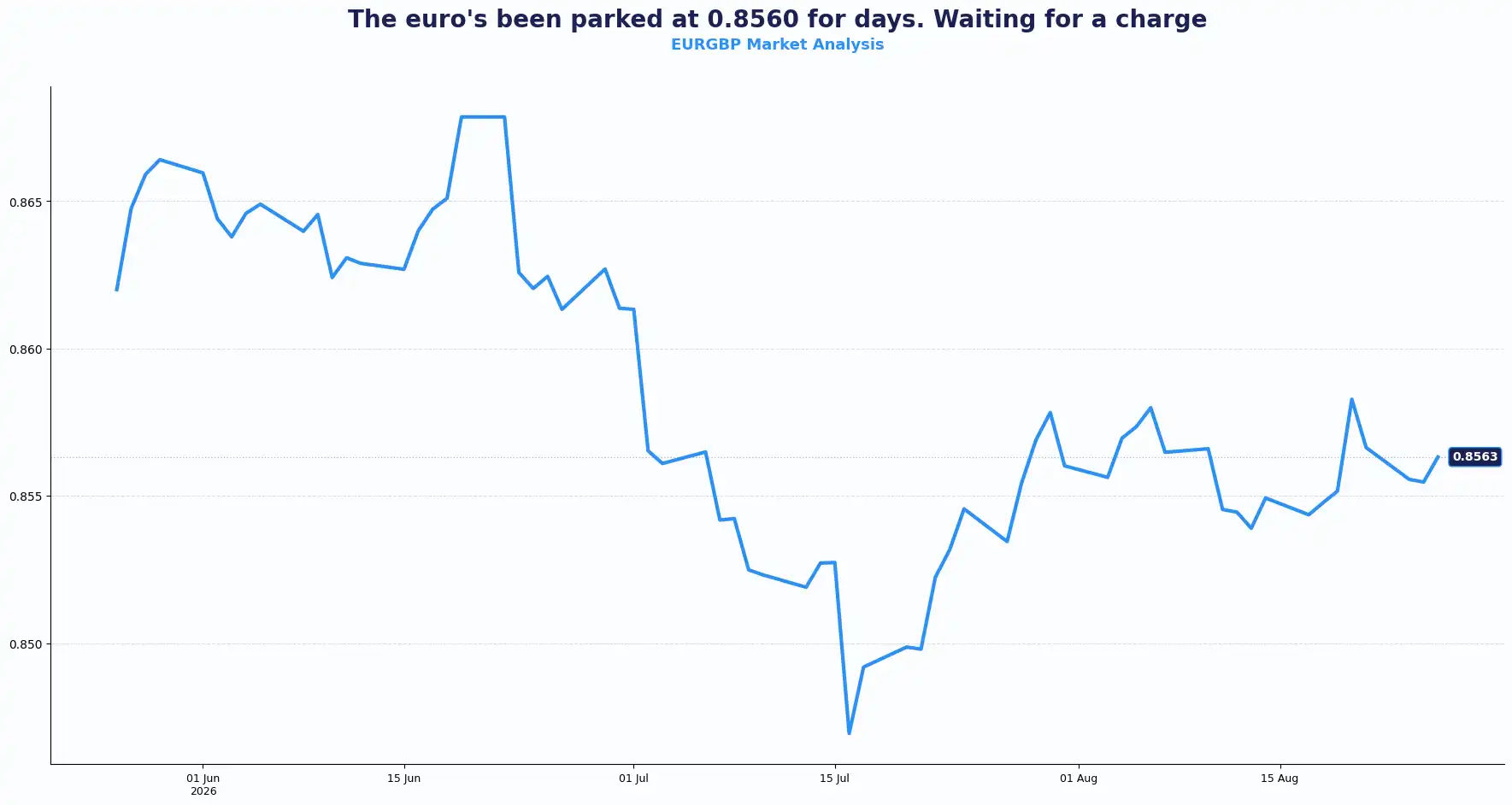
Key Technical levels for the EUR/GBP pair: Resistance sits at 0.8600, 0.8700 and Support sits at 0.8520, 0.8500
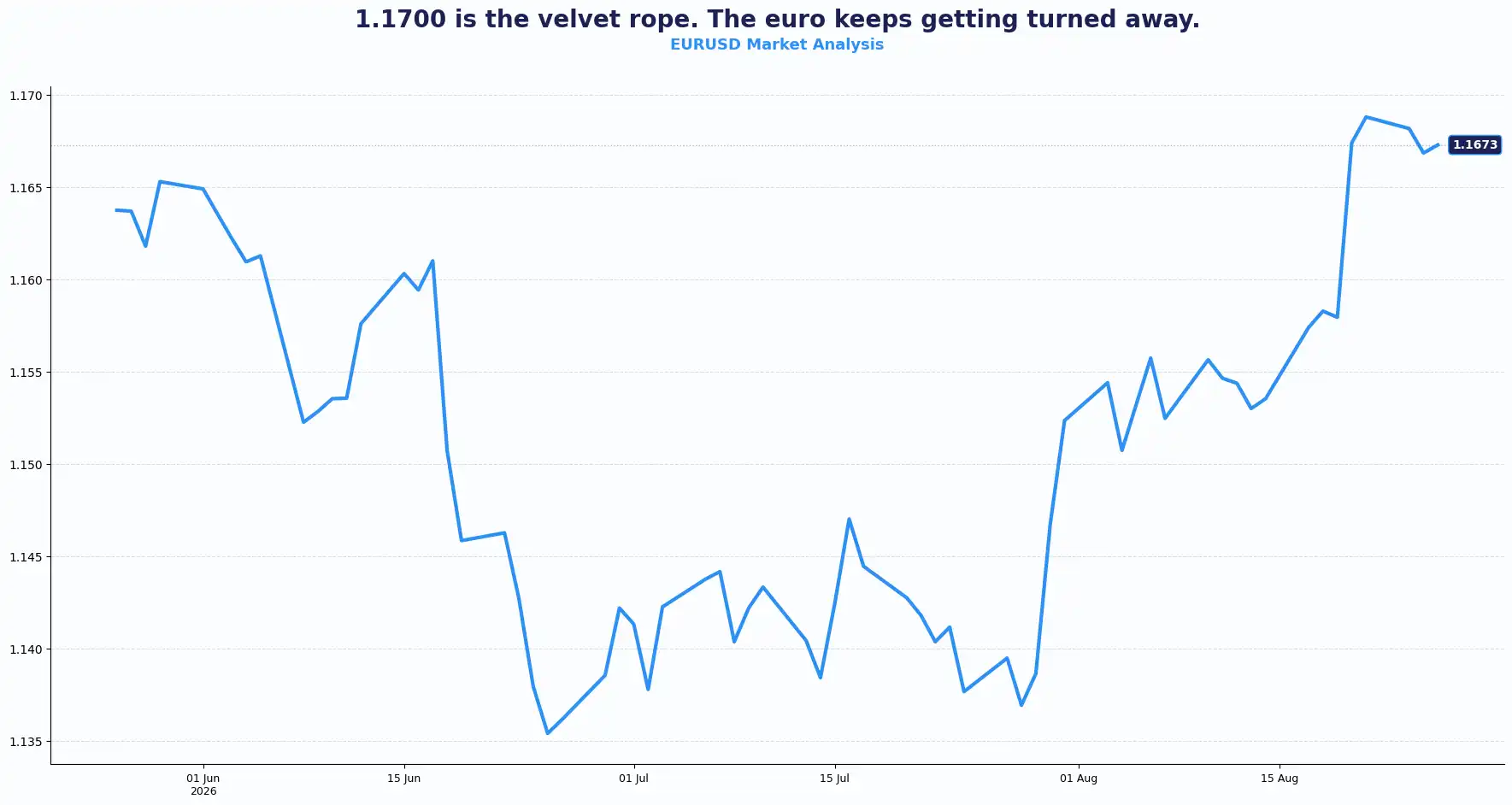
Key Technical levels for the EUR/USD pair: Resistance sits at 1.1700, 1.1711, 1.1805 and Support sits at 1.1600, 1.1570
USD: Dollar Awaits Five Data Releases Today, Warsh on Friday
DXY: 99.00
The Dollar Index (DXY) recovered to 99.00 during Wednesday’s early European session. The move followed a period of weakness driven by falling Treasury yields, lower oil prices and reduced expectations for an immediate Fed rate increase. Today's data cluster and Friday's Jackson Hole speech are the week's twin focal points.
The dollar index steadies, anchored within striking distance of the three-month low of 98.50 touched last week. The DXY structure stays bearish below 99.40. Today brings five simultaneous US data releases: core PCE, headline PCE, Q2 GDP second estimate, durable goods orders, and personal income and spending.
Core PCE carries the most policy weight as the Fed’s preferred inflation gauge. Consensus puts the annual core rate at 3.3%, with the headline PCE forecast to ease slightly to 3.6% YoY from 3.7% in June. While the data alone is unlikely to shift the broader narrative of inflation sitting above target, a reading above consensus could keep hawkish Fed risks in play even with a September hold widely expected. A softer print is likely to deepen existing dollar pressure.
That leaves the dollar caught between two forces. Sticky inflation can keep Fed tightening risks alive. Lower oil prices and softer yields can pull in the opposite direction.
Warsh now sits at the centre of that debate. Fed Chair Kevin Warsh's speech at the Jackson Hole Symposium on Friday comes with doubts over the Fed's commitment to strict inflation control, keeping the dollar vulnerable. His comments could clarify how the central bank intends to anchor inflation expectations while long-term yields respond to fiscal and Treasury policy. The US Treasury's reported plan to deploy nearly $1 trillion from its General Account to fund increased buybacks of longer-term bonds introduces an additional structural variable. Warsh's tone on Friday could set the dollar's direction for the weeks ahead more decisively than today's data. A strong reaffirmation of the 2% inflation mandate from Warsh could halt the dollar's slide; otherwise, downside risks toward 98.50 remain open.
Other currencies:
AUD/USD: 0.7180 | NZD/USD: 0.5955 | USD/JPY: 159.00 | GBP/JPY: 216.70
Aussie Gains as Inflation Beats Forecasts
AUD/USD climbed towards 0.7180 after Australian inflation surprised on the upside. July CPI rose 3.5% YoY. That was down from 3.8% in June but above the 3.2% consensus forecast. The monthly CPI increased 1.0%, against expectations of a 0.8% rise. Trimmed-mean inflation held at 3.6%.
The result keeps RBA tightening expectations in play. The RBA has also warned that underlying inflation could stay above its target band for some time. AUD/USD now approaches the 0.7200 area. The dollar’s direction remains the other half of the equation.
USD/CHF also edged higher as the dollar recovered ahead of the US PCE report. Meanwhile, NZD/USD slipped as the dollar regained some ground. Expectations of a potential RBNZ rate increase next week provide the New Zealand dollar with a separate source of support.
Yen Gains Policy Support
USD/JPY edged down to 158.92 as expectations for further BoJ tightening supported the yen. Economists expect the BoJ to raise its policy rate to 1.25% in September. EUR/JPY also slipped towards 185.45 as the yen gained support from the changing BoJ outlook. GBP/JPY sits around the 216.70 area after recent gains.
The Canadian dollar faces a different pressure point. USD/CAD moved above 1.3860 after rebounding from 1.3825 as lower oil prices reduced support for the commodity-linked currency. Renewed US-Canada trade tensions add another source of pressure.
Sterling sits near a six-month-high. The euro tests a key technical ceiling. The dollar waits for inflation and Fed guidance. The Australian dollar has a fresh inflation catalyst. The yen has a stronger policy narrative.
The direction of rate differentials, energy prices, and central bank expectations can shift quickly when inflation and policy guidance converge. Upcoming data and geopolitical developments could impact the major pairs.
Current Rate Table
| Pair | Rate (indicative) | Trend |
|---|---|---|
| GBP/USD | 1.3628 | Bullish pullback |
| EUR/USD | 1.1673 | Tentatively bullish |
| EUR/GBP | 0.8563 | Neutral / ranging |
| AUD/USD | 0.7180 | Bullish |
| NZD/USD | 0.5955 | Mild bearish bias |
| USD/JPY | 159.00 | Bearish (JPY bid) |
| USD/CAD | 1.3866 | Bullish |
| GBP/JPY | 216.70 | Bearish |
Market lookahead:
Wed, Aug 26
- Australia’s Consumer Price Index (Jul)
- US GDP Q2
- US Durable Goods Orders (Jul)
- US PCE & Core
- Personal Income and Spending data
Thurs, Aug 27
- US Goods Trade Balance (Jul)
Fri, Aug 28
- Eurozone’s Consumer Confidence (Aug)
- Fed Chair Warsh Speech
Stay Ahead in the Currency Game
Whether you're a daily FX trader or handle international transactions regularly, our 'Currency Pulse' newsletter delivers the news you need to make more informed decisions. Receive concise updates and in-depth insights directly in your LinkedIn feed.
Subscribe to 'Currency Pulse' now and never miss a beat in the currency markets!
Ready to act on today’s insights? Get a free quote or give us a call on: +44 (0)20 7740 0000 to connect with a dedicated portfolio manager for tailored support.
Important Disclaimer: This blog is for informational purposes only and should not be considered financial advice. Currency Solutions does not take into account the investment objectives, financial situation, or specific needs of individual readers. We do not endorse or recommend any specific financial strategies, products, or services mentioned in this content. Forward contracts can help businesses manage foreign exchange exposure by providing greater certainty over future exchange rates, although they may also mean that businesses do not benefit from favourable exchange-rate movements. Businesses should consider their individual circumstances and speak with their dealer to understand how forward contracts may support their specific foreign exchange requirements. All information is provided “as is” without any representations or warranties, express or implied, regarding its accuracy, completeness, or timeliness.