Dollar Recovery Tests Sterling and Euro Ahead of US CPI
7 min read
Share


The dollar recovered ground on Monday despite Friday's sharp post-NFP sell-off, with Strait of Hormuz uncertainty sustaining safe-haven demand. GBP/USD retreated from the 1.3500 level touched last week. EUR/USD held above 1.1550, unable to clear the 1.1620 ceiling.
US July Nonfarm Payrolls shed 23,000 jobs against a +80,000 consensus. Fed September hike expectations dropped from 67% to 46%. Oil prices recovering keeps inflation fears alive. A Fed hike later this year stays on the table. The Swiss franc softened as dollar demand outweighed its safe-haven appeal. The New Zealand dollar drifted lower, with the RBNZ's hawkish stance offering a floor rather than a lift.
Wednesday brings US CPI for July, consensus at 3.4% YoY, landing alongside Germany's inflation data. Two inflation prints arriving the same day. Thursday follows with the UK's preliminary Q2 GDP, forecast at 0.4% against Q1's 0.6%. That number could define sterling's next trajectory.
GBP: Navigating Domestic Growth & Shipping Risks
GBP/USD: 1.3503 | EUR/GBP 0.8561
The GBP/USD pair starts the week softer at 1.3496 and moves away from a multi-week high above 1.3500. The pair had touched that level on Friday before geopolitical risk reasserted itself. The 1.3500 handle acted as a ceiling rather than a floor, and the pair traded lower into the London open on Monday. Now testing the 1.35 level.
The driver is not primarily domestic. The immediate pressure comes from renewed demand for the dollar as geopolitical risks around the Strait of Hormuz keep risk sentiment fragile. Even as Omani-mediated negotiations between US and Iranian officials reported tentative progress over the weekend, traders discounted the optimism. Sterling’s recent gains now face a stronger test as traders weigh the weaker US labour data against the inflation risks created by higher oil prices.
Thursday puts sterling in the spotlight, with the preliminary UK Q2 GDP report arriving. Expectations are for a 0.4% QoQ rise, down from Q1’s 0.6% in 2026. Higher energy costs and sluggish business investment in Q2 may lead to a lower figure, which could prompt renewed discussion about the UK’s growth outlook and the Bank of England’s policy direction. UK trade balance data and June’s industrial production figures will also be published, making it a packed and pivotal day for those monitoring sterling.
Monday's softness in the GBP/USD pair reflects the broader backdrop: oil prices recovering after an August dip, inflation fears keeping at least one Fed hike plausible for later this year, and a dollar that is finding buyers on every dip. The Bank of England's rate path depends partly on how resilient UK growth proves; a soft GDP print sharpens that uncertainty.
The pound has climbed towards 1.3500 but now needs fresh domestic support to extend that move. Weak UK data could put pressure on GBP/USD. Stronger figures could reinforce the recent sterling advance.
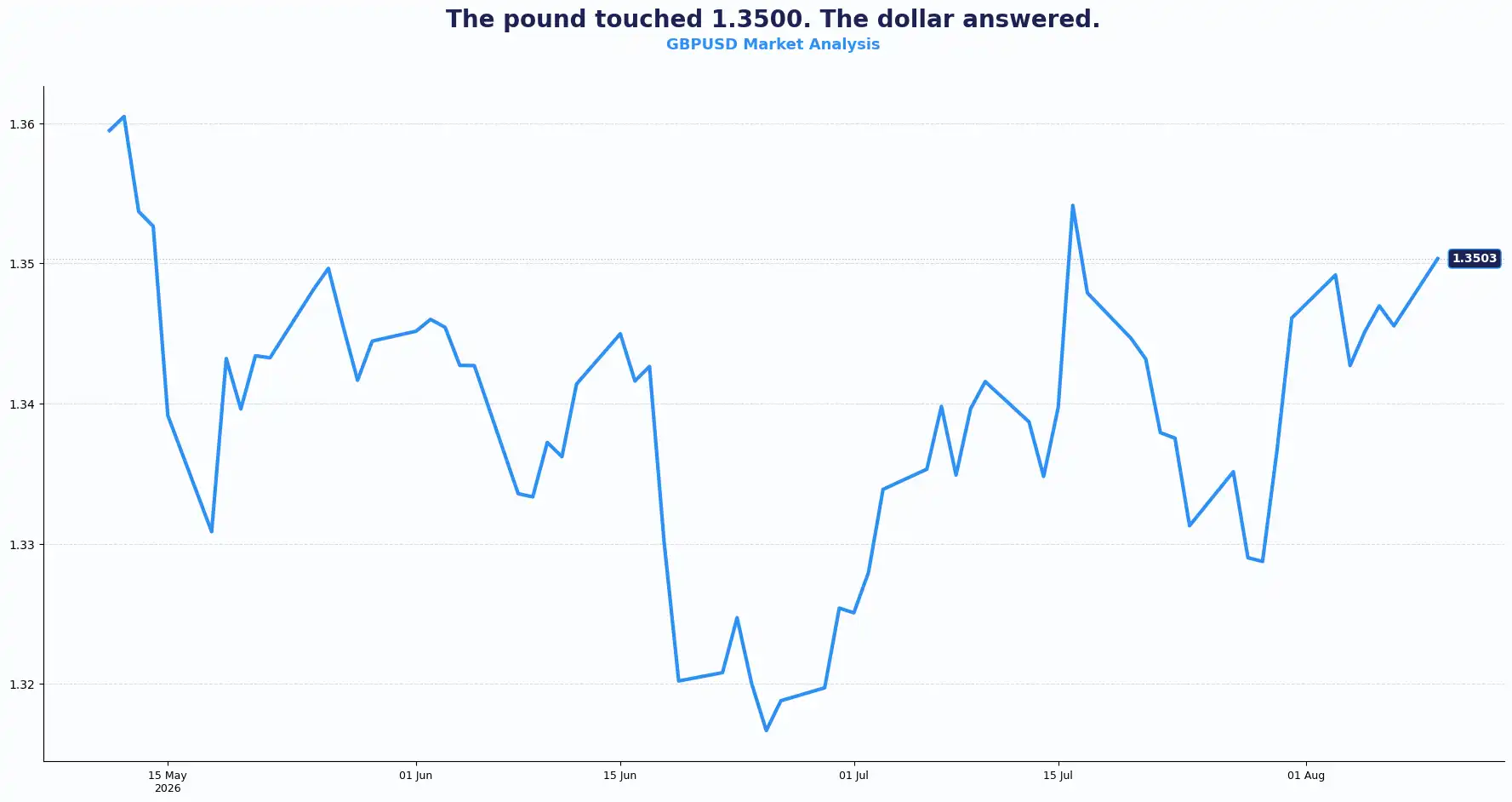
Key Technical levels for the GBP/USD pair: Resistance sits at 1.3550, 1.3600 and Support sits at 1.3420, 1.3460, 1.3500
Euro: Energy Costs Weigh On European Recovery
EUR/USD: 1.1563 | EUR/GBP: 0.8561
The euro touched a fresh high since 17 June last week, driven by the weak US payrolls print on Friday. That move reversed into Monday's Asian session as the dollar found its footing. EUR/USD sat just above 1.1550 early in the European session, well within range of the recent high but unable to push through it.
The near-term trading range is 1.1500 to 1.1600. The dollar's recovery from its post-NFP swing low caps the upside for the pair. Iranian diplomatic progress over the weekend was greeted with scepticism; traders chose the safety of the dollar over the signal from Oman.
Two key data prints could likely shape the euro's path this week. Germany's HICP and CPI for July arrive on Wednesday, the same day as the US CPI release. European inflation data feeding into ECB rate expectations on the same day as American inflation data feeding into Fed expectations means Wednesday carries outsized directional significance for EUR/USD. A configuration in which German inflation surprises to the downside while US inflation holds firm could push the pair back toward 1.1490. The reverse configuration could see EUR/USD clear 1.1620 for the first time since mid-June.
Friday brings Eurozone trade balance data alongside the second estimate of Q2 Eurozone GDP; the consensus holds at the same level as the previous quarter. The structural story for the euro this week is whether policy divergence between the Fed and ECB narrows further, or whether US hike bets stage a partial recovery in Wednesday's CPI. The data, rather than the headlines, will decide whether the euro can hold its recent ground.
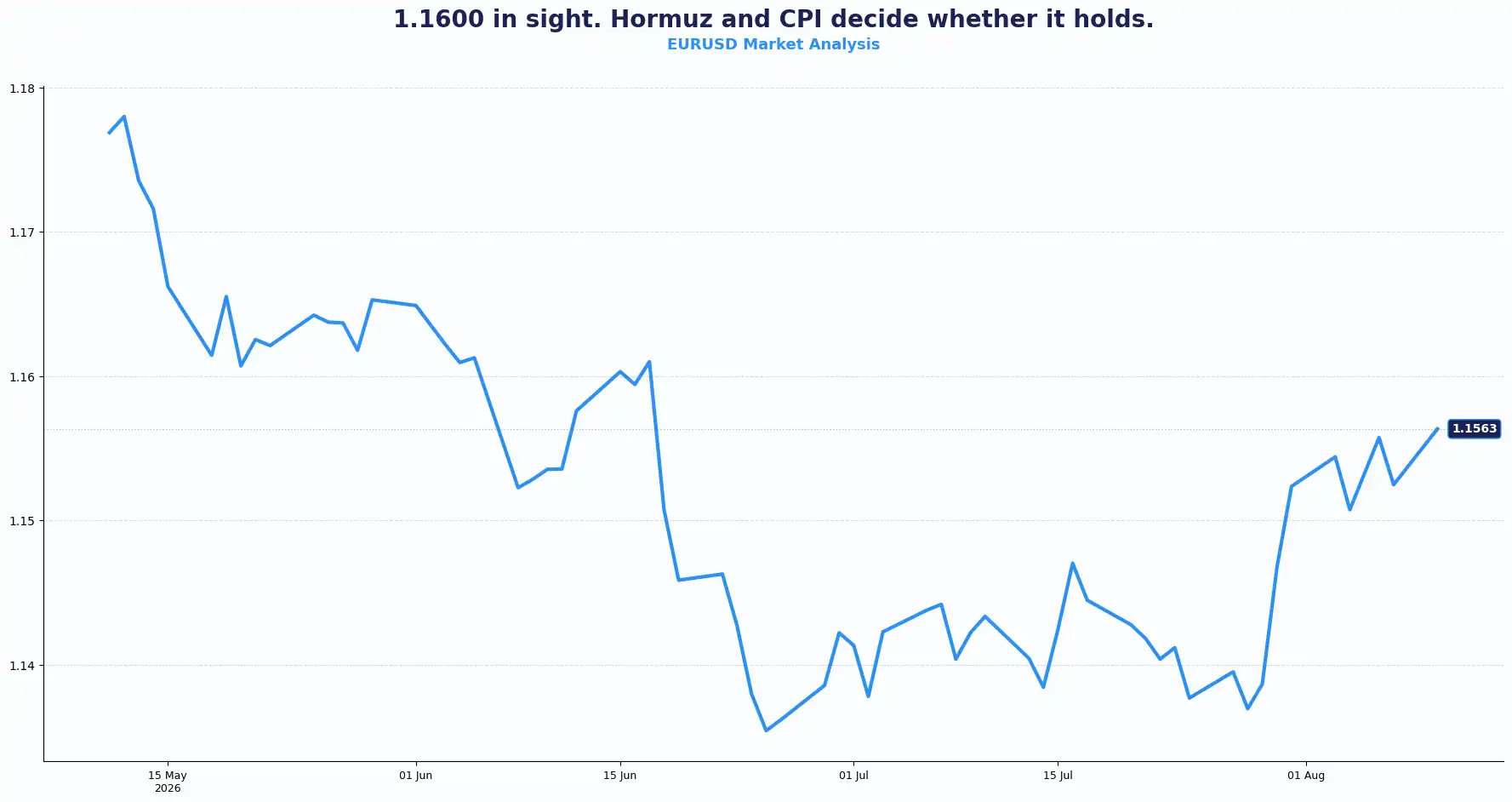
Key Technical levels for the EUR/USD pair: Resistance sits at 1.1620, 1.1650 and Support sits at 1.1550, 1.1490, 1.1430
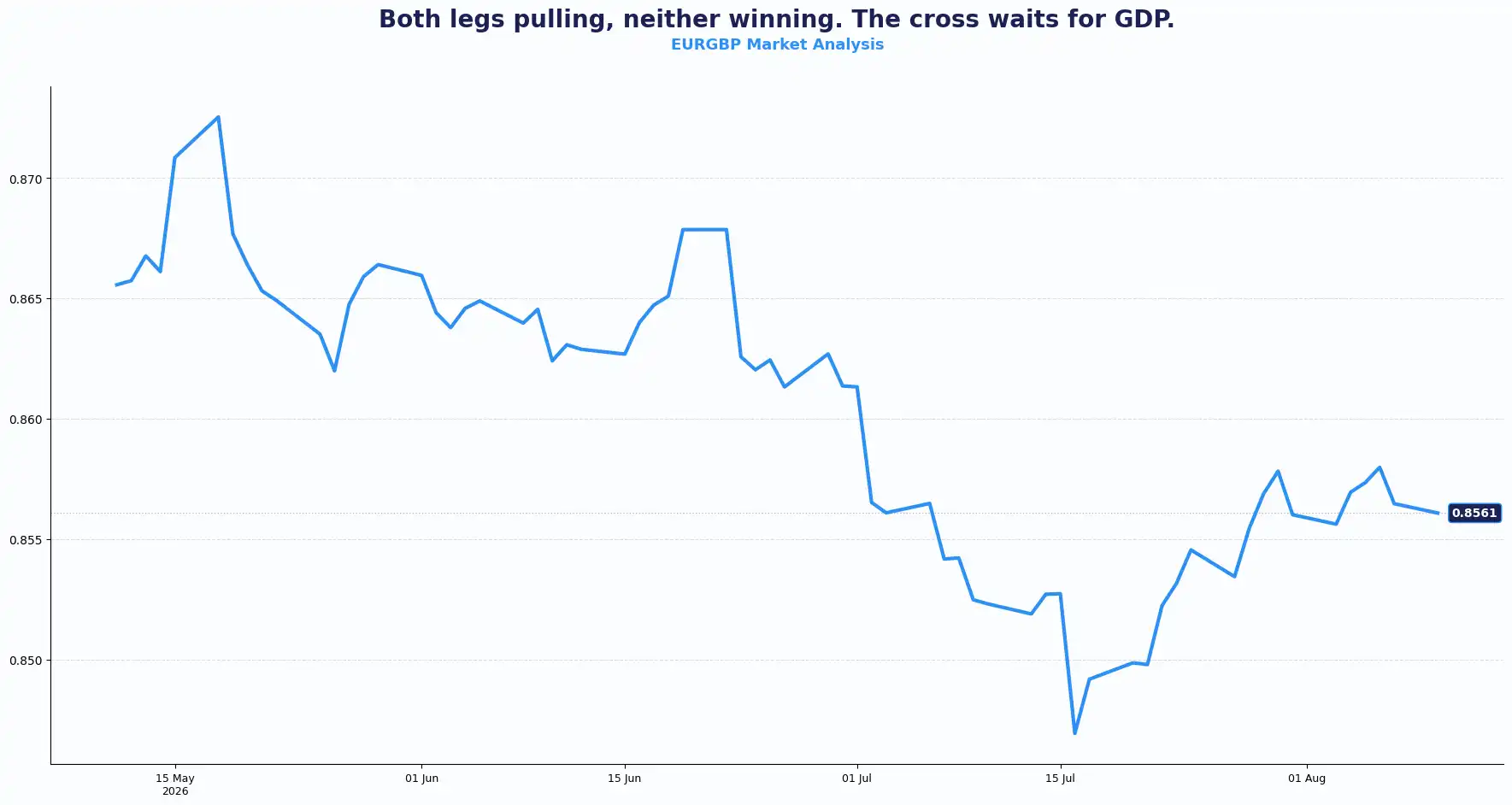
Key Technical levels for the EUR/GBP pair: Resistance sits at 0.8600, 0.8640 and Support sits at 0.8510
USD: Soft Jobs Data Meet Inflation Pressure
DXY: 99.65
The US Dollar Index (DXY) firming near 99.65 reflects persistent risk aversion. Disappointing July payrolls reduced the CME FedWatch probability of a September Fed rate increase from 67% to 46%. Nonetheless, safe-haven flows tied to US-Iran diplomatic developments keep the dollar supported against most major peers.
US payrolls fell by 23,000 in July and the unemployment rate held at 4.1%. The weak payroll figure pushed expectations for Fed tightening lower. The Fed voted 9-3 to hold its July meeting, with three dissenters pushing for an immediate hike. That internal division is not resolved by one soft jobs report. The FOMC's response to Friday's data will become clearer after Wednesday's Consumer Price Index (CPI) for July arrives; consensus sits at 3.4% year-on-year, with core (ex-food and energy) at 2.5%.
Fed Richmond President Tom Barkin's commentary added nuance to the picture. He described the labour market as characterised by "low hire, low fire," stagnant rather than deteriorating. Separately, he flagged corporate earnings as "quite strong," with a watch for whether that strength feeds through into employment. The implication: the Fed is watching two variables simultaneously, which could shape the September outlook.
Rising oil prices driven by Hormuz supply anxiety sustain inflation fears and keep a September hike on the table despite the payrolls miss. Thursday brings US Producer Price Index (PPI) data for July alongside initial jobless claims, and Friday delivers Retail Sales for July. Each print could shift the September probability further.
Geopolitical risk gives the dollar another source of support. Uncertainty around the Strait of Hormuz has kept safe-haven demand in play. That influence can affect EUR/USD, GBP/USD and USD/CHF at the same time.
The next few sessions therefore matter across the whole FX complex. The dollar does not need one single bullish catalyst. It needs the data to keep rate expectations from shifting further against it.
Other Currencies:
AUD/USD 0.7028 | NZD/USD 0.5864 | USD/JPY at 158.33 | GBP/JPY at 213.00
USD/CHF has also responded to the stronger dollar tone. The Swiss franc faces a different policy backdrop after softer Swiss inflation. The SNB has also signalled that it can intervene in the foreign exchange market if necessary.
NZD/USD faces a similar cross-current. The New Zealand dollar can draw support from a relatively firm Reserve Bank of New Zealand policy stance. The dollar can regain ground when geopolitical risk increases.
The same theme runs through both pairs. Domestic central-bank expectations matter. So does the dollar’s reaction to global risk.
That keeps the next US inflation figures central to the wider FX picture. A softer inflation signal could reinforce the post-NFP shift in rate expectations. A firmer reading could restore dollar support. Neither outcome should be treated in isolation.
The broader message is clear. Sterling now needs UK data. The euro needs to defend its recent gains. The dollar needs to reconcile weak employment with inflation pressure. Other currencies will feel the spillover. That divergence can quickly change the value of cross-border cash flows. The important question is not simply where a pair trades today. It is which data point could change the narrative next.
Current Rate Table
| Pair | Rate | Trend |
|---|---|---|
| GBP/USD | 1.3503 | Soft / retreating from 3-week high |
| EUR/USD | 1.1563 | Flat / consolidating below multi-week high |
| EUR/GBP | 0.8561 | Firm / dollar risk weighing on both legs |
| USD/CHF | 0.8070 | Soft |
| NZD/USD | 0.5897 | Soft |
Market lookahead:
Tues, Aug 11
- RBA interest rate decision
Wed, Aug 12
- Germany’s Consumer Price Index (CPI) (Jul) inflation figures
- US Consumer price index (CPI) (Jul) inflation figures
Thurs, Aug 13
- UK Goods Trade Balance (Jun)
- UK GDP Q2
- Eurozone Industrial Production (Jun)
- US Producer Price Index (PPI) (Jul)
Fri, Aug 14
- Eurozone Trade Balance (Jun)
- Eurozone GDP Q2
- US Retail Sales (Jul)
Stay Ahead in the Currency Game
Whether you're a daily FX trader or handle international transactions regularly, our 'Currency Pulse' newsletter delivers the news you need to make more informed decisions. Receive concise updates and in-depth insights directly in your LinkedIn feed.
Subscribe to 'Currency Pulse' now and never miss a beat in the currency markets!
Ready to act on today’s insights? Get a free quote or give us a call on: +44 (0)20 7740 0000 to connect with a dedicated portfolio manager for tailored support.
Important Disclaimer: This blog is for informational purposes only and should not be considered financial advice. Currency Solutions does not take into account the investment objectives, financial situation, or specific needs of individual readers. We do not endorse or recommend any specific financial strategies, products, or services mentioned in this content. Forward contracts can help businesses manage foreign exchange exposure by providing greater certainty over future exchange rates, although they may also mean that businesses do not benefit from favourable exchange-rate movements. Businesses should consider their individual circumstances and speak with their dealer to understand how forward contracts may support their specific foreign exchange requirements. All information is provided “as is” without any representations or warranties, express or implied, regarding its accuracy, completeness, or timeliness.