US Targets Iran With Fresh Sanctions; Sterling and Dollar Find Range
9 min read
Share


Sterling held near six-month highs around $1.3630 and the US dollar index (DXY) steadied at 99.07 on Tuesday, with major currency pairs consolidating across the board. The US Treasury announced a sweeping sanctions package against Iran on Monday, covering digital assets, technology, gold, aviation and shipping. Iran's threat to halt oil exports through the Strait of Hormuz kept energy risk elevated and safe-haven demand in play, capping gains for risk-sensitive currencies while giving the dollar a floor.
The euro held above $1.1650 after Germany's Q2 GDP revised up to 1.0% YoY. The RBA minutes flagged a rate hike as "quite possible," lifting the Australian dollar modestly.
All eyes now turn to Wednesday's US PCE inflation print and Fed Chair Kevin Warsh's debut Jackson Hole keynote on Friday, both could determine the next direction for the dollar and its impact on G10 FX.
GBP: Cable Consolidates Near Highs as Middle East Crises Re-arm Greenback
GBP/USD: 1.3646 | EUR/GBP: 0.8551
Sterling entered its second straight day of sideways trading on Tuesday, consolidating around 1.3630 during the Asian session. The pair held its bullish footing above the 200-day Simple Moving Average but did not push through the 1.3660–1.3665 supply zone that stands between current levels and a fresh leg higher.
The dollar picked up modest ground across the board, anchored by a combination of Fed rate-hike expectations and a sharp escalation in US-Iran tensions. Tamer July US inflation data pushed some investors to price in a rate hold at the September 15–16 FOMC meeting. Still, over 40% of rate market pricing points to at least one further hike at September's meeting, and the broader year-end cumulative probability sits higher; that residual hawkishness gives the dollar a floor.
The geopolitical backdrop added a layer of safe-haven demand. US Treasury Secretary Scott Bessent launched a sweeping sanctions package against Iran, covering digital assets, technology, gold, aviation and shipping. Bessent issued a direct warning that any financial institutions conducting business with Iran risk being brought into the sanctions net. In response, Iran's Supreme National Security Council secretary threatened to halt all oil exports through the Strait of Hormuz, pushing energy risk sharply higher.
Higher energy prices can feed inflation while weakening growth. That combination keeps central banks cautious and complicates the interest-rate outlook.
In that environment, sterling outperformed. With the UK calendar quiet this week, the pound drew strength from its carry profile. Sterling sits among the highest volatility-adjusted currencies in the G10, and in a low-volatility environment, carry demand is sticky. The EUR/GBP cross extended losses for a fourth consecutive day, retesting the 0.8550 area. The cross is anchored near those levels for now, with investors continuing to favour the pound's yield advantage over the euro.
For the GBP/USD cross, the sterling needs fresh domestic support to extend its advance. The dollar needs either stronger US data or a more hawkish Fed signal to regain broader momentum.
The next major test comes from US inflation. US PCE inflation for July drops on Wednesday. Fed Chair Kevin Warsh takes the podium at Jackson Hole on Friday, his first major keynote as chair and one of the most closely watched central bank speeches of the year. Both events could reshape the dollar and set the tone for GBP/USD's next directional move.
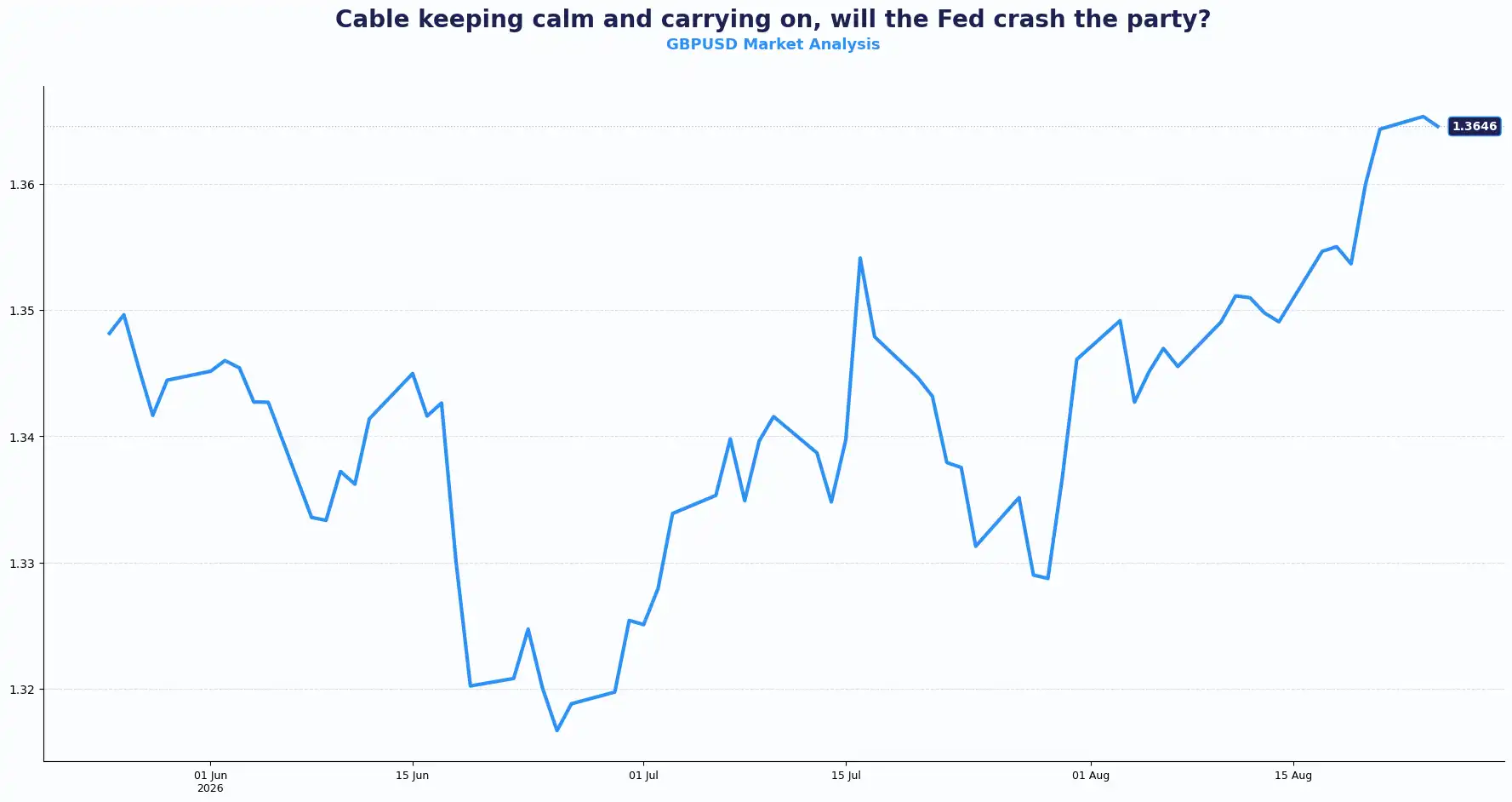
Key Technical levels for the GBP/USD pair: Resistance sits at 1.3660, 1.3700, 1.3750 and Support sits at 1.3560, 1.3580
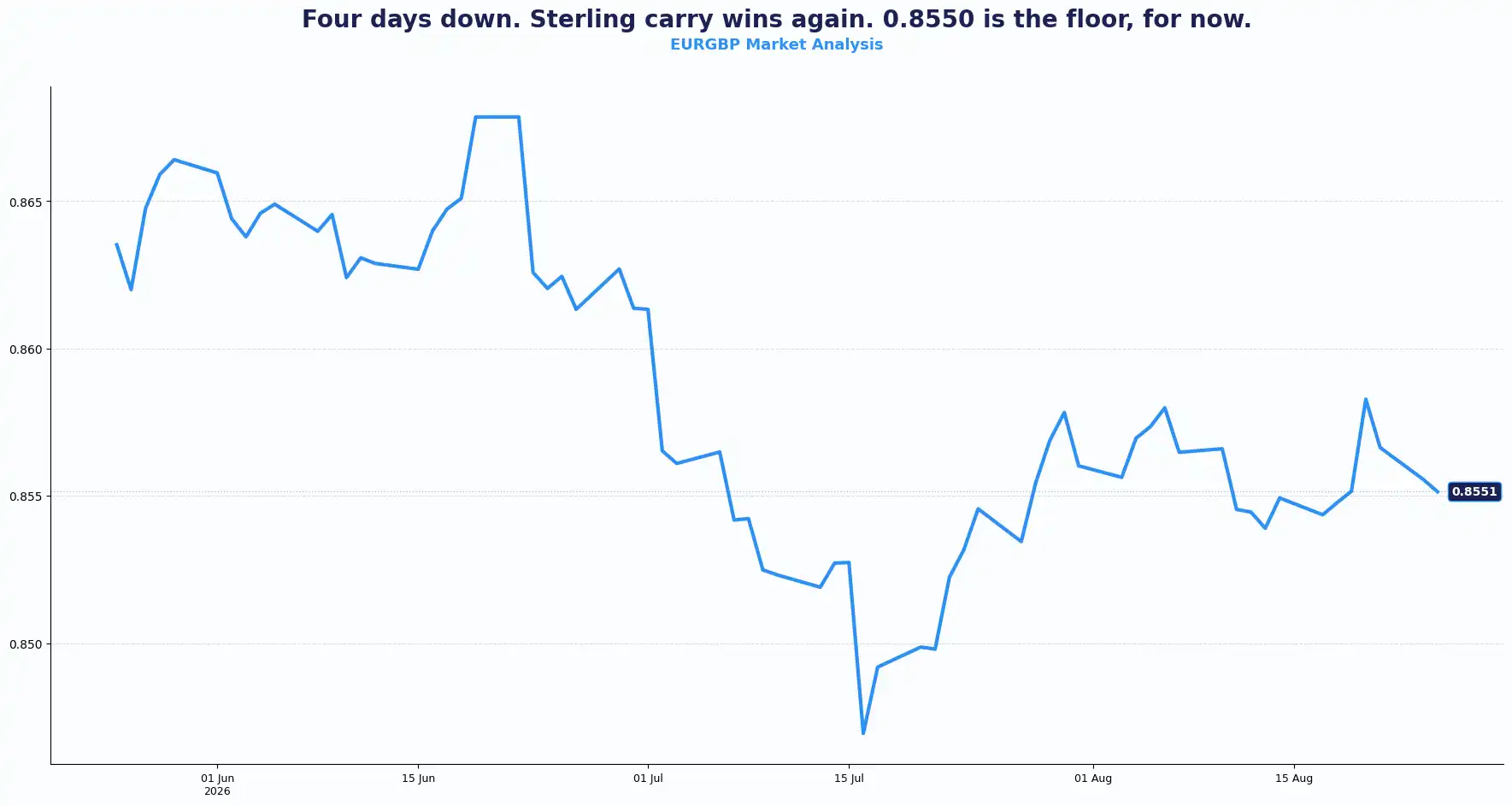
Key Technical levels for the EUR/GBP pair: Resistance sits at 0.8580- 0.8600 and Support sits at 0.8540, 0.8550
EUR: Euro Tests Support as ECB Bets Build, Germany Data Surprises
EUR/USD: 1.1671 | EUR/GBP: 0.8551
The euro has lost ground against sterling for a fourth straight session and is trading near the 0.8550 level in EUR/GBP. German growth offered little support despite an upward revision to Q2 GDP.
German GDP grew 0.3% QoQ from April to June. That beat the preliminary 0.2% consensus. Annual growth also rose to 1% from the earlier 0.9% consensus. However, the stronger figure failed to change the immediate currency picture.
EUR/GBP instead continues to track the relative appeal of sterling. The cross trades near 0.8550, with 0.8530 acting as the next important support. Resistance sits around 0.8575 and then 0.8585.
EUR/USD edged up after that data, trading around 1.1670 in the European session as the dollar found some footing. The pair holds a bullish near-term bias but cannot generate clean upside momentum ahead of the week's major risk events.
Three forces underpin the euro's structural case. Rising oil prices and elevated sovereign bond yields feed Eurozone inflation concerns. Second, those inflation pressures push market expectations firmly toward an ECB rate hike in September; the ECB's June tightening already established the direction, and recent ECB Consumer Expectations Survey data showed three-year-ahead inflation expectations at 2.7% in July, with five-year expectations holding at 2.4%. Third, today's German IFO Business Climate Index for August is expected to show a slight improvement in both current conditions and near-term expectations.
Higher energy prices hurt growth but can also delay disinflation. The ECB therefore faces a policy problem rather than a clean growth story.
The near-term drag on the euro is yield-spread compression. US Treasury yields climbed over the past week, pulling yield spreads slightly against the euro and eroding some of its support. At the same time, the US Treasury doubling its buyback operations for longer-dated bonds added a layer of complexity for dollar bears.
For EUR/USD, the key question is whether US inflation or European inflation exerts the stronger influence on rate expectations. Wednesday's US PCE release could provide the first cue.
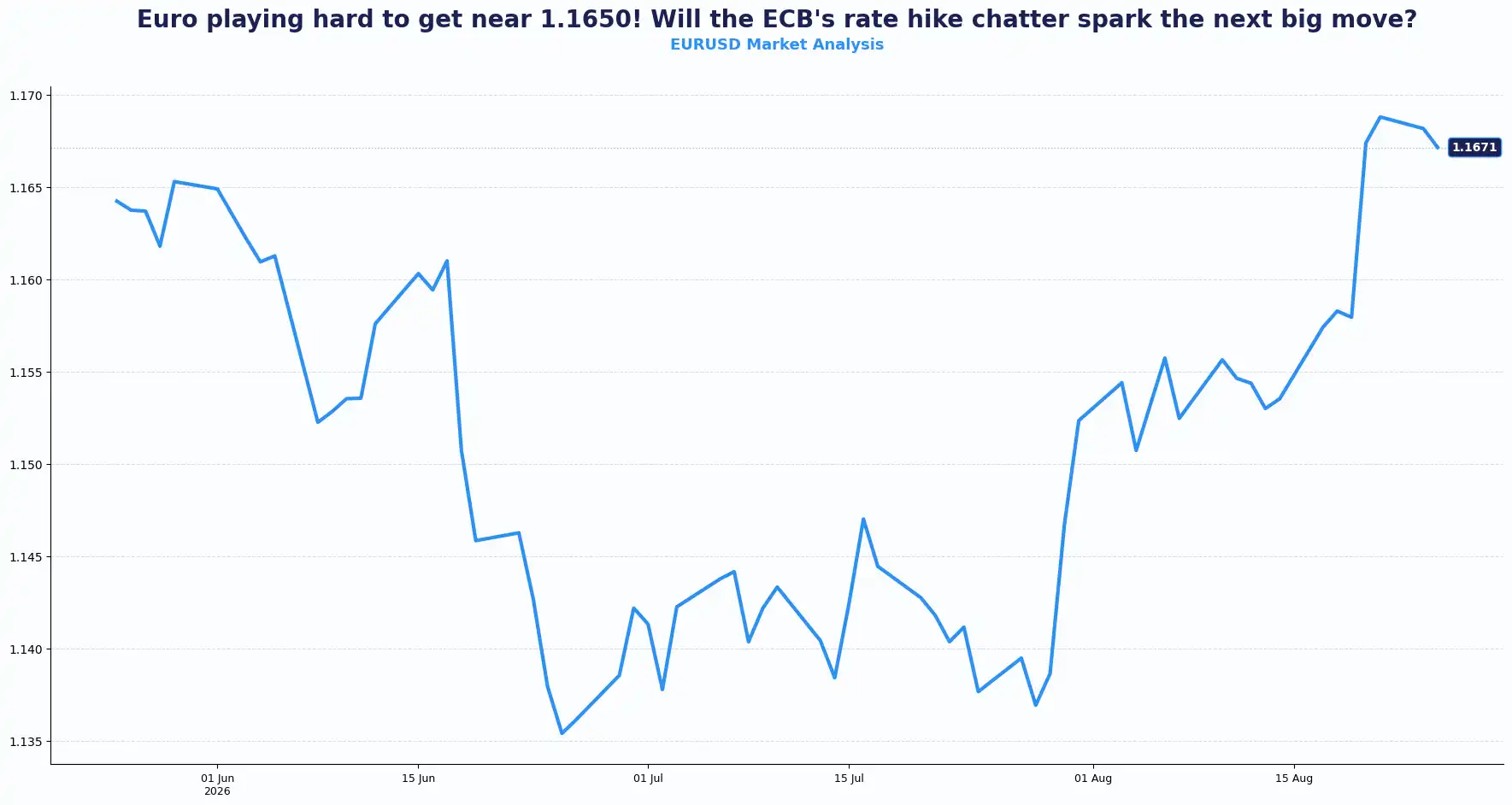
Key Technical levels for the EUR/USD pair: Resistance sits at 1.1700, 1.1711, 1.1805 and Support sits at 1.1600, 1.1577
USD: Greenback Defends Floor, but the Broader Trend Holds
DXY: 99.07
The dollar index (DXY) held near 99.07 on Tuesday, recovering modest ground from its lowest level since 14 May. The recovery was real but has not changed the wider picture; technical signals show no reversal in the broader trend. Oscillator readings moderated the rate of the dollar's decline rather than ended it.
The US sanctions package against Iran drove safe-haven positioning. Wall Street closed Monday in the red, with cautious flow filtering through into dollar demand. Energy price risk from the Strait of Hormuz threat also helped support inflation expectations and preserved residual Fed-hike pricing.
Policy uncertainty still limits the upside. Treasury plans to increase longer-dated bond buybacks have offered some support to bonds but have not removed concerns over US borrowing costs. The US 10-year Treasury yield climbed back towards 4.71% on Tuesday. Yields feed directly into rate expectations. Higher US yields can support the dollar. They can also pressure currencies where central banks offer less restrictive policies.
The Fed now faces a difficult signal set. Inflation remains above target. Energy prices add another source of pressure. At the same time, growth and labour data have weakened in places.
Market consensus for tomorrow ‘s core US PCE is +0.2% MoM for July, with the annual rate holding at 3.3%. A soft print could extend the dollar's softer tone. A hot print could reopen the September hike debate sharply. The decisive moment sits with Warsh on Friday; his Jackson Hole address could signal how the new Fed leadership intends to lean against persistent inflation. That uncertainty over the Fed's policy response is limiting the scope for further dollar gains.
Other Currencies: Carry Trades, Yen Positioning, and the Pacific
AUD/USD: 0.7146 | NZD/USD: 0.5952 | USD/JPY: 159.41 | GBP/JPY: 217.38
The Australian dollar has held firm after the Reserve Bank of Australia's (RBA) July meeting minutes showed that officials considered a 25-basis-point rate increase or leaving the cash rate unchanged at 4.35%. Several officials judged upside inflation risks significant enough to keep another hike in play.
That support faces a fresh test on Wednesday. Australia releases July CPI figures. The data can shift expectations for the RBA's next move, thereby influencing AUD/USD.
AUD/USD trades near 0.7152 and NZD/USD near 0.5955 on Tuesday. Both currencies were broadly flat against the dollar.
The New Zealand dollar faces a similar inflation story. Expectations for further RBNZ tightening have strengthened as inflationary pressures remain elevated. The pair remains sensitive to both domestic data and shifts in the broader dollar trend.
The yen has given back much of its earlier intervention-driven recovery. USD/JPY trades around 159.32 on Tuesday. The pair has recovered sharply from the intervention area and now sits close to 160.
The rate gap explains much of the pressure. The Bank of Japan's (BoJ) policy rate sits well below the Fed's target range. That keeps the carry differential wide.
Japan's inflation data could provide the next domestic test. A stronger inflation signal could revive expectations for further BoJ tightening. A softer reading would leave the rate differential as the dominant force.
Elsewhere in Asia, the South Korean won has benefited from a softer dollar backdrop but faces pressure from higher oil prices and US yields. USD/KRW recently tested the 1380 area as exporters and corporates sold dollars.
Sterling still holds a constructive structure. The euro retains support from ECB tightening expectations. The dollar has found a short-term bid from geopolitical risk and higher yields. Commodity currencies are waiting for inflation data. The yen remains exposed to the US-Japan rate gap.
This week's inflation releases, Treasury policy, and central bank communication can all shift exchange rates quickly. That keeps currency volatility firmly tied to the data rather than to technical levels alone.
Current Rate Table
| Pair | Rate | Trend |
|---|---|---|
| GBP/USD | 1.3646 | Bullish bias, consolidating |
| EUR/USD | 1.1671 | Bullish bias above 20-day EMA |
| EUR/GBP | 0.8551 | Bearish |
| USD/JPY | 159.41 | Ranged; intervention risk above 160 |
| GBP/JPY | 217.38 | Bullish, carry-driven |
| AUD/USD | 0.7146 | Cautious bid; hawkish RBA tone |
| NZD/USD | 0.5952 | Firm; RBNZ hike expectations building |
Market lookahead:
Tue, Aug 25
- US Consumer Confidence (Aug)
Wed, Aug 26
- Australia’s Consumer Price Index (Jul)
- US GDP Q2
- US Durable Goods Orders (Jul)
- US PCE
Thurs, Aug 27
- US Goods Trade Balance (Jul)
Fri, Aug 28
- Eurozone’s Consumer Confidence (Aug)
- Fed Chair Warsh Speech
Stay Ahead in the Currency Game
Whether you're a daily FX trader or handle international transactions regularly, our 'Currency Pulse' newsletter delivers the news you need to make more informed decisions. Receive concise updates and in-depth insights directly in your LinkedIn feed.
Subscribe to 'Currency Pulse' now and never miss a beat in the currency markets!
Ready to act on today’s insights? Get a free quote or give us a call on: +44 (0)20 7740 0000 to connect with a dedicated portfolio manager for tailored support.
Important Disclaimer: This blog is for informational purposes only and should not be considered financial advice. Currency Solutions does not take into account the investment objectives, financial situation, or specific needs of individual readers. We do not endorse or recommend any specific financial strategies, products, or services mentioned in this content. Forward contracts can help businesses manage foreign exchange exposure by providing greater certainty over future exchange rates, although they may also mean that businesses do not benefit from favourable exchange-rate movements. Businesses should consider their individual circumstances and speak with their dealer to understand how forward contracts may support their specific foreign exchange requirements. All information is provided “as is” without any representations or warranties, express or implied, regarding its accuracy, completeness, or timeliness.