Hormuz Deadlock and US CPI Data Weigh on G10 FX
9 min read
Share


Hopes for a swift Hormuz agreement have faded. Trump issued sweeping new demands on Tehran including compensation for regional conflict casualties. Iran responded by ruling out any negotiations until his term ends in 2029. Oman-Iran talks remain stalled pending a broader US accord. Oil holds near $81.50 as the risk premium builds, keeping energy-driven inflation concerns live across G10.
The RBA held rates at 4.35% this morning; Governor Bullock confirmed the board considered a hike, but not discussed a cut. The BoJ is weighing a September rate increase as yen weakness and energy costs lift inflation.
Sterling holds onto two days of modest gains but retreats from 1.3530 toward 1.3500, trading on dollar dynamics rather than domestic strength, ahead of Thursday's UK Q2 GDP. The EUR/USD pair consolidates as the dollar edges higher, the pair within striking distance of its highest level since June. The dollar index firms to 99.75 as rate-cut bets remain trimmed. Tomorrow arrives Germany ‘s and US CPI figures, giving us cues on inflation effects.
GBP: Sterling Holds Firm as Economic Data Awaits
GBP/USD: 1.3503 | GBP/AUD: 1.9148 | EUR/GBP: 0.8543
The British pound holds near 1.3500 against the dollar as Tuesday's Asian session gets underway. Two days of modest gains sit intact. The question is whether GBP can hold them without domestic fuel. GBP/USD trades around 1.3504. EUR/GBP sits near 0.8540 while GBP/AUD trades near 1.9148.
The immediate test for the GBP/USD pair now comes from the US CPI report due to be released on Wednesday. UK GDP follows on Thursday with the first estimate for Q2 and the June monthly figure. The UK also releases June industrial production and trade data. Thursday's UK data slate is the week's scheduled sterling catalyst that could add impact to the single currency.
Q2 growth is forecast at 0.4% quarter-on-quarter, a step-down from the prior 0.6% reading. Monthly GDP is expected to contract 0.1% in June. A print in line with forecasts does little to reinforce sterling at current levels. A sharper miss strips residual rate expectations from the pound at the exact moment the 1.3500 level needs domestic support to hold.
The UK economy is expected to have grown 0.4% in Q2 after expanding 0.6% in Q1. Monthly GDP could fall 0.1% in June. A stronger quarterly print could support sterling by reducing pressure on the Bank of England to ease policy. A weaker figure could reinforce expectations for lower UK rates and put pressure on GBP/USD.
The BoE's rate path and UK growth expectations are the two pillars of sterling's medium-term valuation. When one wobbles, the currency leans harder on the other. Right now, both are under market scrutiny simultaneously.
The pound faces a delicate setup. Domestic growth needs to provide support while US inflation controls the dollar side of the pair. A softer US CPI could weaken the dollar and give GBP/USD more room to extend its move above 1.3500. A firmer print could revive rate expectations and put that level under pressure.
EUR/GBP near 0.8540 reflects mild GBP outperformance. That dynamic holds as long as Thursday's GDP data does not disappoint materially.
Oil Adds Another Layer to the BoE Puzzle
Oil brings a second inflation channel into the sterling story. WTI trades around $81.50 as uncertainty over the Strait of Hormuz keeps the energy risk premium elevated. Recent diplomatic developments have reduced confidence in a swift resolution. Iran has also rejected a near-term return to negotiations with the Trump administration, according to media reports.
Higher crude prices can feed into transport and energy costs. That can lift inflation across the UK economy. For the BoE, the issue becomes more complicated if inflation stays sticky while growth loses momentum.
That mix can create a difficult policy balance. Stronger energy prices could slow the pace of expected easing. Weaker growth could pull in the opposite direction. Sterling therefore has two competing domestic forces before it even meets the dollar. The BoE angle matters because rate expectations drive much of GBP/USD's medium-term direction.
The pound currently sits at a point where UK growth, UK inflation and US CPI can quickly reshape the rate narrative.
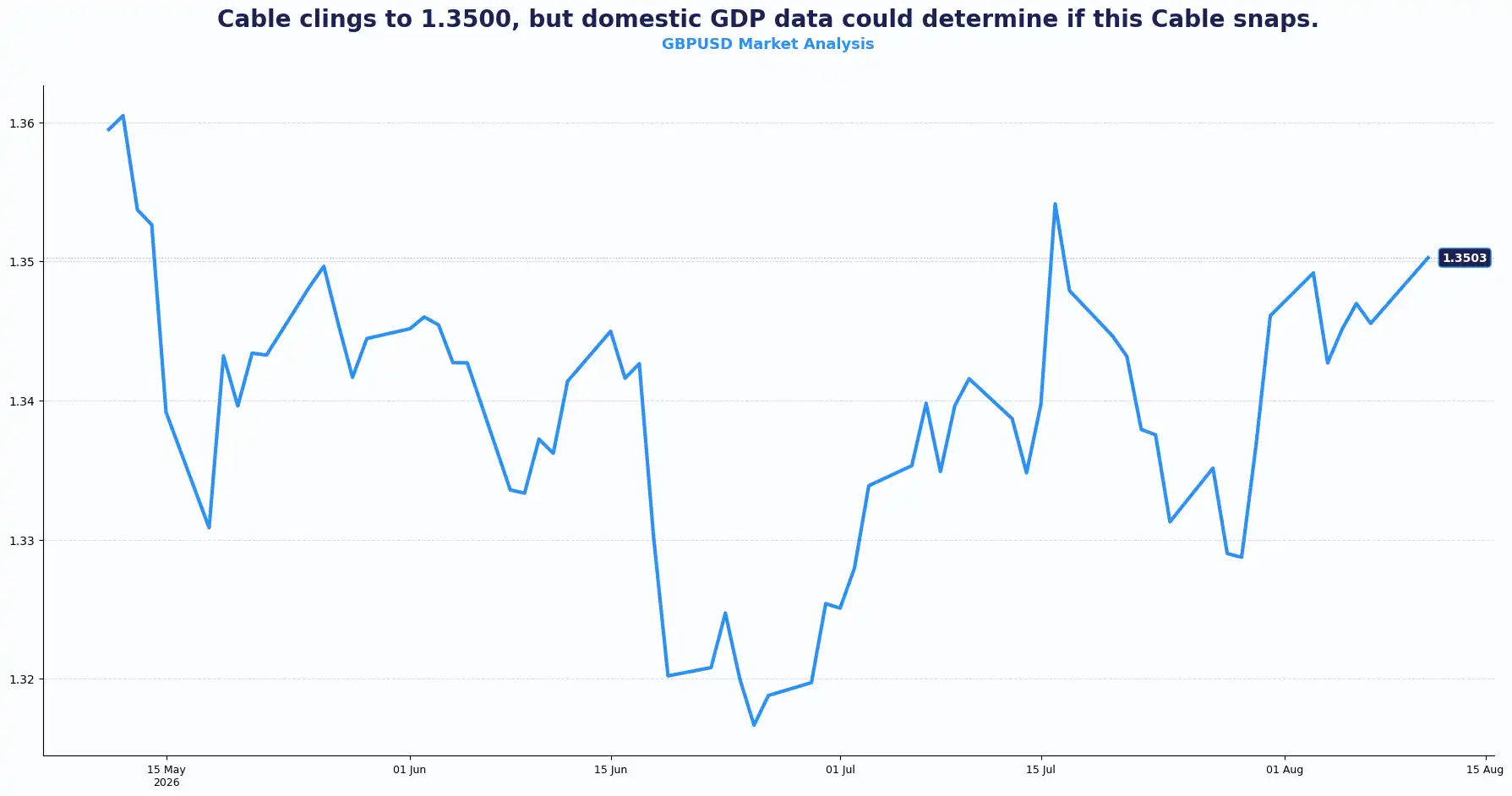
Key Technical levels for the GBP/USD pair: Resistance sits at 1.3550, 1.3600 and Support sits at 1.3450, 1.3400. Bias : Firm above 1.3500
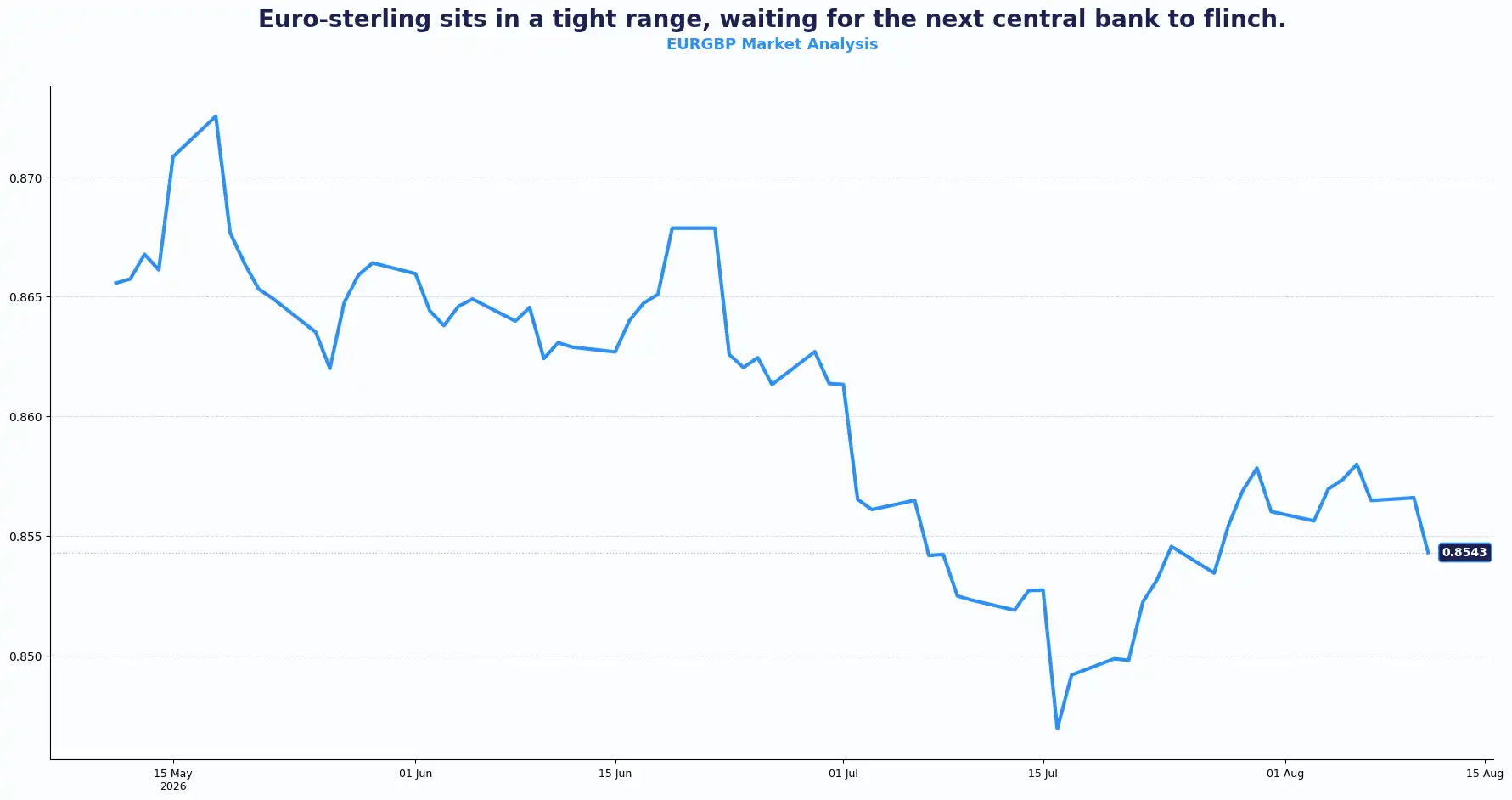
Key Technical levels for the EUR/GBP pair: Resistance sits at 0.8575, 0.8600 and Support sits at 0.8520, 0.8500. Bias: Sterling favoured near 0.8540
EUR: Euro consolidating near $1.15 While Two Data Events Queue Up
EUR/USD: 1.1538
The EUR/USD pair trades near 1.1535 after consolidating around the mid-1.1500s, while two heavyweight data releases approach.
The euro has struggled to build fresh momentum while the dollar holds part of its recent recovery. Traders also face renewed oil and geopolitical risk ahead of the US inflation report.
The dollar's modest recovery caps the EUR/USD pair upside for now. That recovery has a clear driver: oil prices hold their bid on Hormuz uncertainty, and elevated energy costs stoke inflation fears, keeping the door open to further Federal Reserve (Fed) tightening. Cleveland Fed President Beth Hammack reinforced that view on Monday, stating the current rate is not meaningfully restricting the economy and that further rate increases are needed. The longer the Fed waits, she noted, the longer it misses its 2% inflation target. That framing keeps the dollar supported against the euro even as broader fundamentals favour EUR/USD.
Wednesday brings the US CPI for July alongside Germany’s CPI and HICP figures the same day. Consensus for US CPI sits at 3.4% YoY, a modest easing from June's 3.5%. US Core CPI is forecast at 2.5% YoY and 0.2% MoM. A print at or below consensus could accelerate the repricing of September Fed hike expectations, which already scaled back sharply after Friday's weak US Non-farm Payrolls (NFP). A hotter reading may reintroduce the September hike risk and could pull the EUR/USD pair back toward ~1.1480.
For Germany, the HICP figures for July are expected at 2.8% YoY and 0.9% MoM, unchanged from prior readings. A firmer German inflation reading could strengthen the case for a cautious ECB stance and offer support to the euro. A softer figure could reduce that pressure.
Trump's new compensation demands have effectively closed the diplomatic door on a near-term Hormuz resolution. Oil prices currently hold their bid on that basis. Elevated energy costs feed directly into eurozone inflation expectations, keeping the ECB's own policy calculus complicated.
The pair therefore sits between two opposing forces. German inflation can influence the euro through ECB expectations. US inflation can move the dollar through Fed expectations.
The euro does not need a dramatic catalyst to move. It needs a clear shift in the relative rate story.
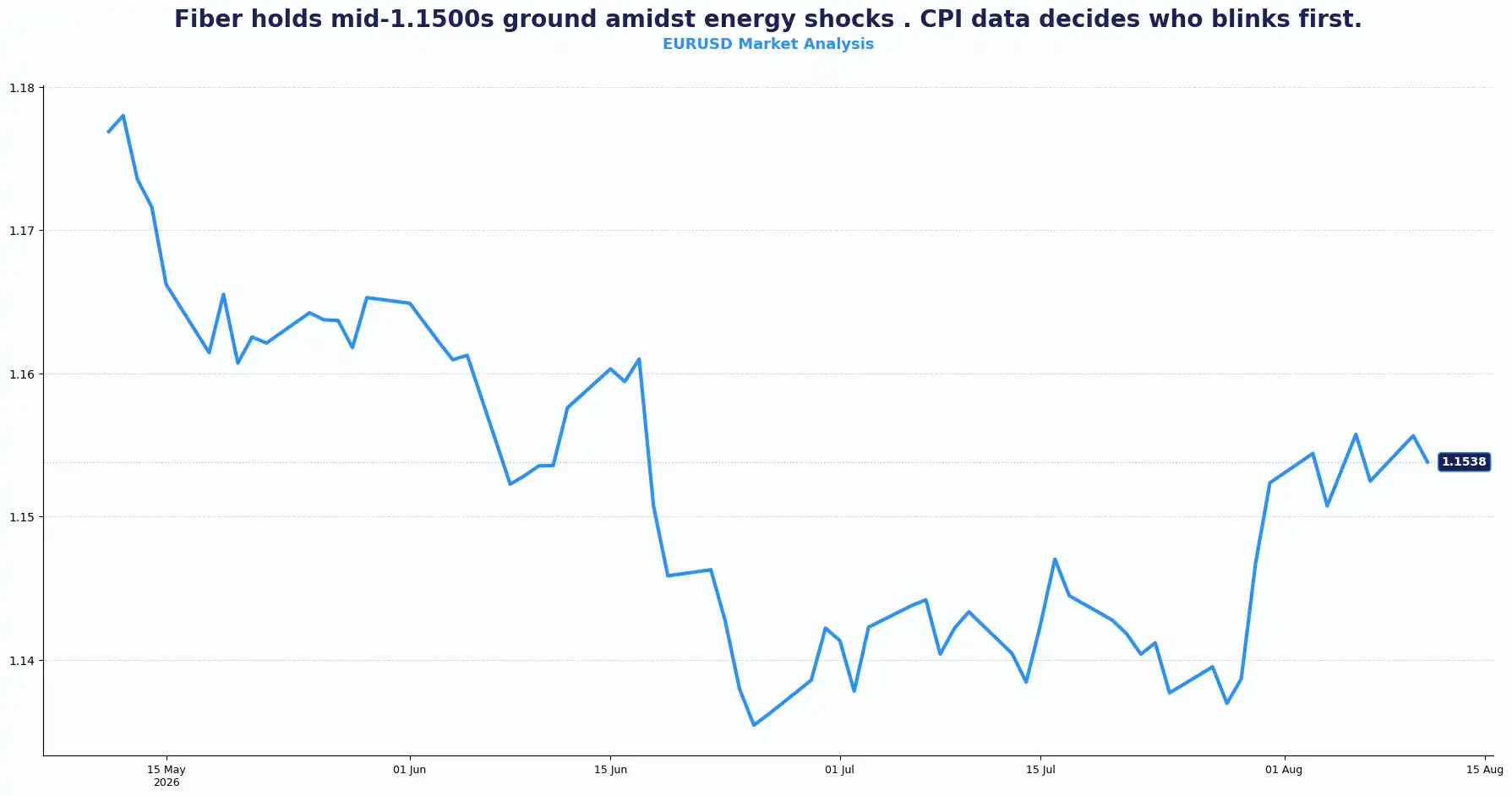
Key Technical levels for the EUR/USD pair: Resistance sits at 1.1575, 1.1600 and Support sits at 1.1500, 1.1450.
USD: Dollar Finds Support Ahead of July CPI
DXY: 99.85
The dollar index trades around 99.85 after recovering from recent weakness, trading flat, searching for direction while awaiting Wednesday's CPI release for its next meaningful move.
Recent labour data have already complicated the outlook. The July NFP report came in well below expectations. That pushed markets' Fed rate expectations in a dovish direction, enough to price out a September rate hike. But the data wasn’t weak enough to price in a cut either. Which leaves the dollar in a holding pattern, where the inflation data could now determine whether it reinforces or challenges that move. Whether the September-hike risk returns or disappears further.
CPI at 3.4% YoY is the consensus, a tick lower than June's 3.5%. Core CPI at 2.5% YoY marks a continued gradual disinflation path. A reading on or below those figures likely extends dollar softness and supports risk assets. A reading above them, particularly if core CPI accelerates, pulls rate hike expectations back into September and firms the dollar across the G10.
The Hormuz dynamic adds another variable with energy prices. Higher oil prices can feed into headline CPI and PPI, reflecting on inflation expectations and complicating the Fed's path. Thursday's US PPI is also a key input into the Fed's preferred PCE inflation measure.
Cleveland Fed's Hammack has explicitly flagged upside inflation risks. The data on Wednesday settles the question that has kept the dollar range-bound since Friday.
The dollar therefore sits at the centre of the week's currency story. The GBP/USD and the EUR/USD pairs both need the US CPI outcome to establish their next directional bias.
The data will not dictate every move, but it could significantly shift the relative rate narrative that drives the major pairs.
Other Currencies:
AUD/USD: 0.7051 | NZD/USD: 0.5873 | AUD/NZD: 1.1960 | USD/JPY: 159.22 | GBP/JPY: 215.01
AUD Slides After RBA Holds, Bullock Leans Hawkish
The Australian dollar dips to 0.7051 after the RBA held its cash rate at 4.35%, its second consecutive hold. The decision was broadly expected by the markets after Q2 inflation came in below projections.
Bullock's press conference carried the weight. She mentioned that the board did not discuss a cut. It discussed a hike or a hold, and chose the hold. Bullock was explicit: the board will raise rates again if needed, upside risks to inflation are present, and the domestic economy is still operating above capacity. The bank does not expect inflation to return to the midpoint of its target range until late 2027.
Rising oil prices feature in the RBA's upside risk assessment, the same channel pressuring central banks globally. AUD/USD weakness after the decision reflects the absence of a fresh rate hike signal rather than a dovish pivot. The pair's next directional move is likely to follow Wednesday's US CPI rather than domestic data from Australia.
AUD/NZD sits at 1.1960. NZD/USD at 0.5873 faces its own headwinds from a firmer dollar and elevated oil. New Zealand's Q3 inflation expectations are due; the Q2 reading showed an unexpected acceleration, a reminder that the RBNZ's September meeting carries its own uncertainty.
BoJ Considers September Hike as Yen Sits at 159.22
USD/JPY at 159.22 reflects yen’S softness against a broadly range-bound dollar. The BoJ left rates unchanged in July and is now considering a rate increase at the September 17–18 meeting.
The BoJ's concern concentrates on two fronts: rapidly growing AI-related demand pushing domestic prices higher, and yen depreciation feeding import costs into the broader CPI basket. Crude oil at current levels adds a third layer; Japan imports virtually all of its energy needs. Higher oil at a weaker yen is a compounding effect the BoJ cannot ignore. GBP/JPY at 215.01 captures the yen's broad underperformance across G10.
Current Rate Table
| Pair | Rate | Bias / trend |
|---|---|---|
| GBP/USD | 1.3503 | Firm near 1.3500 |
| EUR/GBP | 0.8543 | Euro subdued vs sterling |
| GBP/AUD | 1.9148 | Sterling firm |
| EUR/USD | 1.1538 | Consolidating |
| AUD/USD | 0.7051 | Slightly softer |
| NZD/USD | 0.5873 | Under pressure |
| USD/JPY | 159.22 | Dollar firm |
| GBP/JPY | 215.01 | Sterling supported |
Market lookahead:
Wed, Aug 12
- Germany’s Consumer Price Index (CPI) (Jul) inflation figures
- US Consumer price index (CPI) (Jul) inflation figures
Thurs, Aug 13
- UK Goods Trade Balance (Jun)
- UK GDP Q2
- Eurozone Industrial Production (Jun)
- US Producer Price Index (PPI) (Jul)
Fri, Aug 14
- Eurozone Trade Balance (Jun)
- Eurozone GDP Q2
- US Retail Sales (Jul)
Stay Ahead in the Currency Game
Whether you're a daily FX trader or handle international transactions regularly, our 'Currency Pulse' newsletter delivers the news you need to make more informed decisions. Receive concise updates and in-depth insights directly in your LinkedIn feed.
Subscribe to 'Currency Pulse' now and never miss a beat in the currency markets!
Ready to act on today’s insights? Get a free quote or give us a call on: +44 (0)20 7740 0000 to connect with a dedicated portfolio manager for tailored support.
Important Disclaimer: This blog is for informational purposes only and should not be considered financial advice. Currency Solutions does not take into account the investment objectives, financial situation, or specific needs of individual readers. We do not endorse or recommend any specific financial strategies, products, or services mentioned in this content. Forward contracts can help businesses manage foreign exchange exposure by providing greater certainty over future exchange rates, although they may also mean that businesses do not benefit from favourable exchange-rate movements. Businesses should consider their individual circumstances and speak with their dealer to understand how forward contracts may support their specific foreign exchange requirements. All information is provided “as is” without any representations or warranties, express or implied, regarding its accuracy, completeness, or timeliness.