Dollar Weakness Puts Sterling and Euro in Focus
8 min read
Share


The dollar opens the week under pressure as last week's soft US data showed a 0.6% July retail sales drop and a cooler jobs report, pulling Fed rate hike bets lower. DXY edged lower to 99.47 in early Asian session.
Sterling holds near $1.3566 underpinned by a hawkish BoE vote split and UK Q2 growth beat. The euro presses toward 1.1610, with an ECB September hike now almost fully priced by the markets as energy-driven inflation holds well above target.
The US-Iran MOU expires today. The Strait of Hormuz toll-free window closes with no replacement agreement in sight. Hormuz traffic sits at roughly 5% of pre-crisis levels.
Tuesday brings UK labour figures and Eurozone ZEW sentiment. Wednesday arrives UK CPI inflation figures and FOMC Minutes.
GBP: Pound Holds Ground as BoE Tone Stays Hawkish
GBP/USD: 1.3569 | EUR/GBP: 0.8557
The British pound gathered fresh momentum, driving GBP/USD above 1.3550 in early European trading. Friday's US retail sales miss is doing the heavy lifting on the dollar side; GBP/USD has gained traction across the early session. Sterling also held firm against the euro, pinning EUR/GBP near 0.8550.
UK growth also offers some support. UK GDP expanded 0.4% in the second quarter. The pace slowed from 0.6% in the first quarter but still beat some expectations for a weaker result.
BoE Chief Economist Huw Pill reinforced the case for higher borrowing costs following stronger Q2 growth readings. The BoE held the Bank Rate at 3.75% in July with a 6-3 vote. Three policymakers wanted a 25-basis-point increase. Huw Pill argued that inflation risks still sat on the upside and supported a rate increase, giving the pound a firm floor.
The UK economy, in Pill's reading, is not heading into a sharp downturn. That growth reading feeds directly into the rate path argument. BoE communication has stayed hawkish throughout, with the tightening bias anchoring GBP even in the absence of fresh tier-one data. Policy divergence between a patient Fed and a still-active BoE is a structural tailwind for sterling.
This persistent tightening bias directly broadens the rate differential against a cooling American economy. Higher UK growth data reduces fears of an economic slump and implies ongoing monetary policy support for the currency.
The Office for National Statistics (ONS) will release the latest labour market data on Tuesday. The release includes UK average weekly earnings, employment, unemployment and the Claimant Count. A firm labour reading could support the view that the Bank of England has less room to ease policy. A softer report could put that view under pressure.
The next major test for Sterling arrives on Wednesday, with the release of UK CPI data for July. June CPI stood at 2.6%. Current forecasts point to a rise towards 2.9%. A stronger print could keep UK rate expectations firm. A softer number could ease pressure on the BoE. That could feed straight into sterling through the rate differential with the US.
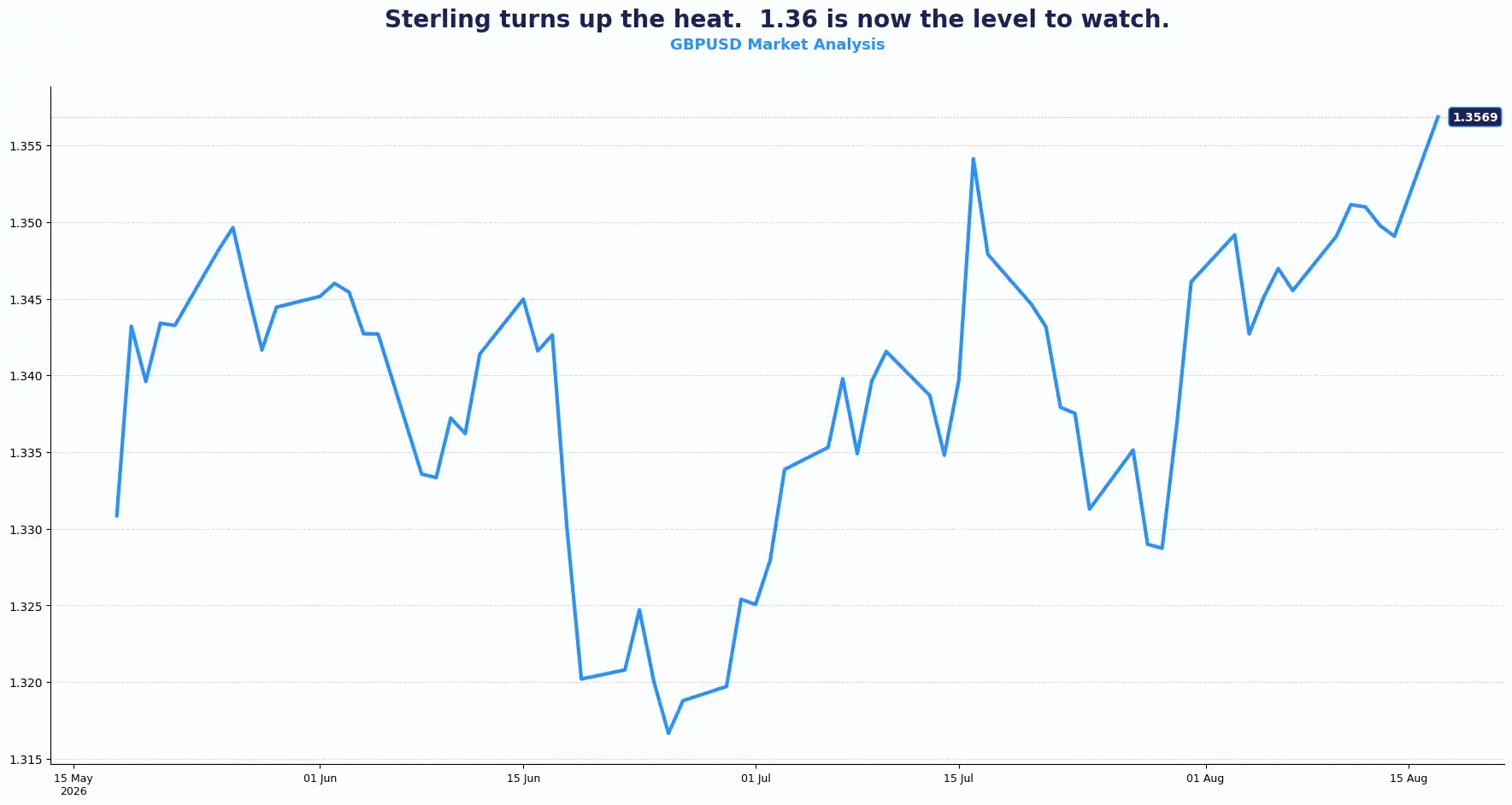
Key Technical levels for the GBP/USD pair: Resistance sits at 1.3600, 1.3650 and Support sits at 1.3480
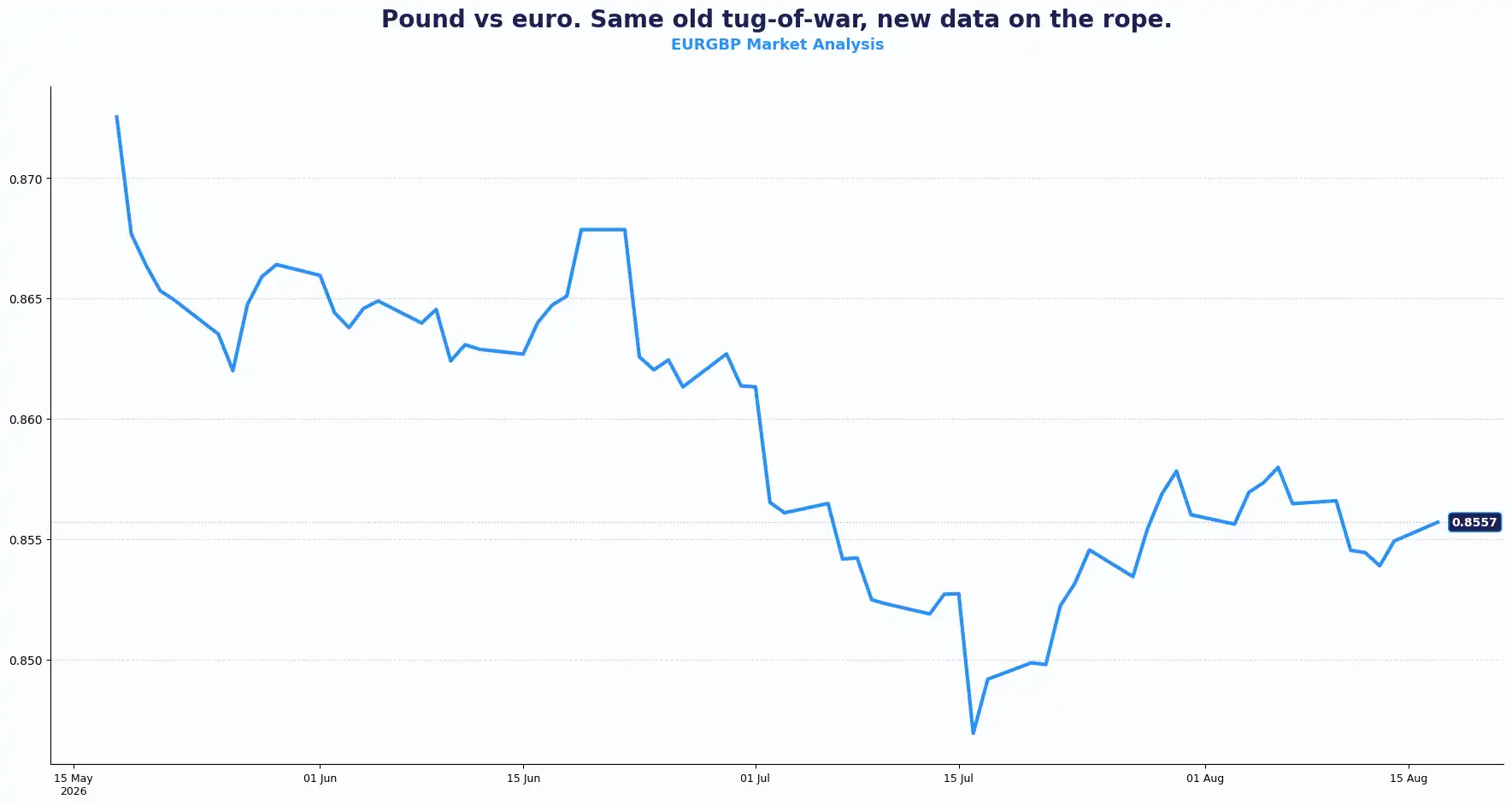
Key Technical levels for the EUR/GBP pair: Resistance sits at 0.8580, 0.8620 and Support sits at 0.8510
EUR: Euro Eyes 1.1600 as Dollar Loses Ground
EUR/USD: 1.1614 | EUR/GBP: 0.8557
The EUR/USD pair has extended its rally into a third consecutive session, touching a two-month high in the Asian hours. The pair approaches the 1.1600 level, a threshold that has attracted sellers' interest in the past. The current move draws heavily on two forces: a broadly softer dollar and a growing consensus around ECB policy.
The ECB itself kept rates unchanged in July. It also flagged the uncertainty created by elevated energy prices. The energy shock continues to complicate the inflation outlook. The market is pricing in a further 25-basis-point ECB rate hike at the September meeting. Inflation in the eurozone has not returned to target, and the ECB's stated mandate is to keep that pressure in place.
That creates an interesting contrast with the US. The Fed faces weaker consumer data while inflation stays above target. The ECB faces higher energy-driven inflation while eurozone growth has shown some resilience.
That policy divergence could keep EUR/USD supported if US data continue to weaken.
Germany and Eurozone ZEW sentiment data for August arrives tomorrow and may offer the first read on how regional confidence is absorbing the rate tightening cycle. A stronger reading could support the euro by pointing to better expectations for Germany and the wider eurozone economy. A weak result could put pressure on the EUR/USD pair near 1.1600.
The EUR/JPY pair is also tracking this move, with technical analysis suggesting scope for a push toward 185/186.
German yields have bounced sharply off support, and a further move higher from current levels would signal a resumption of upside momentum. The steepening of yield differentials is providing the euro with structural backing beyond the short-term dollar-weakness narrative.
FOMC minutes arrive on Wednesday. The language in those minutes could shape dollar direction for the rest of the week and, by extension, the near-term trajectory of the EUR/USD pair. Any pullback toward 1.1500 on a dollar recovery has so far attracted buying interest.
The pair also faces geopolitical risk. Oil prices have remained elevated amid uncertainty over Iran and the Strait of Hormuz. Higher energy costs can feed European inflation but also weaken growth. That creates a complicated backdrop for the euro.
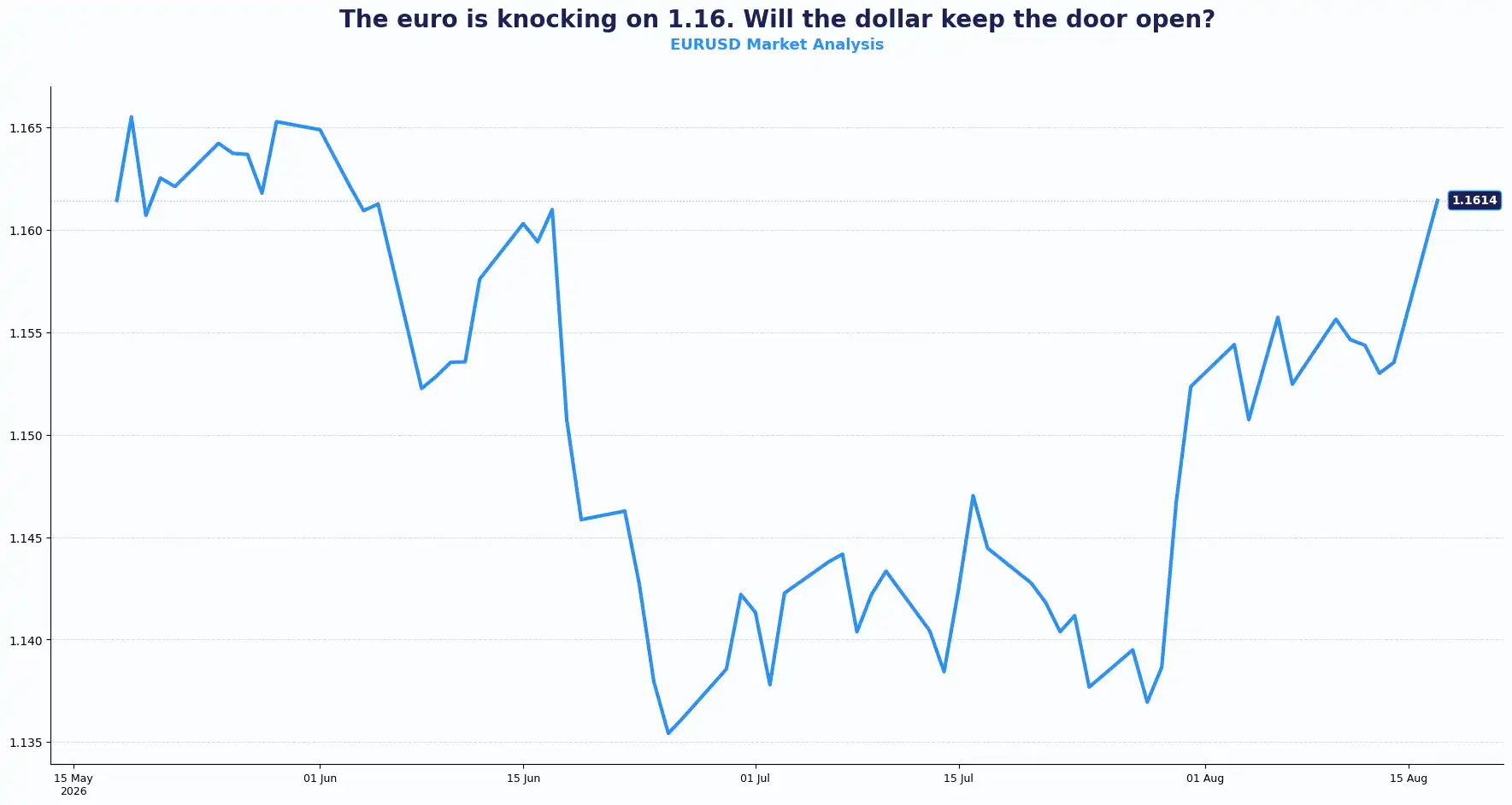
Key Technical levels for the EUR/USD pair: Resistance sits at 1.1600, 1.1650 and Support sits at 1.1500
USD: Dollar Slides as Retail Sales Miss Reprices Fed Path
DXY: 99.65
The dollar index (DXY) edged toward 99.47, near the lower end of its monthly range before trading near 99.60 in the early European session. Friday's retail sales data from the US Census Bureau showed a 0.6% monthly decline in July, the steepest drop since May of last year. That print landed on top of a softer July jobs report and easing core CPI, and the combination has trimmed expectations for near-term Fed action.
The Fed held rates at 3.50%-3.75% in July. The decision passed by a 9-3 vote. Three members preferred a 25-basis-point increase. The Fed also said inflation remained elevated and linked some price pressure to energy supply shocks.
CME FedWatch data puts the probability of a September rate hike at 31%, down from 35% in the immediate aftermath of the retail sales release. Weaker jobs, subdued core inflation, and now falling consumer spending raise the odds of the Fed holding up again in September. The yield curve is doing its own signalling. The US 2/30s spread has reached 108 basis points.
The Fed will publish the minutes from its 28-29 July meeting on Wednesday. The minutes could show how strongly policymakers debated another rate increase. ADP employment, July industrial production, and import and export price indices also arrive tomorrow. Each data point has the potential to move dollar pricing.
Technical analysis suggests that this steepening represents a headwind for the dollar and reinforces the view that DXY could slip back toward the mid-98 area. A confirmed break below 99.40 opens that path. The short end of the curve is trading downwards, while longer yields edge higher, a configuration that typically reflects shifting rate expectations rather than renewed growth confidence. A recovery above 100.00 would change the tone and put the recent dollar decline under pressure.
That dynamic feeds through almost every major currency pair.
Other currencies:
AUD/USD: 0.7115 | NZD/USD: 0.5916| USD/JPY: 159.04 | GBP/JPY: 215.55
USD/JPY trades around 159.04 on Monday as traders reduced Fed hike expectations. Japan's second-quarter GDP grew 1.1% annualised. The yen also has support from higher Japanese government bond yields and renewed expectations around Bank of Japan policy.
AUD/USD sits near 0.7115 while NZD/USD trades around 0.5916. Both currencies have benefited from the softer dollar backdrop.
GBP/JPY sits near 215.55. A weaker dollar does not translate directly into the cross. Sterling strength and yen direction both matter. That makes UK data and Japanese policy expectations relevant to the pair at the same time.
The Chinese yuan also deserves attention. China's July data showed industrial output growth slowing to 4.5% from 5.3%. Retail sales rose only 0.6% against expectations of 1.5%. The weaker domestic demand picture can influence broader Asian currency sentiment and the yuan.
The common thread is clear. US data has weakened the dollar's near-term support. UK inflation and jobs now test sterling’s trajectory. Eurozone inflation and German sentiment could be the next cues for the euro. Asian data and central bank expectations are likely to shape the yen, yuan, Aussie, and kiwi, and major FX crosses.
Current Rate Table
| Pair | Rate | Trend |
|---|---|---|
| GBP/USD | 1.3569 | Bullish bias |
| EUR/GBP | 0.8557 | Range to firm |
| EUR/USD | 1.1614 | Bullish bias |
| AUD/USD | 0.7115 | Firm |
| NZD/USD | 0.5916 | Firm |
| USD/JPY | 159.04 | Bearish bias |
| GBP/JPY | 215.55 | Firm |
Market lookahead:
Tue, Aug 18
- UK Average Earnings figures (Jun)
- UK Claimant Count Change / Rate (Jul)
- UK ILO Unemployment Rate (3M) (Jun)
- Eurozone Harmonised Index of Consumer Prices (Jul) inflation figures
- Germany and Eurozone ZEW Survey - Economic Sentiment (Aug)
Wed, Aug 19
- UK Consumer Price Index (Jul) CPI - Inflation Figures
- UK Producer Price Index (PPI) (Jul)
- FOMC Minutes
Thurs, Aug 20
- Eurozone Consumer Confidence (Aug)
Fri, Aug 21
- UK GfK Consumer Confidence
- UK Retail Sales (Jul)
- Global PMI releases Services, Manufacturing and Composite (Aug)
Stay Ahead in the Currency Game
Whether you're a daily FX trader or handle international transactions regularly, our 'Currency Pulse' newsletter delivers the news you need to make more informed decisions. Receive concise updates and in-depth insights directly in your LinkedIn feed.
Subscribe to 'Currency Pulse' now and never miss a beat in the currency markets!
Ready to act on today’s insights? Get a free quote or give us a call on: +44 (0)20 7740 0000 to connect with a dedicated portfolio manager for tailored support.
Important Disclaimer: This blog is for informational purposes only and should not be considered financial advice. Currency Solutions does not take into account the investment objectives, financial situation, or specific needs of individual readers. We do not endorse or recommend any specific financial strategies, products, or services mentioned in this content. Forward contracts can help businesses manage foreign exchange exposure by providing greater certainty over future exchange rates, although they may also mean that businesses do not benefit from favourable exchange-rate movements. Businesses should consider their individual circumstances and speak with their dealer to understand how forward contracts may support their specific foreign exchange requirements. All information is provided “as is” without any representations or warranties, express or implied, regarding its accuracy, completeness, or timeliness.