Dollar Softens on Iran Talks; Cable Fails to Follow
9 min read
Share


President Trump cancelled planned strikes on Iran and announced fresh talks for Monday, sending the dollar below 100 and oil down nearly 7% in the early Asian session. The GBP/USD pair failed to capitalise on that move, retreating to 1.3470 despite the softer dollar.
The Bank of England held rates at 3.75% last week and Governor Bailey downplayed urgency on the next hike, weighing on sterling’s ability to gain. The euro firmed above 1.1500 for a fifth straight session, though the 100-day moving average continues to cap upside. A joint US-Japan yen intervention pushed USD/JPY to 156.45. Iranian officials swiftly denied Trump's account of the talks, keeping the risk picture unsettled. Friday’s US Non-Farm Payrolls are now in focus and could be the next directional test for the dollar.
GBP: British Pound Holding Ground at a Critical Crossroads
GBP/USD: 1.3459 | EUR/GBP: 0.8563
The GBP/USD opened the week near 1.3470, before edging lower towards 1.3459, pulling back modestly after three consecutive sessions of gains. The dollar softened across the board after President Trump cancelled a planned strike on Iran, citing pleas from regional allies including Saudi Arabia, and stated that fresh talks would begin on Monday. That news shifted broader risk sentiment, drove oil prices sharply lower, and took some wind out of the dollar. Yet sterling failed to capitalise fully. The EUR/GBP pair firmed to around 0.8560 in the early European session, with the pound losing relative ground even within the cross.
The Bank of England (BoE) held rates unchanged at 3.75% last Thursday in a 6–3 vote. Three Monetary Policy Committee (MPC) members pushed for an immediate 25-basis-point (bps) hike, signalling that inflation risks have not disappeared. The Committee also warned that renewed energy price pressures linked to geopolitical tensions could feed into domestic inflation if they persist.
BoE Governor Andrew Bailey struck a more measured tone after the decision. He acknowledged inflation had eased faster than the Bank expected and played down the urgency of another rate increase. The split vote tells one story; Bailey's tone tells another. The combination of a split vote and softer guidance leaves policymakers alert without committing to tighter policy. That balance continues to shape sterling. The Bank has not ruled out further tightening, yet it has not signalled that another increase is imminent. Investors therefore continue to reassess the pace of future policy adjustments rather than pricing a clear direction.
Money markets still price in a 25 bps hike by year-end, though conviction on that call has softened since the decision. The BoE has flagged that persistent Middle East disruption, particularly any prolonged closure of the Strait of Hormuz, could still force its hand via second-round inflation effects.
Broader risk sentiment also influenced price action. Falling oil prices eased concerns over imported inflation and reduced demand for traditional defensive assets. That offered some relief to the dollar but stopped short of giving sterling a meaningful lift.
GBP/USD sits at a technically significant juncture near 1.3470–1.3500. A sustained break above 1.3500 would shift the near-term bias more constructively bullish, while a failure to hold current levels opens the door to a re-test of lower support.
The current backdrop reflects shifting expectations around monetary policy, geopolitical developments and energy prices. Those factors continue to influence exchange rate behaviour across the major sterling pairs without establishing a clear directional trend.
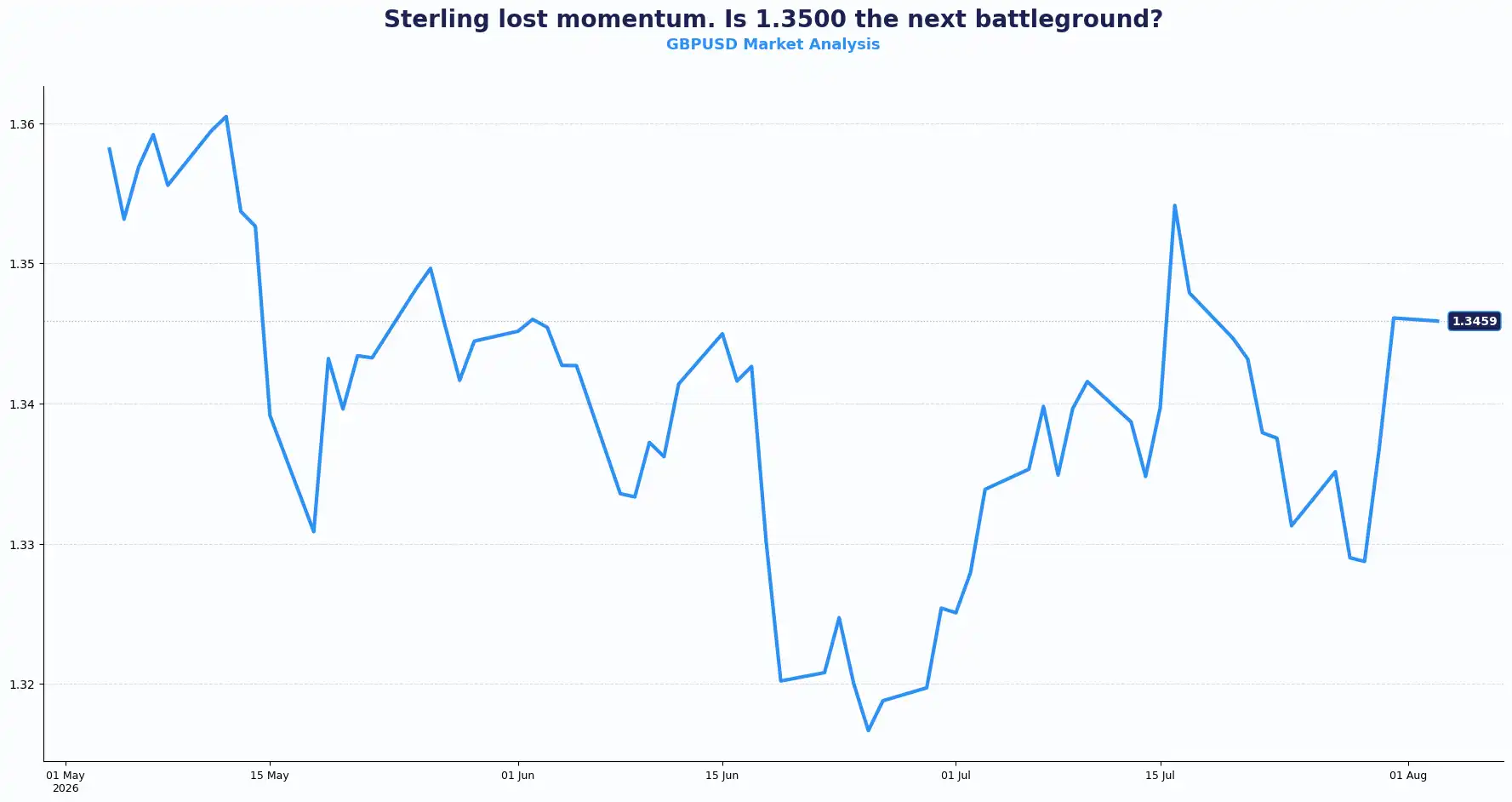
Key Technical levels for the GBP/USD pair: Resistance sits at 1.3550, 1.3500 and Support sits at 1.3400, 1.3345
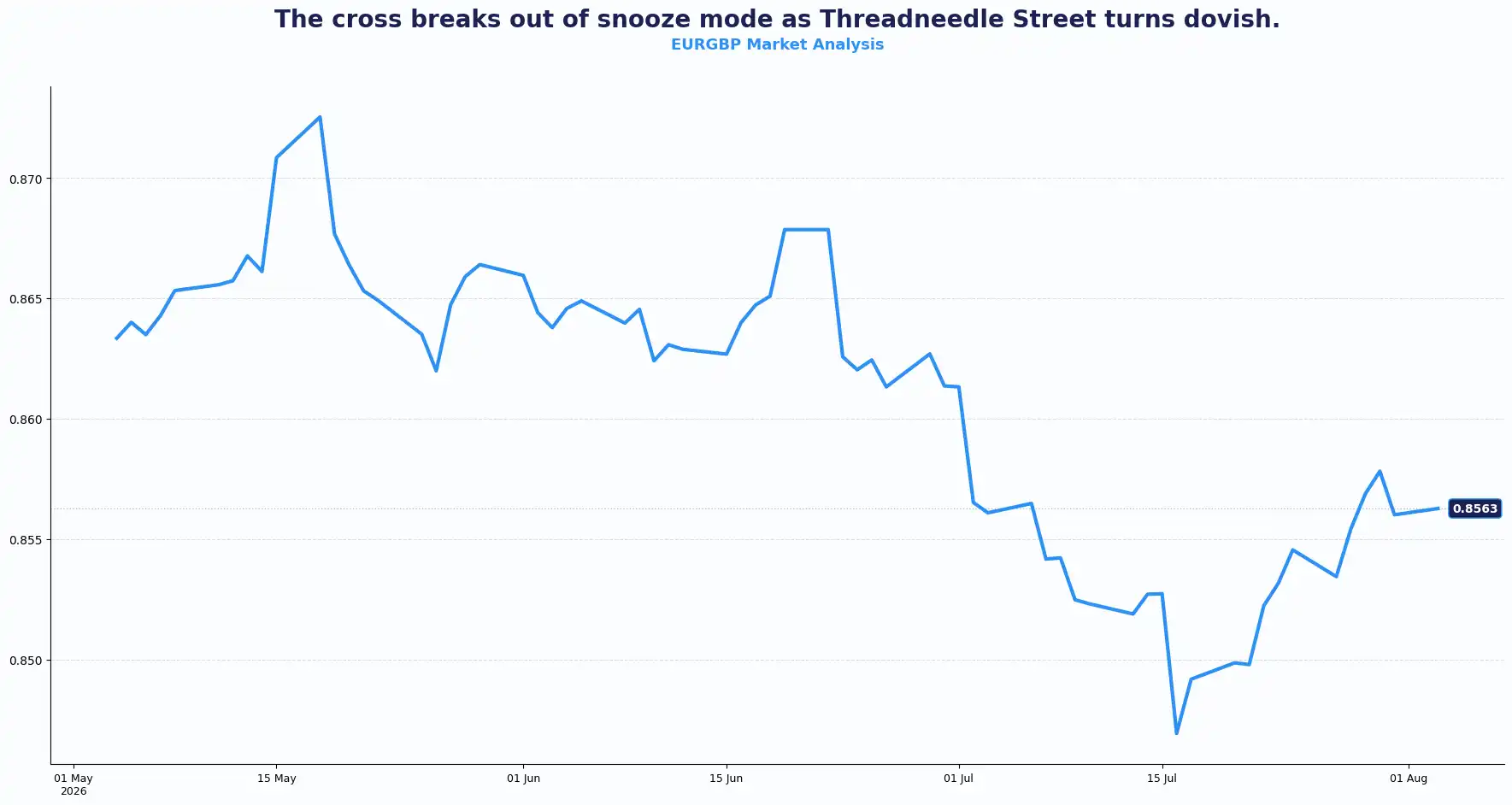
Key Technical levels for the EUR/GBP pair: Resistance sits at 0.8600, 0.8580 and Support sits at 0.8530, 0.8500
EUR: Euro Advances as Oil Prices Slump Sharply
EUR/USD: 1.1530
The EUR/USD pair climbed past 1.1535 in early European hours, extending a fifth consecutive session of gains against the dollar then trading in range 1.1525-1.1535, with bullish bias. The move drew fuel from the same driver steering most of Monday's price action: improving risk sentiment following Trump's decision to stand down on Iran strikes. The pair found steady support despite disappointing economic data out of Germany.
Data released this morning reported a 1.1% monthly drop in German retail sales for June, missing the consensus of a 0.5% contraction and sharply reversing the 1.2% gain recorded in May. On an annualised basis, German retail sales fell 0.2% in June against a prior reading of +2.1%. The figures pointed to softer household spending across Europe's largest economy but generated little lasting pressure on the single currency. The data registered little immediate reaction in the EUR/USD pair.
Trump's decision to resume talks with Iran improved global risk sentiment and reduced demand for the dollar, allowing the euro to edge higher despite disappointing domestic data.
The European Central Bank (ECB) offered little fresh guidance, leaving policy expectations largely unchanged. Recent Eurozone inflation data continues to support the view that price pressures have not eased quickly enough to remove the possibility of further policy tightening later this year. With no major ECB speakers scheduled over the coming week, wider macro developments continue to drive price action.
French inflation briefly added support after consumer prices came in above expectations. That boost proved short-lived as attention shifted back to global political developments and upcoming US economic releases.
The technical picture is equally nuanced: EUR/USD holds above 1.1500, but the 100-day simple moving average (SMA) sits just above and has capped upside through the early session, acting as near-term resistance.
The EUR/USD pair's ability to sustain levels above 1.1500 through the week will depend in large part on the outcome of US-Iran talks and Friday's US jobs data. Incoming US economic data and evolving geopolitical developments may carry greater weight than domestic releases until the ECB provides clearer policy direction.
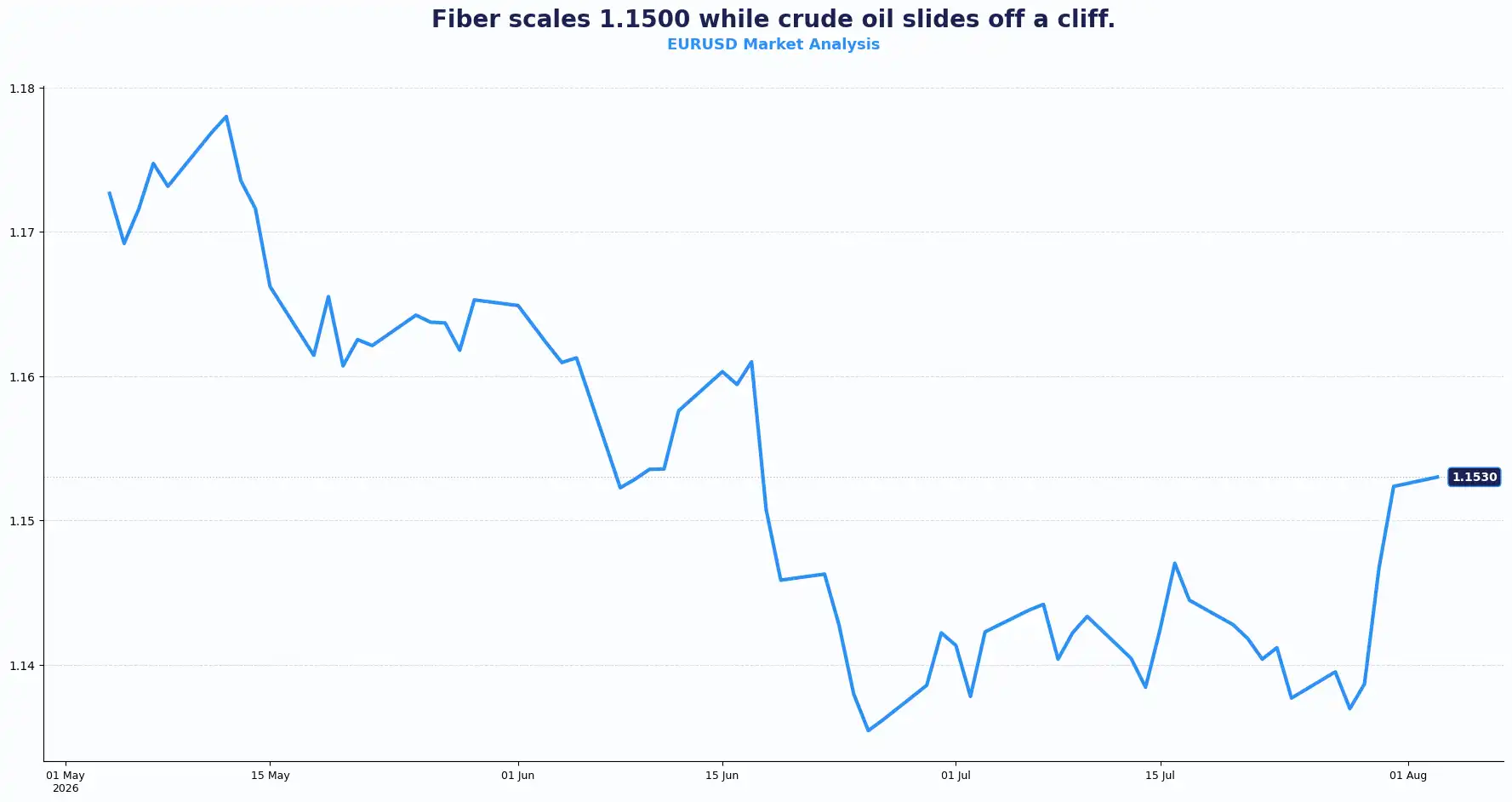
Key Technical levels for the EUR/USD pair: Resistance sits at 1.1600, 1.1570 and Support sits at 1.1530, 1.1480
USD: Greenback Weakens on Diplomatic Hopes
DXY: 99.70
The dollar started the week under pressure. The US Dollar Index (DXY) traded near 99.78, slipping back below the psychological 100.00 mark as easing geopolitical tensions reduced demand for safe-haven assets.
The move followed President Donald Trump's announcement that the United States would resume talks with Iran after cancelling a planned military strike. He also signalled progress towards reopening the Strait of Hormuz, although Iranian officials rejected Washington's account and insisted military forces remained on high alert. The conflicting messages kept geopolitical risk alive but eased the immediate demand for the dollar.
The shift in sentiment coincided with a sharp fall in oil prices. Lower energy costs reduced concerns over renewed global inflation and prompted investors to reassess the outlook for US interest rates.
The Federal Reserve (Fed) left rates unchanged at its July meeting last week. However, expectations for another rate increase softened after policymakers offered little urgency to tighten further. According to CME FedWatch pricing, markets now assign a roughly 64.7% probability of a US rate hike by September, down from around 77% before the July decision.
Analysis suggests that if Iran tensions continue to de-escalate, the dollar could lose one of its main near-term supports, the safe-haven bid that geopolitical anxiety generates, leaving it exposed to a softer rate outlook. Much of recent dollar strength came from expectations that US interest rates would stay higher for longer.
Attention now turns to US labour data. Economists expect July Non-Farm Payrolls (NFP) to show around 91,000 new jobs, while the unemployment rate is forecast to edge up to 4.3%. A stronger report could revive support for the dollar by reinforcing confidence in the US economy. A weaker outcome could strengthen expectations that the Fed will stay on hold.
The dollar's direction this week hinges on two variables: how US-Iran talks develop, and whether Friday's jobs data can shift rate expectations back toward hike pricing. In the long run, the balance between slowing inflation, labour market resilience and shifting Fed expectations could continue to shape the dollar's direction against the major currencies.
Oil Retreats as Supply Outlook Improves
Crude oil extended its decline after diplomatic headlines eased fears of an immediate disruption to Middle East supply.
WTI traded close to $79 per barrel, almost 7% lower on the day. Trump's decision to pursue talks with Iran reduced concerns over supply through the Strait of Hormuz, although uncertainty persists after Tehran dismissed Washington's claims.
Supply expectations also shifted after OPEC+ agreed to increase production by 188,000 barrels per day from September. The additional output eased concerns over tighter supply and added further pressure to prices.
Lower oil prices influence currencies beyond the energy sector. They often reduce inflation expectations, easing pressure on central banks to tighten policy. That can weigh on currencies supported by higher interest rate expectations while improving sentiment towards higher-risk assets.
Yen Strengthens After Coordinated Intervention
The Japanese yen outperformed after Tokyo and Washington confirmed a joint intervention to support the currency. USD/JPY fell towards 156.45 after US Treasury Secretary Scott Bessent said both governments stood ready to intervene again if necessary. President Trump described the move as support for Japan and wider global economic stability.
The announcement strengthened confidence that authorities would continue to defend the yen against excessive weakness. Even so, geopolitical developments continue to influence the pair. Any renewed escalation in the Middle East could quickly revive demand for the dollar and reverse part of the yen's recent gains.
Aussie and Kiwi Dollars Benefit from Better Risk Sentiment
The Australian dollar edged higher as improving sentiment supported higher-beta currencies. AUD/USD traded near 0.7050, with investors continuing to price one further Reserve Bank of Australia (RBA) rate increase this year. The softer dollar also added support after geopolitical tensions eased.
The New Zealand dollar followed a similar path. NZD/USD held close to 0.5900, shrugging off weaker Chinese PMI data as broader risk appetite outweighed concerns over slowing activity in China's economy.
For both currencies, external drivers continue to dominate. Developments in US-Iran negotiations, shifts in commodity prices and expectations for US monetary policy are likely to carry greater influence than domestic data in the near term.
Current Rate Table
| Pair | Rate | Trend |
|---|---|---|
| GBP/USD | 1.3459 | Neutral/Bearish short-term |
| EUR/GBP | 0.8563 | EUR favoured, range |
| EUR/USD | 1.1530 | Bullish bias |
| USD/JPY | 156.45 | Bearish (intervention) |
| AUD/USD | 0.7050 | Mildly Bullish |
| NZD/USD | 0.5900 | Bullish |
Market lookahead:
Mon, Aug 03
- Manufacturing PMI releases USD, GBP , EUR (Global Manufacturing PMI)
Tues, Aug 04
- USD - Goods Trade Balance
- USD - JOLTS Job Openings (Jun)
Wed, Aug 05
- Composite PMI releases USD, GBP, EUR (Global)
- Eurozone Producer Price Index (PPI)
Thurs, Aug 06
- Germany Factory Orders (Jun)
- Eurozone Retail Sales
- US Initial Jobless Claims
Fri, Aug 07
- Germany’s Imports, Exports, Trade Balance (Jun)
- US Average Hourly Earnings (Jul)
- US NonFarm Payrolls (Jul)
- US Unemployment rate (Jul)
Stay Ahead in the Currency Game
Whether you're a daily FX trader or handle international transactions regularly, our 'Currency Pulse' newsletter delivers the news you need to make more informed decisions. Receive concise updates and in-depth insights directly in your LinkedIn feed.
Subscribe to 'Currency Pulse' now and never miss a beat in the currency markets!
Ready to act on today’s insights? Get a free quote or give us a call on: +44 (0)20 7740 0000 to connect with a dedicated portfolio manager for tailored support.
Important Disclaimer: This blog is for informational purposes only and should not be considered financial advice. Currency Solutions does not take into account the investment objectives, financial situation, or specific needs of individual readers. We do not endorse or recommend any specific financial strategies, products, or services mentioned in this content. Forward contracts can help businesses manage foreign exchange exposure by providing greater certainty over future exchange rates, although they may also mean that businesses do not benefit from favourable exchange-rate movements. Businesses should consider their individual circumstances and speak with their dealer to understand how forward contracts may support their specific foreign exchange requirements. All information is provided “as is” without any representations or warranties, express or implied, regarding its accuracy, completeness, or timeliness.