Dollar Drift Deepens as Hormuz Deal Nears and NFP Data Looms
9 min read
Share


The dollar held near a seven-week low on Thursday as Iran and Oman moved closer to finalising a commercial shipping corridor through the Strait of Hormuz. A joint statement is in final drafting, though Tehran confirmed the arrangement covers a two-to-four-month window only, not a full reopening.
Sterling drifted to 1.3460 against the dollar as conflicting rhetoric from Washington and Tehran kept directional conviction low. The pound faces a data vacuum until UK Q2 GDP which arrives next week. The euro held firmer, with EUR/USD trading near 1.1550 after reclaiming a key trendline break and eyeing 1.1600 next.
July's US ADP private payrolls printed at 44,000 against a 70,000 consensus, pulling back Fed rate hike expectations to one move by year-end, from two moves last week. Friday's NFP figures now carry more weight for September's Fed decision and the dollar's next direction.
GBP: Sterling Navigates Middle East Risk and UK Growth
GBP/USD: 1.3457 | EUR/GBP: 0.8573 | GBP/JPY: 212.38
The British pound holds steady above 1.3450, trading near 1.3460 in early European trading. Cable consolidated strong gains over recent sessions, keeping spot prices inside Monday’s wide trading range. Meanwhile, GBP/JPY pauses its rebound from multi-month lows, hovering near 212.38. EUR/GBP anchors near 0.8573 as buyers and sellers lock into a tight equilibrium; sterling continued to hold its ground against the single currency despite cautious sentiment.
With GBP/USD drifting toward 1.3460, the move lower came as conflicting signals out of Tehran and Washington kept traders cautious. Fresh reports confirm Iran and Oman agreed on maritime routes through the Strait of Hormuz. However, Tehran insists any waterway opening demands an end to U.S. naval blockades. Simultaneously, Houthi missile strikes on Red Sea oil tankers maintain a persistent geopolitical risk premium. This tension caps sterling's upside against the American currency.
Domestically, a data vacuum leaves investors focused entirely on the preliminary UK Q2 GDP release on August 13. Until then, the pair is likely to track broader dollar sentiment and any fresh geopolitical headlines from the Middle East.
The ADP private payrolls figure for July added to the cautious tone. Softer US labour data has pulled back expectations for further Federal Reserve (Fed) rate increases. That dynamic has taken some support away from the dollar without yet providing a clean lift to sterling. The GBP/USD pair is trading within Monday's established range. Directional conviction is low ahead of Friday's US non-farm payrolls (NFP) release; the report could determine whether the pair extends its recovery or slips back into consolidation.
On the crosses, GBP/JPY has stalled its recovery from multi-month lows. Across the globe, Japan’s worsening fiscal outlook overshadows recent joint intervention efforts, preserving the wide UK-Japan rate differential and supporting the GBP/JPY pair carry trades. Sterling trend oscillators lean bullish, signalling upside force once geopolitical clouds clear. The wide interest rate differential between the UK and Japan also continued to support carry trade demand, helping cushion downside pressure on the cross.
For now, sterling sits between two competing forces. Softer US economic data offers support, while geopolitical uncertainty keeps demand for the dollar intact during periods of caution. With UK data temporarily taking a back seat, global developments continue to shape the pound's direction against its major peers.
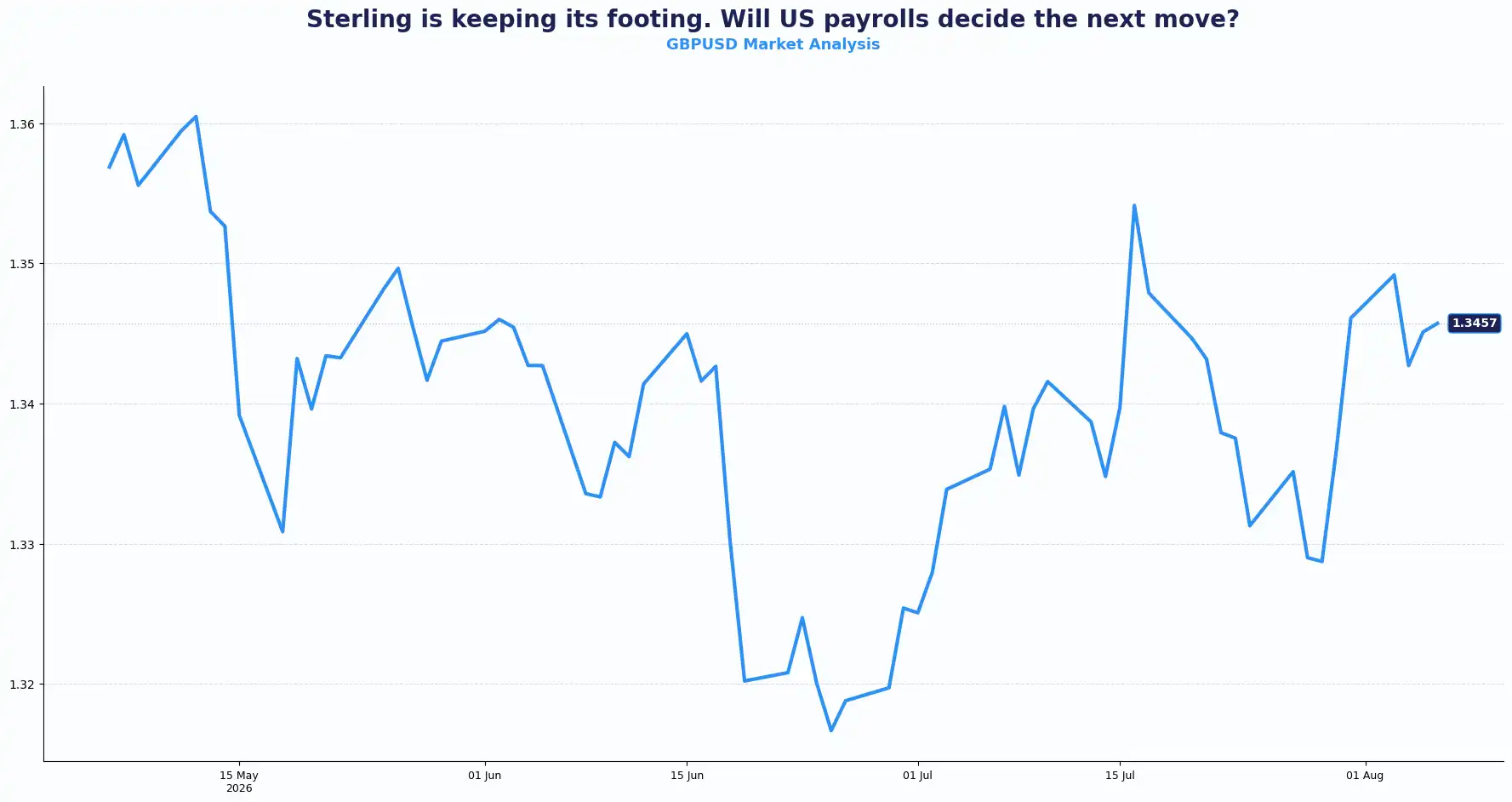
Key Technical levels for the GBP/USD pair: Resistance sits at 1.3510, 1.3560 and Support sits at 1.3450, 1.3420, 1.3380
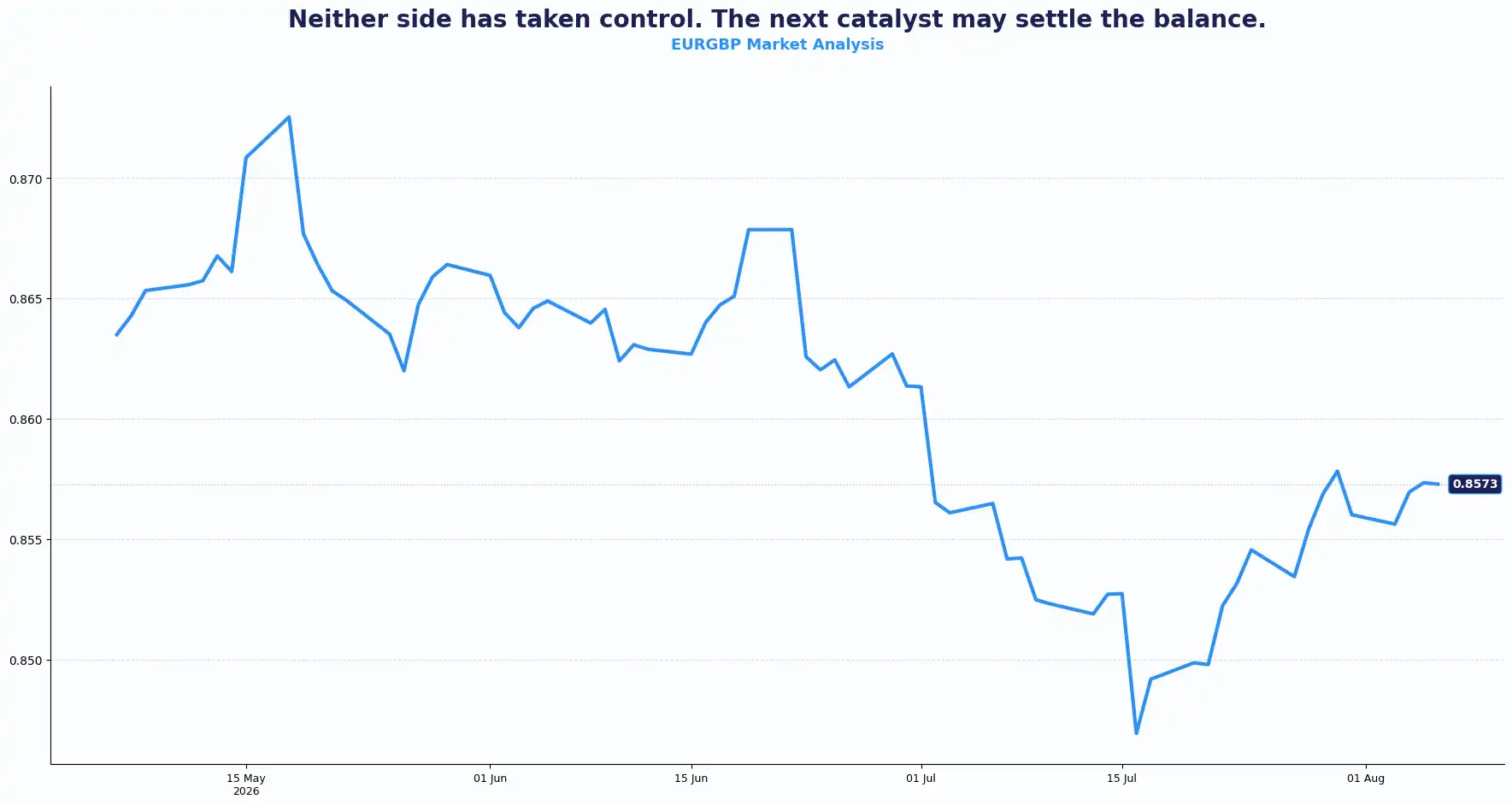
Key Technical levels for the EUR/GBP pair: Resistance sits at 0.8610 and Support sits at 0.8550
EUR: Euro Eyes 1.1600 as Dollar Pressure Builds
EUR/USD: 1.1543 | EUR/GBP: 0.8573
The euro extended its week-long recovery during Thursday's Asian session, with EUR/USD trading near 1.1550. The pair broke above a key downward-sloping resistance trend line, turning the 1.1538 level into near-term support. That technical development has reinforced a constructive short-term bias.
The primary driver behind the euro's strength is dollar softness rather than outright euro momentum. The combination of easing Middle East tensions and weaker US employment data pulled the dollar lower across the board.
German factory orders beat expectations in June, rising 3.1%. Eurozone PMI data showed only marginal growth, though sentiment across the bloc has held broadly steady. The euro is consolidating within fair-value estimates derived from US-Germany yield spread dynamics. That spread has narrowed slightly as Fed rate-hike expectations recede, which has been consistent with EUR/USD recovering from the July low of ~1.1350.
Progress on Strait of Hormuz negotiations contributed to improved risk sentiment. However, expectations of a comprehensive deal are likely premature, and any reversal in diplomatic progress could quickly reintroduce risk aversion.
Friday's NFP report is the next significant test. A second consecutive weak payrolls print would reinforce the view that the Fed's tightening cycle is nearing its ceiling, a scenario that has historically weighed on the dollar and supported EUR/USD.
For now, the euro continues to benefit from a combination of softer US economic data, resilient Eurozone indicators and improving risk sentiment. Whether that recovery extends further now depends less on European data and more on whether upcoming US labour figures reinforce expectations that the Fed may have less room to tighten policy in the months ahead.
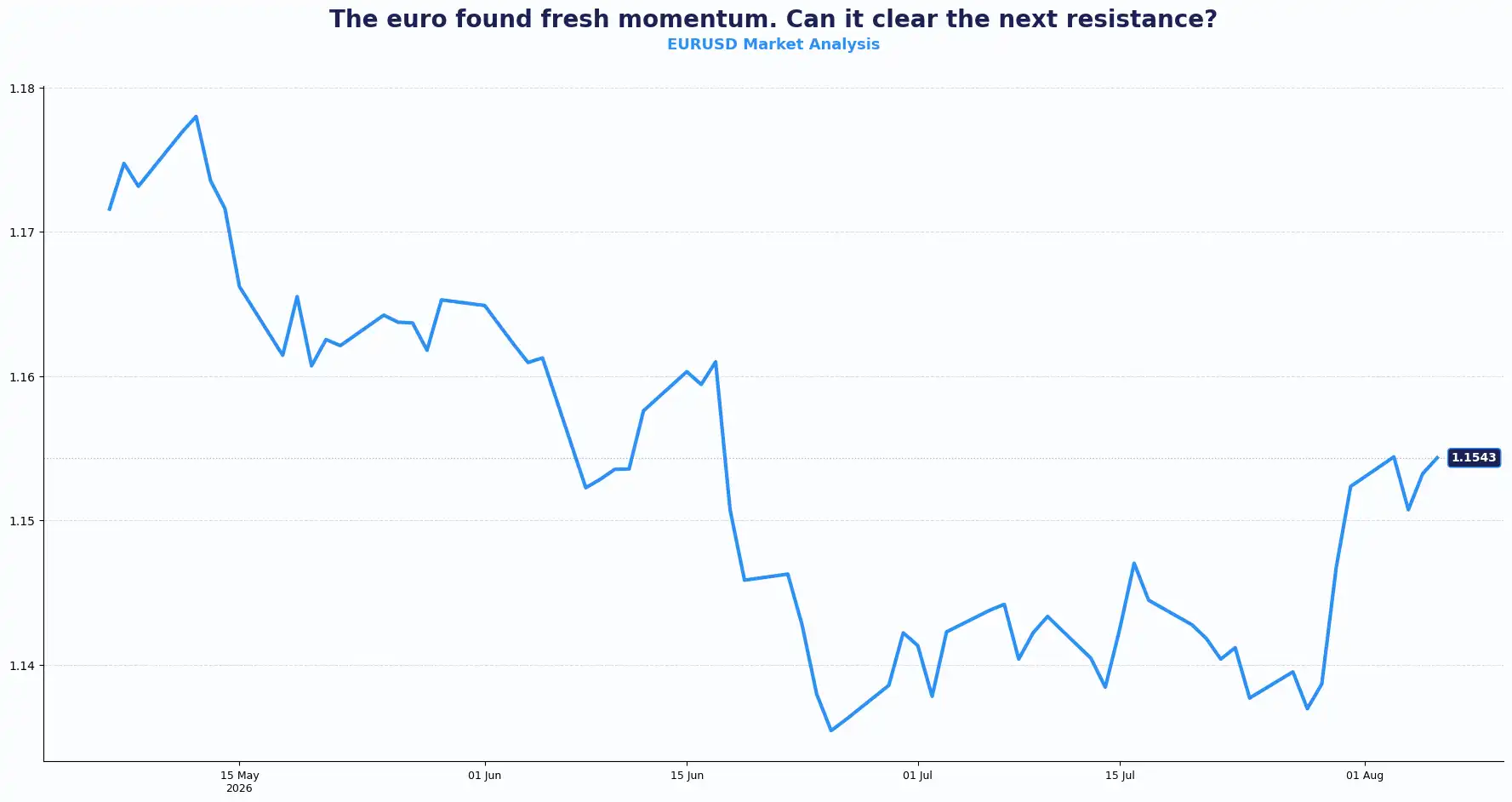
Key Technical levels for the EUR/USD pair: Resistance sits at 1.1600, 1.1686 and Support sits at 1.1538, 1.1472, 1.1353
USD: Dollar on the Back Foot for a Third Day
DXY: 99.65 | USD/CHF: 0.8060
The dollar index (DXY) traded near 99.65 during the Asian session, close to its weakest level since 17 June. Three consecutive days of losses reflect a combination of softer US data and reduced safe-haven demand as diplomatic progress in the Middle East has improved broader risk appetite. Although traders stopped short of pushing the Greenback sharply lower before Friday's NFP report.
The biggest surprise came from the labour market. ADP reported that US private employers added just 44,000 jobs in July, well below expectations of 70,000. The miss reinforced signs that hiring is losing momentum and prompted investors to reassess how much scope the Fed has for further policy tightening. That shift removed some of the dollar's recent support across the major currency pairs.
Political developments also influenced sentiment. President Donald Trump described discussions with Iran as "very productive", while Vice President JD Vance warned negotiations would take time and remain complex.
Those developments eased some immediate concerns over energy supply disruptions and reduced safe-haven demand for the dollar. At the same time, renewed Israeli strikes in southern Lebanon and continued uncertainty across the region prevented investors from fully abandoning defensive positions. The result left the dollar under pressure without triggering a broader sell-off.
Separately, the Trump administration has so far returned approximately $100 billion in Liberation Day tariff refunds to businesses, following a Supreme Court ruling in February that struck down the broad import duties as unlawful. Around $29 billion in potential refunds is still under review, and a further $1.6 billion is delayed pending banking detail submissions from importers. The tariff refund process adds a degree of fiscal uncertainty to the US economic picture that the dollar has not yet fully absorbed.
While the refunds carry important fiscal implications, currency traders have focused far more on employment data and expectations for Fed policy.
The Fed also continues to send mixed signals. Governor Lisa Cook reiterated that inflation risks have not disappeared and left the door open to further policy tightening if inflation strengthens. San Francisco Fed President Mary Daly, however, suggested tariff-driven inflation could fade over time while warning that technological change may create fresh price pressures and warrants attention. Those comments reinforced the view that policymakers continue to depend on incoming data rather than follow a predetermined path. The language of the Fed signals a pause rather than an imminent hike, and that interpretation has weighed on the dollar at the margin.
Safe-haven flows into the Swiss franc have also reflected dollar softness. USD/CHF fell for a third consecutive session to around 0.8060. Swiss CPI dropped to 0.4% in July, below the Swiss National Bank's forecast for a modest uptick. That inflation miss complicates the SNB's policy outlook and introduces a separate domestic dynamic into the franc's move.
Technically, DXY continues to trade with a softer bias while holding above key support near the 99.50 area. Immediate resistance sits around 100.20, with stronger resistance closer to 100.80. A sustained break below recent lows would reinforce the current corrective move, while a stronger-than-expected payrolls report could quickly restore support for the dollar.
Friday's employment report now stands as the week's defining event. Another weak reading could strengthen expectations that US policy may become less restrictive over time, while stronger payroll growth would challenge that view and could lift the dollar against its major peers. Until then, shifting geopolitical headlines and incoming labour data continue to drive short-term direction across the FX landscape.
Other Currencies
USD/JPY: 157.76 | AUD/USD: 0.7045 | NZD/USD: 0.5879
The yen held a defensive tone despite the recent US-Japan coordinated intervention. Japan's deteriorating fiscal position has overshadowed the intervention effect, limiting yen recovery. USD/JPY trades near 157.76. The wide yield gap between the US and Japan keeps the carry trade structurally intact, and that dynamic has supported GBP/JPY above key levels even as sterling's broader momentum fades.
The Australian dollar showed resilience after Australia's June trade surplus came in at A$1,929 million, well above consensus. A 9.6% surge in exports drove the beat. AUD/USD held near 0.7045. The combination of firmer trade data and softer US dollar sentiment provided support, though the pair has yet to break decisively above 0.7080 resistance.
The New Zealand dollar traded near 0.5879. NZD/USD is broadly range-bound with limited domestic catalysts this week.
Sterling entered a quieter domestic period with attention fixed on next week's UK GDP release. The euro built on improving sentiment as softer US data narrowed the policy gap between the ECB and the Federal Reserve. The dollar eased before Friday's payrolls report, while commodity and risk-sensitive currencies benefited from weaker US employment data and tentative progress in Middle East diplomacy.
Even so, geopolitical developments continue to change quickly. Any shift in negotiations, energy supply expectations or US labour data could alter currency direction over the coming sessions, leaving investors focused on incoming data rather than conviction alone.
Current Rate Table
| Pair | Rate | Trend |
|---|---|---|
| GBP/USD | 1.3457 | Sideways to Bullish |
| EUR/USD | 1.1543 | Bullish |
| EUR/GBP | 0.8573 | Range-bound |
| AUD/USD | 0.7045 | Mild Bullish |
| NZD/USD | 0.5879 | Mild Bullish |
| USD/JPY | 157.76 | Sideways |
| GBP/JPY | 212.38 | Bullish |
| USD/CHF | 0.8060 | Bearish |
Market lookahead:
Thurs, Aug 06
- Germany Factory Orders (Jun)
- Eurozone Retail Sales
- US Initial Jobless Claims
Fri, Aug 07
- Germany’s Imports, Exports, Trade Balance (Jun)
- US Average Hourly Earnings (Jul)
- US NonFarm Payrolls (Jul)
- US Unemployment rate (Jul)
Stay Ahead in the Currency Game
Whether you're a daily FX trader or handle international transactions regularly, our 'Currency Pulse' newsletter delivers the news you need to make more informed decisions. Receive concise updates and in-depth insights directly in your LinkedIn feed.
Subscribe to 'Currency Pulse' now and never miss a beat in the currency markets!
Ready to act on today’s insights? Get a free quote or give us a call on: +44 (0)20 7740 0000 to connect with a dedicated portfolio manager for tailored support.
Important Disclaimer: This blog is for informational purposes only and should not be considered financial advice. Currency Solutions does not take into account the investment objectives, financial situation, or specific needs of individual readers. We do not endorse or recommend any specific financial strategies, products, or services mentioned in this content. Forward contracts can help businesses manage foreign exchange exposure by providing greater certainty over future exchange rates, although they may also mean that businesses do not benefit from favourable exchange-rate movements. Businesses should consider their individual circumstances and speak with their dealer to understand how forward contracts may support their specific foreign exchange requirements. All information is provided “as is” without any representations or warranties, express or implied, regarding its accuracy, completeness, or timeliness.