Risk-On Returns: Dollar Posts Worst Week Since January
7 min read
Share


Ceasefire unwinds safe-haven positions, sending the dollar to its weekly lows since January, while sterling claims 1.34 ground. The euro breaks resistance on hawkish ECB-BoE split versus Fed. Rate paths diverge while Hormuz caps the rally. Rate splits and oil volatility shape next moves ahead of US inflation data.
GBP: Sterling Navigates the Strait’s Shadow
GBPUSD: 1.3424
Sterling currently trades at $1.3424, maintaining its position above the 200-day moving average after a 1.8% climb this week. While the pair drifted lower during Friday’s Asian session, it holds the bulk of its recent gains. Investors continue to monitor the delicate US-Iran ceasefire against the persistent threat of shipping disruptions in the Strait of Hormuz.
The story beneath the surface: The war sent the dollar soaring as safe-haven demand exploded. Oil prices rocketed. Energy-dependent economies like Britain looked vulnerable. But the ceasefire flipped the script. Risk appetite returned. Capital rotated back into growth-sensitive currencies. Sterling benefits directly from this reversal.
The Bank of England (BoE) remains a central pillar for the pound. Although traders recently reduced rate hike bets to 30-40 basis points by year-end, the BoE’s stance contrasts sharply with the Federal Reserve’s (Fed) signal of just one reduction. This policy divergence supports sterling's current floor, creating a tailwind for GBP/USD bulls.
Hormuz risks cap the rally for now with rising tensions around the strait supporting crude oil prices and fuelling inflation concerns. However, today’s US Consumer Price Index (CPI) data could show inflation rising due to previous oil price surges, which may delay Fed cuts and revitalise the dollar.
Investors that bought the dollar when the war hit peak intensity are now seen selling as the tail risk of catastrophic escalation fades. The ceasefire appears to remove that extreme downside from sentiment. However, this optimism could reverse fast if weekend peace talks in Islamabad fail to deliver progress.
The current technical landscape shows sterling testing long-term moving averages, consolidating above the 200-day line.
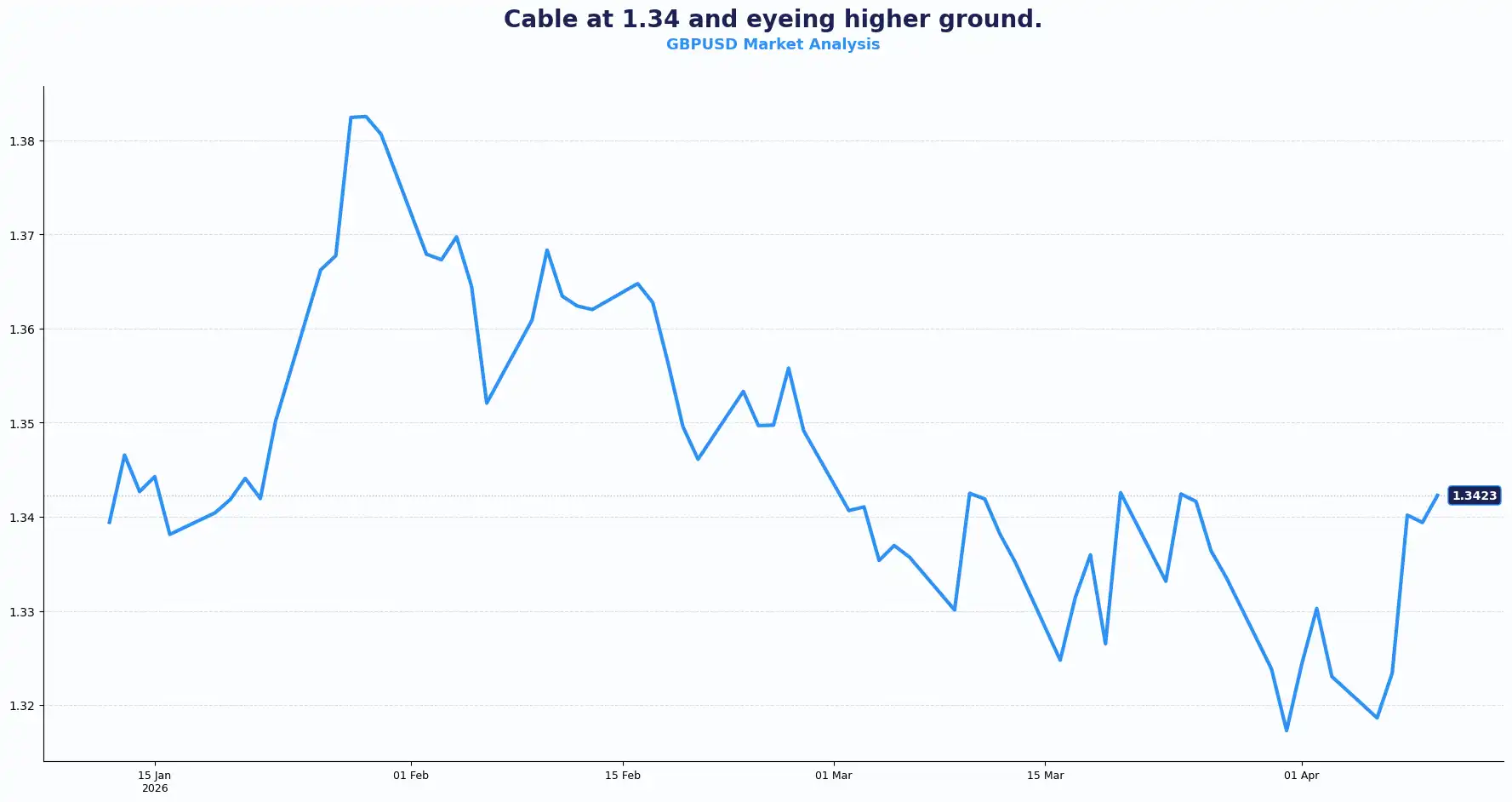
Key Technical levels for the GBP/USD pair: Resistance sits at 1.3480 and Support sits at 1.3350
EUR: Euro Tests Resistance on Hawkish Shift
EURUSD: 1.1690 | EURGBP: 0.8711
The euro mirrored the broader recovery against the dollar, trading at $1.1690 after testing its own 200-day moving average. Despite a slight softening today, the weekly trend is positive. Against the pound, the euro bounced off Wednesday’s low of 0.8688 to reach 0.8711, as the market balances the relative "stickiness" of the ECB against that of the BoE.
The European Central Bank (ECB) maintains a stern posture. Markets now price in two full rate hikes, with a 50% chance of a third by December. Germany’s latest inflation data confirms price pressures persist; March CPI stands at 2.7% YoY. Sterling recently gained on the euro due to its higher sensitivity to equity rallies, and the euro’s support remains solid. BoE Governor Andrew Bailey’s recent warnings about private credit markets add caution to the UK outlook that the Eurozone currently avoids.
EUR/GBP trades in a tight range above 0.8700 as traders stay cautious amid ceasefire uncertainty. The technical structure shows the pair confined within a falling wedge pattern. A key moving average cluster provides near-term support. Momentum indicators suggest a mild bullish bias. Upside pressure is building gradually.
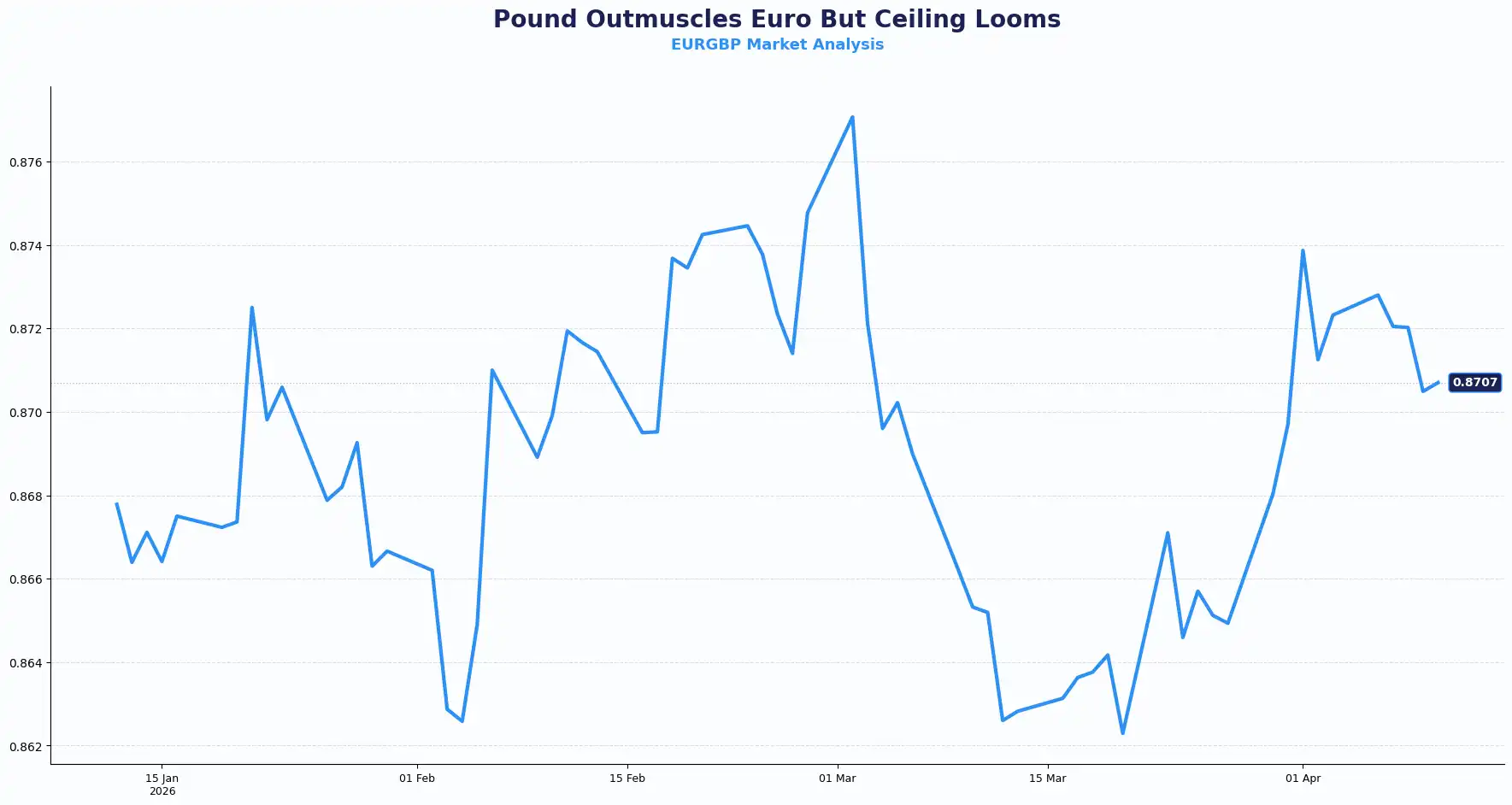
Key Technical levels for the EUR/GBP pair: Resistance sits at 0.8800 and Support sits at 0.8680; Bias: Gradual upside pressure
Analysts see limited downside in EUR/GBP after the drop to 0.870. But European Central Bank rate expectations may prove stickier than Bank of England pricing. The BoE stood ready to cut rates before the war erupted. Energy price declines could trigger dovish BoE repricing faster than ECB adjustments. This shift could support a move back toward 0.880 in the EUR/GBP pair this quarter.
Geopolitical noise keeps traders cautious. Iran's claim that Israel's attacks on Lebanon violate its agreement with the United States stalled the risk-on momentum that followed the ceasefire deal. Before the war, one-fifth of global oil and gas shipments passed through the Strait of Hormuz, but on Thursday, traffic collapsed to below 10% of normal volume. Ships now navigate both mines and bureaucratic hurdles, as each vessel needs Iranian approval. In the first 24 hours of the ceasefire, only one oil products tanker and five dry bulk carriers sailed through, compared to the strait's normal daily traffic of about 140 ships.
Israel bombed more Lebanese targets on Thursday, and Iran hasn't lifted its Hormuz blockade. Tehran insists there will be no deal while Israel strikes Lebanon. The dollar climbed throughout that conflict. Investors view the US economy as less exposed to war fallout, given that America is a net energy exporter while Britain imports energy. This fundamental difference drives currency flows during energy crises. The pound and other European currencies have swung on headlines throughout the crisis.
The EUR/USD pair trades below 1.1700 with a mild negative bias. But the downside looks cushioned. Meaningful dollar buying hasn't emerged ahead of US consumer inflation data due later today. US headline CPI is projected to show 3.3% year-on-year growth in March, up from 2.4% in February. Soaring oil prices from the Middle East war are driving the increase. A softer-than-expected reading could pressure the dollar against the euro.
Hormuz tensions support crude oil prices, fuelling inflation concerns and strengthening hawkish Fed expectations. The safe-haven dollar gets a tailwind from this dynamic. But hopes for a ceasefire stability cap the dollar upside ahead of the crucial CPI release, offering support to the currency pair. The breakout above 1.1670 holds firm, strengthening the case for an extended weekly uptrend.
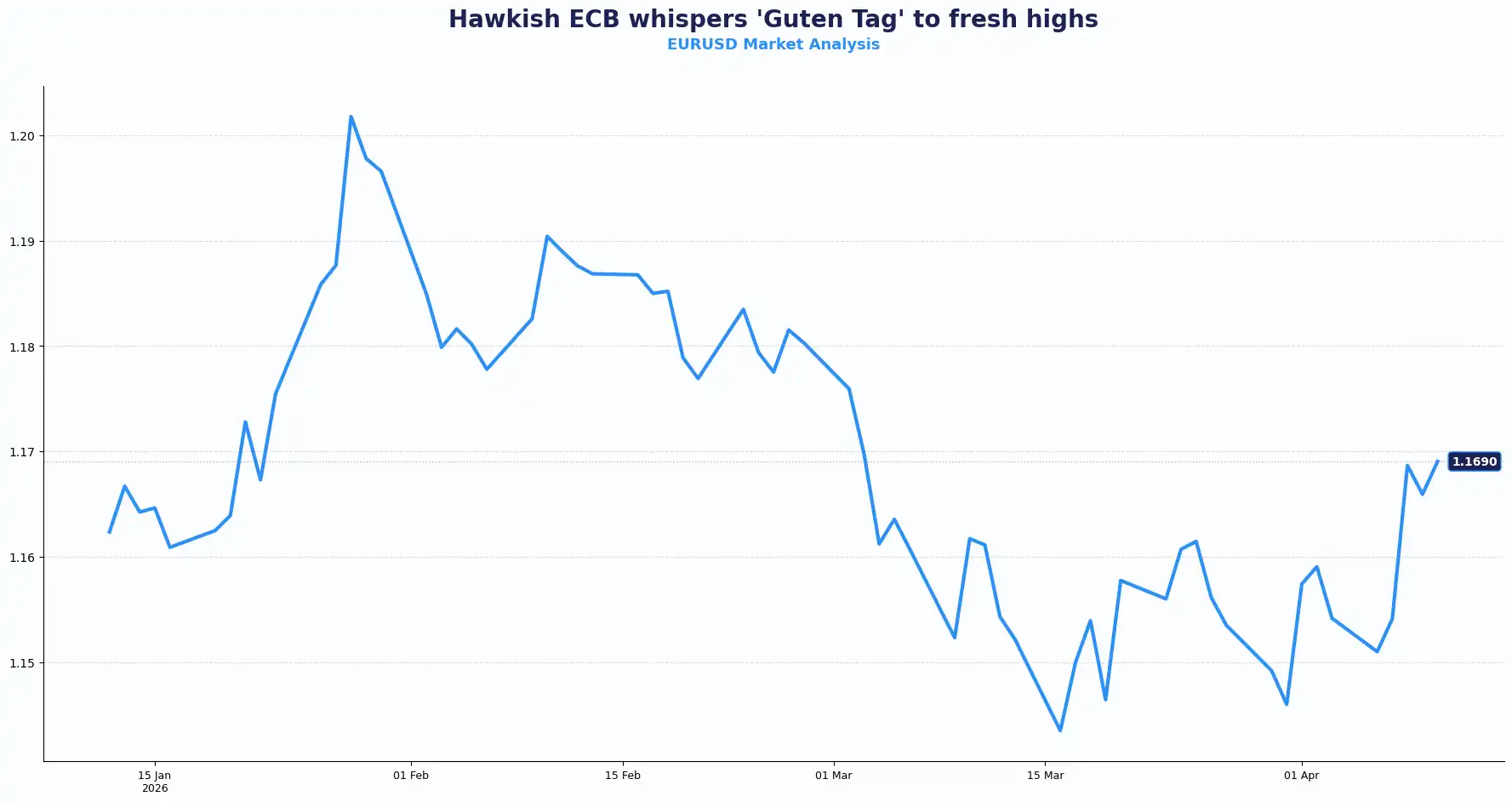
Key Technical levels for the EUR/USD pair: Resistance sits at 1.1750 and Support sits at 1.1620
USD: Dollar Slides as Fear Premium Fades
DXY: 98.9 | USDJPY: 159.23 | AUDUSD: 0.7067 | NZDUSD: 0.5845
The dollar is heading for its largest weekly drop since January. The DXY lost 1.3% this week as investors unwound "safe haven" positions following Tuesday’s ceasefire agreement. The Australian and New Zealand dollars capitalised on this, posting weekly rises of nearly 3%. Even the yen, under pressure from oil imports and low rates, has stabilised at 159.2 to the dollar.
The dollar’s dominance in March stemmed from the US economy’s status as a net energy exporter. As the "tail risk" of total war fades, investors are trimming dollar exposure. The dollar’s recent softness is a product of shifting sentiment rather than a change in US economic fundamentals. Sticky PCE data supports the Fed's cautious stance.
A failure in this weekend’s peace talks in Islamabad would prompt investors to quickly move back into the dollar, rapidly reversing this week’s losses, as renewed geopolitical tension would restore the dollar’s safe haven appeal.
Global Perspectives: The "Adult" in the Room
USDCNH: 6.83 | USDKRW: 1,478
Dollar weakness this week has pushed China's yuan to its strongest levels since 2023, emerging as a surprise winner during this conflict; despite China’s role as the world's largest oil importer, USDCNH hit 6.83. Market participants are re-evaluating the "China risk premium" as the currency shows remarkable stability. Meanwhile, South Korea’s won recovered from the 1,500 level after the central bank held rates steady, reflecting a broader recovery in Asian currencies as immediate oil supply fears marginally eased.
Current Rate Table:
| Pair | Rate | Trend |
|---|---|---|
| GBP/USD | 1.3424 | Bullish |
| EUR/GBP | 0.8711 | Range → Up |
| EUR/USD | 1.1690 | Bullish |
| AUD/USD | 0.7067 | Bullish |
| NZD/USD | 0.5845 | Bullish |
| USD/JPY | 159.23 | Bullish |
| GBP/JPY | 213.68 | Bullish |
| USD/CNH | 6.83 | Bearish dollar |
| USD/KRW | 1,478 | Bearish dollar |
(as at the time of writing)
Market Lookahead
Fri, 10 April
- US CPI (March)
Developments on US-Iran peace talks over the weekend
Next Week
- US PPI
- BoE speakers: Andrew Bailey, Megan Greene
Stay Ahead in the Currency Game
Whether you're a daily FX trader or handle international transactions regularly, our 'Currency Pulse' newsletter delivers the news you need to make more informed decisions. Receive concise updates and in-depth insights directly in your LinkedIn feed.
Subscribe to 'Currency Pulse' now and never miss a beat in the currency markets!
Ready to act on today’s insights? Get a free quote or give us a call on: +44 (0)20 7740 0000 to connect with a dedicated portfolio manager for tailored support.
Important Disclaimer: This blog is for informational purposes only and should not be considered financial advice. Currency Solutions does not take into account the investment objectives, financial situation, or specific needs of any individual readers. We do not endorse or recommend any specific financial strategies, products, or services mentioned in this content. All information is provided “as is” without any representations or warranties, express or implied, regarding its accuracy, completeness, or timeliness.