NZD/USD Extends Gains Amid Shifting Dollar Sentiment
7 min read
Share


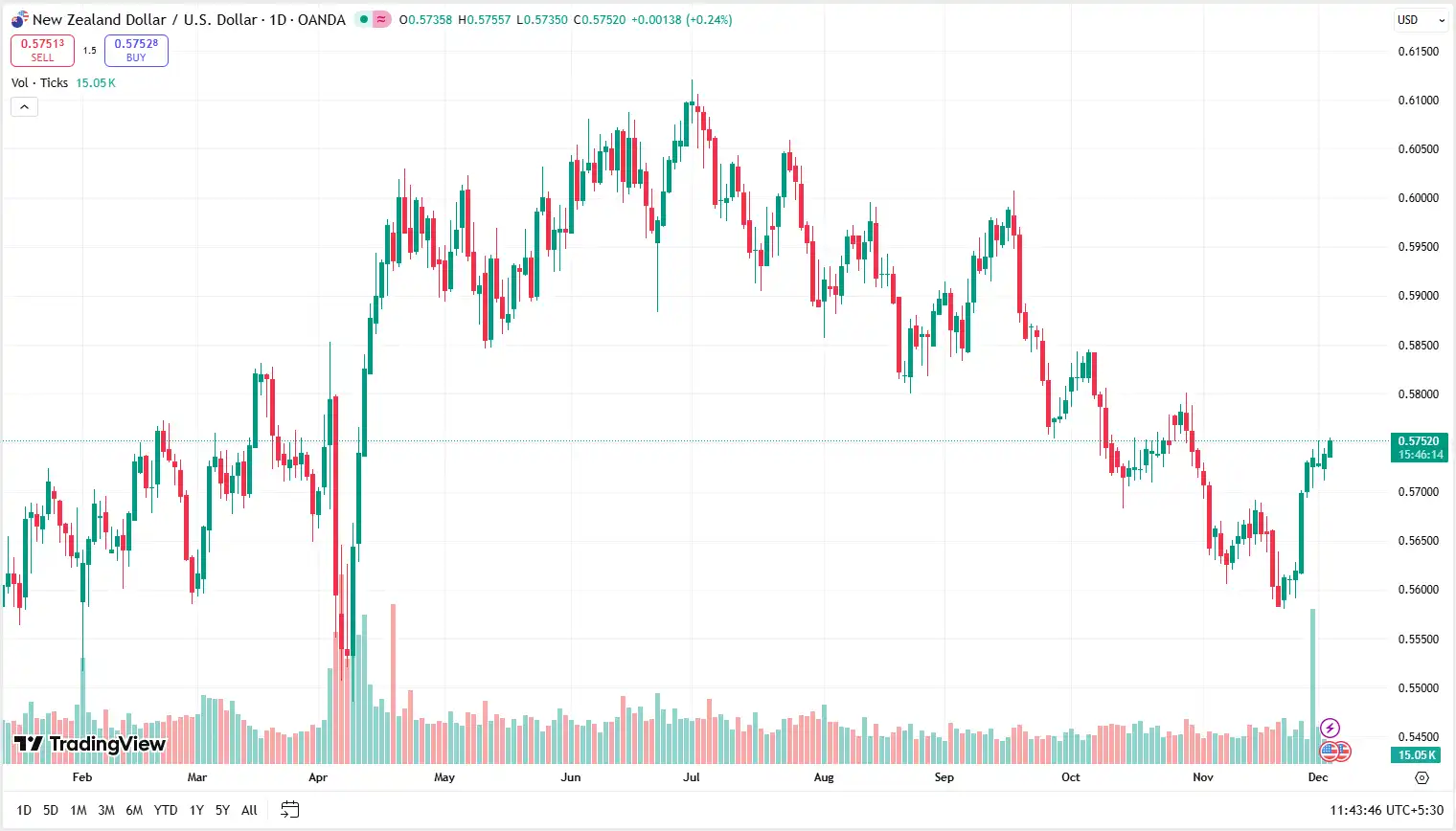
The NZD/USD pair edged upward, trading towards the 0.5752[1] in Wednesday’s Asian session, buoyed by a stronger New Zealand dollar. This followed recent Chinese services-sector data. China’s Services PMI[2] slipped to 52.1 in November from 52.6 previously but still beat expectations, indicating continued growth in Asia’s largest economy. The kiwi[3] gained slight support from this release, helping the pair settle after recent market volatility. Current price action shows a cautiously positive outlook, though gains remain limited ahead of important US data.
Market reports[4] note that despite last week’s 25-basis-point rate cut by the Reserve Bank of New Zealand (RBNZ), the central bank’s messaging has provided some support to New Zealand dollar sentiment. Policymakers[5] have suggested the easing cycle may be drawing to an end as domestic economic indicators begin to show early signs of improvement. This view has eased downside pressure on the currency, allowing the pair[6] to stay above recent lows. Yet, with global risk appetite still fragile, the pair remains sensitive to changes in US macroeconomic trends.
Market commentators[7] point out that the US dollar remains under pressure as softer manufacturing data emerges. Signs of a cooling labour market are adding to the uncertainty. Federal Reserve (Fed) officials have also offered dovish commentary, further weighing on sentiment. Market pricing now points to a strong chance of a 25-basis-point rate cut at the Fed’s[8] December meeting. This expectation is limiting the dollar’s ability to rebound. The greenback’s broader outlook continues to face medium-term headwinds.
Analysts[9] suggest focus now shifts to upcoming ADP Employment Change and ISM Services PMI reports, which might influence the near-term market direction. Stronger-than-expected results could temporarily ease US dollar weakness, while the forthcoming PCE inflation report will likely clarify the Fed’s policy path. Overall, the pair holds short-term support, though US data risks remain key for its medium-term outlook[10]. The NZD/USD exchange rate shows a cautiously positive bias as upbeat China data and firm RBNZ signals support the kiwi amid lingering US downside risks.
EUR/GBP Holds Steady Amid Shifting Policy Outlook
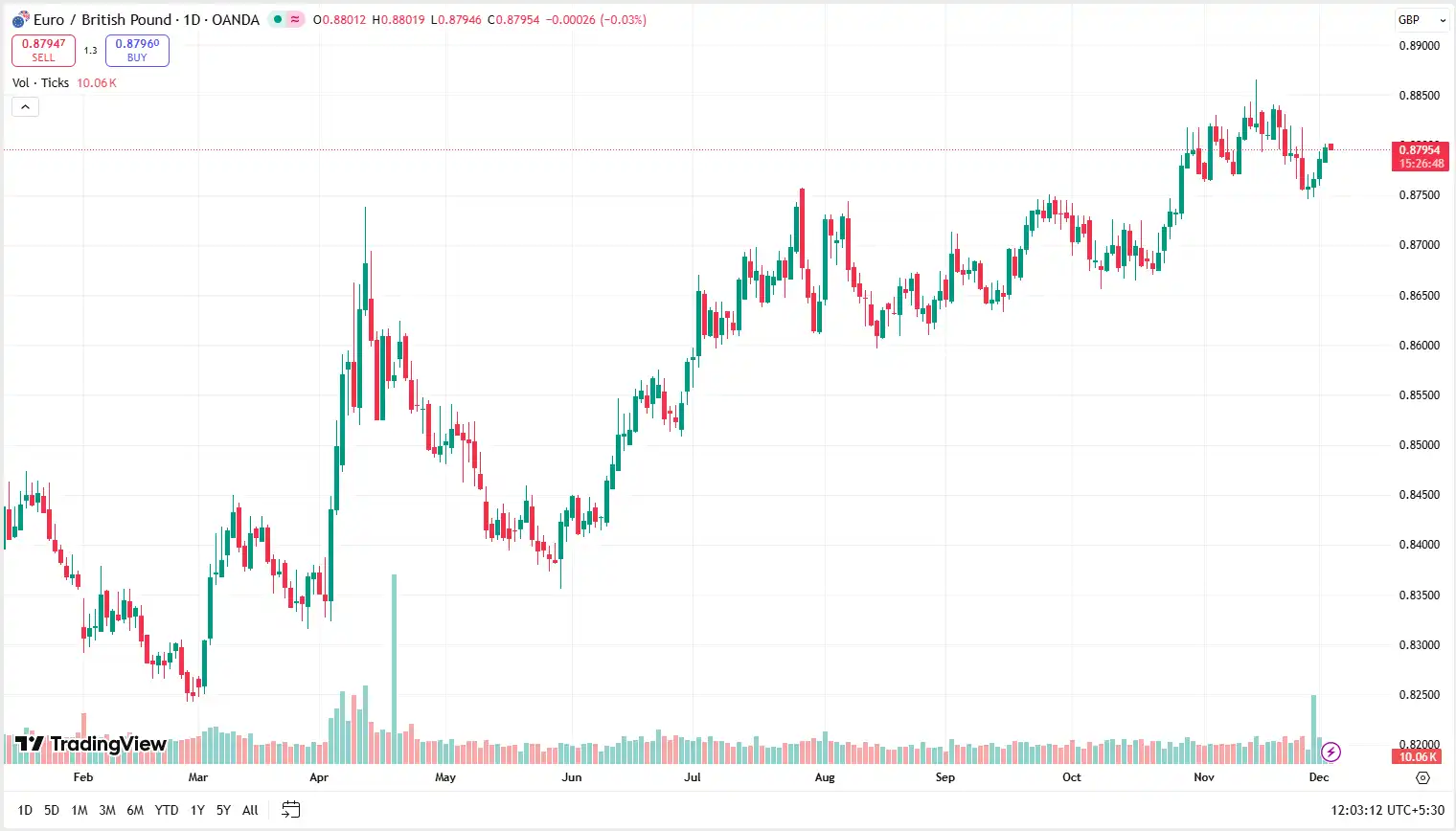
The EUR/GBP pair slipped to around 0.8795[11] in Wednesday's early European trade as investors reassessed monetary policy expectations between the Bank of England (BoE) and European Central Bank (ECB). Price movement stayed within recent ranges, but the short-term bias leans slightly higher due to weaker UK macro data putting pressure on sterling[12]. The market’s hesitation to push GBP[13] upward reflects ongoing concerns about the UK’s economic momentum and the chance of the BoE changing policy before year-end.
Market watchers[14] note that hopes for a December rate cut are still strong, with nearly 90% odds priced in after softer UK inflation and labour market signs. The recent Autumn Statement[15], which forecasts higher taxes, has dampened market sentiment and capped any upside for the pound. Prime Minister Keir Starmer’s[16] remarks about easing inflation and borrowing costs have bolstered expectations that the BoE may loosen policy sooner rather than later. These factors leave the pound vulnerable in the near term, as markets brace for possible policy shifts.
Market reports[17] point out that the euro has found steady support after Eurozone inflation rose slightly in November, easing market fears that the ECB might speed up its rate-cutting cycle. The ECB kept its deposit rate at 2.00%[18], with President Christine Lagarde saying borrowing costs are at the right level for now. This confidence has helped markets price out any near-term rate cuts, providing some stability for the euro. As a result, the euro's downside pressure has been limited for the time being.
Analysts[19] indicate focus is now on upcoming US data, such as labour market indicators and consumer sentiment figures. Softer-than-expected US figures could dampen overall market sentiment. This may indirectly pressure the pound through risk-sensitive channels. As a result, the pair could remain supported in the short term. Medium-term risks still point towards renewed volatility. The EUR/GBP exchange rate stays supported as weak UK data and stable Eurozone inflation keep pressure on the pound.
USD/JPY Drifts Lower as Policy Divergence Weighs
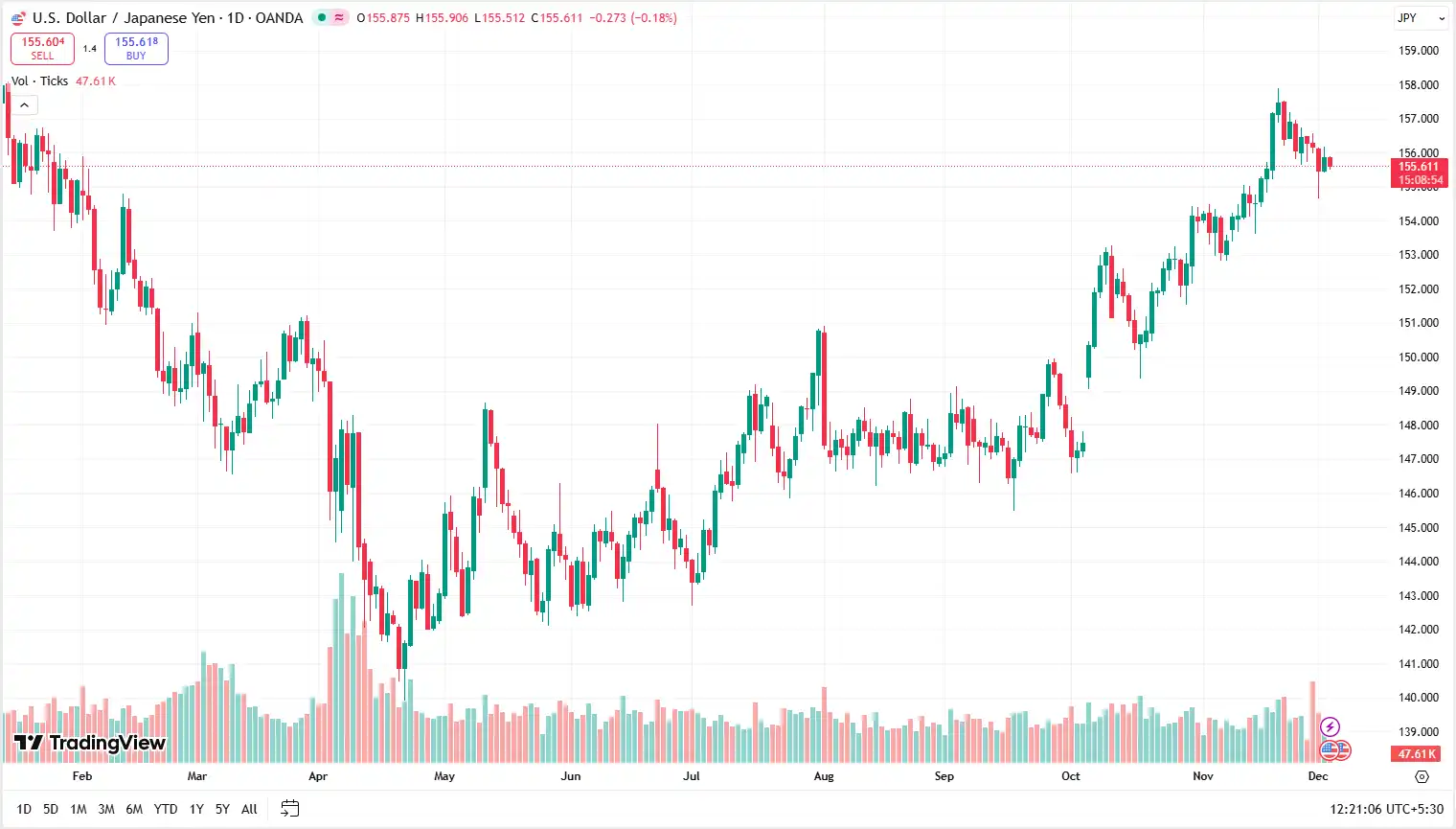
The USD/JPY pair traded lower near 155.61[20] in Wednesday's early Asian session, falling from above 156.00. This followed Tuesday’s modest rise but lacks strong bearish momentum, indicating a cautious market ahead of key US data[21] releases later this week. The overall tone suggests investors are reassessing the interest rate outlook for both the US and Japan. Risks are slightly tilted to the downside for this currency pair.
Market reports[22] highlight that the Japanese Yen remains supported by rising hopes of another rate hike from the Bank of Japan (BoJ). Governor Kazuo Ueda’s[23] comments earlier this week show increasing confidence in meeting the BoJ’s inflation and economic goals. This has strengthened the perception that policy normalisation is underway. As a result, the Yen’s relative yield appeal has improved, capping the pair’s rallies and keeping it below recent highs.
Market watchers[24] note that the US dollar continues to weaken, nearing its lowest point since mid-November, as markets expect a Fed rate cut next week. Softer US economic data has strengthened these dovish views. Any further signs of slowing growth may push the dollar lower. Traders now focus on today’s ADP employment figures and ISM Services PMI[25]. These releases might shape expectations ahead of Friday’s core PCE inflation report. The PCE report is seen as the most important for the dollar’s near-term path.
Analysts[26] suggest the pair may receive limited support from broadly positive risk sentiment short-term, which usually reduces demand for the safe-haven yen. However, the medium-term outlook seems fragile, with diverging Fed–BoJ policy[27] paths increasing downside risks. A sustained drop below 155.50 might lead to a deeper pullback, while resistance at 156.20 keeps recovery attempts in check. Overall, the USD/JPY exchange rate remains under pressure as weak US data and rising BoJ tightening expectations tilt risks to the downside.
USD/CAD Holds Steady as Dollar Sentiment Softens
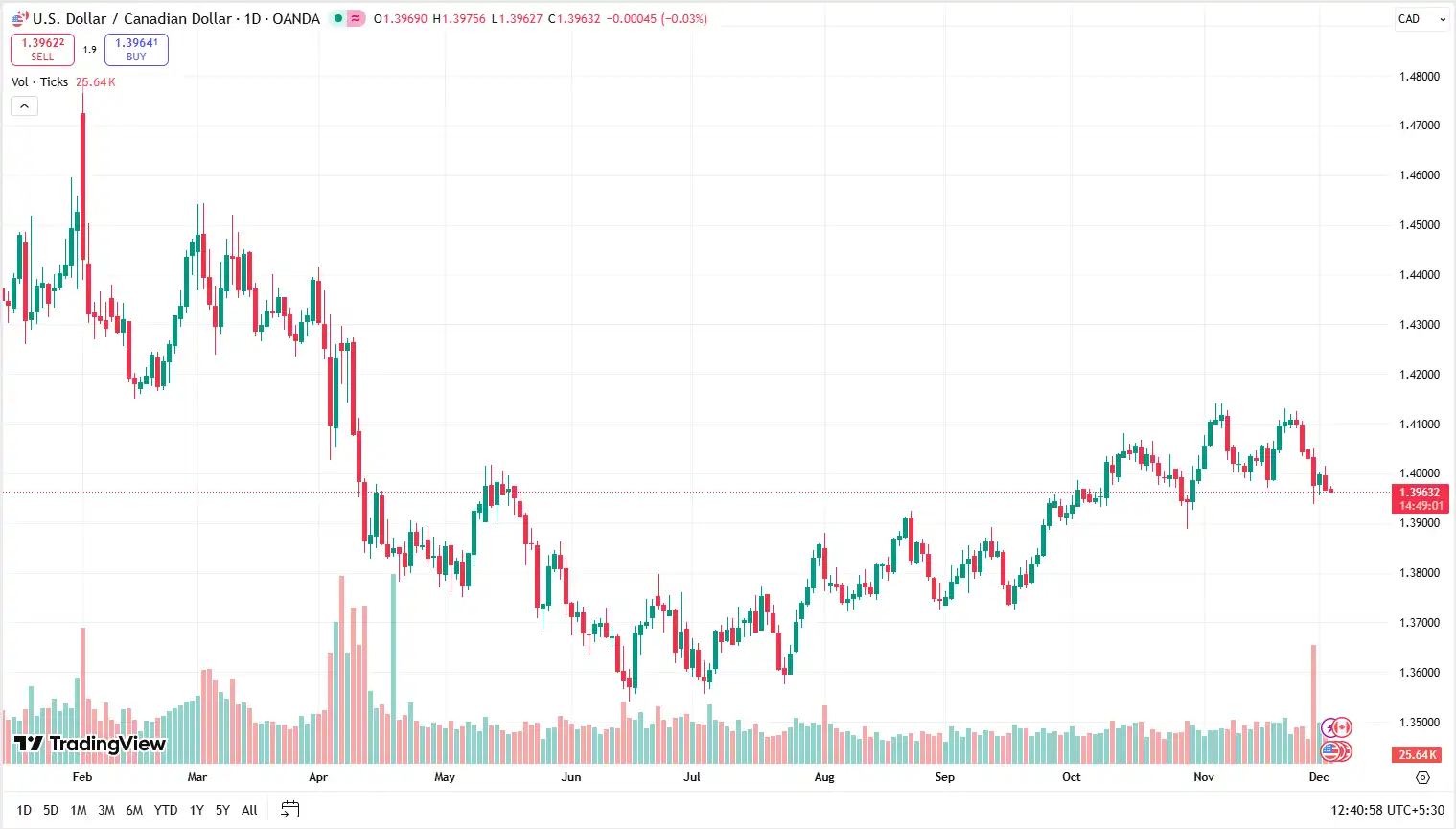
The USD/CAD pair traded cautiously around 1.3960[28] in Wednesday’s European session, reflecting a slight loss in upside momentum as the dollar softened. After reaching several-week highs, the pair struggled to extend gains, with traders adopting a more defensive stance. This followed comments from President Donald Trump[29] suggesting White House economic adviser Kevin Hassett might be a potential successor to Fed Chair Jerome Powell in 2026. These remarks weighed on broader US dollar sentiment, keeping the US Dollar Index (DXY) close to 99.10[30]. This limited immediate bullish momentum for the pair.
Market reports[31] point out that the near term remains sensitive to incoming US macroeconomic data. Traders adopt a cautious stance ahead of November’s ADP Employment Change and ISM Services PMI. Both releases could shape expectations for the Fed’s future policy direction. Recent warnings from Fed officials[32], including Powell, highlight emerging downside risks in the labour market. This has heightened market sensitivity to weak data surprises. Softer-than-expected figures might reinforce views of an earlier policy shift, adding pressure on the US dollar. Such dynamics could create short-term resistance to further gains in the currency pair.
Market watchers[33] note Canada’s focus is now on the November labour market report, with unemployment expected to rise slightly to 7.0% from 6.9%. A stagnant labour force and softer employment trends highlight ongoing challenges for the economy. Though the Canadian dollar[34] faces little immediate pressure, a further decline in job conditions could weigh on the currency. This might support the currency pair over the longer term, should employment continue to weaken.
Market reports[35] point out that the pair holds near-term support above the 1.3900 level, reflecting cautious market sentiment. The medium-term outlook, however, remains fragile and uncertain. Should US economic momentum weaken, further gains could be limited. The pair is sensitive to changes in rate expectations and upcoming labour data from both economies. The USD/CAD exchange rate trades cautiously near recent highs as softer U.S. sentiment limits further gains.
Stay Ahead in the Currency Game
Whether you're a daily FX trader or handle international transactions regularly, our 'Currency Pulse' newsletter delivers the news you need to make more informed decisions. Receive concise updates and in-depth insights directly in your LinkedIn feed.
Subscribe to 'Currency Pulse' now and never miss a beat in the currency markets!
Ready to act on today’s insights? Get a free quote or give us a call on: +44 (0)20 7740 0000 to connect with a dedicated portfolio manager for tailored support.
Important Disclaimer: This blog is for informational purposes only and should not be considered financial advice. Currency Solutions does not take into account the investment objectives, financial situation, or specific needs of any individual readers. We do not endorse or recommend any specific financial strategies, products, or services mentioned in this content. All information is provided “as is” without any representations or warranties, express or implied, regarding its accuracy, completeness, or timeliness.