EUR/USD Extends Gains Amid Dollar Softness
7 min read
Share


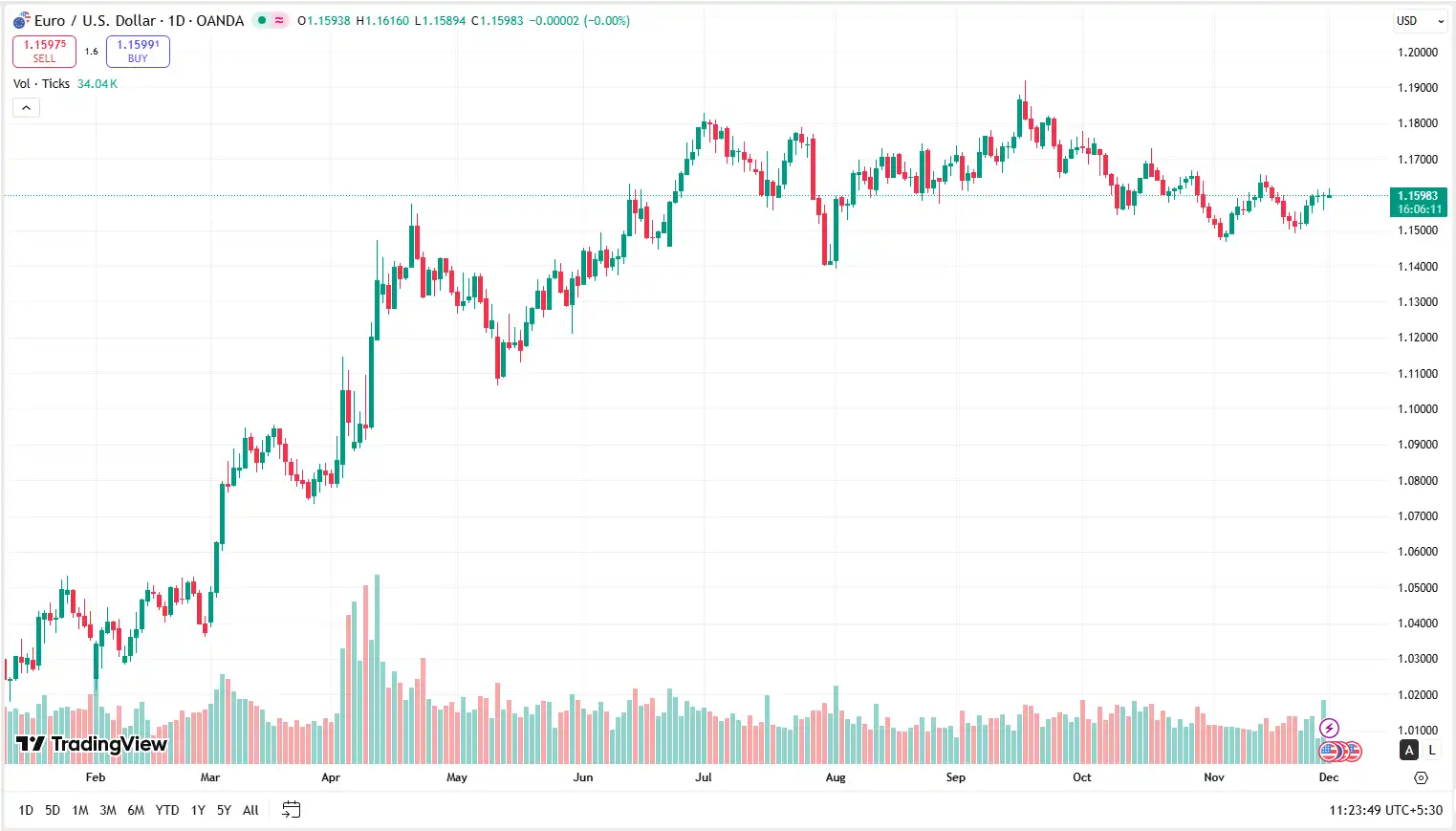
The EUR/USD pair traded around the 1.1600[1] psychological marker in Monday’s Asian session and began the new week on a firmer footing, building on last week’s gains. This move is seen as a continuation of the broader short-term upward trend. Even so, buyers remain cautious ahead of a potential test of the 200-day Simple Moving Average[2] level, which continues to cap upside momentum.
Market reports[3] indicate that the US dollar remains under sustained pressure amid ongoing expectations that the Federal Reserve (Fed) will resume easing in December. Recent comments from various Fed officials have strengthened the view that the Fed is leaning towards a more accommodative stance, prompting markets to increase wagers[4] on further rate cuts. This dovish revaluation, combined with broadly positive risk sentiment across global markets, is weighing on the greenback and helping to support the pair in the short term.
Market commentators[5] observe that in the Eurozone, the common currency is gaining strength amid growing confidence that the European Central Bank (ECB) has concluded its rate-cutting phase. The most recent policy meeting minutes revealed that policymakers agreed to keep all key rates unchanged[6], asserting that the current rate levels are appropriate. The euro holds a modest fundamental edge, with investors discounting any additional easing in 2025 and a low probability of such moves in 2026[7].
Analysts[8] suggest attention has now turned to this week’s key data releases in the US, beginning with the ISM Manufacturing PMI. Additional signs of US economic easing would strengthen downward pressure on the dollar, supporting the short-term tone for the pair[9]. That said, medium-term risks remain balanced, and future gains will likely depend on whether the pair manages a clear break above the 200-day SMA. Overall, the EUR/USD exchange rate continues to edge higher as dollar weakness and improving Eurozone sentiment support the pair.
GBP/USD Holds Steady Amid Shifting Policy Expectations
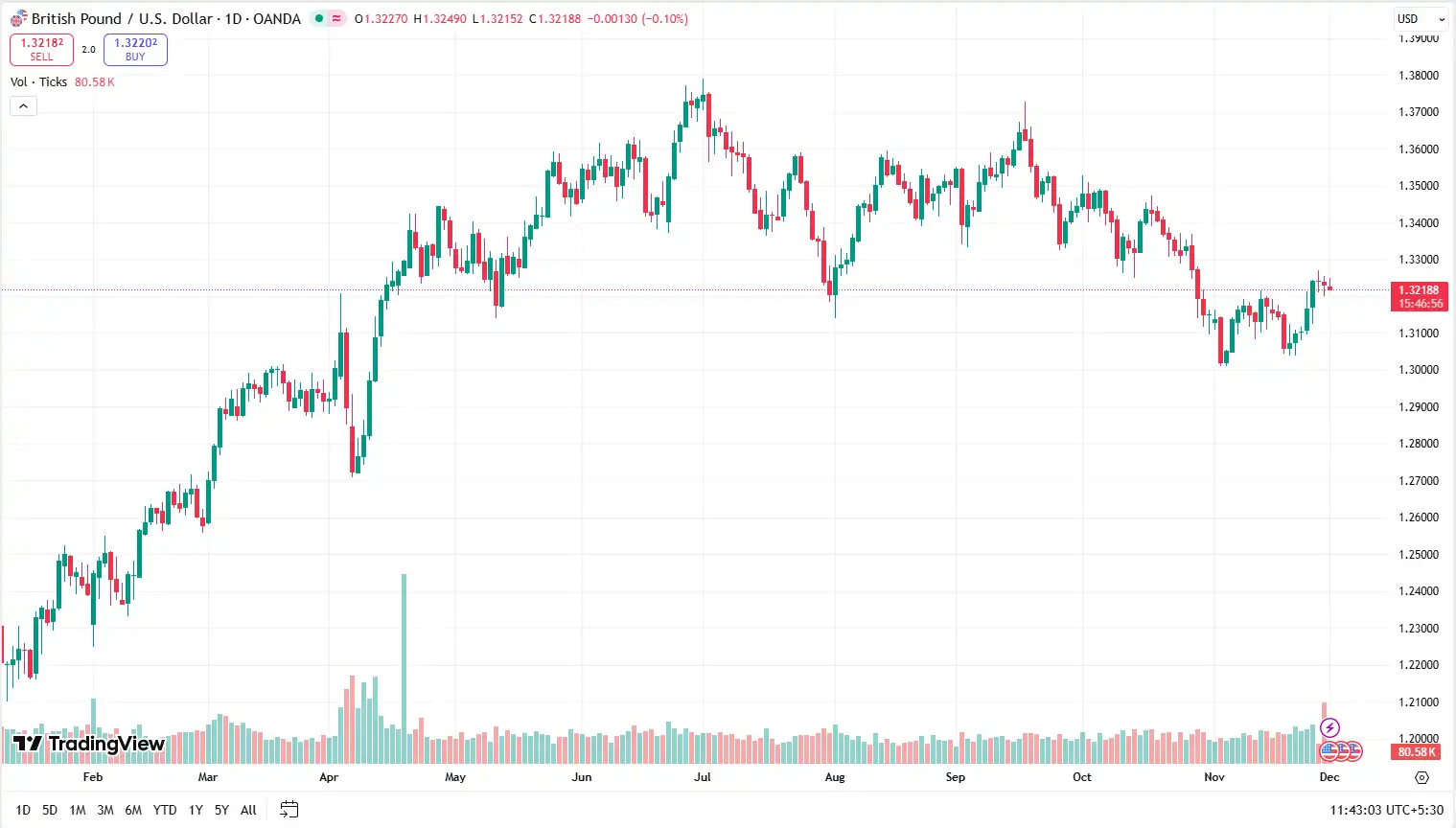
The GBP/USD pair stayed steady and traded around 1.3200[10] in Monday's early Asian session. Market participants continued to weigh the impact of the UK Autumn Budget alongside shifting expectations around US monetary policy. The pair’s downside appears limited for now, partly due to growing bets on a December rate cut[11] by the Fed, which has broadly pressured the US dollar.
Market reports[12] indicate that last week’s Autumn Budget, announced by UK Chancellor Rachel Reeves, offered slight support to sterling. The fiscal package introduced tax rises along with changes to business rates, benefits, and pensions. The Office for Budget Responsibility’s[13] upward revision of the UK’s 2025 GDP forecast to 1.5% provided some welcome relief. However, their subsequent downgrades for later years cast a shadow over the medium-term outlook. This mix suggests that any uplift in GBP is likely to be modest, with the currency’s broader direction remaining sensitive to upcoming economic data.
Market commentators[14] have observed that Fed officials have adopted a notably dovish tone in the US, reinforcing the expectation that the Fed will ease monetary policy. Fed funds futures currently suggest an 87% chance of a 25-basis-point rate cut in December, up from 71% last week. Fed Governor Christopher Waller[15] and San Francisco Fed President Mary Daly both mentioned that the easing of the labour market bias has strengthened this view and limited any recovery attempts for the US dollar.
Analysts[16] highlight that attention has now turned to the upcoming US ISM Manufacturing PMI, with markets closely watching for signs of further slowing activity. A softer-than-expected outcome would likely reinforce expectations of forthcoming Fed easing, providing additional short-term support for the pair. However, concerns around the UK’s growth trajectory over the medium term and the possibility of weakening domestic momentum may still cap sterling’s gains in the weeks ahead. In short, the GBP/USD exchange rate remains supported in the near term, though broader gains may be limited by the UK’s uncertain growth outlook.
USD/CAD Pressured Amid Diverging Policy Outlook
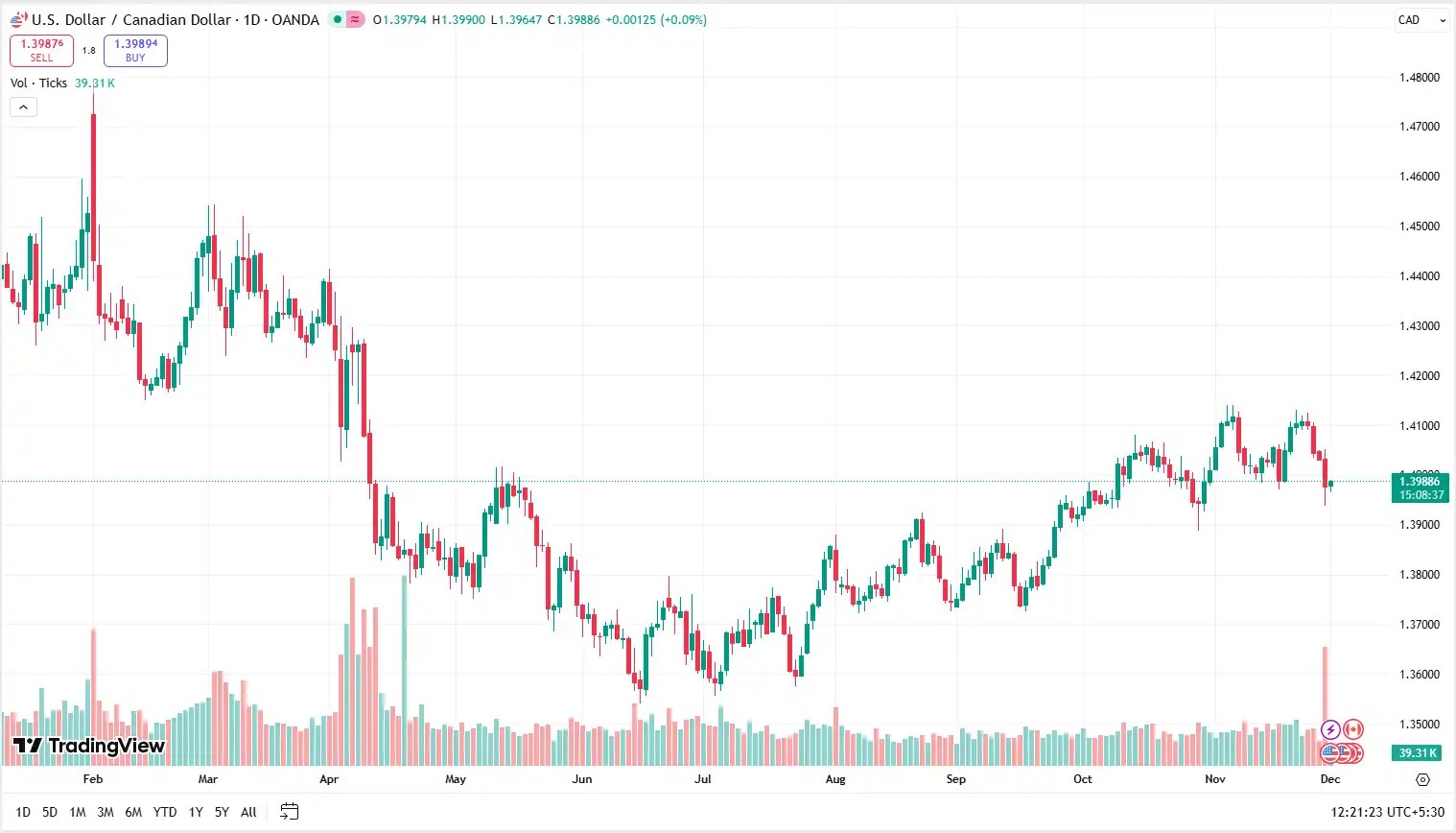
The USD/CAD pair traded near 1.3990[17], regaining some ground during Monday’s Asian trading session. It found support after recent declines but encountered resistance amid mounting market expectations of a Fed rate cut in December. The upside potential for the pair remains constrained as traders factor in an 87% probability[18] of a 25 basis point cut at the forthcoming Fed meeting, according to the CME FedWatch tool. This reflects a dovish stance following weaker-than-anticipated US economic data and recent remarks from Fed officials.
Market reports[19] indicate that the US dollar is coming under pressure amid weak economic signals, including slowing retail sales and a decline in consumer confidence. These developments have intensified speculation that the Federal Reserve may deliver further policy easing. Upcoming US economic releases, particularly the November ISM Manufacturing PMI[20] and personal income and spending figures, will be closely monitored for new indications on the Fed’s policy direction. These releases may either support or challenge the prevailing view of imminent rate cuts, directly affecting the outlook for the pair.
Market commentators[21] note that in Canada, the loonie has found support following stronger-than-anticipated Q3 GDP growth of 2.6%, compared to a previous contraction. This has prompted markets to lower expectations for further rate cuts by the Bank of Canada (BoC). The divergence in central bank policies, with Fed dovishness contrasted against BoC caution[22], has weighed on the US dollar and offered a short-term floor for the Canadian dollar.
Analysts[23] indicate that although near-term support for the pair is reinforced by the recent rebound, the broader outlook remains fragile. Medium-term risks still tilt to the downside if US data continues[24] to underperform and the Fed proceeds with more aggressive rate cuts. On the other hand, a stronger US economic report or hawkish Fed remarks could boost the dollar’s appeal and drive the pair upward. The USD/CAD exchange rate remains vulnerable as shifting Fed expectations and solid Canadian data continue to shape the pair’s direction.
NZD/USD Holds Firm Amid Mixed Market Drivers
The NZD/USD pair traded close to 0.5730[25] during Monday’s European session, following a consolidation of Friday’s rise to a near one-month peak. Price movements have become range-bound in early European trading[26], with the kiwi demonstrating resilience despite weaker Chinese manufacturing figures. This tight consolidation indicates markets are taking a breather after last week’s robust recovery, although the overall short-term bias still leans towards the upside.
Market reports[27] highlight that the disappointing data from China, where the RatingDog Manufacturing PMI slipped back into contraction at 49.9 in November, initially gave little boost to the pair. The release came after weaker official PMIs over the weekend, confirming renewed pressure in both manufacturing and services sectors[28]. However, the muted market reaction suggests some hope around easing trade tensions and recent Chinese policy measures designed to support domestic demand. These factors have helped ease risk aversion and continue to offer modest support for the New Zealand dollar.
Market commentators[29] highlight that at the domestic level, the Reserve Bank of New Zealand’s (RBNZ) recent guidance remains a central influence. The Reserve Bank of New Zealand (RBNZ) implemented a fully priced 25 bps rate cut[30] last week but signalled an end to the easing cycle as the economy showed early signs of improvement. This contrasts with the Fed, where markets are factoring in a strong chance of another rate cut this month. The resulting pressure on the US dollar[31] has helped maintain the pair’s firm tone and supports the view of a gradual continuation of recent gains.
Analysts[32] suggest that looking forward, forthcoming US data, such as ISM surveys and labour market indicators, will be carefully watched for further signs of economic slowing. Any fresh indications of weakening activity are likely to put pressure on the dollar and provide additional short-term support to the pair. However, medium-term risks remain, especially if worries about global growth resurface or Chinese momentum further declines, potentially restricting upside moves.

Stay Ahead in the Currency Game
Whether you're a daily FX trader or handle international transactions regularly, our 'Currency Pulse' newsletter delivers the news you need to make more informed decisions. Receive concise updates and in-depth insights directly in your LinkedIn feed.
Subscribe to 'Currency Pulse' now and never miss a beat in the currency markets!
Ready to act on today’s insights? Get a free quote or give us a call on: +44 (0)20 7740 0000 to connect with a dedicated portfolio manager for tailored support.
Important Disclaimer: This blog is for informational purposes only and should not be considered financial advice. Currency Solutions does not take into account the investment objectives, financial situation, or specific needs of any individual readers. We do not endorse or recommend any specific financial strategies, products, or services mentioned in this content. All information is provided “as is” without any representations or warranties, express or implied, regarding its accuracy, completeness, or timeliness.