AUD/USD Extends Gains Amid Diverging Policy Outlook
6 min read
Share


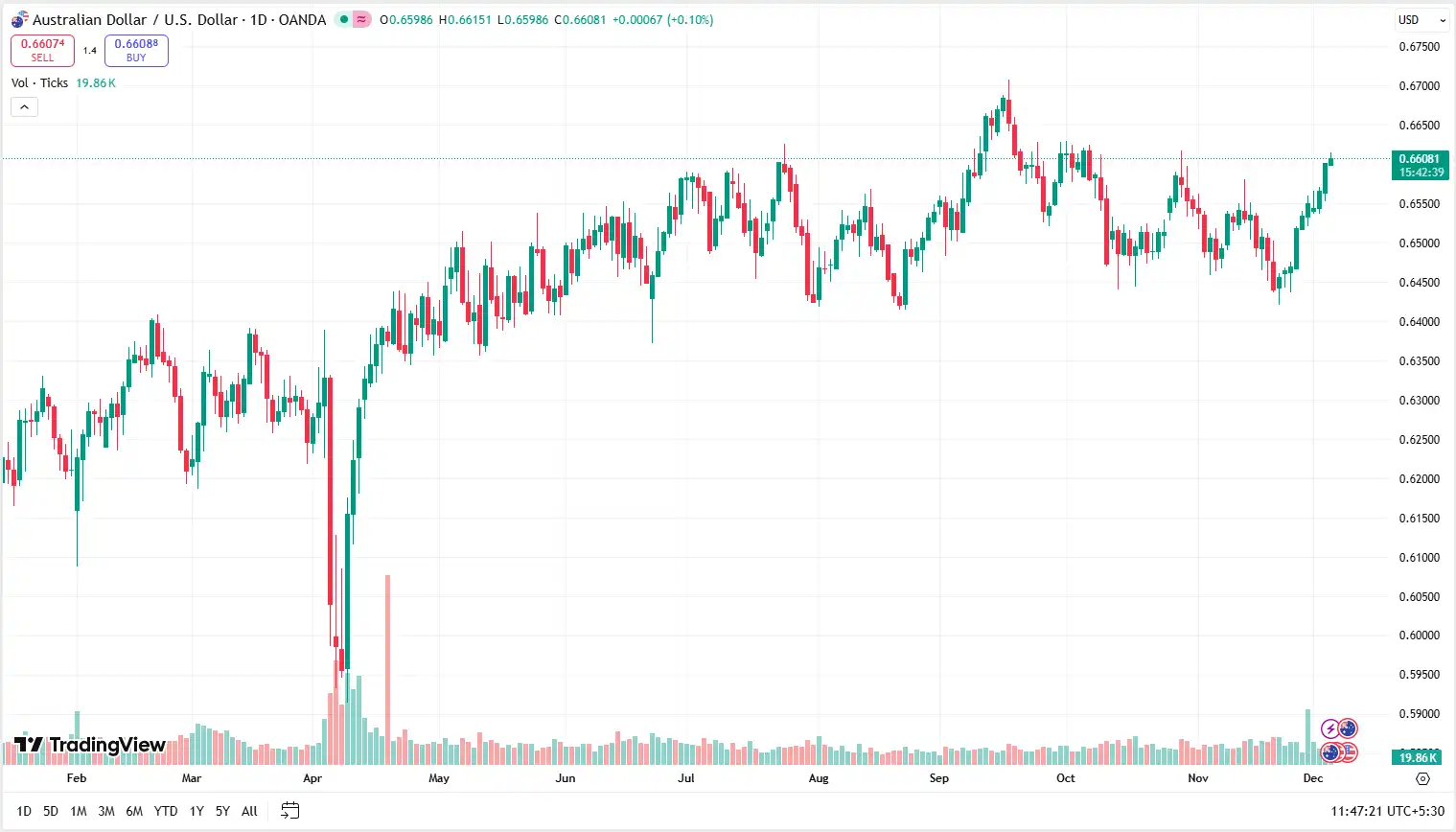
The AUD/USD pushed higher for a second week, trading above 0.6600[1] during Thursday’s early Asian session. It hit its highest point since late October. The pair rose on continued US dollar weakness and positive local data support. This move showed solid demand for the Australian dollar following a larger-than-expected October trade surplus[2]. The result reinforced the generally bullish sentiment around the currency.
Market commentators[3] noted that the reaction to the data release was modest, but the figures still added to a positive outlook for the Aussie. Expectations of near-term policy easing by the Reserve Bank of Australia (RBA)[4] have been steadily falling. This shift has intensified following Governor Michele Bullock’s[5] remarks this week that inflation is not yet sustainably within the 2–3% target range. Investors now see greater chances of further tightening in 2025, with the policy gap against the more dovish Federal Reserve (Fed) continuing to support the pair during dips.
Market reports[6] indicate the US dollar remains pressured near one-month lows. Traders anticipate a Fed rate cut at next week’s meeting amid signs of a cooling US economy. Recent softer US data, including slowing labour market indicators[7] and weaker manufacturing, have strengthened expectations of a more accommodative Fed stance. Speculation about a dovish successor to Chair Jerome Powell[8] has further dampened the greenback, boosting upward momentum in the pair.
Analysts[9] point to upcoming US releases, especially weekly jobless claims and the University of Michigan sentiment survey, for further signs of weakening economic momentum. Any downside surprises will likely keep the US dollar defensive in the near term, supporting the pair’s short-term bias. Medium-term risks remain if global risk sentiment worsens or US data stabilises. The AUD/USD exchange rate continues to strengthen, supported by a weaker US dollar and upbeat Australian economic data.
EUR/USD Edges Lower But Outlook Stays Supported
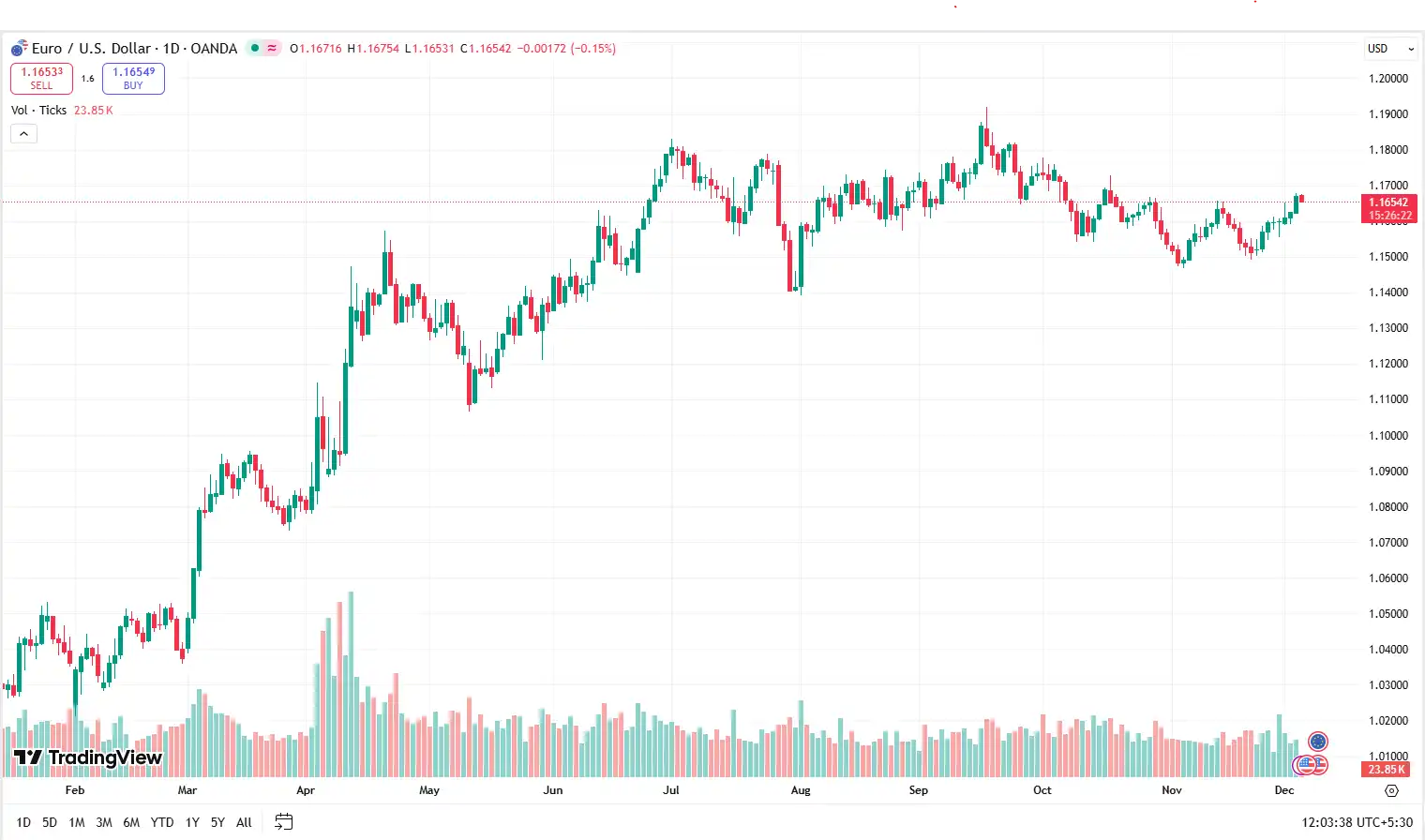
The EUR/USD pair retreated, trading near 1.1650[10] in Thursday’s early Asian session after hitting its highest since mid-October. Despite the slight pullback, price action remains positive following Wednesday’s clear break[11] above the 100-day SMA, reinforcing a short-term bullish view. Initial support lies near 1.1630[12], with dips expected to attract buyers, while the broader fundamental outlook stays favourable for the single currency.
Market reports[13] show the US dollar is trying a small rebound from multi-week lows, but the recovery lacks strength amid dovish Fed expectations. Recent US data signals a gradual cooling of economic activity and further labour-market softening in November. These trends have boosted market confidence in a 25-basis-point rate cut[14] at next week’s FOMC meeting, maintaining pressure on the greenback. This dynamic also provides a base of support for the pair.
Market watchers[15] observe that risk sentiment remains broadly supportive, as lower expected US rates reduce demand for safe-haven assets. Meanwhile, the euro benefits from the growing belief that the European Central Bank (ECB)[16] has concluded its easing cycle. Comments from ECB President Christine Lagarde[17], highlighting inflation near the 2% target in coming months, reinforce policy hold expectations and limit downside risk for the pair.
Analysts[18] indicate focus now shifts to the US data calendar, with Challenger Job Cuts and weekly Initial Jobless Claims expected later today before key inflation figures. Any additional signs of economic weakness would likely weigh on the dollar and keep the pair biased higher in the short term. However, medium-term risks remain, as ongoing global growth weakness or a change in Fed guidance could reduce bullish momentum. The EUR/USD exchange rate remains biased to the upside as supportive euro fundamentals and dovish Fed expectations keep bullish momentum intact.
USD/CAD Steady as Divergent Policies Shape Outlook
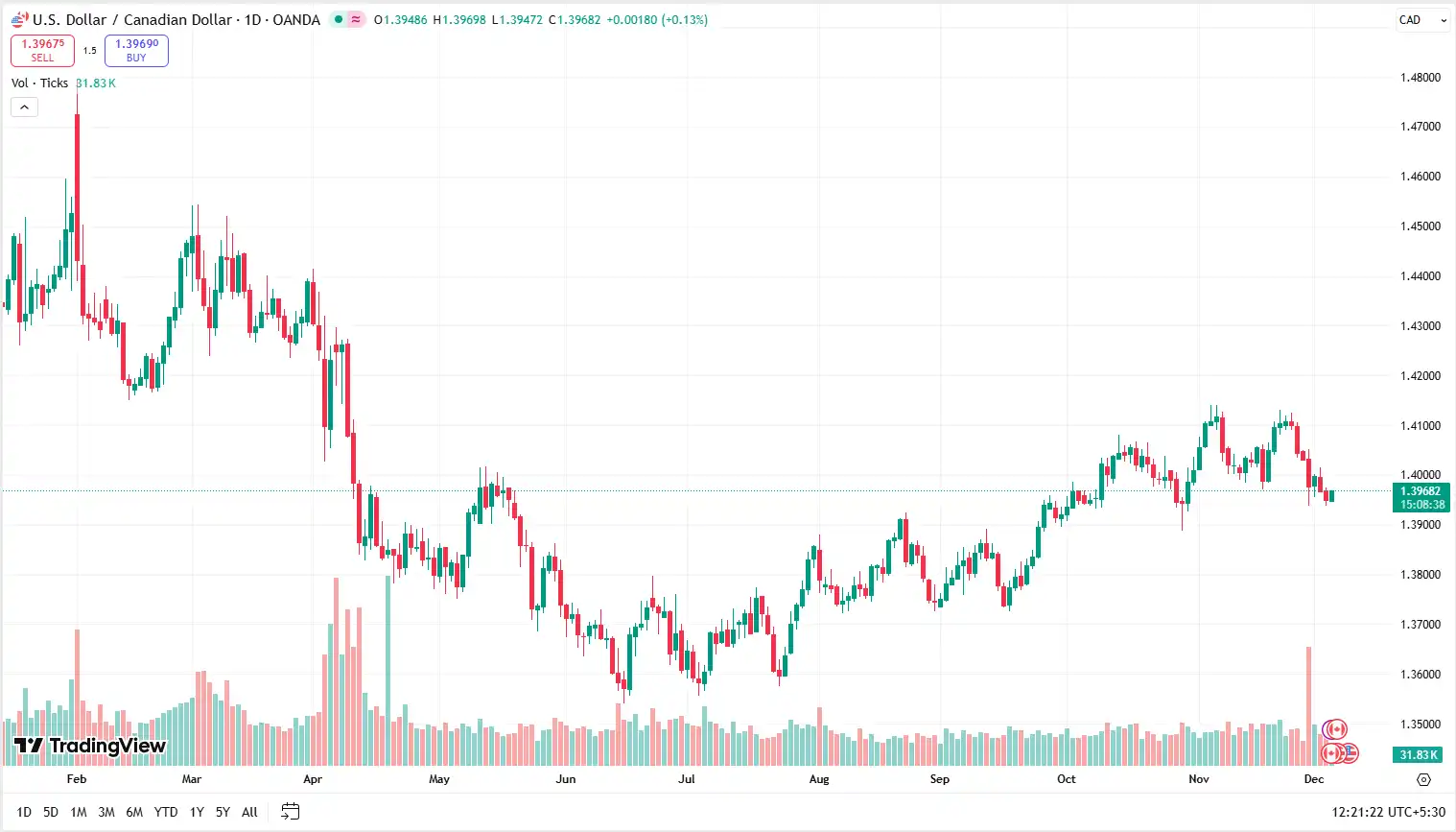
The USD/CAD pair edged higher, trading near 1.3960[19] in Thursday's early Asian session. It stabilised after a two-day decline and briefly revisited the region. Despite the modest rise[20], price action shows no clear bullish momentum. The pair remains close to last week’s one-month low. This move signals a tentative US dollar recovery, but gains are limited. Markets still expect another upcoming Fed rate cut[21].
Market reports[22] highlight that a softer US dollar tone continues after Wednesday’s disappointing ADP employment report showed an unexpected 32,000 private-sector job loss for November. The data increased concerns about a cooling US labour market and further signs of slowing economic momentum. This fuels expectations of more monetary easing by the Fed[23], limiting the US dollar’s gains and dampening any sustained recovery in the pair. Conversely, the Bank of Canada’s (BoC)[24] more hawkish stance, signalling a pause in rate cuts, widens policy divergence and supports the Canadian dollar.
Market watchers[25] note that alongside policy expectations, stabilising crude oil prices are giving extra support to the commodity-linked loonie. This is helping to cap rallies in the currency pair. However, until clear catalysts appear, the pair will stay sensitive to US economic sentiment and risk appetite shifts.
Analysts[26] suggest focus now shifts to key US data, including Challenger Job Cuts, Initial Jobless Claims, and notably, the upcoming PCE Price Index, the Fed’s preferred inflation gauge. Canada’s Ivey PMI[27] and monthly jobs report will also attract close attention. These releases could influence expectations for both central banks. They may decide if the pair gains firmer short-term support or continues to drift lower amid medium-term risks for the US dollar. The USD/CAD exchange rate saw only a modest, fragile rebound as soft US data and dovish Fed expectations kept upside momentum constrained.
GBP/USD Drifts Lower Amid Weakening Dollar Momentum
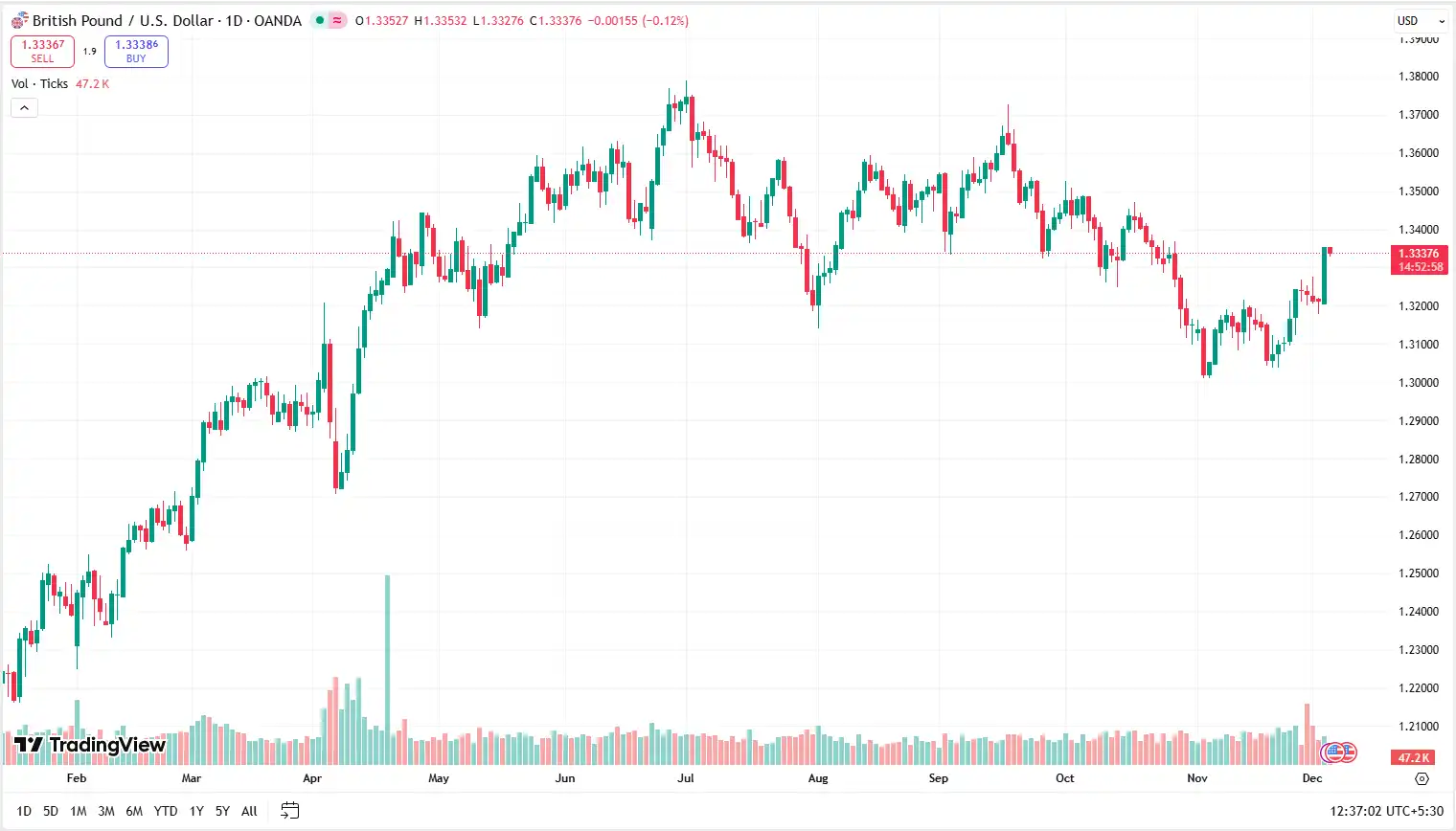
GBP/USD slipped, trading near 1.3330[28] in Thursday’s early Asian session. The pair eased from a near two-month high as renewed US dollar demand capped gains. The pullback shows modest profit-taking after a strong rally, though the overall tone stays supported by expectations of the upcoming Fed rate cut[29]. Traders are set to focus on the fresh US Initial Jobless Claims[30] for guidance. Further labour-market softening could weigh on the greenback and limit the pair’s downside.
Market reports[31] highlight that recent US data, including weaker-than-expected Manufacturing PMI and a disappointing ADP employment report, have strengthened market belief in a December quarter-point rate cut by the Fed. Fed Funds[32] futures now show an 89% chance of easing, with expectations for a total of 89bps of cuts through 2025. This dovish repricing has limited US dollar gains, though political uncertainty over central bank leadership adds risk. Reports suggest Kevin Hassett is a leading candidate to replace Jerome Powell, further clouding US dollar sentiment.
Market watchers[33] highlight the pound faces medium-term vulnerabilities, limiting the pair’s scope for decisive gains. The UK Autumn Budget reinforced expectations for a December Bank of England (BoE)[34] rate cut. Markets now price a 90% chance of a reduction to 3.75%. Prime Minister Keir Starmer’s[35] focus on lowering inflation and borrowing costs signals government backing for easier policy. This stance may weigh on sterling as yield differentials turn against it.
Analysts suggest the pair will likely stay sensitive to incoming US data, which could keep support if economic softness continues in the short term. However, BoE easing expectations[36] and wider UK growth worries create headwinds, implying rallies may be limited unless US economic weakness deepens. The GBP/USD exchange rate is consolidating after a brief pullback, with sentiment staying cautiously supported by Fed-cut expectations but capped by UK rate-cut risks.
Stay Ahead in the Currency Game
Whether you're a daily FX trader or handle international transactions regularly, our 'Currency Pulse' newsletter delivers the news you need to make more informed decisions. Receive concise updates and in-depth insights directly in your LinkedIn feed.
Subscribe to 'Currency Pulse' now and never miss a beat in the currency markets!
Ready to act on today’s insights? Get a free quote or give us a call on: +44 (0)20 7740 0000 to connect with a dedicated portfolio manager for tailored support.
Important Disclaimer: This blog is for informational purposes only and should not be considered financial advice. Currency Solutions does not take into account the investment objectives, financial situation, or specific needs of any individual readers. We do not endorse or recommend any specific financial strategies, products, or services mentioned in this content. All information is provided “as is” without any representations or warranties, express or implied, regarding its accuracy, completeness, or timeliness.