Sterling Weak Ahead of UK Data and Ongoing Dollar Strength
5 min read
Share


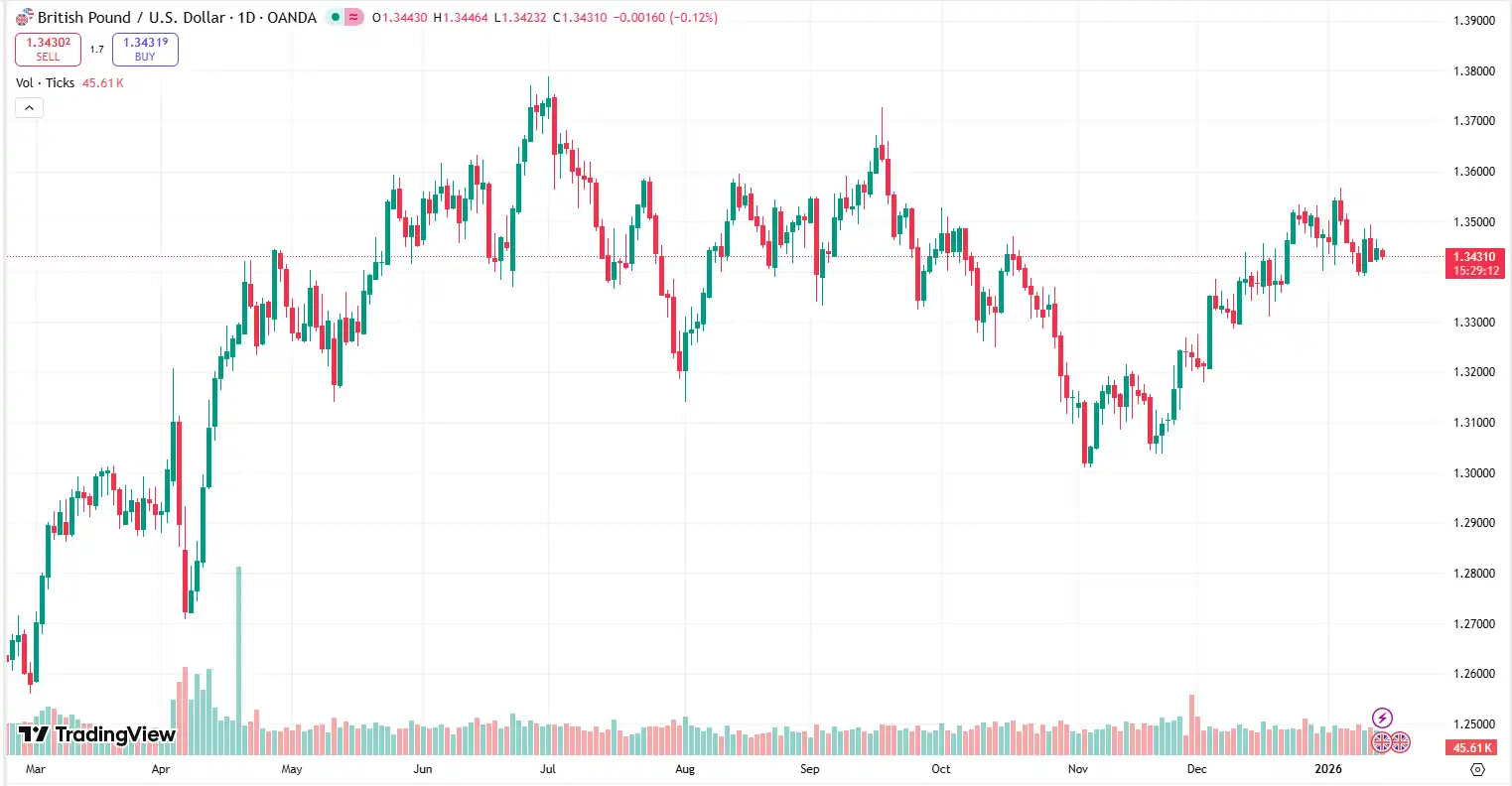
GBP/USD declined towards 1.3420 levels during Asian trading on Thursday as markets awaited key UK economic data[1] and responded to strong US economic figures.
Traders are focused on key UK economic reports, with the Office for National Statistics (ONS) releasing November Gross Domestic Product (GDP)[2] today, followed by Industrial Production data[3]. Macroeconomic figures released this morning indicate that the UK economy grew in November, with GDP rising 0.3% MoM[4], reversing October’s 0.1% decline and in line with market forecasts. Industrial Production is expected to increase by 0.1% for the month, but is expected to remain down 0.4% YoY. Markets will also be closely monitoring Manufacturing Production figures[5]. Market analysts suggest that strong data from the UK could stabilise the pound and limit its recent losses, while weaker results may lead to further sterling declines.
The US dollar gained support following recent data releases. November Producer Price Index (PPI) figures exceeded expectations, with both headline and core readings remaining elevated year over year, indicating persistent price pressures[6]. US retail sales also surpassed forecasts, reflecting strong consumer demand[7]. A lower unemployment rate has reinforced the Federal Reserve’s (Fed) current policy stance, and markets now anticipate rates to remain steady for an extended period[8].
The Atlanta Fed’s GDPNow model was revised higher, with Q4 2025 growth estimates now in the mid-5% range[9], supporting expectations of continued US economic strength. Weekly US Initial Jobless Claims[10] will be monitored for early indications of labour market conditions.
With UK data risk in focus and US economic indicators remaining strong, GBP/USD remains under pressure as the dollar benefits from both safe-haven and cyclical flows.
Euro Steadies Amid Geopolitical Issues and US Data Impact
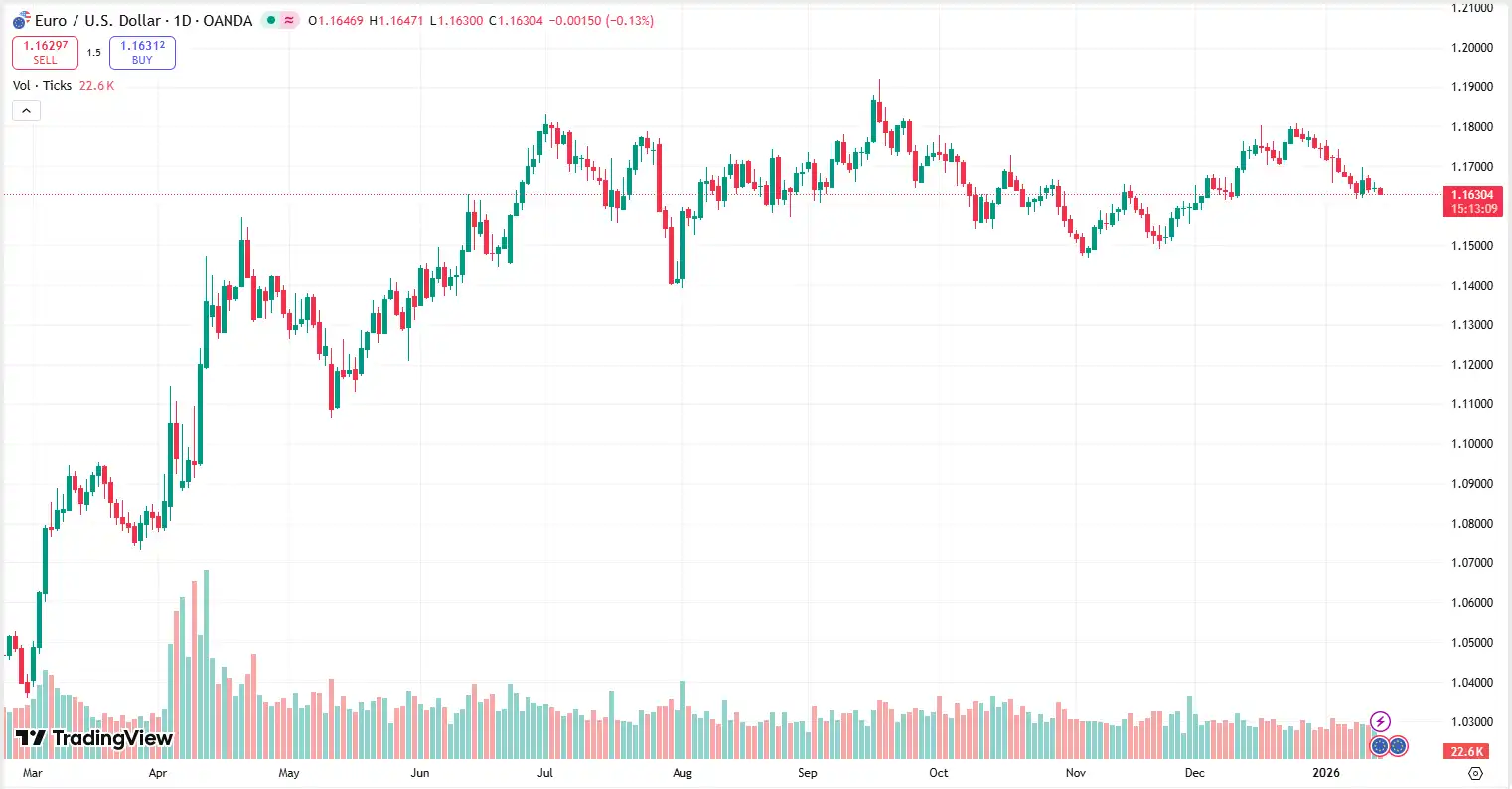
EUR/USD remained in a narrow range near 1.1650 on Wednesday, as strong US data and increased geopolitical tensions reduced risk appetite and limited fresh positioning.
Instability in the Middle East kept G10 currencies rangebound and encouraged defensive positioning[11]. US equities experienced sector rotation but avoided widespread risk-off moves[12]. With no domestic catalysts, the euro remained sensitive to US data and global developments.
US inflation signals remained firm. The US November Producer Price Index (PPI) exceeded expectations, with both headline and core measures rising 3.0% YoY, highlighting persistent upstream price pressures. Retail sales also surpassed forecasts, indicating resilient consumer demand and supporting the view that US growth momentum is intact[13]. The Atlanta Fed’s GDP Now model now estimates Q4 growth above 5%, underscoring economic strength.
The US dollar struggled to extend gains as markets weighed strong data against mixed Fed commentary, with some officials favouring patience and a restrictive stance, while others signalled possible easing later in the year, keeping rate expectations uncertain[14].
A quiet European calendar left the euro without support, while ongoing political uncertainty from EU-US trade discussions[15] and France’s unresolved budget contributed to a cautious tone[16].
The market’s focus now turns to Eurozone inflation[17], US jobless claims, and regional Fed surveys for direction. Until then, EUR/USD is expected to consolidate, with geopolitics and inflation keeping market conviction subdued.
Dollar Firms Against Loonie as US Data Offsets Oil Impacts
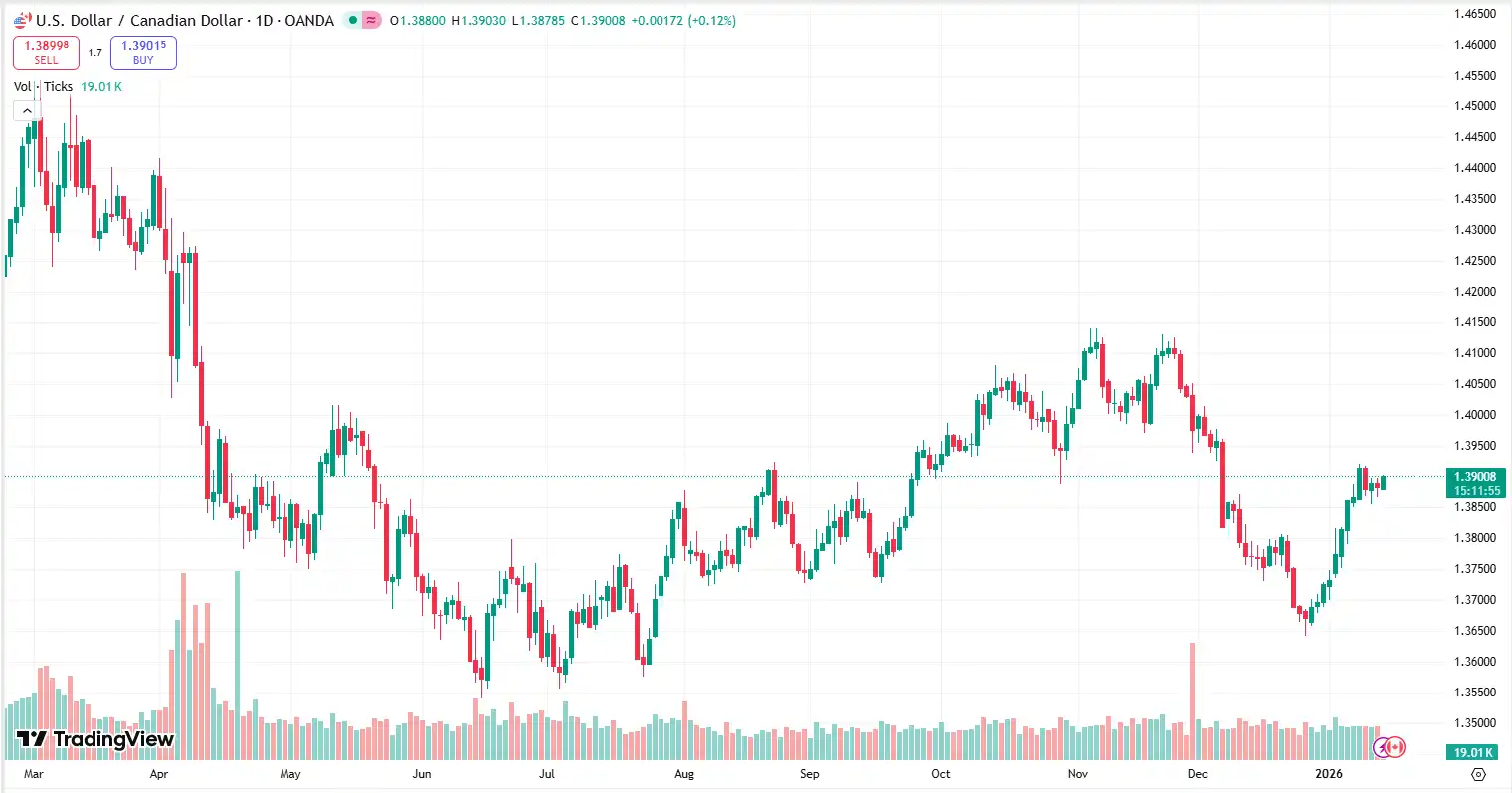
USD/CAD remained stable during Thursday’s Asian session, trading near 1.3900. Strong US economic data supported the US dollar, while higher crude oil prices provided some support to the loonie[18].
The US dollar remained supported after a series of positive US data releases, reinforcing expectations that the Fed will maintain its current policy stance. US Retail Sales rose 0.6% MoM in November, rebounding from October’s decline and indicating resilient consumer demand despite tighter financial conditions. This followed strong US PPI data, both headline and core measures, underscoring ongoing inflation pressures.
Along with last week’s labour-market data, which showed the US unemployment rate easing to 4.4%, these figures support a prolonged policy pause by the Fed[19]. Several investment banks now anticipate the first rate-cut in mid-year, reflecting confidence in US economic momentum[20]. Markets will focus on weekly U.S. initial jobless claims and statements from Fed officials for further guidance[21].
In Canada, the loonie received modest support from higher oil prices. West Texas Intermediate (WTI) crude rose amid renewed geopolitical risks in the Middle East, particularly regarding Iran[22][23]. As a major energy exporter, Canada benefits from stronger oil prices, which helped limit further gains in USD/CAD.
However, the pair remains slightly biased to the upside, as US economic momentum continues to outpace Canadian data and interest-rate differentials favour the US dollar. Unless there is stronger evidence of US economic cooling or a sustained rally in energy markets, the USD/CAD pair is likely to remain supported near current levels.
Aussie Weakens amid Inflation Outlook and Dollar Strength
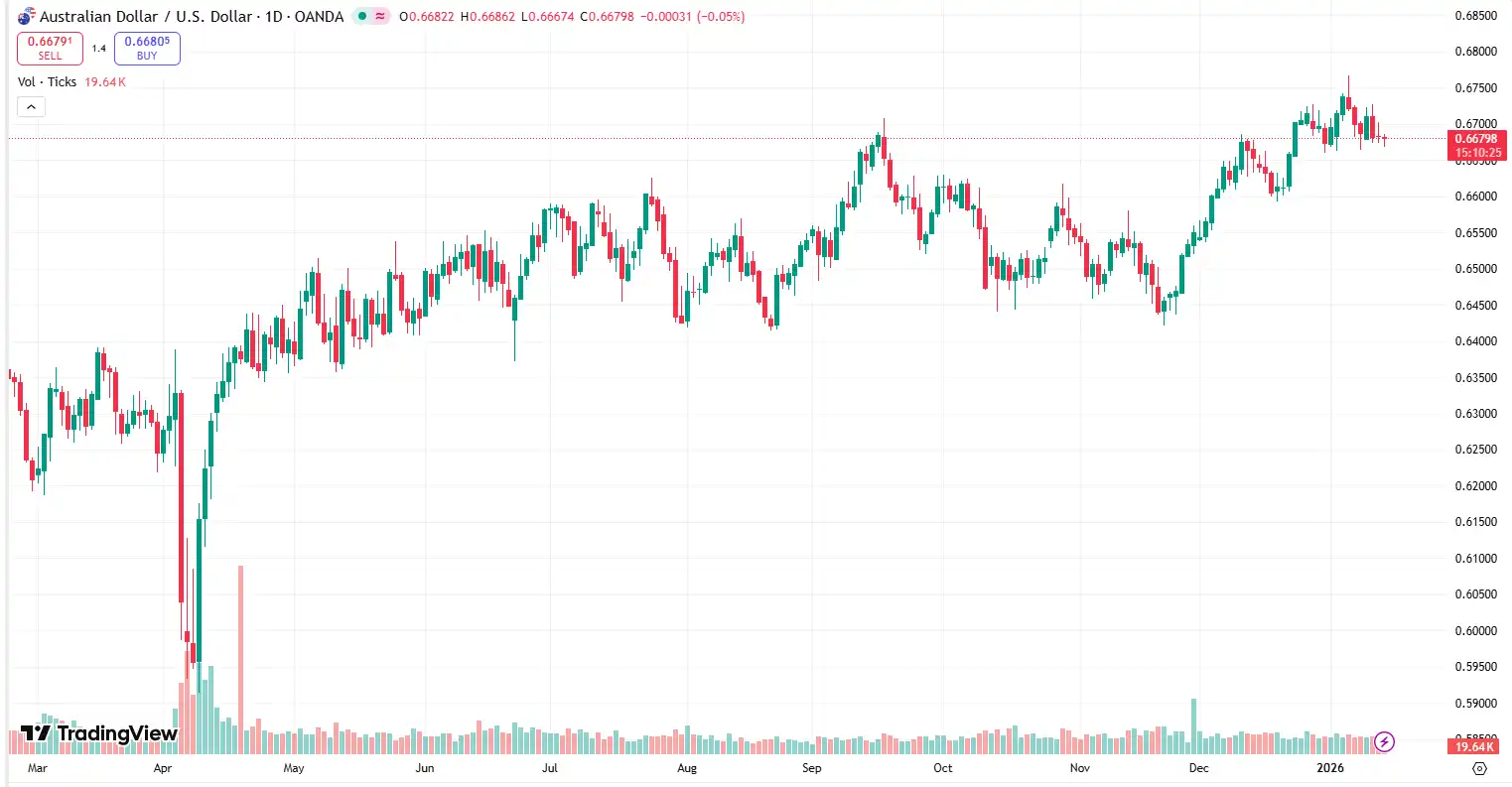
AUD/USD declined during Thursday’s Asian session, falling below the 0.6700 handle as softer Australian inflation expectations offset persistent domestic price pressures. Strong US data continued to support the US Dollar.
Australia’s Consumer Inflation Expectations fell to 4.6% in January from 4.7%, prompting profit-taking in the AUD after recent gains. This data has intensified debate over whether inflation remains strong enough to justify further Reserve Bank of Australia (RBA) tightening[24].
The RBA has kept its cash rate unchanged at 3.6%[25] since December, acknowledging that inflation has moderated from 2022 highs but remains above the 2-3% target[26]. Australia’s Headline CPI slowed to 3.4% YoY in November, though policymakers remain cautious due to persistent services inflation.
In the US, the dollar remained supported by strong economic data. US Retail Sales rose 0.6% MoM in November, and PPI figures showed both headline and core inflation steady at 3% YoY. Along with last week’s drop in the unemployment rate to 4.4%, these results reinforced expectations that the Fed might keep interest rates unchanged for an extended period.
The markets' focus now shifts to U.S. Initial Jobless Claims and the Fed’s commentary on policy direction. In the near term, the AUD/USD pair will likely remain influenced by the balance between softer Australian inflation and strong US data.
Stay Ahead in the Currency Game
Whether you're a daily FX trader or handle international transactions regularly, our 'Currency Pulse' newsletter delivers the news you need to make more informed decisions. Receive concise updates and in-depth insights directly in your LinkedIn feed.
Subscribe to 'Currency Pulse' now and never miss a beat in the currency markets!
Ready to act on today’s insights? Get a free quote or give us a call on: +44 (0)20 7740 0000 to connect with a dedicated portfolio manager for tailored support.
Important Disclaimer: This blog is for informational purposes only and should not be considered financial advice. Currency Solutions does not take into account the investment objectives, financial situation, or specific needs of any individual readers. We do not endorse or recommend any specific financial strategies, products, or services mentioned in this content. All information is provided “as is” without any representations or warranties, express or implied, regarding its accuracy, completeness, or timeliness.