Sterling Holds Ground Against a Weaker Japanese Yen
4 min read
Share


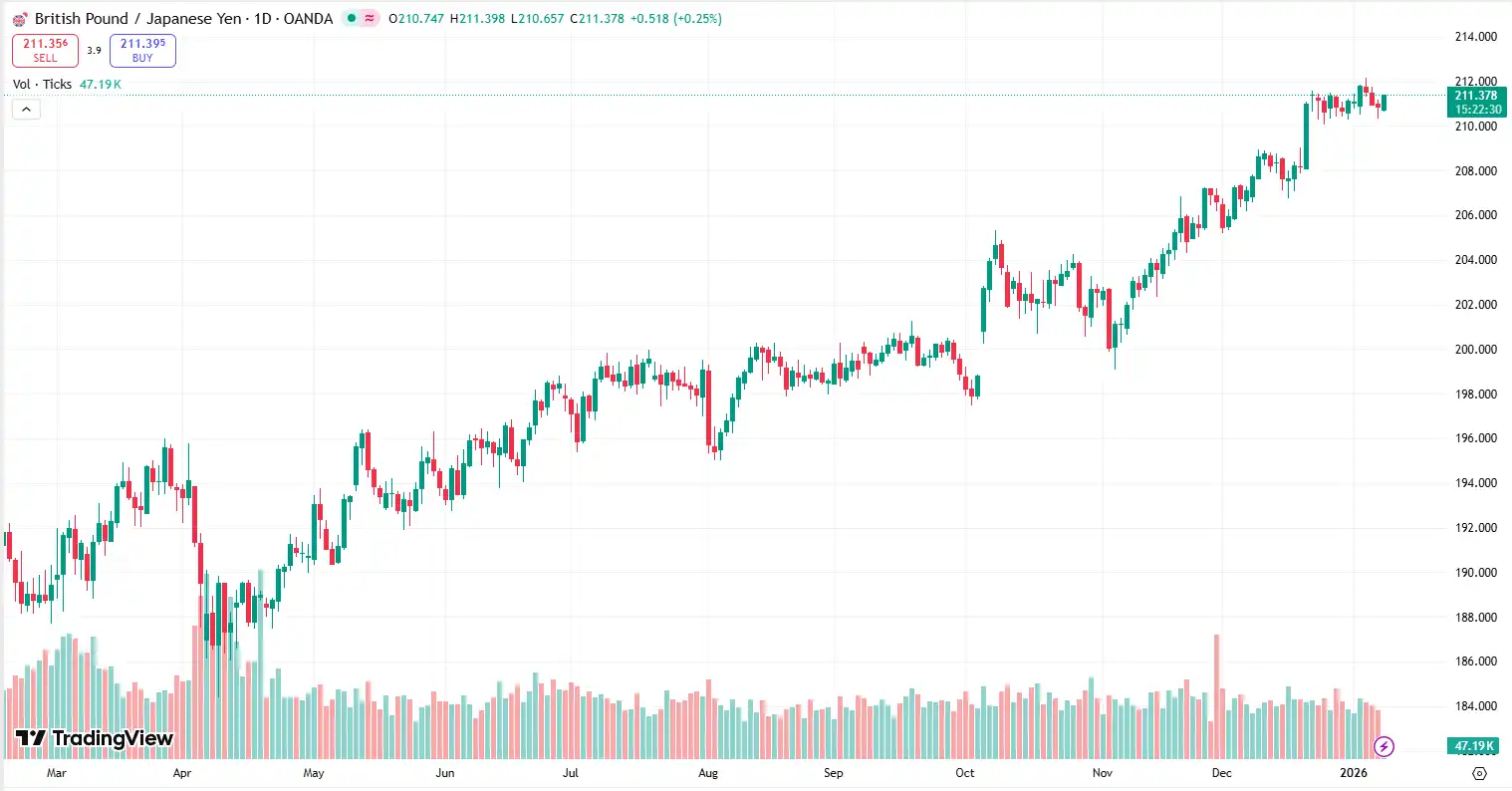
GBP/JPY is trading close to 211.30 in Friday’s Asian session, rising as the Japanese yen weakens in global markets. The pair is supported by the yen’s underperformance, which persists amid ongoing trade tensions between Japan and China. Recently, China imposed export controls on dual-use items bound for Japan. Tokyo called this move unacceptable, increasing geopolitical risk sentiment around the yen[1]. Japan’s stronger than anticipated household spending in November ‘25 has eased some economic concerns[2], though currency flows continue to favour moves against the yen. At the same time, China’s tighter export controls on dual-use goods, which affect both civilian and military sectors, are likely to disrupt Japanese supply chains and keep markets cautious about the yen[3].
The British pound remains mostly steady. Sterling is seeing a slight increase as markets look ahead to the release of UK labour data[4] for the three months ending in November.
Market investors consider UK employment data[5] a key indicator for the Bank of England’s (BoE) policy perspective amid ongoing macroeconomic uncertainty[6] [7].
Short-term movements in GBP/JPY are expected to be influenced by changes in local trade tensions and overall risk sentiment. The GBP/JPY exchange rate continues to rise as a softer yen lifts cross-currency demand.
Aussie Retreats as Dollar Strength and China Data Weigh
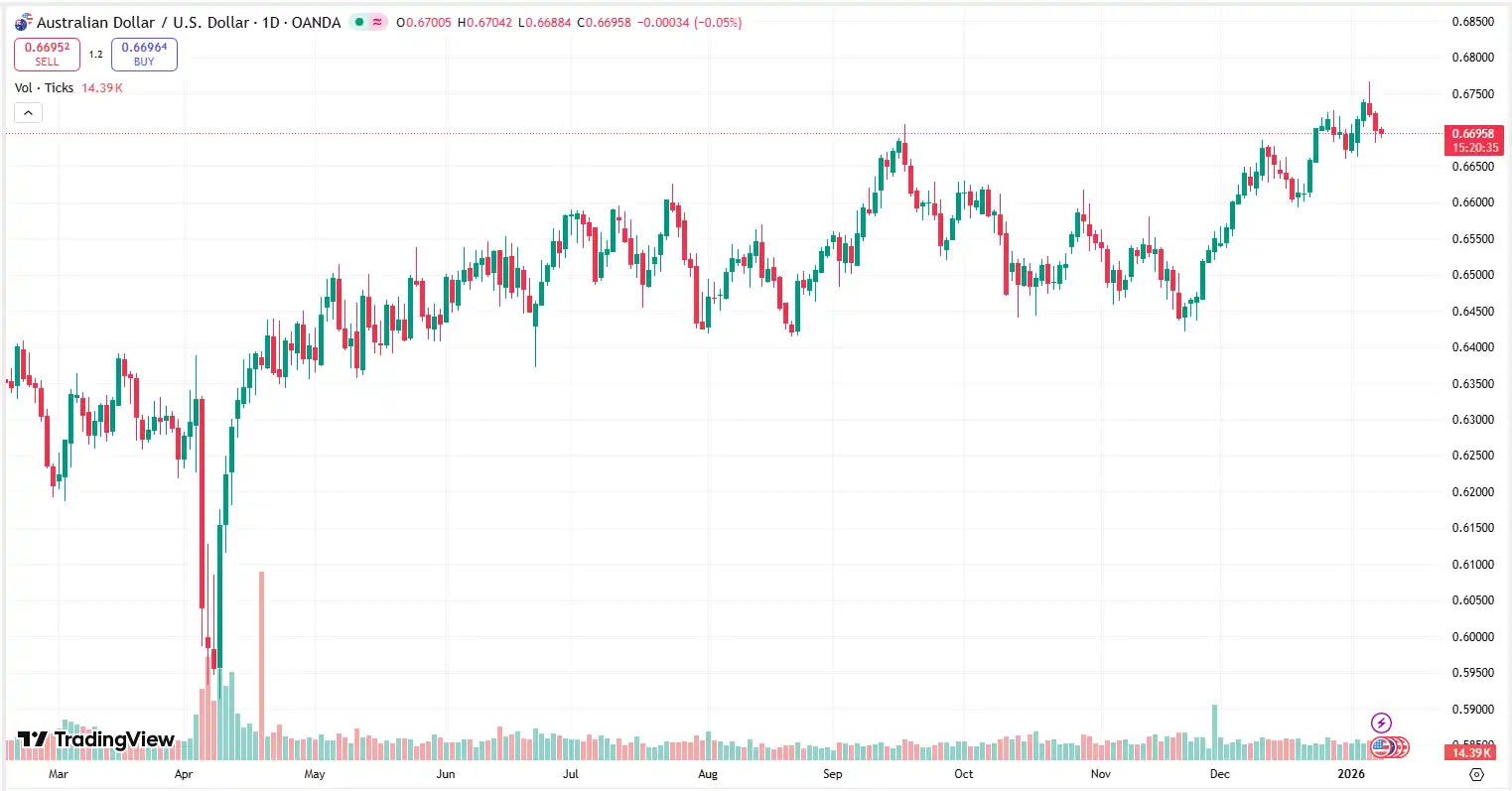
AUD/USD is trading near 0.6690 on Friday, declining for the third consecutive session. The Aussie dollar is experiencing increased pressure as key Chinese data disappoints, weakening short-term AUD sentiment against the US dollar[8]. In December, China’s Consumer Price Index (CPI) increased 0.8% YoY, below consensus expectations and indicating weaker demand pressures in the world’s second-largest economy; This is important for the commodity-linked AUD. CPI recorded a modest 0.2% MoM gain after a contraction in November ‘25, signalling that price pressures remain[9]. Meanwhile, Australia’s trade surplus[10] dropped sharply in November ‘ 25 to 2,936 million Australian dollars, mainly due to weaker exports[11]. This has reduced the currency’s external strength. Inflation in Australia also shows mixed signals after November’s CPI[12] slowed further while remaining above target. This leaves the Reserve Bank of Australia’s (RBA) policy outlook unclear[13]. In the US, recent labour and services data have supported the dollar[14]. The Nonfarm Payrolls (NFP) report is due today and consensus forecasts point to around 60,000 jobs added in December. This has made the greenback have defensive appeal as markets maintain a cautious stance[15]. These contrasts in economic trends and risk sentiment have kept AUD/USD under pressure, with key technical levels now being tested. The AUD/USD exchange rate softens as dollar strength and weaker China data pressure the Australian dollar.
Euro Holds Firm as Yen Remains Under Pressure
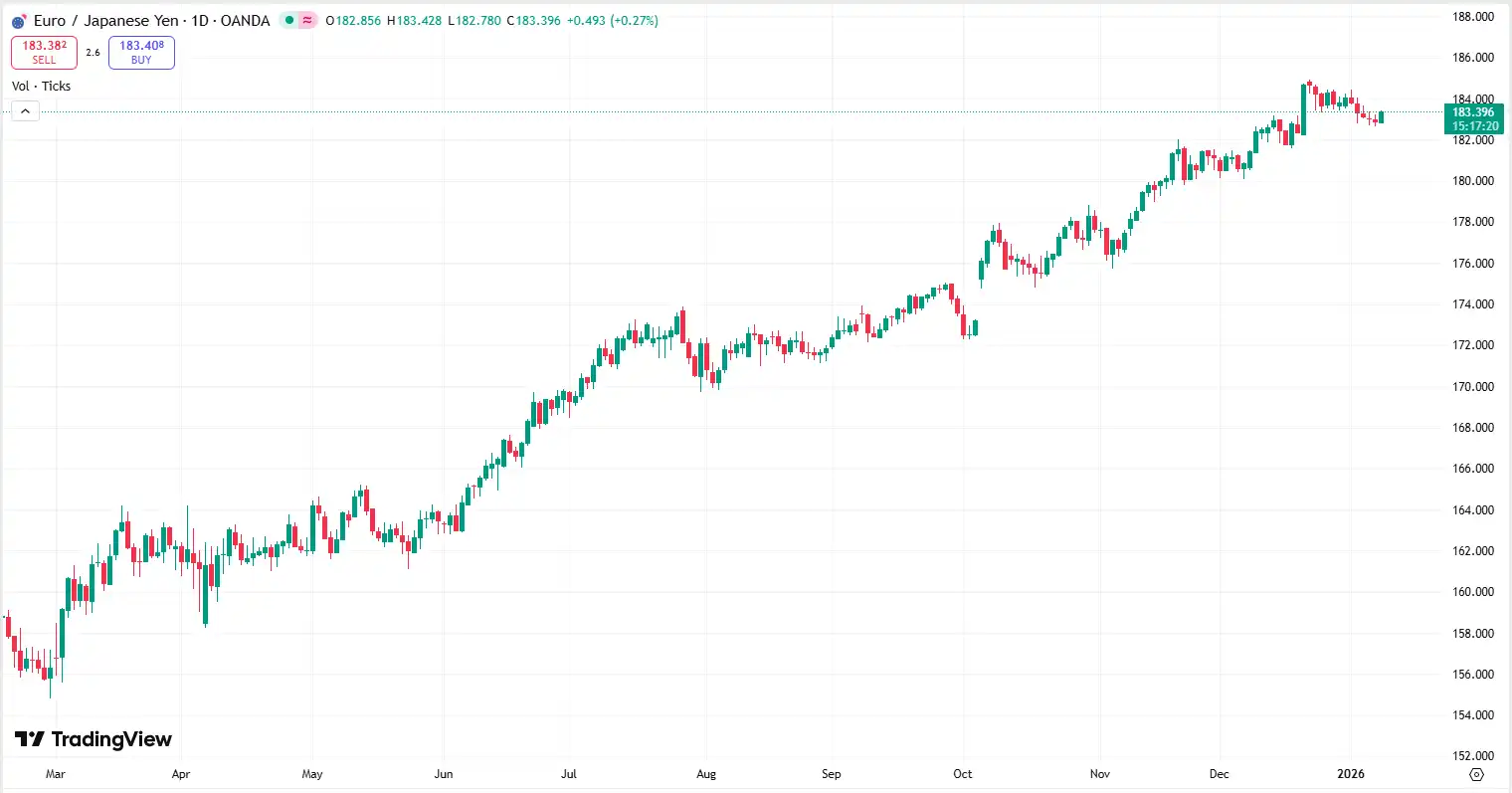
EUR/JPY holds firm around 183.20 during Asian trading, underpinned by persistent yen softness. The pair has stabilised above recent lows after underperforming yen sentiment boosted the euro against the Japanese currency.
EUR/JPY has attracted buying interest above the 183.00 threshold, supported by broader risk appetite and the euro’s relative firmness coming into key data releases[16]. Markets have priced in uncertainty around the timing of the Bank of Japan’s (BoJ) next rate move, keeping the yen on the defensive[17]. Meanwhile, softer US dollar dynamics indirectly favour cross-pairs with USD exposure.
Market analysts note that the EUR/JPY pair is trading above the 50-day moving average, indicating a positive outlook. Resistance is near the nine-day exponential moving average, and a break above this level could lead to further gains[18].
Markets are watching upcoming European retail data[19], as these reports could influence the European Central Bank’s (ECB) decisions and affect risk sentiment in currency markets[20]. The EUR/JPY exchange rate remains supported as yen underperformance and euro resilience persist.
Loonie Under Pressure as Dollar Holds Firm Ahead of Jobs Data
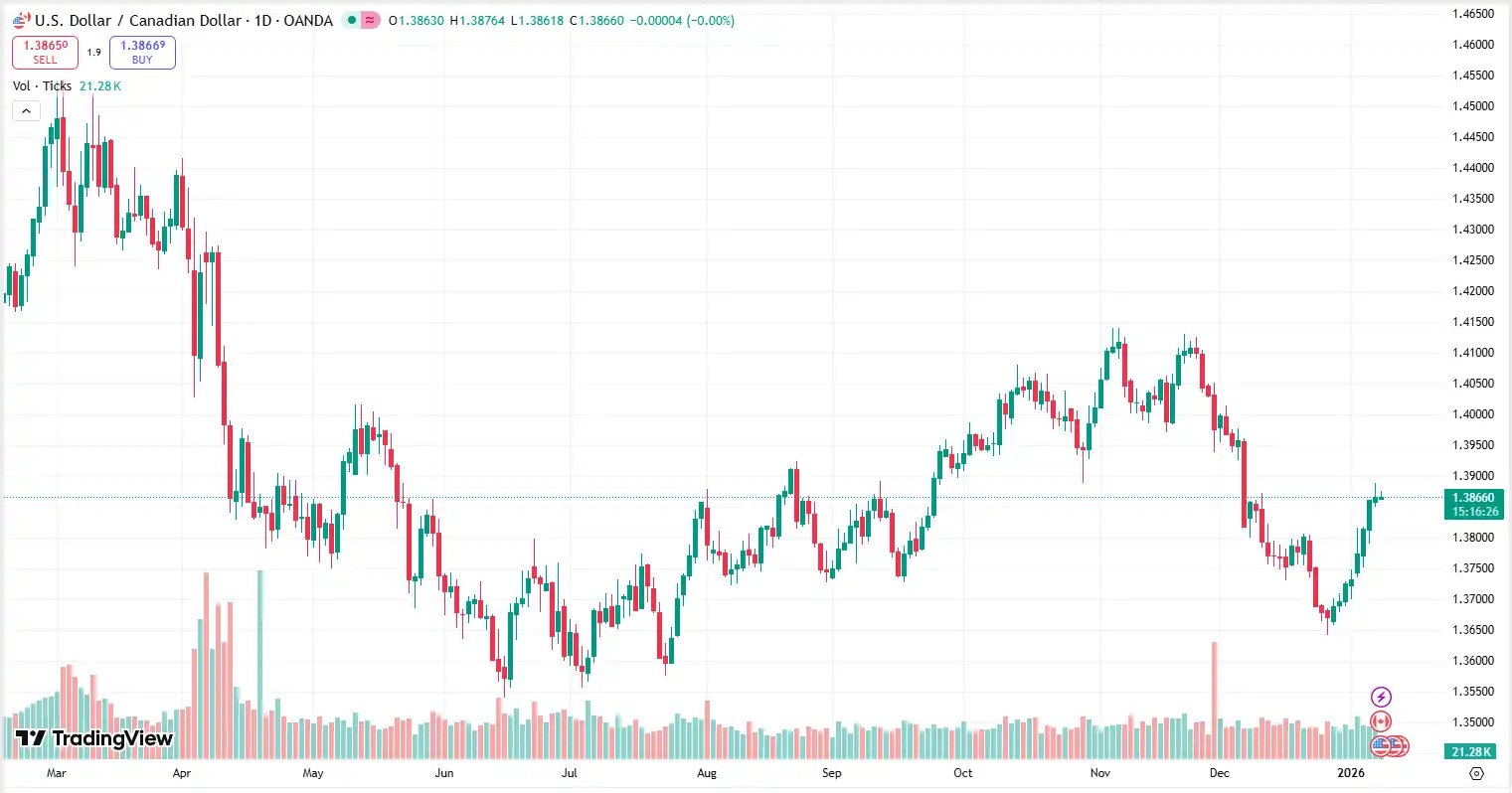
USD/CAD trades firmly near 1.3900 in Friday’s Asian session, clinging to gains as the Canadian dollar stays offered ahead of key jobs data[21]. The pair remains anchored close to its monthly peak, underpinned by a firm US dollar and weaker energy sentiment that continues to pressure CAD. Markets are awaiting Friday’s US Nonfarm Payrolls report[22], with economists forecasting an addition of around 60,000 jobs in December, less than the prior month’s print. It has contributed to the US dollar’s defensive appeal and broader resilience in currency markets[23]. In Canada, job data is expected to show a modest contraction in employment. If the unemployment rate rises, it could lower expectations for Bank of Canada (BoC) rate hikes and keep the loonie under pressure[24]. Energy markets are still affecting the CAD. Oil prices have not gained much, which reduces Canada’s commodity advantage[25] and helps keep USD/CAD steady near 1.3900. Positioning now hinges on employment data from both countries, which are likely to define near-term monetary policy expectations and currency direction. The USD/CAD exchange rate remains firm as a steady dollar and weak loonie sustain gains.
Stay Ahead in the Currency Game
Whether you're a daily FX trader or handle international transactions regularly, our 'Currency Pulse' newsletter delivers the news you need to make more informed decisions. Receive concise updates and in-depth insights directly in your LinkedIn feed.
Subscribe to 'Currency Pulse' now and never miss a beat in the currency markets!
Ready to act on today’s insights? Get a free quote or give us a call on: +44 (0)20 7740 0000 to connect with a dedicated portfolio manager for tailored support.
Important Disclaimer: This blog is for informational purposes only and should not be considered financial advice. Currency Solutions does not take into account the investment objectives, financial situation, or specific needs of any individual readers. We do not endorse or recommend any specific financial strategies, products, or services mentioned in this content. All information is provided “as is” without any representations or warranties, express or implied, regarding its accuracy, completeness, or timeliness.