Sterling Firms as Softer Dollar Lifts Cable Tone
5 min read
Share


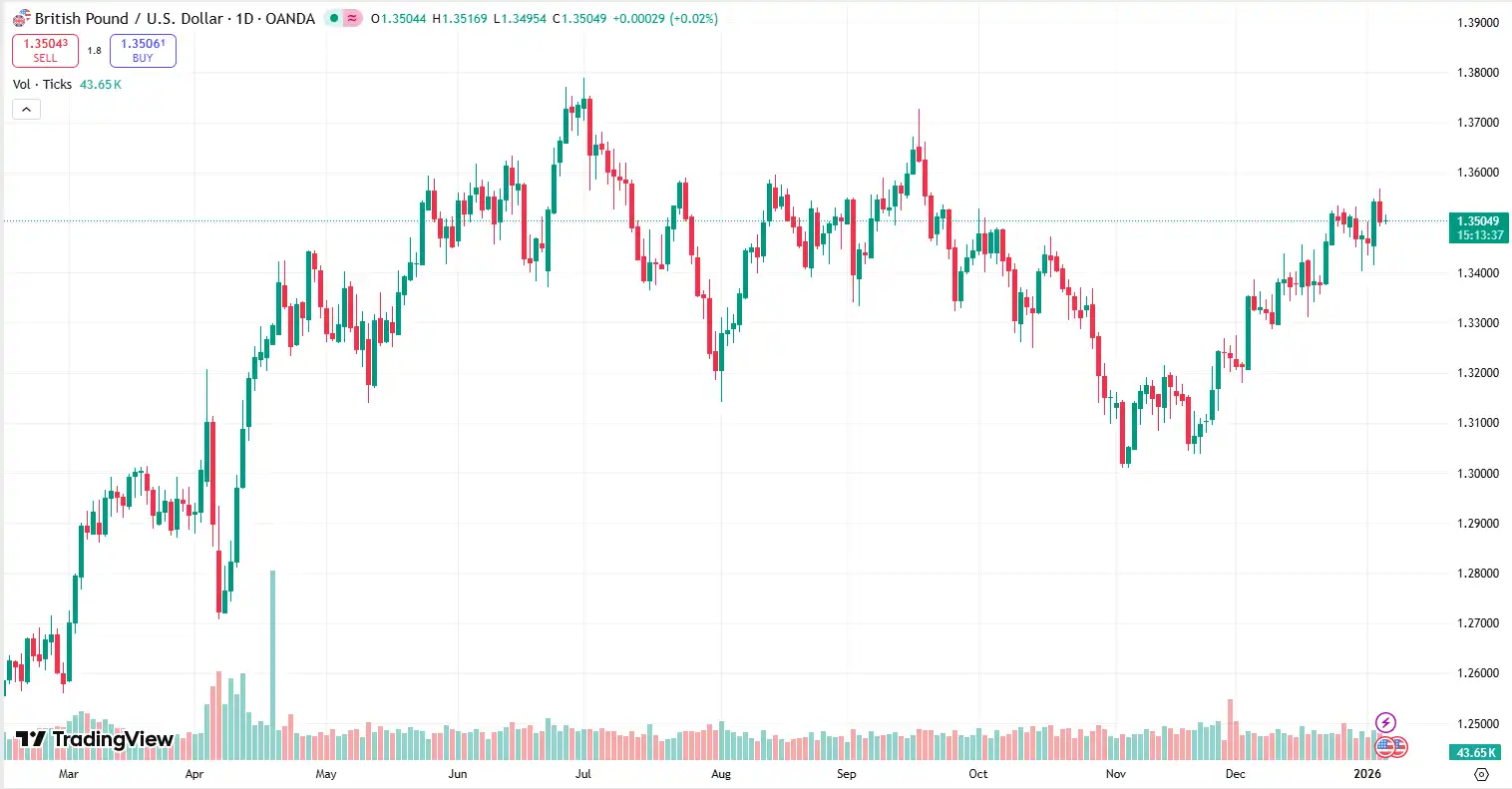
GBP/USD trades with a firm tone above the 1.3500 level during Wednesday’s Asian session as the US dollar loses traction ahead of key US services and labour indicators[1]. The pair extends modest gains after the greenback failed to build on strength seen earlier in the week. The US dollar weakened following remarks from Federal Reserve (Fed) officials. Fed Governor Stephen Miran supported bigger rate cuts this year to sustain economic momentum. Minneapolis Fed President Neel Kashkari highlighted the on-going labour-market risks[2], while Richmond Fed President Tom Barkin emphasised the need for careful decision-making amid mixed inflation and jobs data[3]. These comments reinforced expectations that US policy easing remains firmly on the table. The British pound remains strong despite broader geopolitical events, as markets largely overlook recent US actions in Venezuela[4], allowing domestic UK data to guide near-term positioning[5]. UK private-sector activity grew for the eighth straight month in December, with the Composite PMI rising to 51.4[6]. While this was lower than earlier estimates, it still showed continued growth in both services and manufacturing[7]. Market focus now turns to upcoming US ISM Services PMI[8] and JOLTS job openings[9] due today. These releases are likely to affect the dollar before Friday’s jobs report, meanwhile GBP/USD continues to respond to labour market data. The GBP/USD exchange rate remains supported as softer US policy expectations offset geopolitical uncertainty.
EUR Holds Ground as Markets Await US Labour Cues
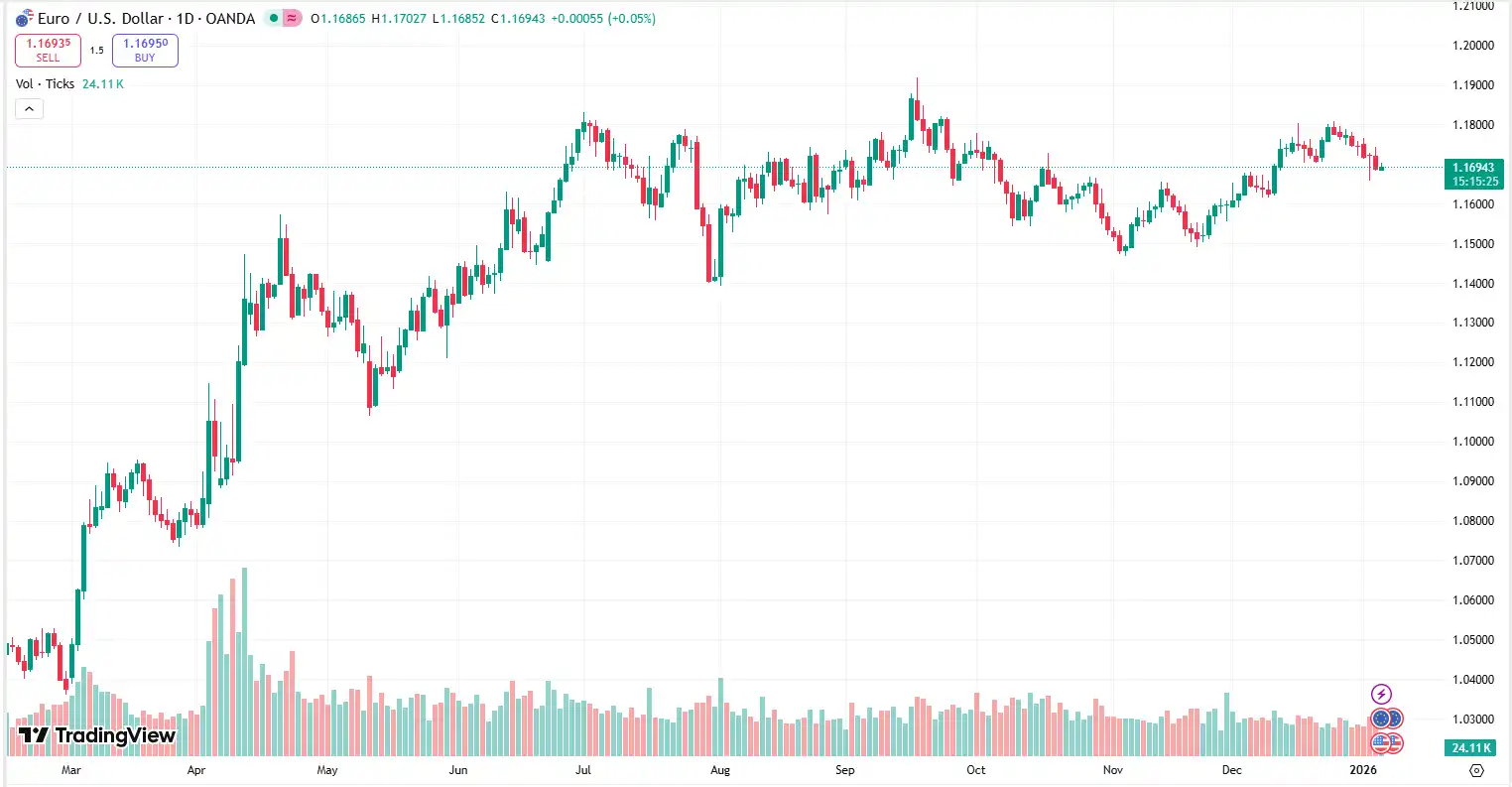
EUR/USD trades near the 1.1700 area after recovering from earlier losses, though buying interest remains measured. The pair struggled to extend gains after meeting resistance near recent highs, with markets cautious ahead of upcoming US labour data. Eurozone business activity continued to expand in December, marking a twelfth consecutive month of growth. Hamburg Commercial Bank (HCOB) reported the Composite PMI slipping to 51.5[10] from November’s stronger reading, while services activity moderated to a three-month low[11]. The figures highlight ongoing expansion but underline fragile demand across the bloc[12]. German inflation data[13] added to the softer outlook. Early estimates showed harmonised consumer prices up 2.0% YoY in December, lower than in November and below market expectations. Monthly inflation was also weaker than forecast[14][15]. This supports the idea that price pressures continue to ease, reducing the urgency for further tightening by the European Central Bank (ECB) [16]. In the US, markets look to upcoming services and labour data for direction. With rate cut expectations largely priced in, the EUR/USD pair remains reactive to any indications of labour market softness ahead of Friday’s jobs report. For now, the pair holds steady as both sides wait for more apparent conviction from incoming data. The EUR/USD exchange rate steadies as easing inflation offsets slower eurozone growth.
Yen Supported as Fed Cut Bets Weigh on Dollar
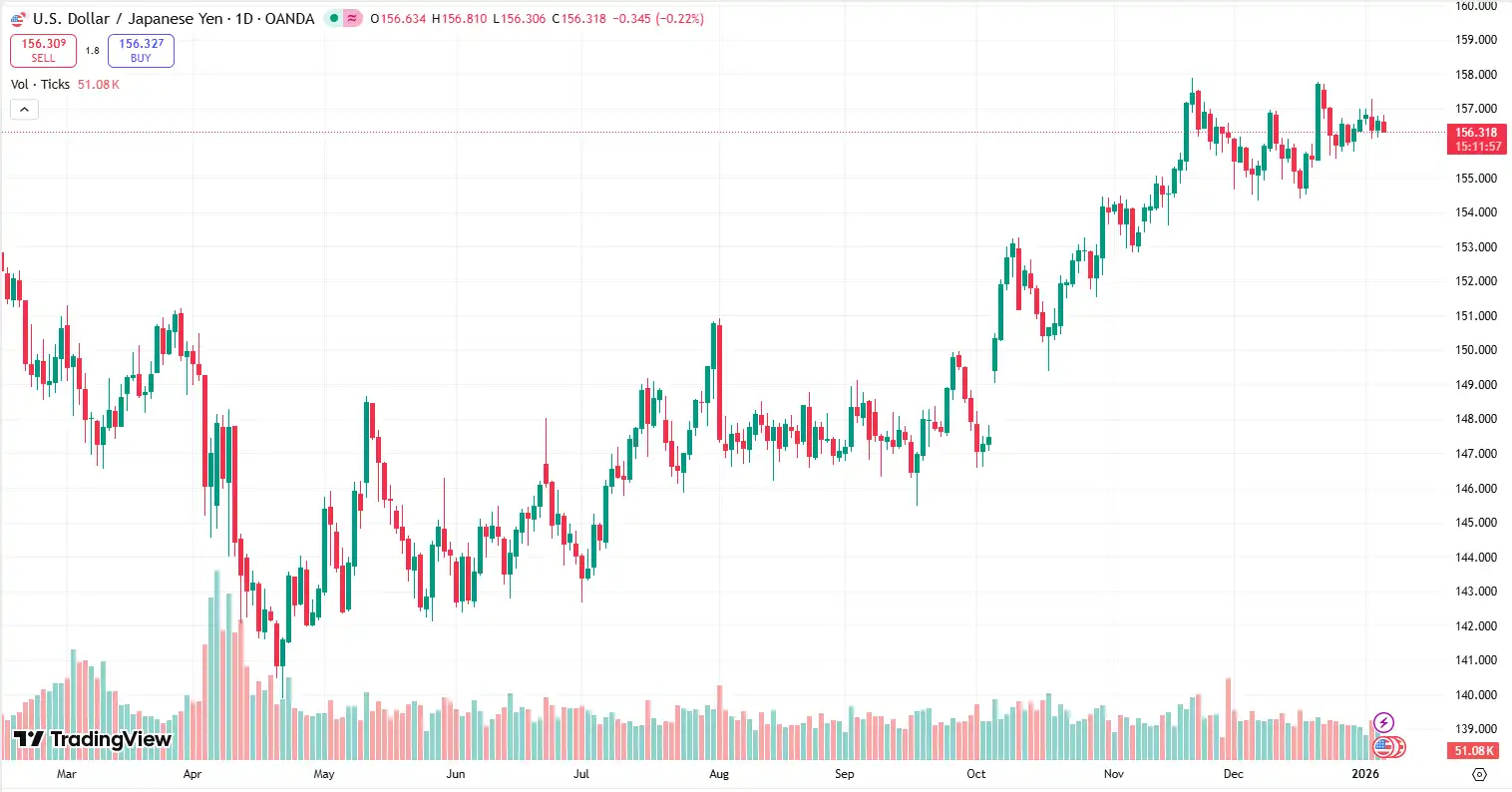
USD/JPY traded lower near 156.30 as the Japanese yen gains support from growing confidence in further policy tightening by the Bank of Japan (BoJ). The move reflects a narrowing gap between Japanese and US interest-rate expectations rather than a shift in overall risk sentiment. BoJ Governor Kazuo Ueda reiterated that rates will continue to rise if economic and price developments align with forecasts[17]. Recent wage growth and inflation trends have reinforced this outlook, pushing Japanese government bond yields[18] to their highest levels in decades and supporting the yen[19]. Fiscal concerns continue to hold things back. Japan’s approval of a record government budget has raised questions about long-term debt sustainability, limiting aggressive positioning by market traders despite rising yields[20]. Still, markets seem more focused on policy direction than short-term fiscal risks[21]. On the US side, the dollar remains under pressure ahead of key labour market data. Expectations of further rate cuts this year[22] continue to weigh on sentiment, keeping recovery attempts in USD/JPY contained.
Markets focus now on upcoming US employment data and Friday’s payrolls report, which could determine whether the USD/JPY pair keeps declining or holds steady. For now, policy divergence remains the dominant driver. The USD/JPY exchange rate weakens as Japan’s tightening outlook gains traction.
Euro steadies as oil weakness weighs on loonie
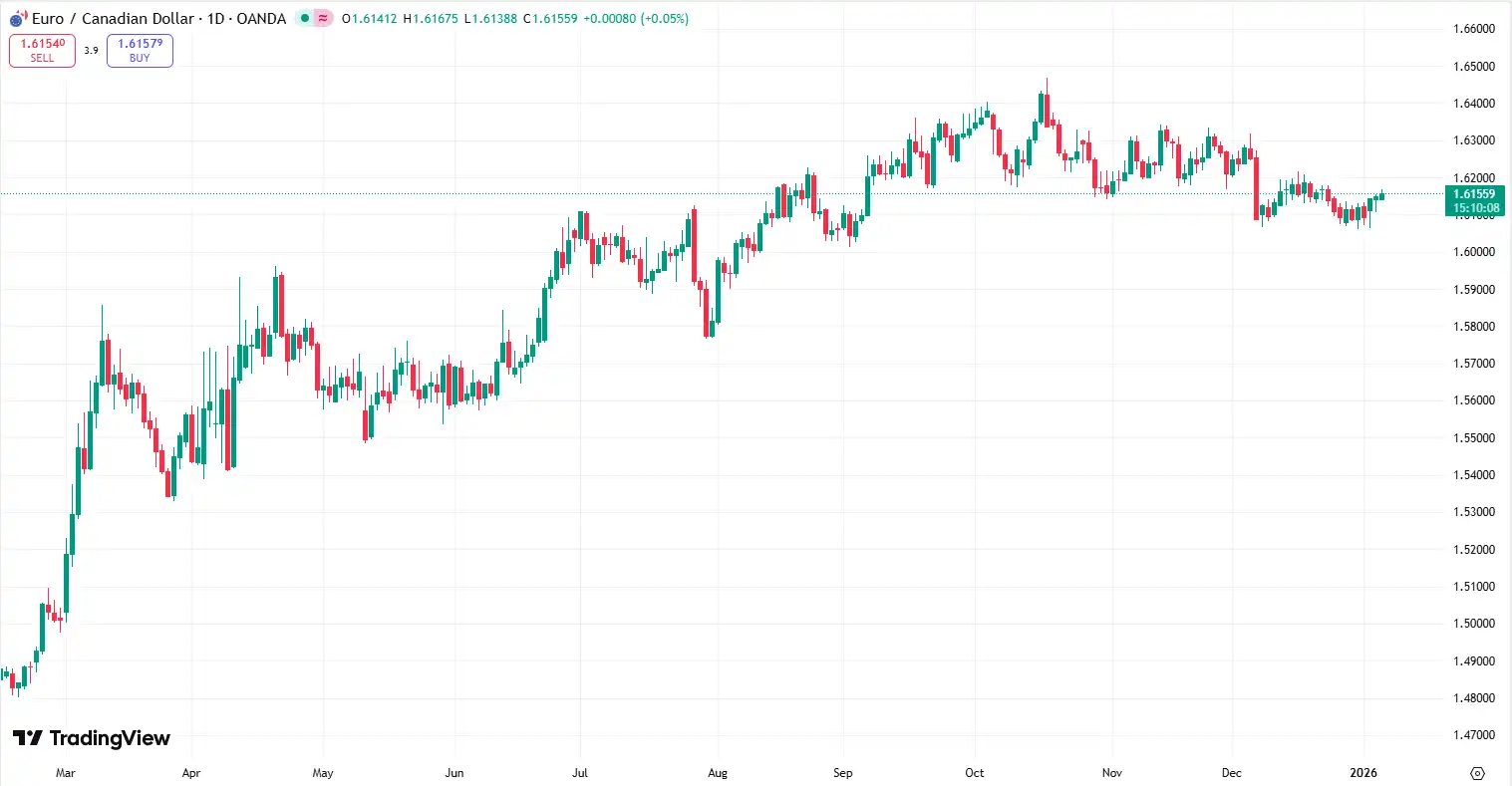
EUR/CAD holds near the 1.6150 recent highs, with the euro steady while the Canadian dollar weakens amid softening oil prices[23]. Energy markets remain the primary driver in shaping near-term moves for the loonie[24]. Recent Eurozone data point to slowing services activity and easing inflation pressures, reinforcing expectations that the ECB has reduced urgency in its policy tightening cycle. While growth remains modest, reduced inflation volatility has helped anchor euro sentiment. The Canadian dollar remains under pressure as crude prices ease on expectations of increased Venezuelan supply entering global markets. Lower oil prices weaken Canada’s export outlook and reduce support for the currency, particularly against peers with more stable growth backdrops[25]. Markets now look ahead to Germany’s retail sales and unemployment data, followed by Eurozone inflation figures later in the day[26]. In North America, Canada’s Ivey PMI[27] will offer insight into domestic business conditions, though energy price dynamics remain the dominant driver for CAD positioning. With policy expectations largely priced in on both sides, EUR/CAD continues to trade in line with commodity trends and relative growth prospects. The EUR/CAD exchange rate holds firm as oil-driven pressure weighs on the Canadian dollar.
Stay Ahead in the Currency Game
Whether you're a daily FX trader or handle international transactions regularly, our 'Currency Pulse' newsletter delivers the news you need to make more informed decisions. Receive concise updates and in-depth insights directly in your LinkedIn feed.
Subscribe to 'Currency Pulse' now and never miss a beat in the currency markets!
Ready to act on today’s insights? Get a free quote or give us a call on: +44 (0)20 7740 0000 to connect with a dedicated portfolio manager for tailored support.
Important Disclaimer: This blog is for informational purposes only and should not be considered financial advice. Currency Solutions does not take into account the investment objectives, financial situation, or specific needs of any individual readers. We do not endorse or recommend any specific financial strategies, products, or services mentioned in this content. All information is provided “as is” without any representations or warranties, express or implied, regarding its accuracy, completeness, or timeliness.