GBP/JPY falls as Japan hints at possible intervention
5 min read
Share


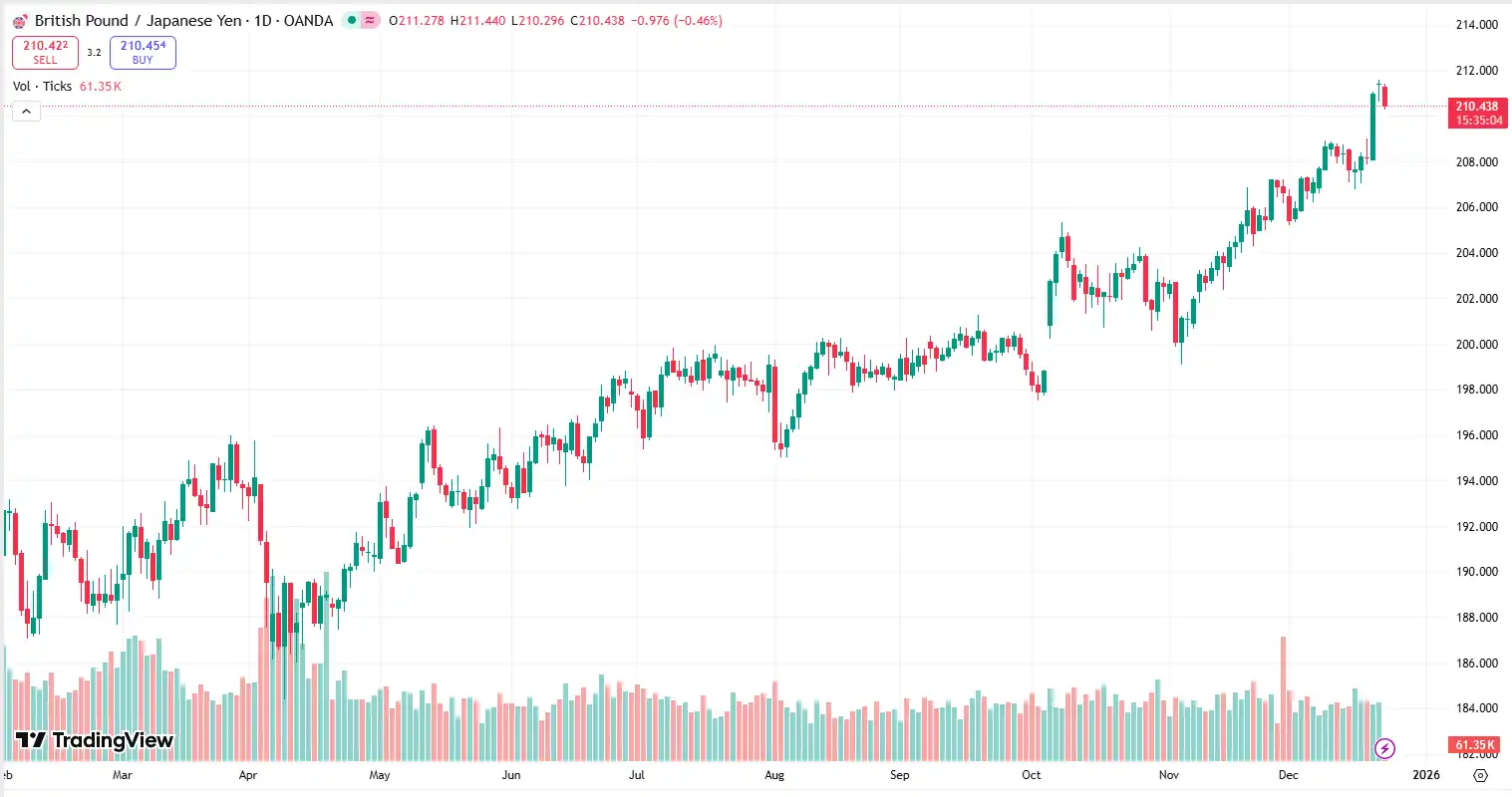
On Tuesday, GBP/JPY dropped to about 210.30, falling from Monday’s multi-year high near 211.60. The yen briefly strengthened after Tokyo renewed discussions of intervention, halting the strong uptrend driven by the policy gap between the UK and Japan[1].
Japan’s Finance Minister Satsuki Katayama stated that officials have a “free hand” to address sharp or one-sided currency moves and warned of intervention if volatility increases[2]. This raised the near-term risk of intervention, leading to a modest yen rebound and a GBP/JPY pullback.
However, this support appears temporary. Last week, the Bank of Japan (BoJ) raised its policy rate by 25 basis points (bps) to 0.75%[3] and signalled that further increases are possible if economic and inflation targets are met. Markets remain sceptical about the pace of future hikes, as tighter policy could conflict with higher government spending and may limit long-term yen gains[4].
The British pound remains stable but lacks clear direction. Last week, the Bank of England (BoE) cut rates by 25 bps to 3.75% after a close vote[5], signalling a gradual approach to further reductions[6]. While this tempered expectations for additional gains, the cautious outlook has also prevented further declines.
With renewed intervention risk and divergent central bank policies, GBP/JPY is likely to shift from a strong rally to a period of consolidation. The GBP/JPY exchange rate is likely to remain volatile near recent highs, with yen intervention risk offsetting still-wide UK–Japan policy divergence.
EUR/GBP slips as UK growth steadies and policy paths diverge
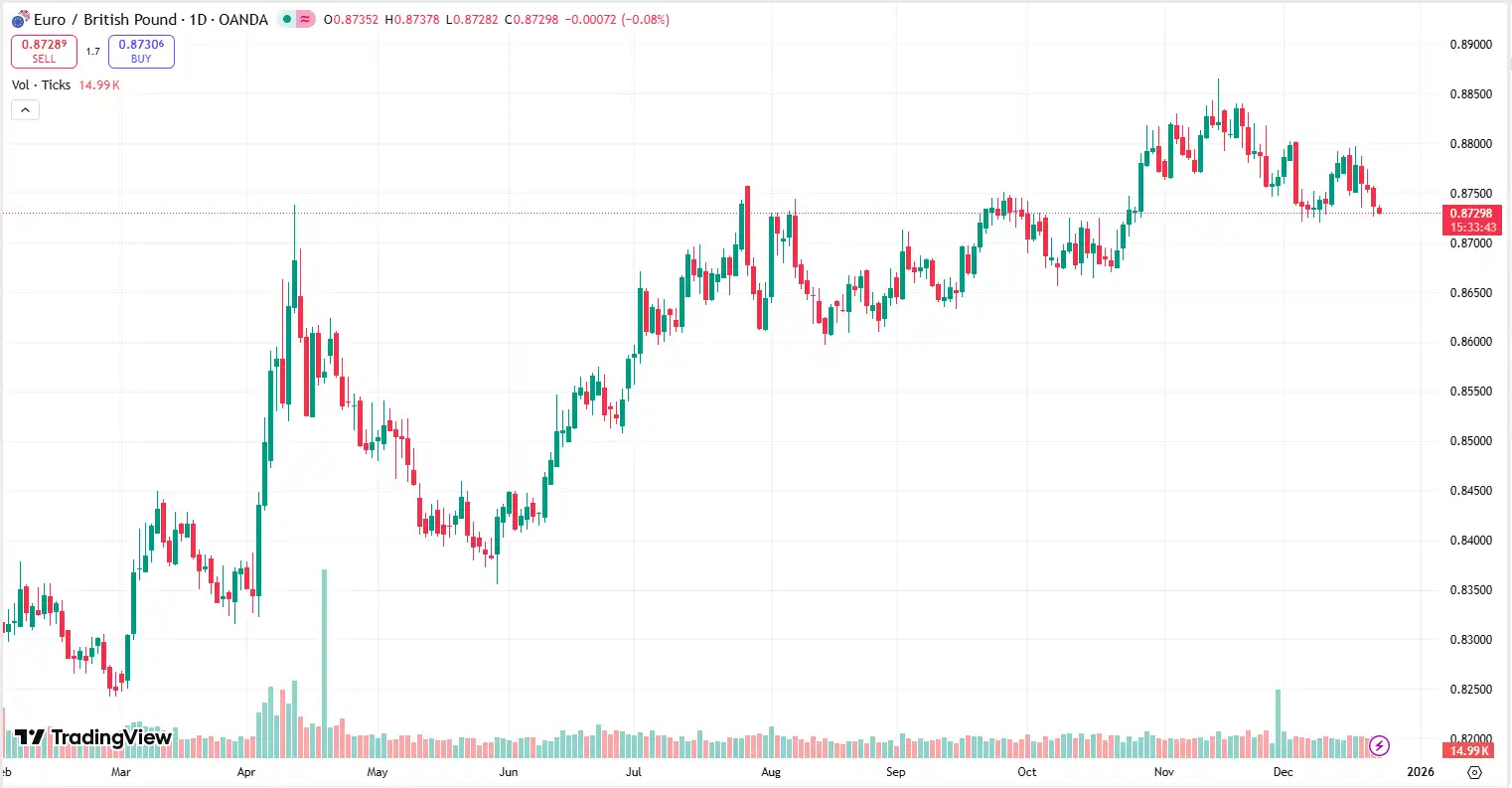
EUR/GBP declined for a fourth consecutive session, trading near 0.8730 early Tuesday in Europe. Stable UK growth supported the pound, while the euro remained steady following last week’s central bank decisions.
The UK Office for National Statistics reported 0.1% economic growth in the third quarter, matching previous estimates and forecasts[7]. While growth remains modest, it indicates the UK is avoiding a downturn, reducing immediate pressure on the pound[8].
Policy signals continue to drive the market. Last week, the BoE reduced rates to 3.75% as expected and signalled caution regarding further cuts. BoE Governor Andrew Bailey emphasised that additional reductions will depend on inflation[9]. Markets still anticipate at least one more cut in the first half of the year, though expectations for a rapid easing cycle have diminished[10].
The European Central Bank (ECB) kept rates unchanged for the fourth consecutive meeting. ECB President Christine Lagarde did not commit to a specific rate path, reinforcing expectations that easing will remain on hold unless data worsens significantly[11].
With UK growth supporting the pound and the ECB maintaining a patient stance, EUR/GBP has edged lower. This movement reflects reduced short-term policy uncertainty rather than a significant trend change. The EUR/GBP exchange rate remains pressured in the short term, with steady UK growth and cautious BoE guidance offsetting the ECB’s policy pause.
USD/JPY slides as Yen strengthens on policy gap and safety demand
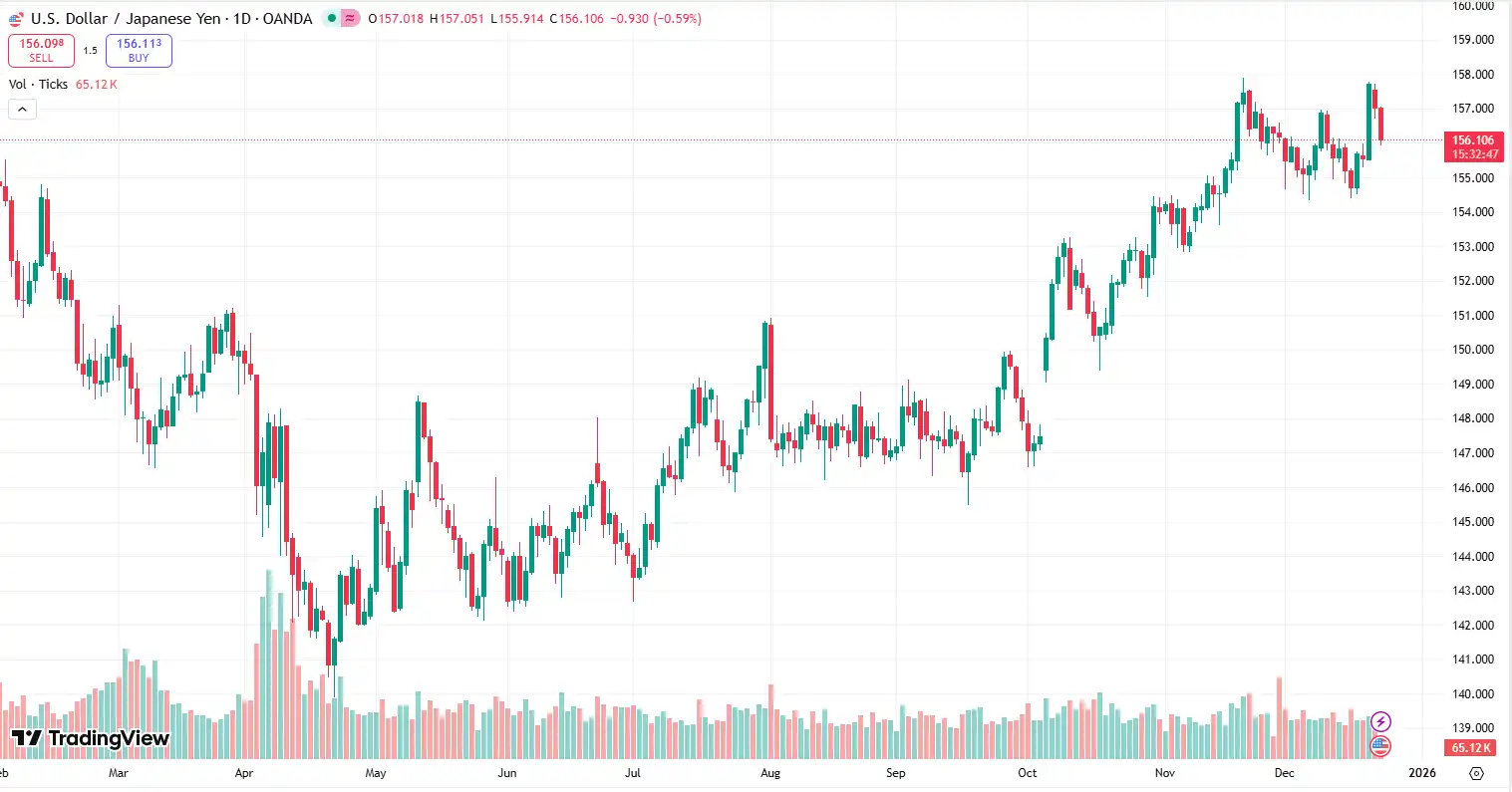
The Japanese Yen strengthened against the US Dollar on Tuesday, pushing USD/JPY lower to 156.10 for a second consecutive day. This movement reflects market attention on the widening policy gap between Japan and the US, as well as increased safe-haven demand.
This shift reflects ongoing trends rather than new developments. Japanese officials continue to express concern about rapid, one-sided currency movements, maintaining the risk of intervention and discouraging aggressive Yen selling[12]. Japanese Finance Minister Satsuki Katayama reiterated that authorities can respond to speculative moves that do not align with economic fundamentals, echoing earlier statements from Japanese official, Atsushi Mimura[13], vice-finance minister for international affairs.
Meanwhile, markets still expect the BoJ to continue normalising policy following last week’s rate hike, which brought rates to a 30-year-high. BoJ Governor Kazuo Ueda indicated that further hikes are likely if growth and inflation meet forecasts, driving Japanese yields higher and supporting the Yen[14].
In the US, the Dollar remains under pressure as markets anticipate a more accommodative medium-term stance from the Federal Reserve (Fed). Traders are factoring in additional rate cuts in 2026, while uncertainty over future Fed leadership and policy messaging adds to Dollar volatility[15]. Rising geopolitical tensions, including developments in the Middle East and Latin America, are also driving investors toward safe havens such as the Yen[16].
With limited new data, the decline in USD/JPY confirms existing trends rather than signalling a surprise. Investors continue to monitor the strengthening Yen and the subdued US Dollar. The USD/JPY exchange rate remains vulnerable in the near term as intervention risks, a hawkish BoJ stance and softer Fed expectations continue to favour the Japanese Yen.
AUD/USD firms as RBA minutes contrast with softer US dollar
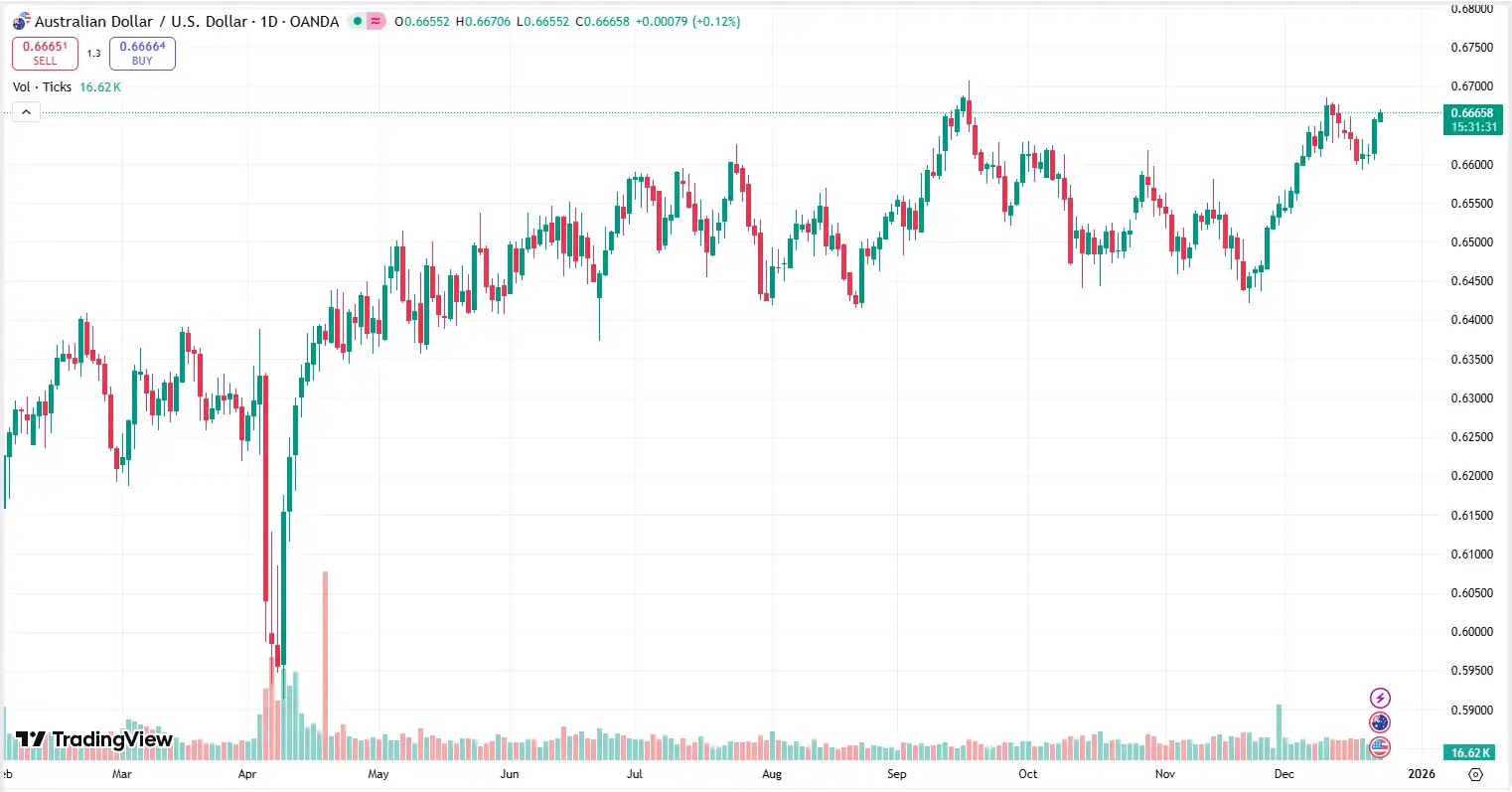
The Australian Dollar continued to rise against the US Dollar on Tuesday. AUD/USD stayed strong just below 0.6660 as markets reacted to the Reserve Bank of Australia’s (RBA) meeting minutes[17] and reconsidered the US policy outlook[18] [19] before important growth data[20].
The RBA’s December meeting minutes[21] showed policymakers are uncertain whether current monetary policy is restrictive enough. Board members noted that inflation may be more persistent than expected and agreed further assessment is needed before deciding on the next policy move. While no immediate action was indicated, officials discussed the possibility of a rate increase in 2026 if inflation does not ease[22].
Market pricing reflects this cautious but slightly hawkish stance. ASX interest-rate futures indicate a small chance of a rate hike next year[23]. Additionally, Australia’s consumer inflation expectations rose to 4.7% in December, reinforcing concerns about persistent inflation[24].
The US Dollar weakened as traders anticipated a more flexible Fed approach. Mixed jobs data, cautious Fed commentary, and calls for lower borrowing costs have pressured the Greenback[25]. The CME FedWatch Tool indicates an 80% probability that the Fed will keep rates unchanged at its January meeting[26].
Markets are now focused on the US third-quarter annualised GDP report, which is expected to show slower growth and could further support the Australian Dollar[27] [28]. The AUD/USD exchange rate remains underpinned by a cautiously hawkish RBA narrative and softer US dollar dynamics, with near-term direction hinging on US growth data and evolving Fed expectations.
Stay Ahead in the Currency Game
Whether you're a daily FX trader or handle international transactions regularly, our 'Currency Pulse' newsletter delivers the news you need to make more informed decisions. Receive concise updates and in-depth insights directly in your LinkedIn feed.
Subscribe to 'Currency Pulse' now and never miss a beat in the currency markets!
Ready to act on today’s insights? Get a free quote or give us a call on: +44 (0)20 7740 0000 to connect with a dedicated portfolio manager for tailored support.
Important Disclaimer: This blog is for informational purposes only and should not be considered financial advice. Currency Solutions does not take into account the investment objectives, financial situation, or specific needs of any individual readers. We do not endorse or recommend any specific financial strategies, products, or services mentioned in this content. All information is provided “as is” without any representations or warranties, express or implied, regarding its accuracy, completeness, or timeliness.