Euro Strength Supported by Weaker US Dollar Flows
5 min read
Share


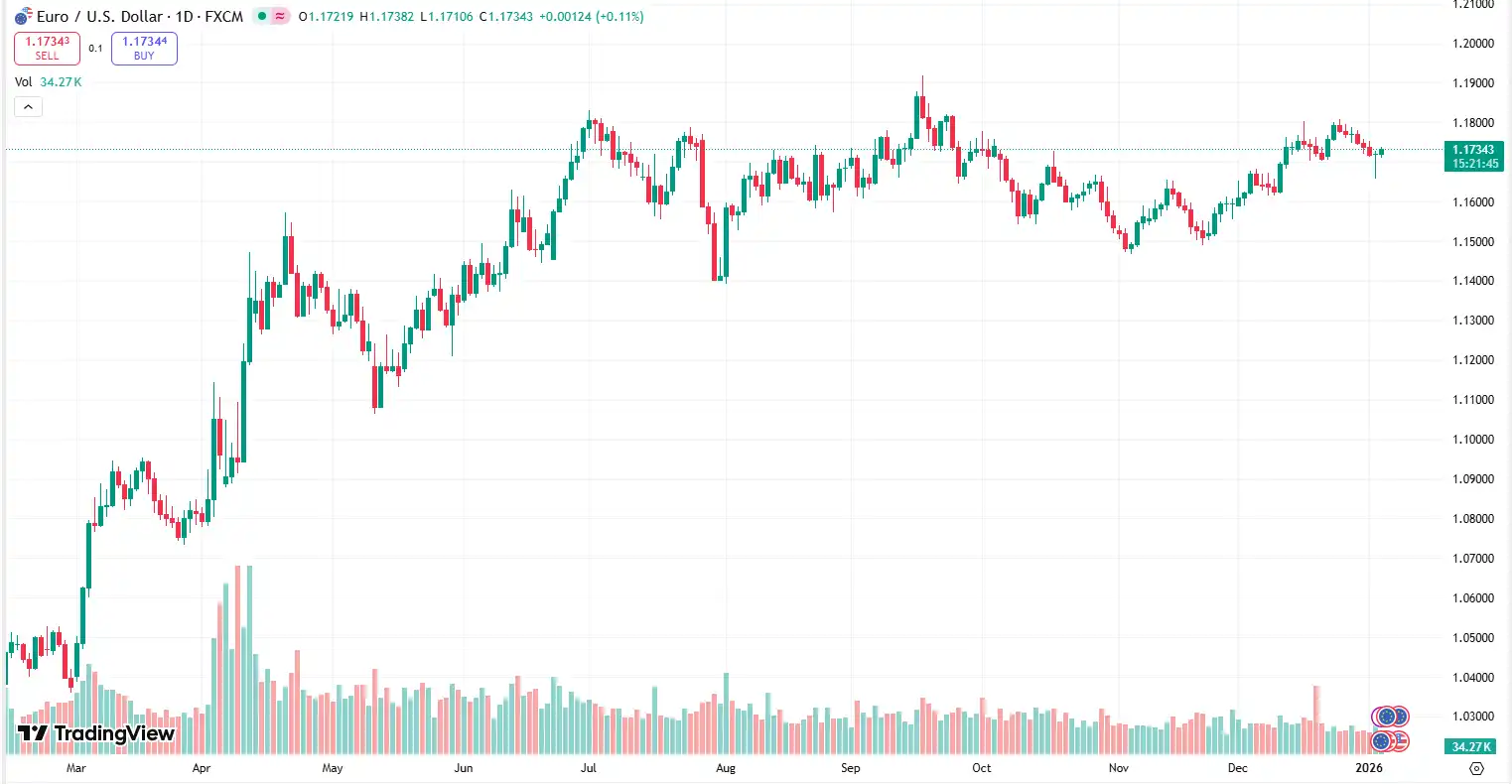
EUR/USD moved higher early Tuesday, trading near 1.1735 as the US Dollar weakened. Buyers entered around 1.1710 during Asian hours after the pair rebounded from a four-week low. If current momentum continues, the euro could strengthen further. Last week, the US Dollar strengthened, pushing EUR/USD down to around 1.1670 following a major geopolitical event. US forces captured Venezuelan President Nicolás Maduro over the weekend, briefly unsettling markets before focus shifted back to economic updates[1]. On Monday, Maduro appeared in Manhattan federal court, pleaded not guilty to drug trafficking and narco-terrorism charges, and his legal team challenged the legality of his capture[2]. Markets then focused on the US ISM Manufacturing PMI for December[3], which declined more than expected, pressuring the US Dollar. The disappointing data raised expectations of slower US growth and fewer rate hikes from the Federal Reserve (Fed) [4], which helped the euro. EUR/USD buyers also benefit from the differing outlooks of the Fed and the European Central Bank (ECB) [5] . With US labour market data [6] and nonfarm payrolls [7] due this week, traders are watching to see whether employment figures will keep the dollar weak or increase demand for US assets. The EUR/USD exchange rate holds near 1.1735, supported by a softer US Dollar and divergent Fed-ECB policy expectations.
GBP/USD Trades Cautiously Ahead of Key Data
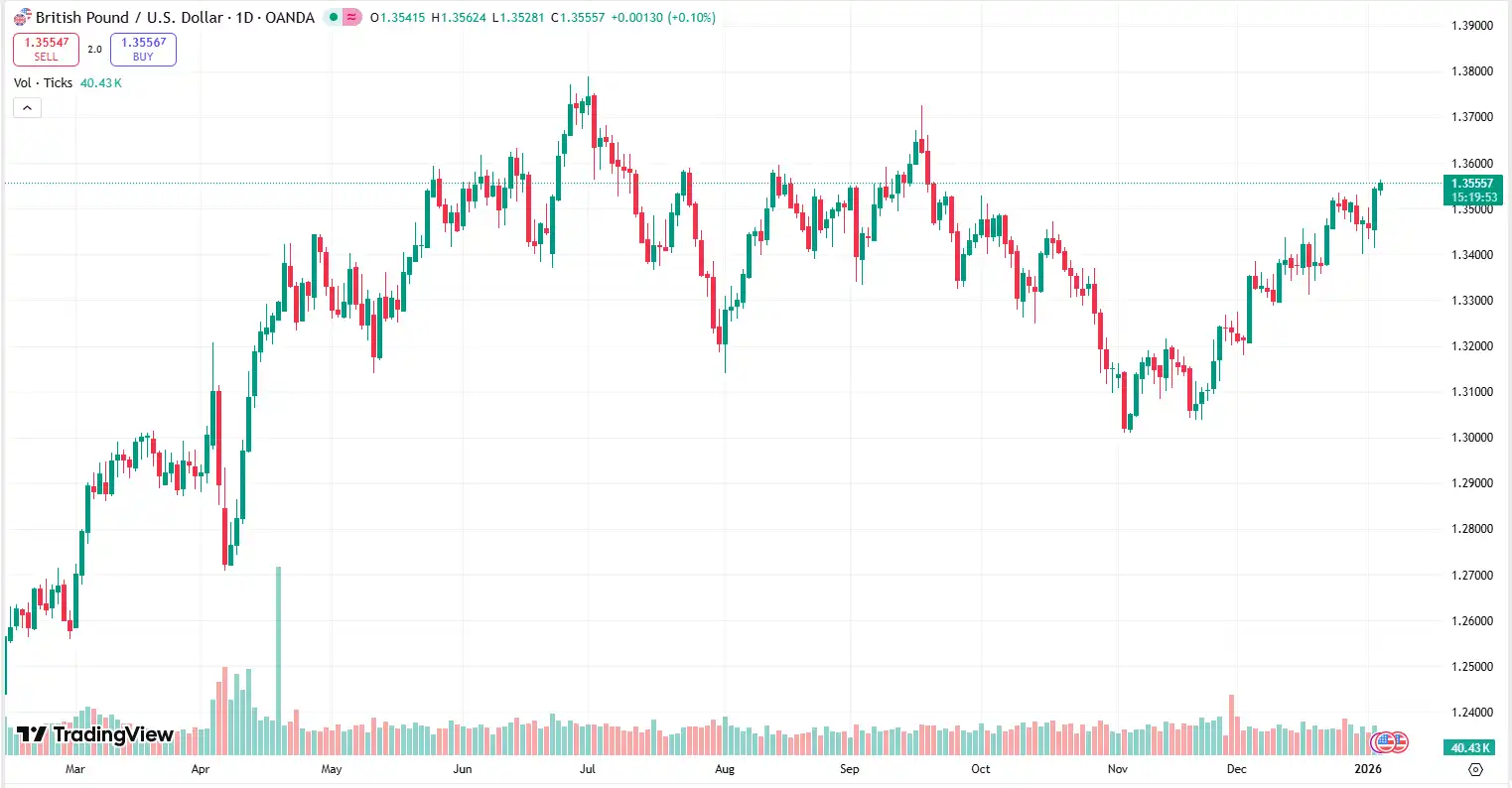
On Tuesday, GBP/USD retreated, trading below the mid-1.3500s after reaching its highest point since September 2025. In early Asian trading, it hovered near 1.3530, retracing some of Monday’s gains as buyers entered on dips. The US Dollar gained support amid geopolitical tensions, boosting demand for safe-haven assets[8], offsetting mixed US PMI data. The Manufacturing PMI showed continued, though moderate, growth, while the ISM index fell to 47.9 in December, signalling contraction. This divergence underscores uneven conditions in the US manufacturing sector[9]. Continued instability in the Middle East and limited progress in peace talks have supported the dollar’s safe-haven appeal. However, markets remain cautious about further dollar gains, as traders anticipate multiple Fed rate cuts in 2026[10]. In the UK, inflation pressures remained stable[11]. The British Retail Consortium reported shop price inflation of 0.7% in December, with food prices up 3.3% year on year[12]. This rise in consumer prices could make the Bank of England (BoE) less likely to cut rates aggressively[13] . Overall, the economic outlook is mixed. UK services and composite activity expanded in late 2025, indicating strong demand despite uneven manufacturing performance. Markets are now watching the final services PMI reports from the UK and US, due today[14], along with Friday’s US Nonfarm Payrolls report. These releases will shape expectations for central bank policy and may determine the next direction for GBP/USD. The GBP/USD exchange rate edges lower to 1.3530, supported by elevated UK inflation and cautious US Dollar flows.
AUD/USD Advances on Softer US Dollar and Inflation Outlook
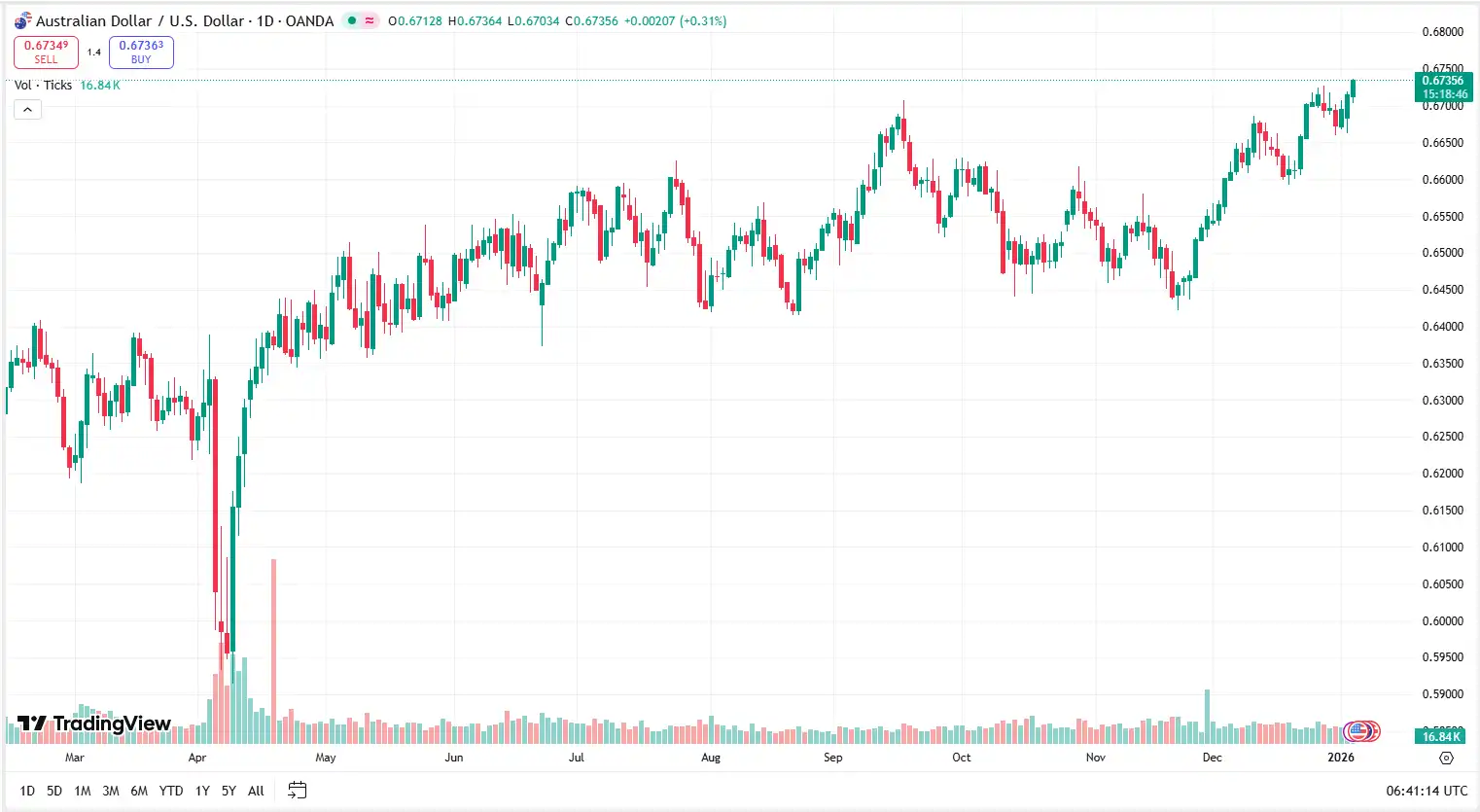
The AUD/USD pair trades near 0.6730 on Tuesday, building on gains from the previous two sessions. The Australian dollar is holding up amid expectations that the Reserve Bank of Australia (RBA) will keep tightening policy. Traders are watching Wednesday’s November CPI release[15] for further guidance on potential rate hikes.
A recent Australian Financial Review poll indicates inflation will stay high, supporting the case for at least two additional RBA rate hikes[16]. While the RBA maintains a hawkish stance, the US dollar has weakened against the Aussie[17] amid concerns about geopolitical tensions. Although most markets have overlooked the US capture of Venezuelan President Nicolás Maduro, the event still influences risk sentiment.
Recent US economic data has increased pressure on the dollar. The ISM Manufacturing PMI fell to 47.9 in December, its lowest since October 2024, indicating that US manufacturing is still shrinking. Markets now anticipate two Fed rate cuts in 2026 and are watching for a new Fed Chair as Jerome Powell’s term ends in May.
China’s Manufacturing PMI rose to 50.1 in December[18] [19], showing slight growth. As Australia trades closely with China, this data continues to affect the Australian Dollar.
Market analysts suggest AUD/USD has rebounded from the lower boundary of an upward channel, indicating bullish momentum. Initial support is near the nine-day EMA at 0.6693, with the lower channel edge providing stronger support. A break below these levels could lead to a decline towards the six-month low near 0.6414. The AUD/USD exchange rate continues to strengthen, supported by hawkish RBA signals and a weakening US Dollar.
Euro Steadies Against Yen Ahead of German Inflation Data
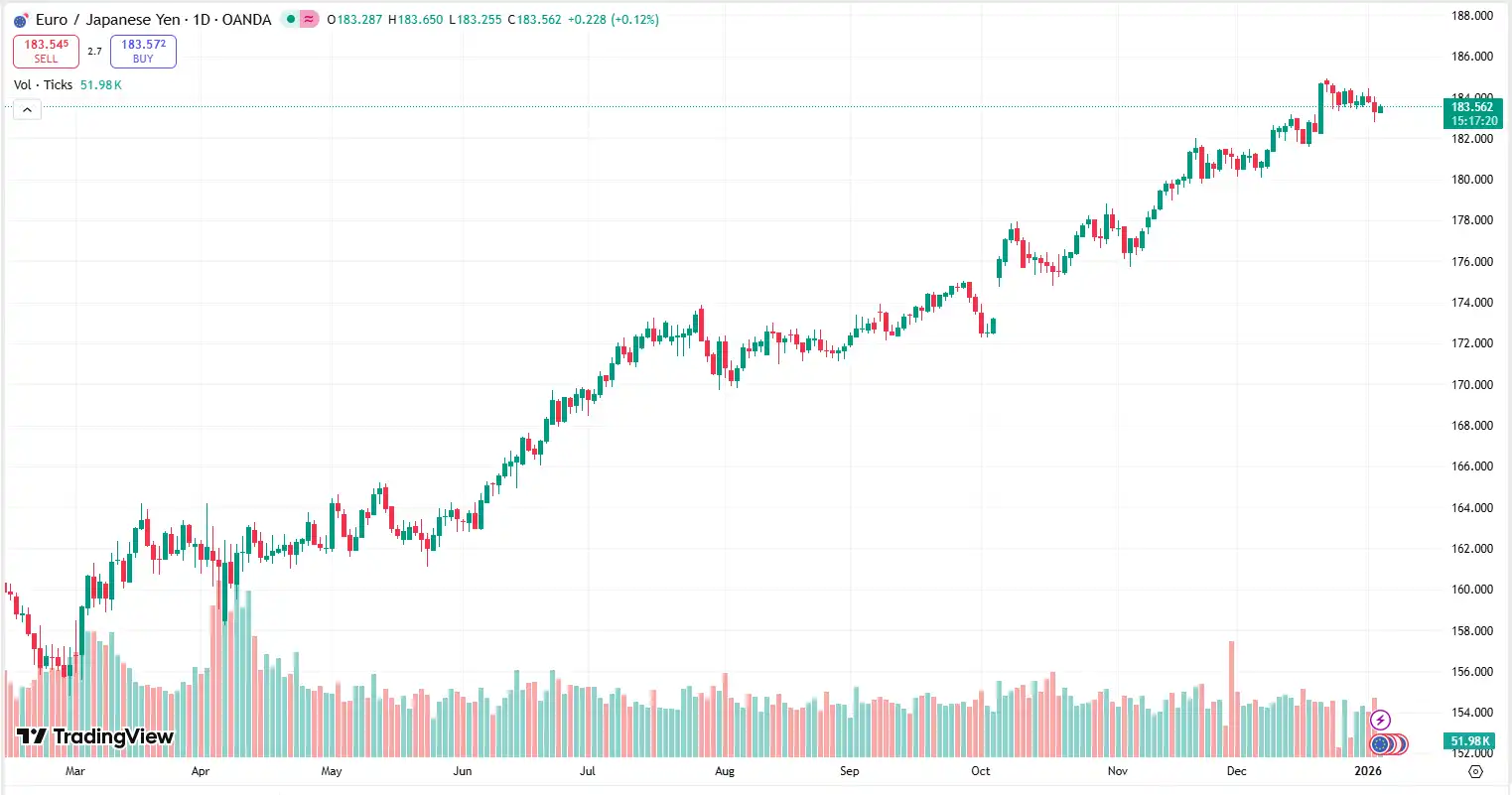
EUR/JPY trades near 183.50 in early Asian hours on Tuesday, maintaining gains after two days of consolidation. The Euro is moving modestly higher as geopolitical concerns subside. Markets are now awaiting Germany’s preliminary December CPI[20] and HICP[21] data to assess inflation trends and potential changes in Eurozone policy[22].
The ECB has kept its policy unchanged following its December 2025 meeting. ECB President Christine Lagarde noted that ongoing uncertainty makes clear guidance difficult, leading markets to remain cautious about the Euro’s outlook[23]. The Euro is getting some support as geopolitical tensions with Venezuela[24] ease, but gains are limited by the Japanese Yen, which may strengthen if the Bank of Japan (BoJ) adjusts rates again[25].
BoJ Governor Kazuo Ueda stated that the central bank will adjust rates in line with economic conditions and inflation, aiming to balance wages and prices[26]. This approach supports a stronger Yen and limits EUR/JPY’s short-term gains. Markets are also monitoring HCOB PMIs for Germany and the Eurozone[27], which may influence market sentiment ahead of the official inflation data.
Market analysts suggest that the pair has held above support near 182.80. A move above 183.60 could target 184.00, though further gains will depend on sustained risk-on sentiment. The EUR/JPY exchange rate steadies near 183.50, supported by easing geopolitical risk and upcoming German inflation data.
Stay Ahead in the Currency Game
Subscribe to 'Currency Pulse' now and never miss a beat in the currency markets!
Ready to act on today’s insights? Get a free quote or give us a call on: +44 (0)20 7740 0000 to connect with a dedicated portfolio manager for tailored support.
Important Disclaimer: This blog is for informational purposes only and should not be considered financial advice. Currency Solutions does not take into account the investment objectives, financial situation, or specific needs of any individual readers. We do not endorse or recommend any specific financial strategies, products, or services mentioned in this content. All information is provided “as is” without any representations or warranties, express or implied, regarding its accuracy, completeness, or timeliness.