EUR/GBP Declines Ahead of UK GDP Data Amid Policy Divergence
6 min read
Share


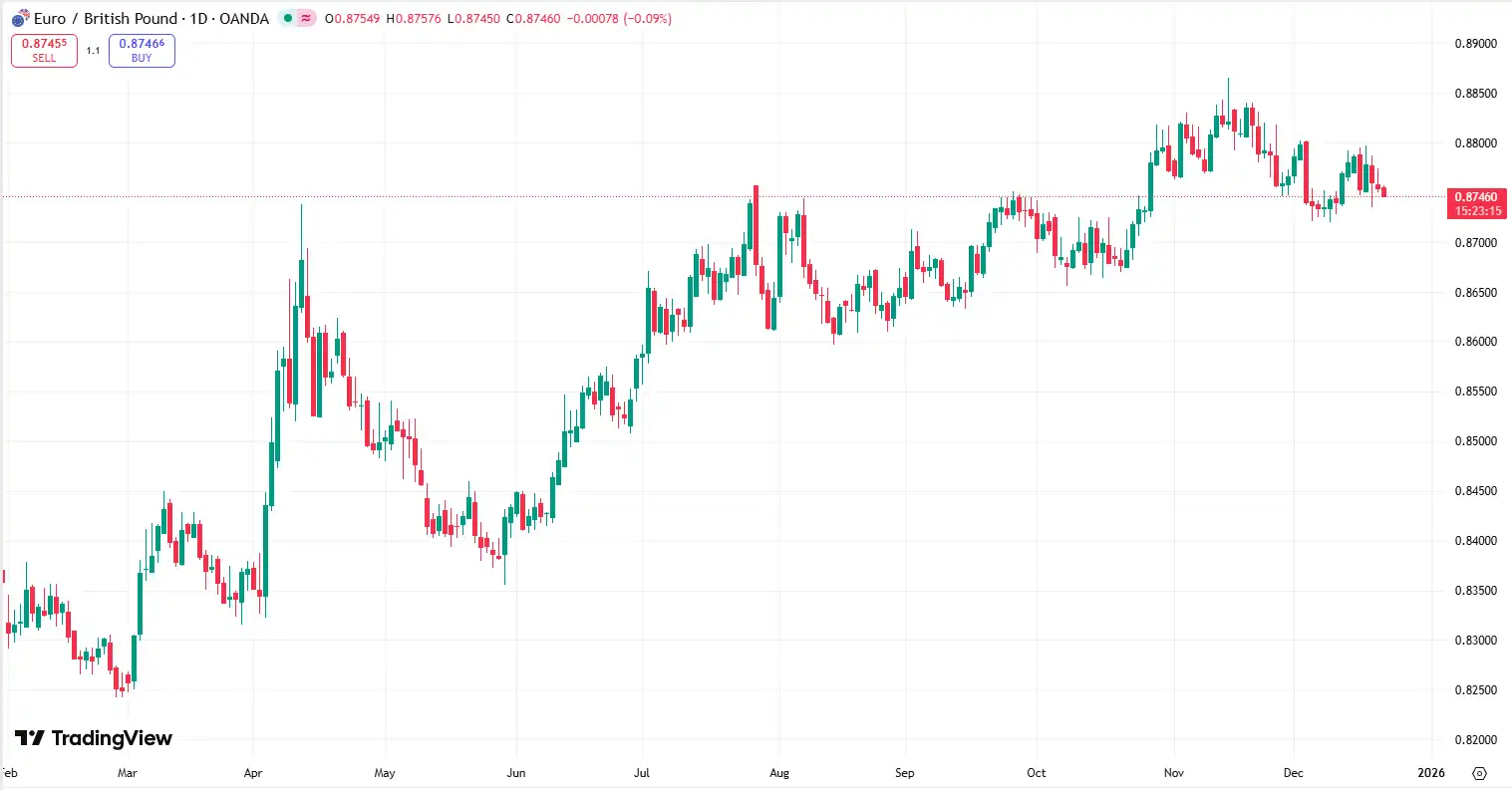
The EUR/GBP pair slipped to around 0.8745 in early European trading on Monday. The pound gained support as markets reassessed the policy outlook after last week’s European central bank (ECB) decisions[1]. Sterling steadied after the Bank of England’s (BoE) December rate cut, and markets now await key UK growth data later today[2].
Last week, the BoE cut its policy rate by 25 bps to 3.75%, the fourth cut this year[3]. Although this move was expected, the guidance was not as dovish as expected. Policymakers signaled that future rate cuts will be gradual and depend on new data, so markets now expect fewer quick cuts. This has helped support the pound in the short term[4].
The pound also got a boost from improved UK growth forecasts. GDP growth for 2025 was anticipated to be 1.5%, up from the earlier estimate of 1.0%. This revision had eased some concerns about the UK’s outlook, even though inflation is falling and the job market is getting weaker.
Meanwhile, the ECB kept interest rates unchanged at its December meeting. ECB President Christine Lagarde said policy is “in a good place” [5], suggesting rates will probably stay the same. The ECB expects inflation to hit its target by 2028, but growth is likely to stay weak[6]. This outlook limits how much the euro can gain.
Now, the focus is on the UK’s third-quarter GDP numbers. Markets expect modest growth of 0.1% from the previous quarter and 1.3% compared to last year. If the data is weaker, the pound could come under pressure, but stronger results might help steady EUR/GBP. The EUR/GBP exchange rate trades slightly lower near 0.8745 as investors balance firmer UK growth expectations against a steady ECB stance, with today’s UK GDP release set to shape near-term direction
EUR/USD firms as ECB signals pause, Fed outlook limits USD gains
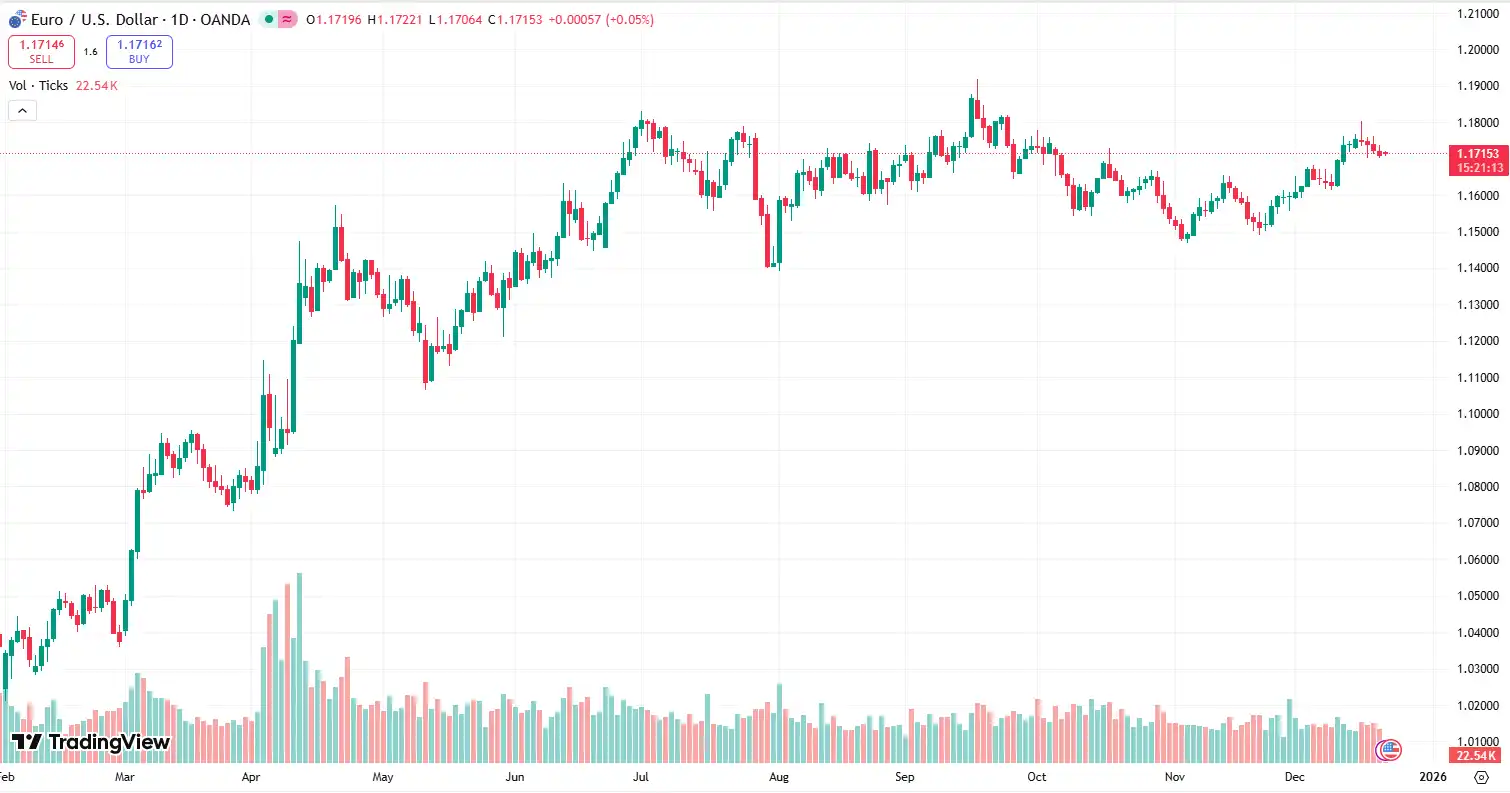
EUR/USD edged higher towards 1.1710 in early Asian trading on Monday, supported by clearer signals that the ECB has reached the end of its easing cycle. Trading remained subdued as markets consolidated ahead of the year-end holidays.
Last week, the ECB kept policy rates at 2.0% and adopted a more constructive outlook for the Eurozone. Updated projections indicated stronger growth and inflation[7], while ECB President Christine Lagarde withheld forward guidance due to ongoing uncertainty. The lack of dovish signals has reinforced expectations that the ECB will maintain its current stance, helping to stabilise the euro after months of rate-driven pressure.
In the US, the Federal Reserve (Fed) implemented a widely expected 25bps rate cut at its December meeting[8], lowering the federal funds target range to 3.50–3.75%[9]. Fed Chair Jerome Powell emphasised a wait-and-see approach, highlighting the need to assess the impact of cumulative easing before taking further action[10].
The Fed’s updated Summary of Economic Projections[11] indicated a median expectation of one additional rate cut in 2026. However, markets continue to anticipate a more accommodative path, suggesting two or more cuts, according to CME pricing[12]. This divergence between official guidance and market expectations has limited the dollar’s recovery and supported EUR/USD.
With both central banks signalling caution, EUR/USD is settling into a near-term range, supported by ECB policy stability and limited by the Fed’s measured approach. The EUR/USD exchange rate remains underpinned above 1.1710 as an ECB policy pause offsets cautious Fed easing, keeping the pair range-bound into year-end.
Sterling Pauses Below Recent High as Yen Finds Modest Support
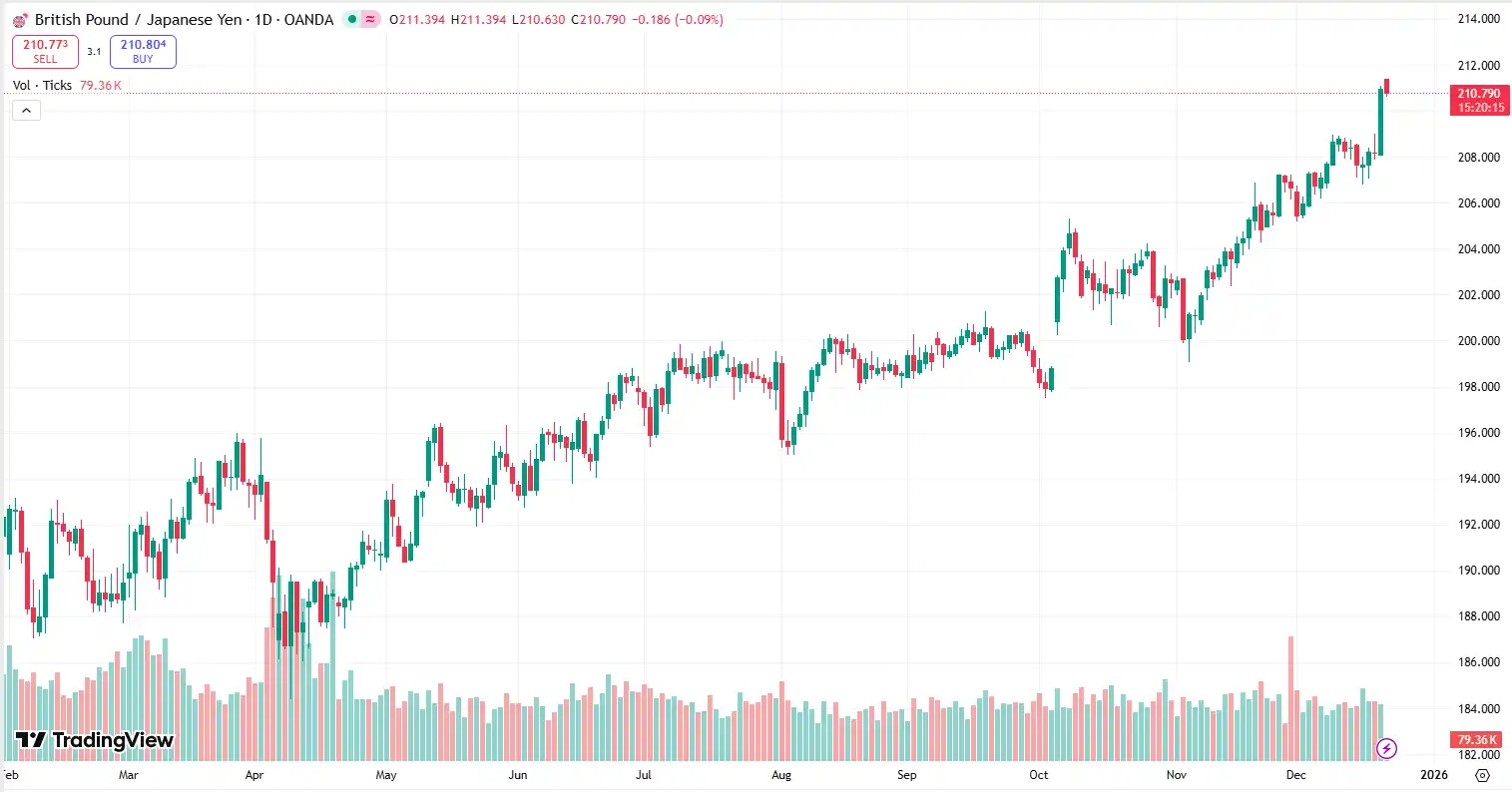
GBP/JPY slipped below 211.00 at the start of the week, trimming part of Friday’s gains that had lifted the pair to its highest level since 2008. Early Asian trading saw limited selling, with the pair stabilising near 210.75-210.80.
The Japanese yen received modest support as global markets remained cautious. Geopolitical risks in Eastern Europe and the Middle East increased safe-haven demand, while speculation about potential Japanese intervention slowed further yen selling. These factors contributed to a partial recovery after last week’s sharp decline.
Differences in policy continue to play an important role. The Bank of Japan (BoJ) has indicated it may tighten further after raising rates to a 30-year high, though officials have not provided clear guidance on future actions[13]. Higher Japanese government bond yields and concerns about Japan’s fiscal outlook are also making traders cautious about large yen positions[14].
The British pound remains supported by the BoEs cautious stance. Last week, the Monetary Policy Committee voted 5 to 4 to cut rates to 3.75%, highlighting divisions among members[15] [16]. As a result, markets have reduced expectations for rapid rate cuts in 2026. Combined with a weaker US dollar, this has helped limit GBP/JPY losses.
Traders are now focused on the UK’s final Q3 GDP report, which may offer short-term direction as year-end trading activity stays subdued. The GBP/JPY exchange rate is consolidating below recent multi-year highs, with yen safe-haven demand capping gains while BoE caution continues to limit downside risk.
Yen Firms as Safe-Haven Demand Builds and Dollar Softens
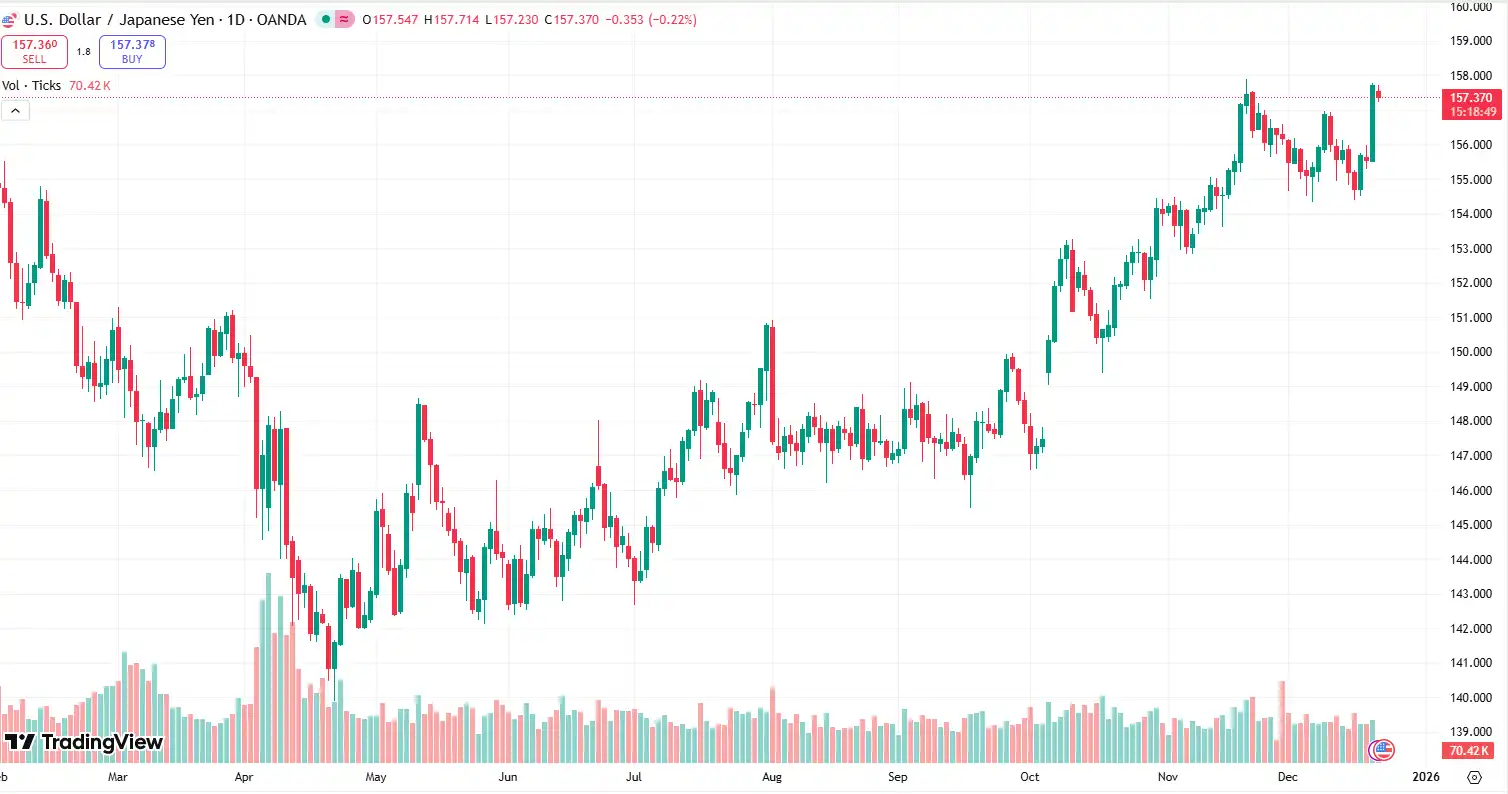
The Japanese yen began the week stronger against the dollar around 157.30, posting modest gains against a weaker US dollar as renewed geopolitical tensions increased demand for safe-haven assets. During Asian trading, USD/JPY remained below the mid-157.00 range, with subdued and slightly lower trading activity.
Elevated global risks continue to support the yen. US action against Venezuelan oil shipments[17], ongoing uncertainty over the Russia-Ukraine conflict[18] [19], and renewed concerns about Israel-Iran tensions have increased market caution[20]. Additionally, comments from Japan’s top foreign-exchange official, Atsushi Mimura, have prompted speculation about potential government measures to address yen weakness[21].
Policy direction remains uncertain. Last week, the BoJ raised its policy rate to 0.75%, the highest level in thirty years, and indicated further tightening is possible if inflation and growth align with expectations. However, Governor Kazuo Ueda did not specify the timing or pace of future moves, increasing uncertainty. Concerns about Japan’s fiscal outlook and rising government bond yields are also making investors cautious about the yen.
In the US, the dollar received only a modest boost from recent commentary. Cleveland Fed President Beth Hammack stated that policy will pause to assess the impact of recent rate cuts, which helped stabilise the dollar after its decline[22]. However, markets anticipate additional rate cuts in 2026, limiting the dollar’s potential gains.
With geopolitical risks elevated and policy differences unresolved, USD/JPY is likely to remain range-bound rather than establishing a clear upward or downward trend. The USD/JPY exchange rate remains range-bound, with safe-haven demand supporting the yen while cautious Fed signals help cushion the dollar.
Stay Ahead in the Currency Game
Whether you're a daily FX trader or handle international transactions regularly, our 'Currency Pulse' newsletter delivers the news you need to make more informed decisions. Receive concise updates and in-depth insights directly in your LinkedIn feed.
Subscribe to 'Currency Pulse' now and never miss a beat in the currency markets!
Ready to act on today’s insights? Get a free quote or give us a call on: +44 (0)20 7740 0000 to connect with a dedicated portfolio manager for tailored support.
Important Disclaimer: This blog is for informational purposes only and should not be considered financial advice. Currency Solutions does not take into account the investment objectives, financial situation, or specific needs of any individual readers. We do not endorse or recommend any specific financial strategies, products, or services mentioned in this content. All information is provided “as is” without any representations or warranties, express or implied, regarding its accuracy, completeness, or timeliness.