Cable Firms as BoE signals gradual policy easing expectations
5 min read
Share


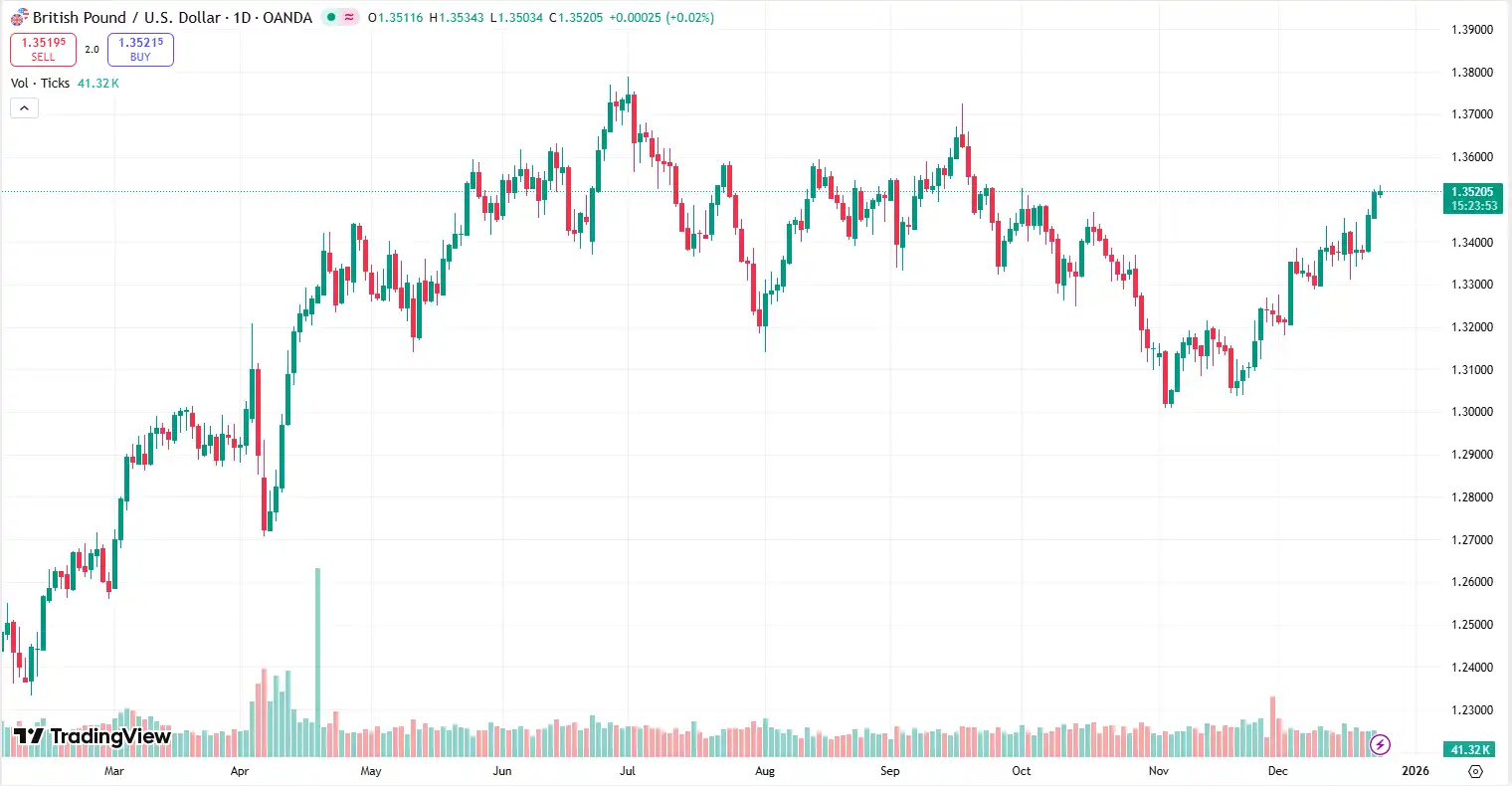
GBP/USD remained above 1.3500 in early European trading on Wednesday, hovering near 1.3510. Sterling found some support after the Bank of England (BoE) indicated that rate cuts are possible but not imminent.
The BoE’s rate cut to 3.75% last week was anticipated, but a split vote and cautious guidance limited market reaction. BoE Governor Andrew Bailey stated that future cuts will depend on inflation, indicating a gradual approach[1]. This has supported the pound, even as trading slows and investors grow more cautious ahead of the holidays.
In the US, the dollar remains supported by signs of stronger economic growth, despite ongoing debate about future interest rates. The Bureau of Economic Analysis (BEA) recently reported that real GDP grew at a 3.8% annual rate in the second quarter and 4.3% in the third quarter, reflecting steady economic activity[2].
The market’s focus now shifts to US Initial Jobless Claims[3], which will indicate whether the job market is slowing enough to justify larger rate cuts. Until then, the cable is expected to remain stable, supported by the BoE’s cautious stance but sensitive to unexpected US data. The GBP/USD exchange rate is expected to remain range-bound above 1.3500 until US labour data indicates the strength of the dollar’s rebound.
EUR/GBP slips as Bank of England hints slower pace of rate cuts
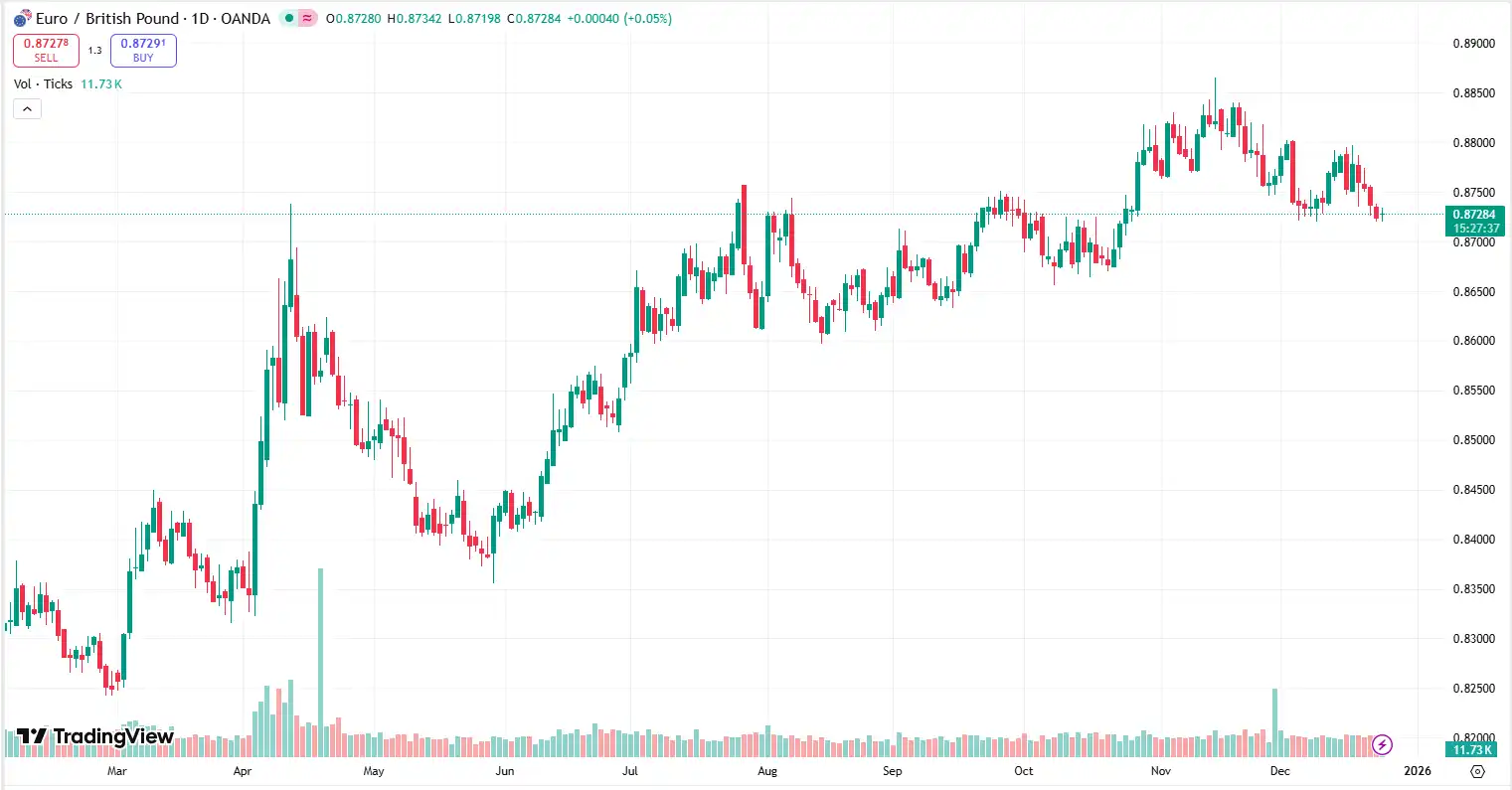
EUR/GBP dropped to about 0.8725 early Wednesday in Europe, extending its recent losses as the pound strengthened after the BoE’s cautious approach. Market traders now see central bank signals as limiting any further weakness in the pound[4].
Last week, the BoE reduced its benchmark rate to 3.75%, marking its first cut since last August. Although widely expected, BoE Governor Andrew Bailey emphasised that future rate cuts will probably happen more slowly, since each decision is now a “closer call” because of ongoing inflation risks. This has helped support the pound and reduced expectations for aggressive rate cuts in 2026, keeping EUR/GBP steady.
At its December meeting, the European Central Bank (ECB) kept all three main policy rates unchanged. Following ECB President Christine Lagarde's statement that policy is in a good place and that the ECB remains flexible for future moves, including possible rate hikes if needed[5]. This unanimous decision was the fourth time in a row the ECB held rates steady, which supports the view that the bank will not cut rates soon.
Market analysts caution, as they anticipate less than a 10% chance of an ECB rate cut by February 2026[6]. These signals have reduced expectations for near-term easing. Although a future cut is still possible, these low odds have kept the euro from falling much against the pound.
Given these factors, the EUR/GBP pair has weakened slightly but lacks a clear catalyst for further declines, as central bank divergence is already reflected in the market. The EUR/GBP exchange rate trades lower near 0.8725, balanced between a more cautiously positioned BoE and a steady ECB, leaving the cross susceptible to policy guidance rather than fresh macro surprises.
GBP/JPY Pressured Near Weekly Lows as Yen Demand Firmly Returns
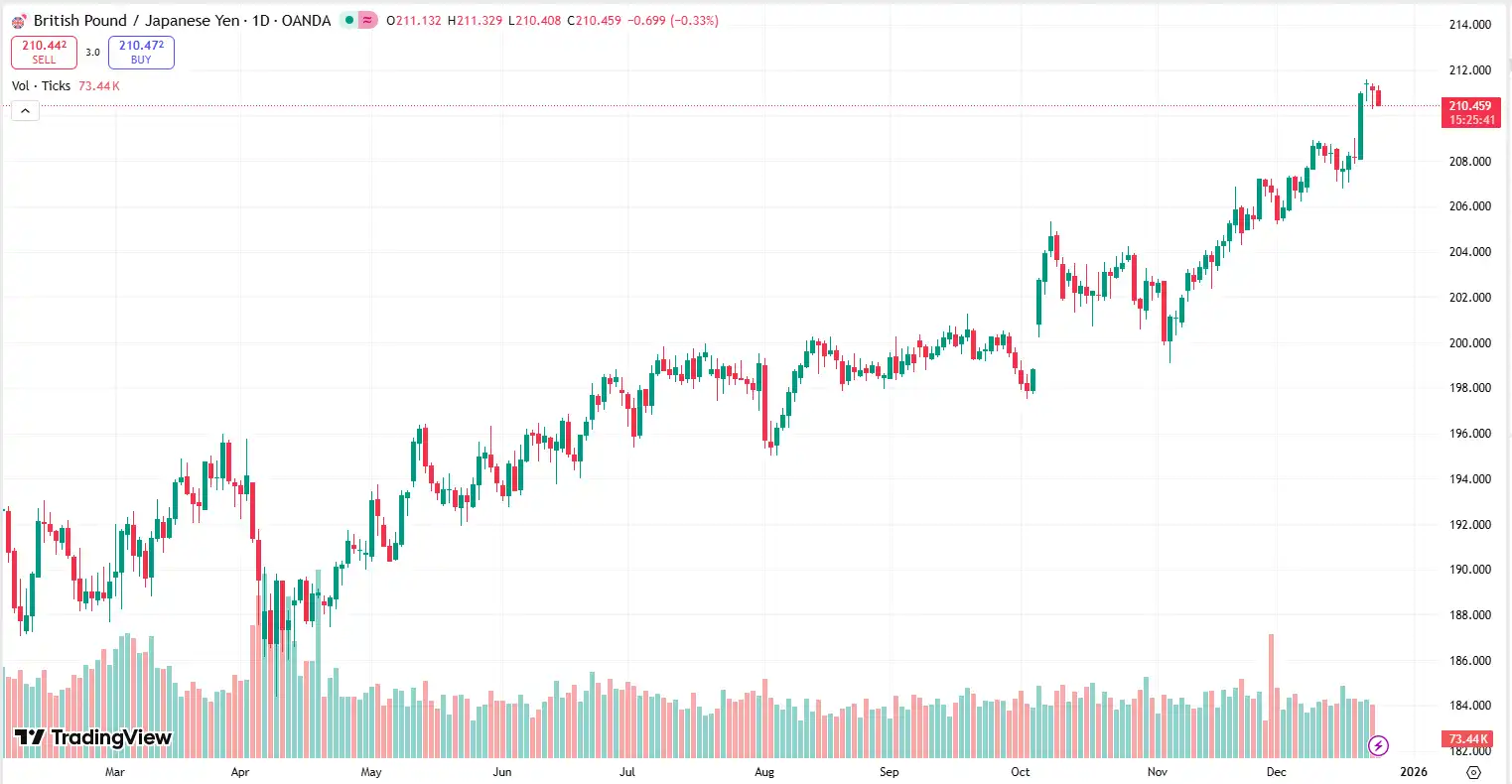
GBP/JPY is trading near 210.40 remaining under pressure around the mid-210.00s in Wednesday’s Asian session, marking a second consecutive day of mild losses amid a strengthening Japanese Yen. The pair is still near levels last seen in August 2008, with momentum slowing as investors rethink central bank signals and market risks.
The yen gained further support after the Bank of Japan (BoJ) published its October meeting minutes[7], which showed that most members favoured continued policy tightening if inflation and growth met targets. This comes after December’s rate hike to 0.75%, the highest in thirty years, confirming the BoJ’s plan to keep normalising policy[8]. With ongoing geopolitical risks, demand for the yen as a safe haven has renewed[9].
The pound has remained stable. Last week, the BoE's narrow vote to cut rates suggested that any further easing will likely be gradual. Officials noted that ongoing inflation is holding back the pace of rate cuts, leading markets to lower expectations for significant policy changes in 2026[10]. This has helped support the pound and kept GBP/JPY from falling further.
Market traders remain cautious as year-end liquidity drops. Now, the focus is on BoJ Governor Kazuo Ueda’s speech on Thursday[11] and Tokyo CPI data on Friday[12][13], which could influence expectations for Japan’s next policy steps. The GBP/JPY exchange rate trades near weekly lows as firmer yen demand offsets sterling support, with near-term direction likely to hinge on BoJ communication and incoming Japanese inflation data.
AUD/JPY Pulls Back from Multi-Month Highs as Yen Finds Support
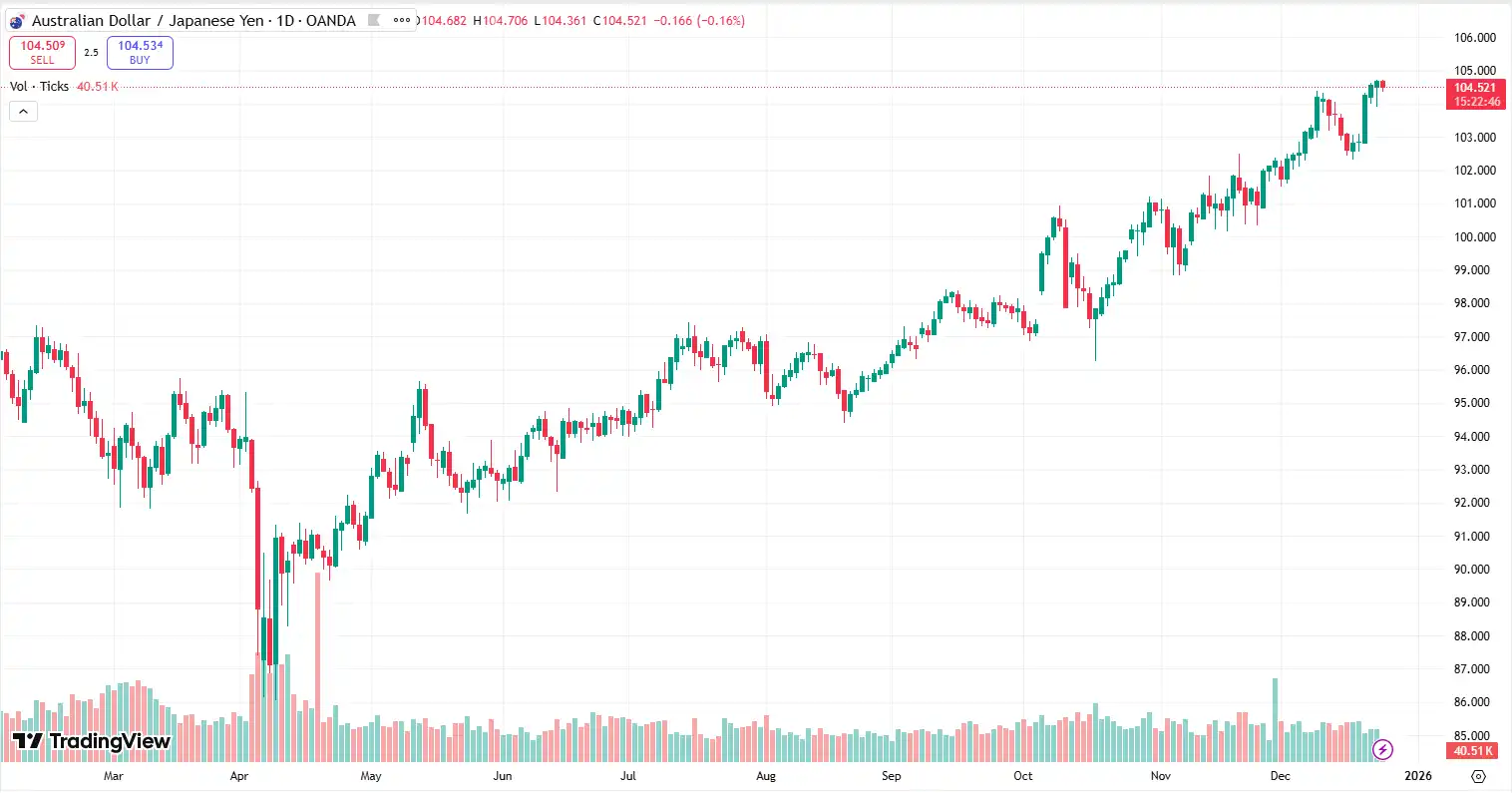
AUD/JPY retreated to 104.50 in Wednesday’s Asian session after briefly reaching 104.72, its highest level since mid-2024. This pullback ends a five-day rally and indicates renewed support for the Japanese Yen as traders monitor potential intervention and reassess Japan’s short-term policy outlook.
The yen gained after Japanese Finance Minister Satsuki Katayama stated that authorities have a “free hand” to address sharp currency movements[14]. Additional warnings from Japanese currency diplomat Atsushi Mimura (vice-finance minister International Affairs) heightened market vigilance regarding intervention risks[15]. BoJ October meeting minutes showed most policymakers supported further rate increases if inflation and growth met forecasts. This guidance influenced expectations ahead of December’s policy decision, when the BoJ raised rates to a 30-year high and signalled further increases if wage and price trends remain positive.
The outlook for the Australian dollar remains positive, supported by expectations of a more hawkish stance from the Reserve Bank of Australia (RBA). December meeting minutes[16] revealed growing concerns that current policy may not be strict enough as inflation persists. Headline inflation remains above the RBA’s 2–3% target, and major banks such as Commonwealth Bank of Australia and National Australia Bank now anticipate a rate hike as early as February 2026 [17] [18].
Given mixed policy signals, AUD/JPY appears to be consolidating after its recent gains rather than reversing direction. The AUD/JPY exchange rate pauses near recent highs as intervention-sensitive yen support offsets Australia’s hawkish rate outlook, leaving the cross in consolidation ahead of clearer policy signals.
Stay Ahead in the Currency Game
Whether you're a daily FX trader or handle international transactions regularly, our 'Currency Pulse' newsletter delivers the news you need to make more informed decisions. Receive concise updates and in-depth insights directly in your LinkedIn feed.
Subscribe to 'Currency Pulse' now and never miss a beat in the currency markets!
Ready to act on today’s insights? Get a free quote or give us a call on: +44 (0)20 7740 0000 to connect with a dedicated portfolio manager for tailored support.
Important Disclaimer: This blog is for informational purposes only and should not be considered financial advice. Currency Solutions does not take into account the investment objectives, financial situation, or specific needs of any individual readers. We do not endorse or recommend any specific financial strategies, products, or services mentioned in this content. All information is provided “as is” without any representations or warranties, express or implied, regarding its accuracy, completeness, or timeliness.