Aussie Holds Firm as RBA Cautions and US Labour Data Steady
5 min read
Share


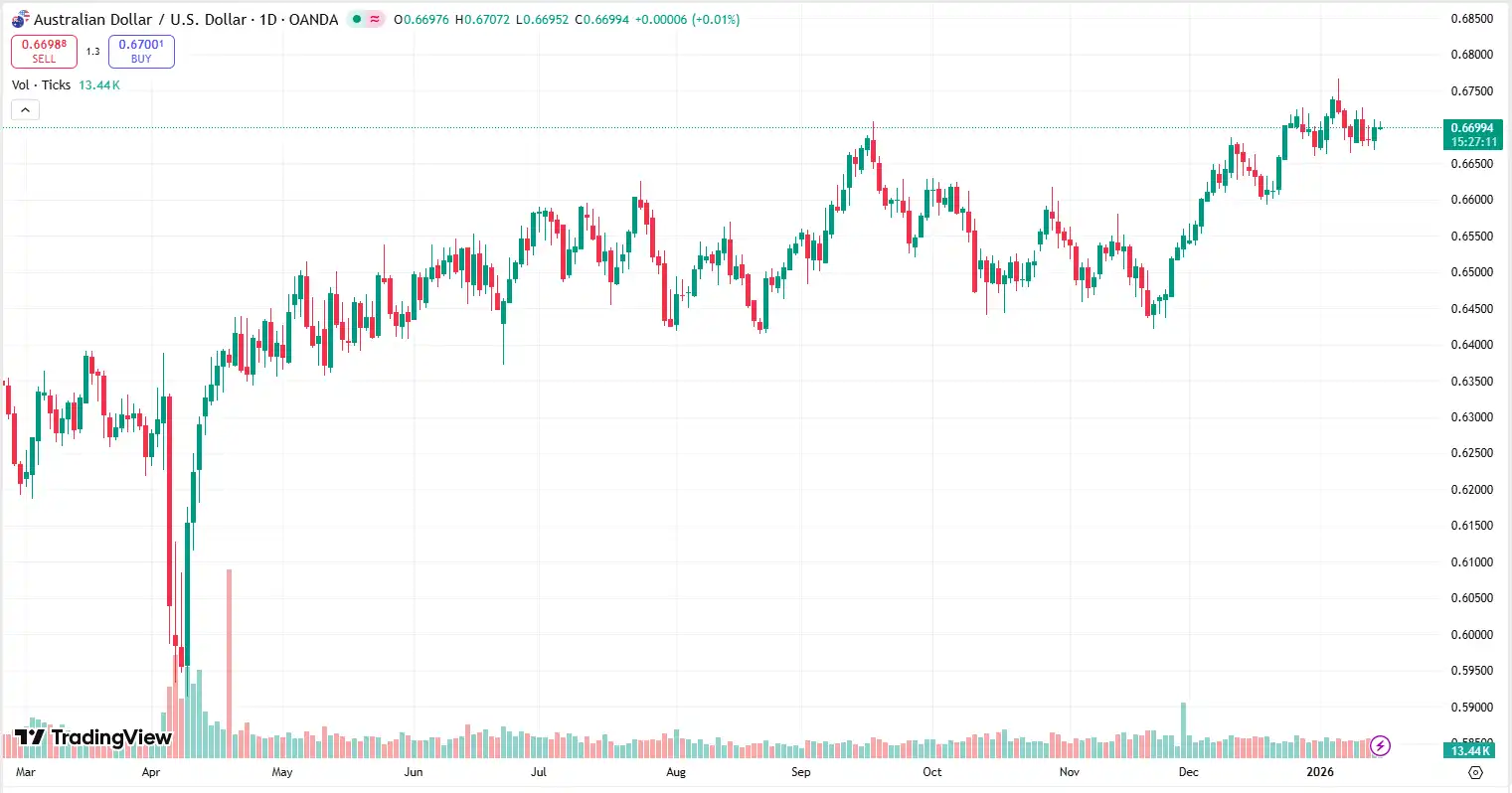
AUD/USD hovered near 0.6700 in Friday’s Asian session, maintaining recent gains as traders weighed cautious Reserve Bank of Australia (RBA) signals against strong US labour data.
The Australian dollar was supported by elevated domestic inflation expectations, complicating RBA policy decisions. Consumer Inflation Expectations remained at 4.6% in January, well above the RBA’s 2 to 3 percent target, sustaining concerns about persistent price pressures. While RBA officials note that inflation has declined significantly since its 2022 peak, recent data suggest a possible rebound[1]. As a result, policymakers are reluctant to signal rate cuts. Currently, markets assign roughly a one-in-four chance of a rate hike in February, with higher odds later in the year if inflation persists[2].
AUD/USD gains were limited as the US dollar strengthened following a drop in US Initial Jobless Claims to 198,000 for the week ending January 10, the lowest in months[3]. This data highlighted ongoing strength in the US job market and reinforced expectations that the Fed will keep rates steady. Fed funds futures now indicate a possible rate cut around mid-year, as policymakers remain cautious about inflation[4].
US dollar gains were capped by ongoing policy uncertainty. AUD/USD remains range-bound, caught between the potential for RBA rate hikes and a cautious Fed as traders await next week’s data.
EUR/USD Stabilises Amid Dollar Strength and Inflation Data
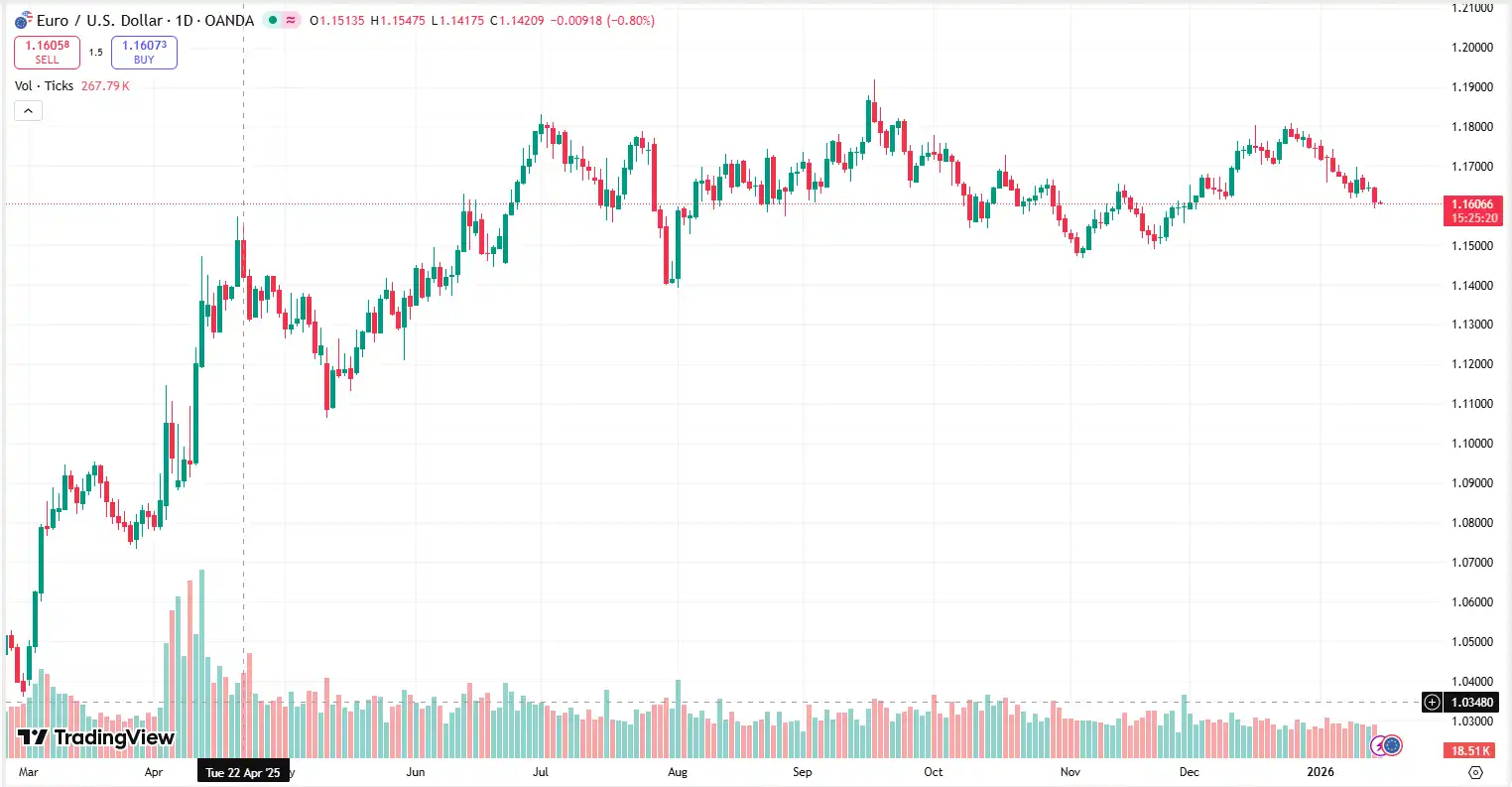
EUR/USD stabilised near 1.1610 during Friday’s Asian session after three consecutive declines, as markets reassessed US monetary policy and awaited key macroeconomic releases from both the US and Europe. Although the US dollar remains supported by strong labour market data[5], its momentum has slowed due to political uncertainty and shifting positioning[6].
The US dollar strengthened after weekly jobless claims came in lower than expected, signalling a resilient job market. This prompted traders to reduce expectations for significant Fed rate cuts, providing short-term support for the dollar. Additionally, strong earnings from Taiwan Semiconductor Manufacturing Co.(TSMC) boosted Wall Street on Thursday, increasing risk appetite and supporting the dollar through portfolio flows[7].
Political uncertainty has limited further gains for the US dollar. Reports of a possible Justice Department indictment of Fed Chair Jerome Powell, which Powell described as politically motivated, have raised concerns about central bank independence[8]. President Donald Trump’s remarks about potential replacements for Powell[9] increased headline risk and briefly pressured the dollar.
At its December meeting, the European Central Bank (ECB) kept its policy[10] unchanged and expressed confidence following modest upward revisions to growth and inflation forecasts. Recent data indicate the Eurozone economy remains resilient, as exporters adapt to US tariffs and strong domestic demand offsets weaker manufacturing. Inflation remains close to the ECB’s 2% target, mainly driven by services, and policymakers continue to highlight ongoing wage pressures[11][12].
Markets’ focus now turns to the upcoming Eurozone inflation data[13] and US industrial production[14] for further direction. For now, the EUR/USD pair remains influenced by US developments, and any rebound is likely to be gradual.
Sterling Struggles for Direction as Firm US Data Offsets UK Data
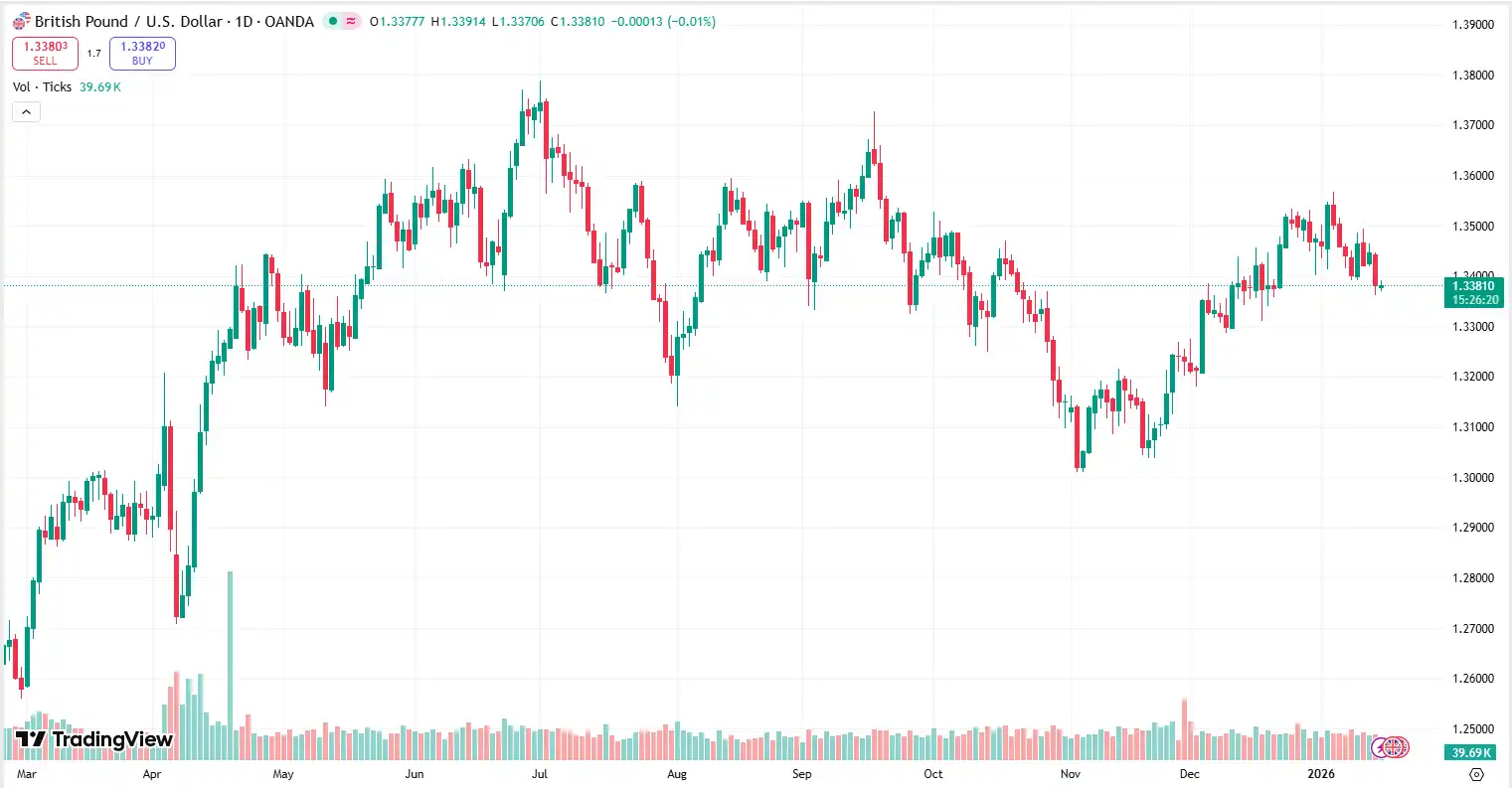
GBP/USD remains below 1.3400 as strong US labour market data supports the dollar. Markets now anticipate the Fed keep interest rates unchanged. In Friday’s early Asian session, the pair hovered near 1.3380, recovering modestly from Thursday’s losses and showing limited momentum.
The US dollar gained support after Thursday’s labour market report showed US Initial Jobless Claims[15] dropped to 198,000 for the week ending January 10, well below the expected 215,000 and the previous week’s 207,000. These figures indicate layoffs remain low, underscoring the resilience of the US job market despite tight monetary policy. Market traders now anticipate the Fed will wait until at least mid-year before considering another rate cut[16].
Adding to this, cautious statements from the Fed and renewed concerns about inflation have further supported the US dollar. Policymakers continue to urge patience, while recent US political events have not altered short-term policy expectations[17].
The British pound’s losses remained limited as the UK GDP[18] data showed monthly growth of 0.3%, above the expected 0.1%, ending two months of contraction. This stronger result has reduced pressure on the Bank of England (BoE) to cut rates quickly and suggests that the UK economy is stabilising[19][20].
With the BoE signaling a gradual approach to easing and improved growth data, markets no longer anticipate rapid rate cuts from the central bank[21]. Policy differences between the BoE and the cautious Fed have kept the GBP/USD pair trading in a narrow range. Future movements for cable will depend on upcoming US data and overall market sentiment.
US Dollar Pulls Back as Oil Strength Bolsters Loonie Demand
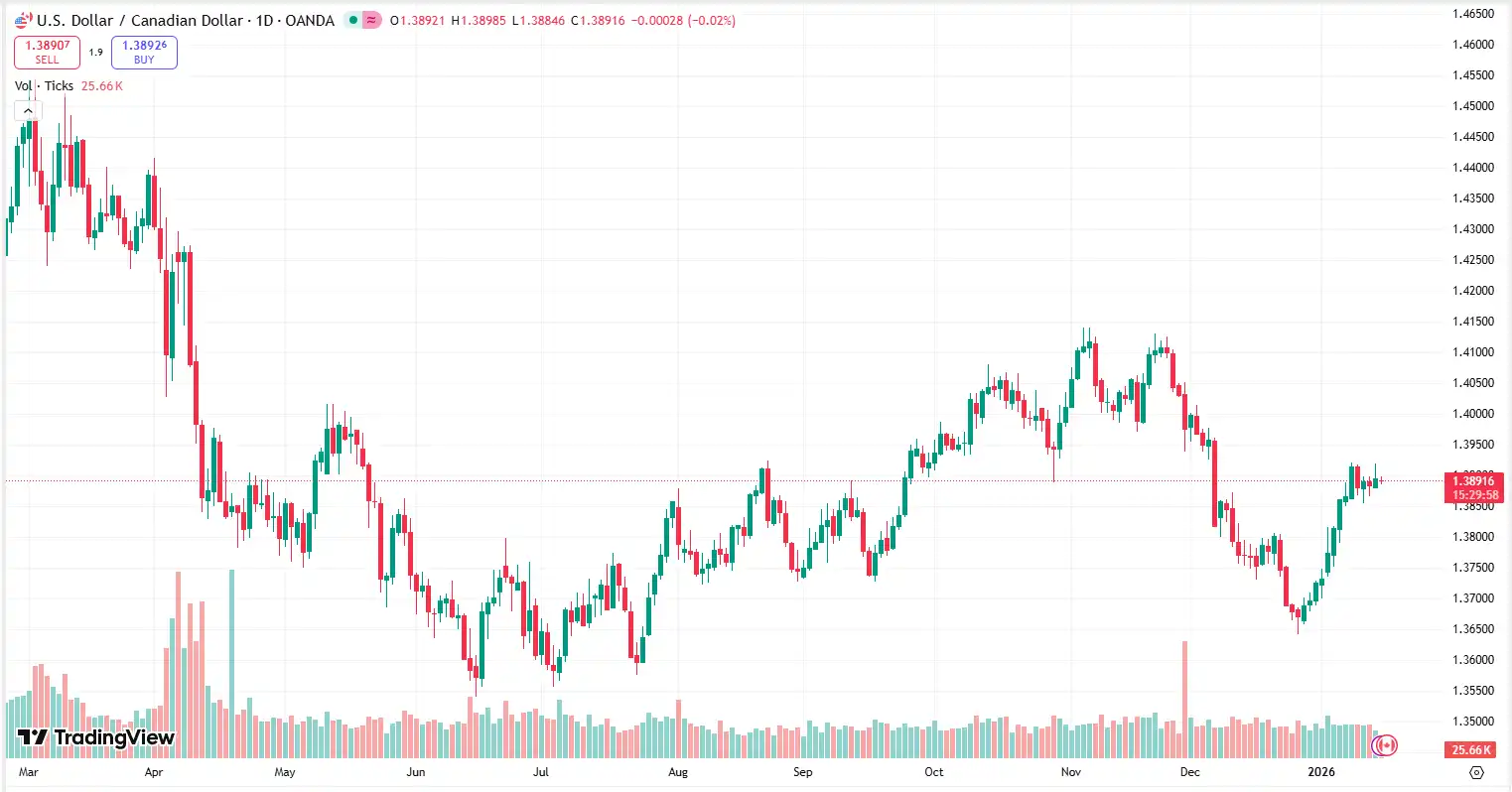
USD/CAD eased to around 1.3890 in early Asian trading on Friday as rebounding crude oil prices supported the loonie[22] and put downward pressure on the pair.
WTI crude and other oil benchmarks extended gains this week[23], driven by renewed geopolitical tensions and reports of tanker attacks in key shipping lanes that raised supply concerns. Higher crude prices have strengthened the Canadian dollar, reflecting Canada’s role as a major energy exporter, and kept the loonie firm against the US dollar[24].
US data earlier this week highlighted a resilient economy, as November Retail Sales[25] exceeded expectations[26] and the Producer Price Index (PPI)[27] remained elevated, suggesting ongoing inflation risks. These results reinforced expectations that the Federal Reserve (Fed) will keep rates steady in the near term, with some forecasts delaying potential cuts until mid-year. Several Fed officials, including Austan Goolsbee and Mary Daly, stated that policy remains sufficiently restrictive, supporting a pause[28].
Market traders are looking ahead to the December US Industrial Production data and additional Fed commentary for insights into the economic outlook. For the Canadian dollar, continued strength in energy markets and signs of central bank divergence from the Fed are expected to remain key drivers for USD/CAD in the near term.
Stay Ahead in the Currency Game
Whether you're a daily FX trader or handle international transactions regularly, our 'Currency Pulse' newsletter delivers the news you need to make more informed decisions. Receive concise updates and in-depth insights directly in your LinkedIn feed.
Subscribe to 'Currency Pulse' now and never miss a beat in the currency markets!
Ready to act on today’s insights? Get a free quote or give us a call on: +44 (0)20 7740 0000 to connect with a dedicated portfolio manager for tailored support.
Important Disclaimer: This blog is for informational purposes only and should not be considered financial advice. Currency Solutions does not take into account the investment objectives, financial situation, or specific needs of any individual readers. We do not endorse or recommend any specific financial strategies, products, or services mentioned in this content. All information is provided “as is” without any representations or warranties, express or implied, regarding its accuracy, completeness, or timeliness.